
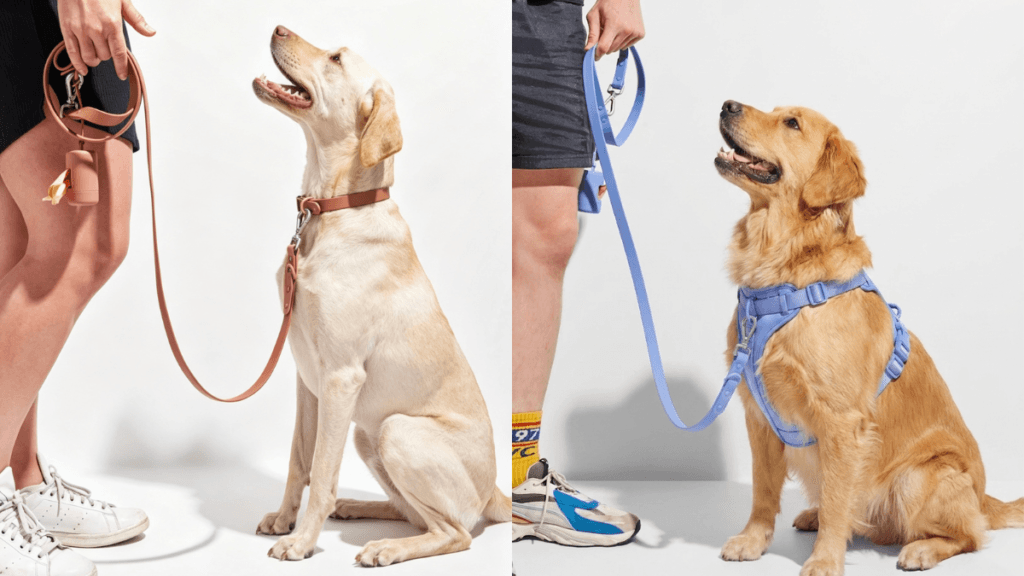
Walk into almost any pet store and you’ll see them hanging by the register — thick, braided rope leashes in every color, usually with a leather or metal accent near the clip. They’ve become one of the most popular leash styles over the past few years, and for good reason. Rope leashes feel substantial in the hand, they’re genuinely strong, and there’s something satisfying about the weight of a good one.
But “rope leash” covers a wide range of quality, and not every rope leash on the market is built the same way. Some are genuinely climbing-grade and built to last years. Others are a rope-look sleeve over a thin core that frays within months. Knowing what to look for — and where rope actually falls short compared to other materials — makes the difference between a leash you love and one you’re replacing every season.
This guide covers what a rope dog leash actually is, why owners like them, what to check before buying one, and the situations where a different material might serve you better.
What Is a Rope Dog Leash, Exactly?
The construction
A rope leash is built from braided or twisted rope — usually nylon or polyester climbing-style rope — rather than flat webbing. The braid gives it a rounded, thick profile, and most versions add a leather or coated handle and a snap hook at the working end, often finished with a whipped or heat-sealed tip so the braid doesn’t unravel.
Where the quality varies
The rope’s diameter and core material determine most of the real-world difference. A thick, tightly braided rope with a solid nylon core holds up to sustained pulling far better than a thin, loosely braided version, even if the two look similar hanging on a shelf. Cheaper rope leashes often use a hollow or loosely packed braid that looks substantial but has noticeably less actual tensile strength.
Why Owners Like Rope Leashes
Genuine strength
A quality rope leash, particularly one built from climbing-grade rope, has real tensile strength and holds up well against strong, sustained pulling from larger dogs. This is the main reason rope leashes are popular with owners of big, powerful breeds.
Comfortable in the hand
The round, thick profile spreads pressure across the palm more evenly than a thin, flat strap, which is part of why rope leashes feel less likely to dig in or slip during a sudden pull. Many also have some give in the braid, which softens sharp jerks slightly compared to a rigid strap.
Look and feel
There’s a straightforward aesthetic appeal — rope leashes read as rugged and outdoorsy, and the leather or metal accents many brands add give them a more finished look than a basic nylon strap. For owners who want their gear to look as good as it functions, that matters.
Where Rope Leashes Fall Short
Water and odor
Braided rope has a lot of surface area and internal fiber structure, which means it absorbs water readily and dries slowly. A rope leash that gets wet on a rainy walk or a swim can stay damp for hours, and that trapped moisture is exactly the kind of environment that leads to a musty, hard-to-remove smell over time.
Fraying at the ends
Even a well-made rope leash will eventually start to fray at the cut ends or where the braid meets the hardware, especially with regular use and machine washing. Once fraying starts, it tends to progress, and a badly frayed rope leash is both less attractive and less structurally sound near the connection points.
Weight and bulk
A thick rope leash strong enough for a large, powerful dog is genuinely heavy compared to a coated webbing leash of similar strength. For small or toy breeds, that weight is disproportionate to the dog and can feel like overkill on the end of the leash.
A Coated Alternative That Skips the Downsides
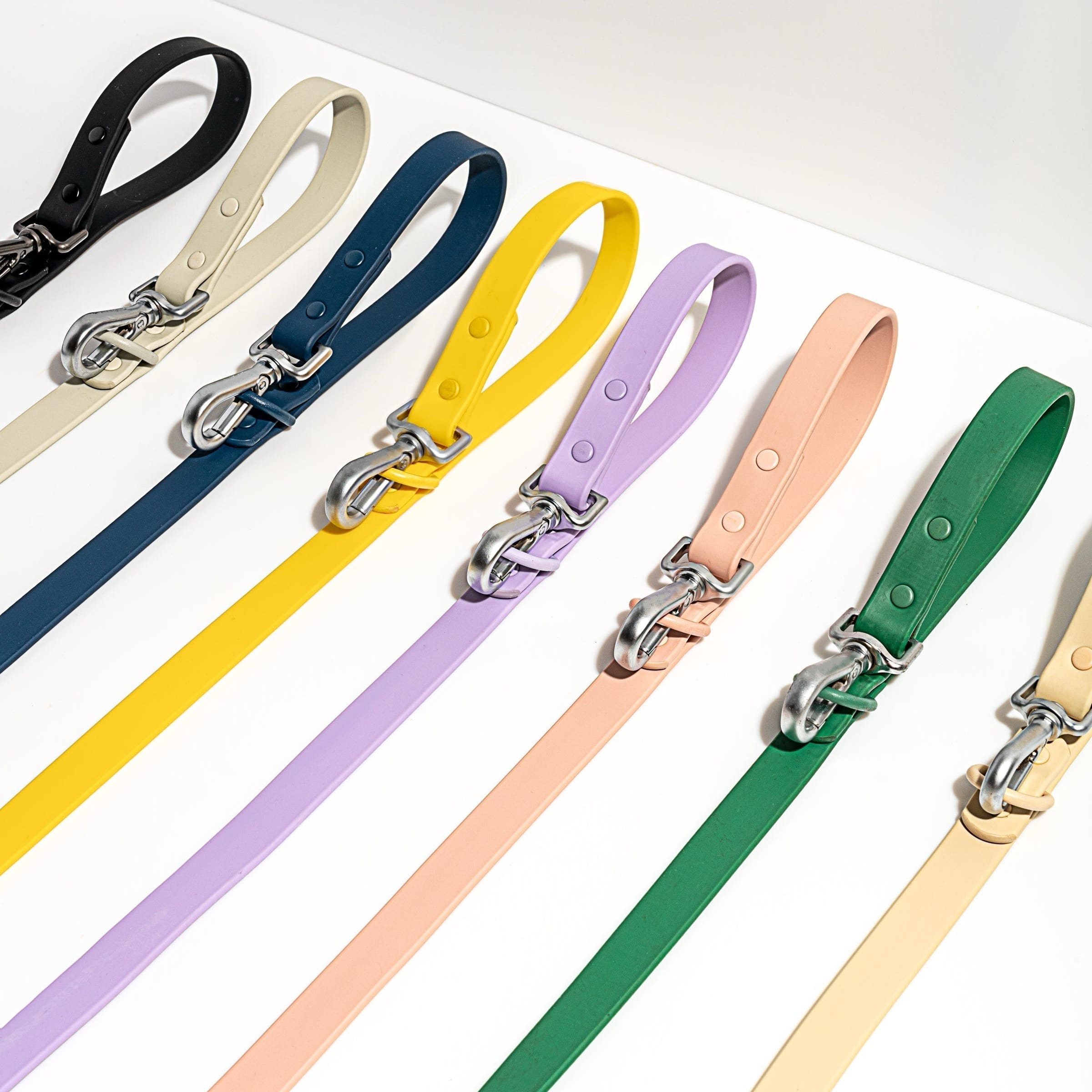
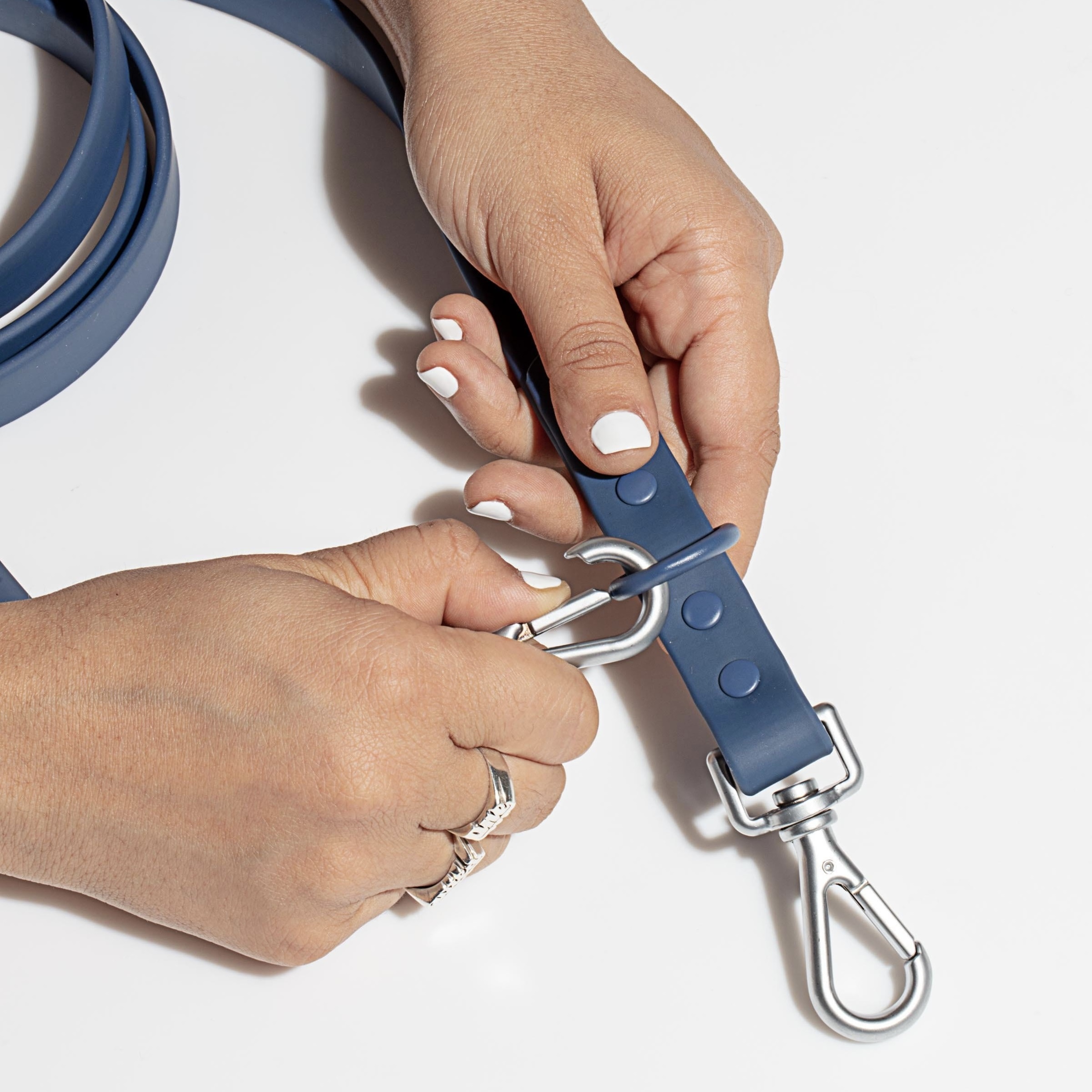
If what you actually want from a rope leash is the strength and the comfortable grip — without the slow-drying, odor-prone downsides — a PVC-coated webbing leash gets you most of the way there from a different direction. It keeps a smooth, easy-clean surface that sheds water instead of soaking it in, so there’s no lingering damp smell after a rainy walk or a trip to the lake.
The MoonianPet Waterproof Dog Leash uses this coated construction with reinforced stitching and a secure metal hook, built to hold up to daily pulling without the fraying that eventually catches up to braided rope. It wipes clean in seconds rather than needing a wash cycle, and it comes in 11 colors if you also want the visual appeal rope leashes are known for.
If you’re deciding between leash materials more broadly, our guide to choosing a dog leash breaks down length, width, and material side by side.

Who a Rope Leash Still Makes Sense For
Rope isn’t a bad choice — it’s a specific one. If you mostly walk in dry conditions, want that rugged aesthetic, and are willing to air-dry and occasionally reseal the ends, a well-made rope leash from a reputable maker will serve you fine for years. Where it tends to disappoint is with dogs who swim often, owners in wetter climates, or anyone who wants a leash they can hose off and forget about rather than one that needs regular care.
Frequently Asked Questions
Are rope leashes stronger than nylon leashes?
A quality climbing-grade rope leash is generally stronger than a thin, flat nylon strap of the same width, since the braided rope structure distributes tension well. But a well-made coated webbing leash with reinforced stitching can match or exceed rope strength while avoiding rope’s moisture and fraying issues.
How do I clean a rope dog leash?
Most rope leashes can be hand washed with mild soap and cool water, then air dried completely before storing — machine washing and drying tends to accelerate fraying. Because rope holds moisture, plan for a longer drying time than you’d expect from a flat webbing leash.
Why does my rope leash smell even after washing?
Rope’s braided structure traps moisture and odor-causing bacteria deep inside the fibers, where surface washing doesn’t always reach. If the smell persists after a proper hand wash and full dry, it’s usually a sign the leash has been damp too many times without fully drying between uses, and a coated, non-absorbent material won’t have the same recurring issue.
Is a rope leash good for a dog that pulls?
The strength of a rope leash makes it a reasonable choice for a strong puller, but the leash material alone won’t stop pulling behavior — it just holds up to it. Pairing any strong leash with a front-clip, no-pull harness addresses the actual pulling rather than just surviving it.
How long does a rope leash typically last?
A well-made rope leash with regular care can last a couple of years, but daily use, frequent wetting, and machine washing shorten that considerably. Fraying at the ends is usually the first visible sign it’s nearing the end of its useful life.
If pulling is the real problem you’re trying to solve, our how to stop a dog from pulling guide covers techniques and gear that address it directly. For chewers, our chew proof dog leash guide covers materials that hold up to teeth as well as pulling.

Wenyue
Wenyue is the founder of MoonianPet and writes about dog collars, harnesses, waterproof pet gear, and everyday dog care. Growing up with dogs inspired her lifelong interest in pet care and practical dog gear. Through MoonianPet, she researches dog collars, harnesses, waterproof materials, and everyday solutions that help active dogs stay comfortable during daily adventures.