
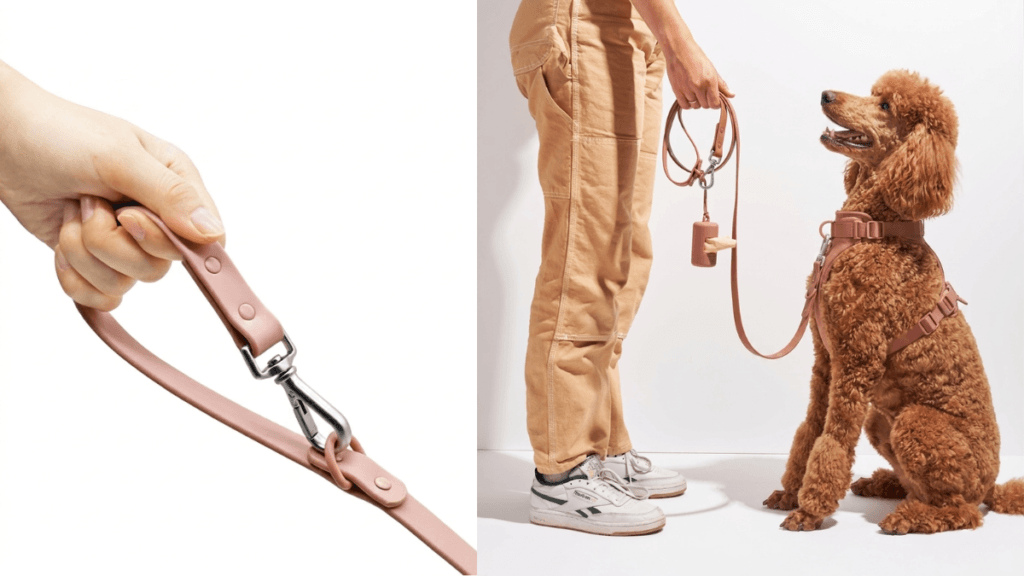
A dog that pulls on the leash turns every walk into a contest. You lean back, they lean forward, and the whole thing becomes an exhausting negotiation that neither of you enjoys. The frustrating part is that pulling is not stubbornness or bad character — it is a dog doing what comes naturally in an environment full of things they want to get to, with no particular reason yet to do otherwise.
The less obvious frustration is that pulling gets worse over time, not better. Every walk where pulling is allowed reinforces the lesson that pulling works. A dog that pulls at six months is almost always a dog that still pulls at three years — and by then, they are considerably stronger. Stopping it requires interrupting that reward loop, and the sooner you start, the easier it is.
Here are five techniques that reliably reduce pulling, what to stop doing that is making it worse, and the gear choices that make the whole process faster and more manageable.
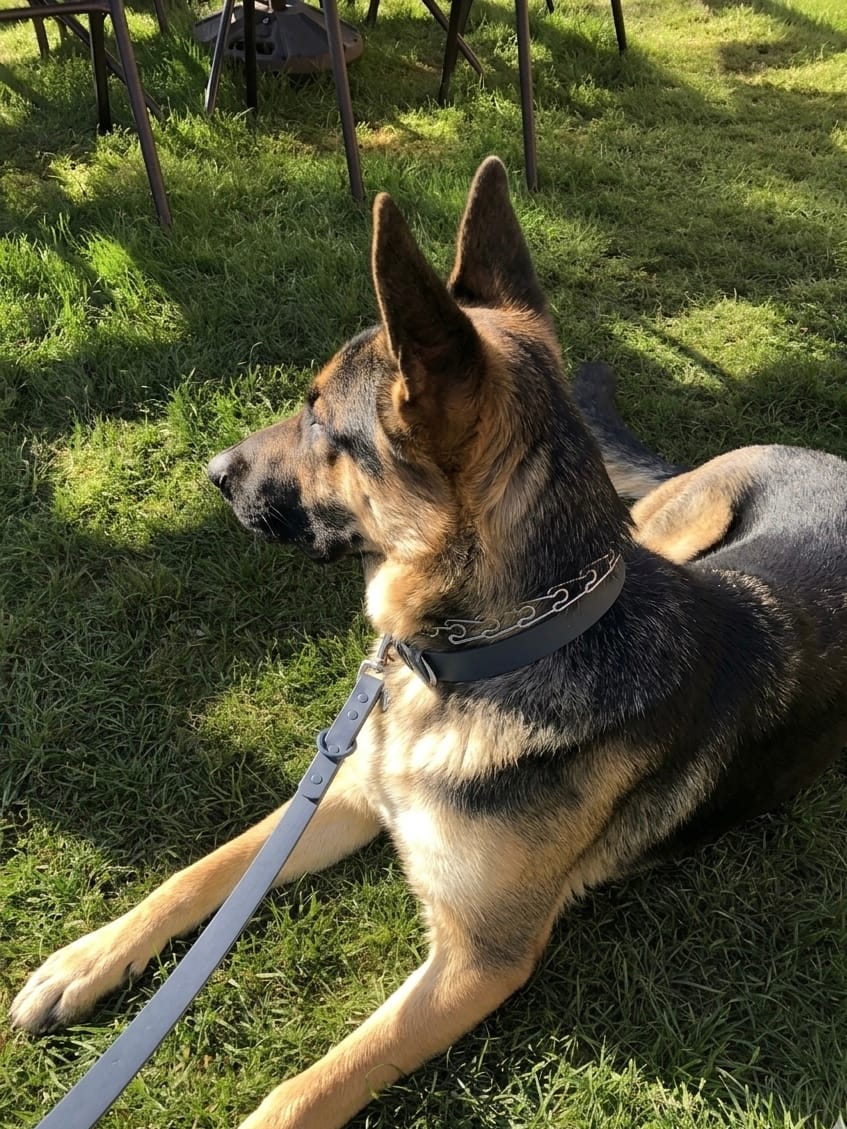
Why Dogs Pull — and Why It Matters for Training
Dogs pull because it works. They want to get somewhere — to a smell, another dog, a person — and walking faster gets them there. If walking faster on a tight leash reliably results in reaching the interesting thing, the dog learns that pulling is the correct strategy. Every walk where pulling is allowed reinforces that lesson.
This means the core of any pulling solution is breaking the connection between pulling and forward progress. The techniques below all work on this principle in different ways — they either make pulling ineffective, redirect the dog’s attention back to you, or change the physical mechanics of the walk so that pulling no longer gets the dog where they want to go.
Technique 1: Stop the Moment the Leash Goes Taut
The most fundamental technique is also the simplest: the moment the leash goes taut, you stop walking entirely. Stand still. Do not pull back, do not say anything, do not move forward. Wait until the dog turns to look at you or takes a step back that creates slack in the leash, then immediately resume walking.
The message this sends is direct: a tight leash means forward progress stops. A loose leash means forward progress continues. Dogs that pull hard are typically very motivated to keep moving, which makes the stopping consequence meaningful — the thing they want only happens when they provide the condition you want.
The first few walks using this method are genuinely painful. You may cover fifty metres in fifteen minutes. Expect it. The improvement comes quickly once the dog makes the connection, but the initial investment in stopping consistently every single time is what teaches the lesson. Inconsistency — stopping sometimes but not always — slows the learning significantly and is the most common reason this technique feels like it is not working.
Technique 2: Change Direction Without Warning
A variation on the stop technique is the direction change: when the dog pulls ahead, turn and walk in the opposite direction before they reach the end of the leash. The dog, focused on what is ahead, suddenly finds you walking away and has to turn and follow to avoid the leash tightening behind them.
The effect is that the dog learns to keep attention on where you are going rather than committing fully to a destination ahead. A dog that is paying attention to your movement cannot also be pulling hard in a fixed direction — the two are in tension. Over time, direction changes train the dog to walk more attentively alongside you rather than independently in front.
Do not announce the direction change — the point is that the dog needs to watch you to know where you are going. Call their name as you turn if needed in the early stages, but the goal is eventually for the dog to notice the change without any cue.
Technique 3: Reward the Position, Not Just the Absence of Pulling
The stop-and-wait technique teaches the dog that pulling does not work. Adding reward for correct position teaches the dog what to do instead. These two approaches work better together than either does alone.
Carry treats on every walk during the training period. When the dog is walking alongside you with a loose leash — not just not pulling, but actively in the position you want — mark the moment with a word like “yes” and deliver a treat. The dog learns that the position beside you produces good things, rather than just learning that pulling forward produces nothing.
Reward the instant the dog is in the correct position, not after several seconds of correct walking — the dog needs to understand exactly what behaviour earned the treat. As the behaviour becomes reliable, the treats can be delivered less frequently, but in the early stages, frequent precise rewards accelerate learning significantly.
Technique 4: Use a Front-Clip Harness to Change the Mechanics
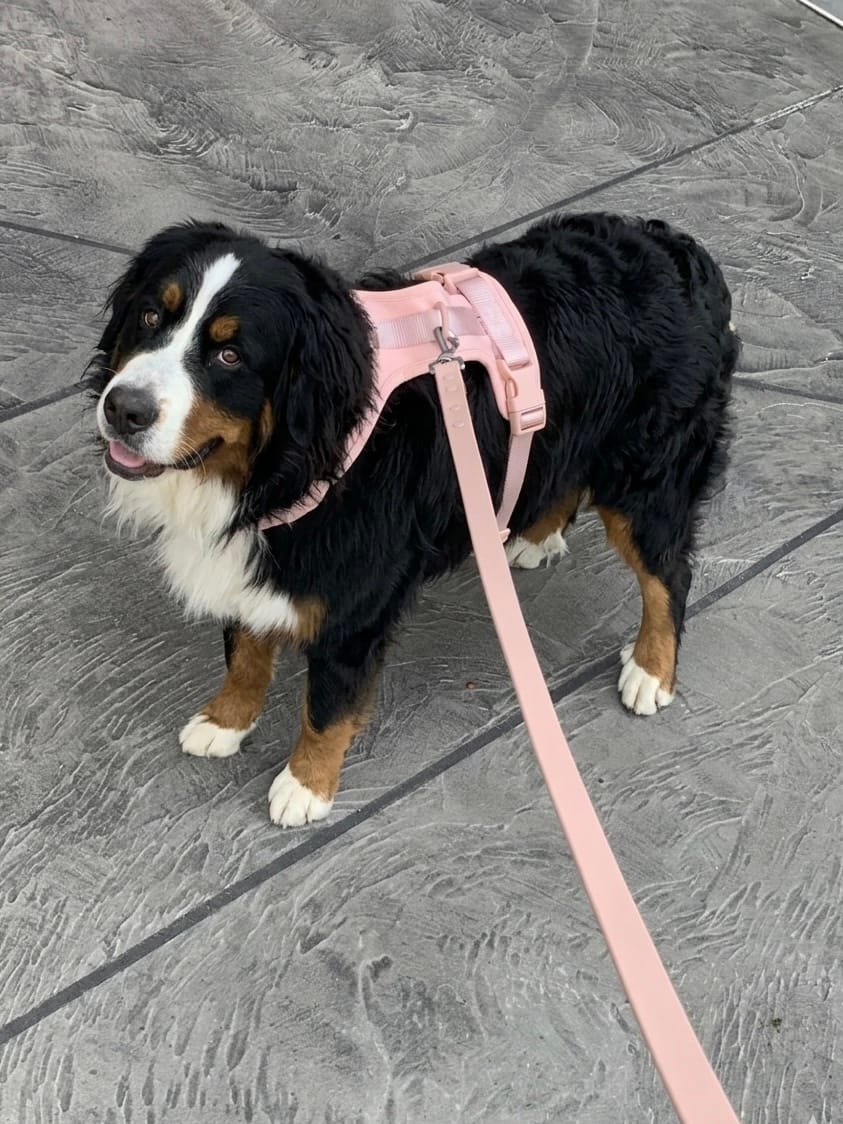
The techniques above are training approaches — they change the dog’s behaviour through learning. A front-clip no-pull harness works differently: it changes the physical mechanics of pulling so that the behaviour becomes less effective regardless of what the dog is trying to do.
When the leash is attached to a front chest ring, a dog that pulls forward creates lateral pressure across the chest rather than pure forward pull. This turns the dog’s body sideways rather than allowing them to lean into the pull. The dog is not prevented from moving forward, but the mechanics of pulling are altered so that full forward thrust is not possible in the same way.
For strong pullers — particularly larger breeds — this mechanical change makes the training process significantly more manageable. The handler is not fighting the dog’s full strength on every step, which makes the stop-and-wait and reward techniques easier to apply consistently.
The MoonianPet No-Pull Dog Harness has both a front chest ring and a back D-ring, so you can switch between front-clip for training walks and back-clip for calmer outings as the dog’s behaviour improves. The neoprene padding distributes pressure evenly across the chest rather than concentrating it at a single point. Not sure which size? The dog harness size guide covers measurement in under two minutes.
Technique 5: Train Attention Before You Need It on Walks
Dogs that pull on walks are often dogs that have not been taught that paying attention to their owner is a worthwhile behaviour. Training attention separately — in a low-distraction environment first, then gradually in more stimulating settings — builds the foundation that makes loose leash walking easier to achieve.
Start indoors or in a quiet garden. Hold a treat at your side and wait. When the dog makes eye contact with you — even briefly — mark and reward. Gradually increase the duration of eye contact required before the reward. Once the dog is reliably checking in with you in a calm environment, practice the same exercise in slightly more distracting settings: outside the front door, in a quiet car park, near a park entrance.
The goal is a dog that regularly glances back at you during a walk — a dog paying attention to you cannot also be fully committed to pulling toward something else. This attention habit, built in low-distraction settings, transfers to walks over time and makes all the other techniques easier to apply.

What Not to Do
These are the approaches that feel intuitive but actively slow down the training process:
Holding the leash short and tight the whole walk
A constantly tight leash feels like control but teaches the dog nothing about loose leash walking — there is no loose leash moment to reward, and the dog learns to walk against constant pressure rather than to seek the slack. Keep the leash at a length where loose is genuinely possible, and let it go loose when the dog is in position.
Repeating commands the dog is already ignoring
“Heel, heel, heel” repeated while your dog surges forward teaches them that “heel” is background noise during exciting moments. Commands should be said once — if the dog does not respond, address the situation rather than repeating the cue until it loses meaning entirely.
Using a retractable leash
A retractable leash is under constant tension. This means the dog is always walking against slight resistance — and the leash rewards pulling by extending further. It is the opposite of loose leash training and will undo consistent work done on a standard leash. If you use a retractable leash for any part of your walks while training, the lesson does not transfer.
The Right Gear Makes Training Easier
Training techniques do the real work, but the right gear makes the process more manageable — particularly in the early stages when the dog is still pulling regularly and every walk involves physical effort.
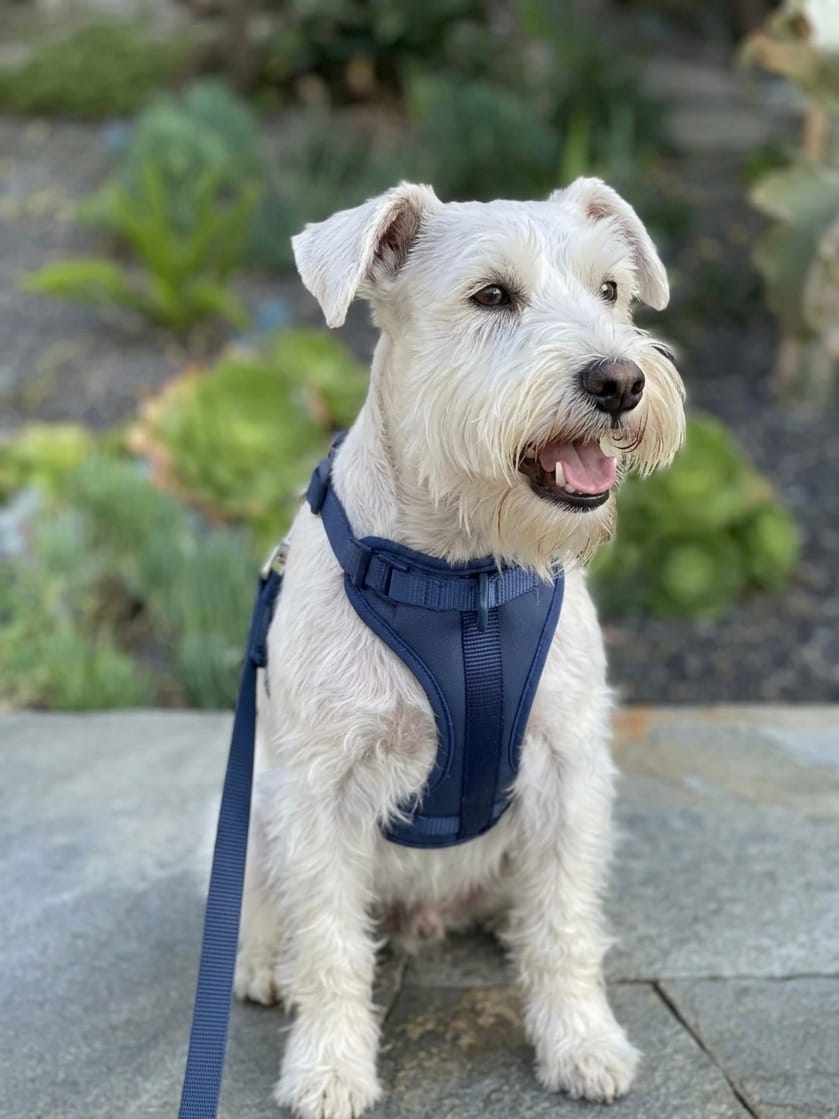
The MoonianPet No-Pull Dog Harness is built for this training period. The front chest ring redirects pulling sideways; the neoprene padding keeps it comfortable during the frequent stops and starts of training walks; and the four adjustment points ensure a secure fit across a wide range of body shapes. Available in 11 colors and five sizes, XS through XL.
Pair with the Harness & Leash Set for a matched setup, or add the MoonianPet Waterproof Leash separately. Need sizing help? The dog harness size guide walks you through measuring in under two minutes.
Frequently Asked Questions
How long does it take to train a dog to stop pulling?
It varies by dog, age, and how consistently the training is applied. Most dogs show noticeable improvement within two to four weeks of consistent daily training walks — meaning every walk, not occasional ones. Puppies often learn faster than adult dogs because they have less established pulling habit to undo. Adult dogs that have been pulling for years may take longer, but improvement is still achievable. The most common reason training takes longer than expected is inconsistency — allowing pulling sometimes while correcting it other times significantly extends the learning period.
Does a no-pull harness stop pulling permanently?
A front-clip no-pull harness manages pulling while it is on — it does not train the dog out of pulling. If you remove the harness and attach the leash to a collar, the pulling typically returns. That is why combining the harness with the training techniques above gives better long-term results than the harness alone: the harness makes each walk manageable while the training builds the habit of loose-leash walking that eventually transfers to any attachment point.
My dog only pulls toward other dogs. Is this different to fix?
Pulling toward other dogs is a specific version of the same problem, but the distraction level is much higher, which means training needs to start at a distance where the dog can still respond to you. Begin working at the distance where your dog notices other dogs but is not yet fully committed to the pull, and gradually decrease the distance as the behaviour improves. A front-clip harness is particularly useful here because the sideways redirection gives you more physical control in close encounters.
Should I use a collar or harness for a dog that pulls?
For a dog that pulls regularly, a front-clip harness is a safer choice than a collar. Sustained pulling against a collar puts pressure on the trachea and neck — particularly harmful for small breeds, brachycephalic breeds, and dogs with any neck issues. A harness distributes the pressure across the chest and shoulders, which are better equipped to handle the load. Our collar vs harness guide covers this comparison in full.
Can an older dog learn to stop pulling?
Yes — older dogs can and do learn to walk on a loose leash. The process may take longer because the pulling behaviour is more established, but the same techniques work. The key adjustment for older dogs is patience with the timeline and keeping training sessions shorter and more frequent rather than long and exhausting. A front-clip harness is particularly helpful for older dogs because it reduces the physical effort required from both the dog and the handler during the training period.
For more on choosing the right harness for training walks, see our guide to front clip vs back clip dog harness. If you are starting leash training from scratch with a new puppy, our puppy’s first walk guide covers the early weeks in detail.
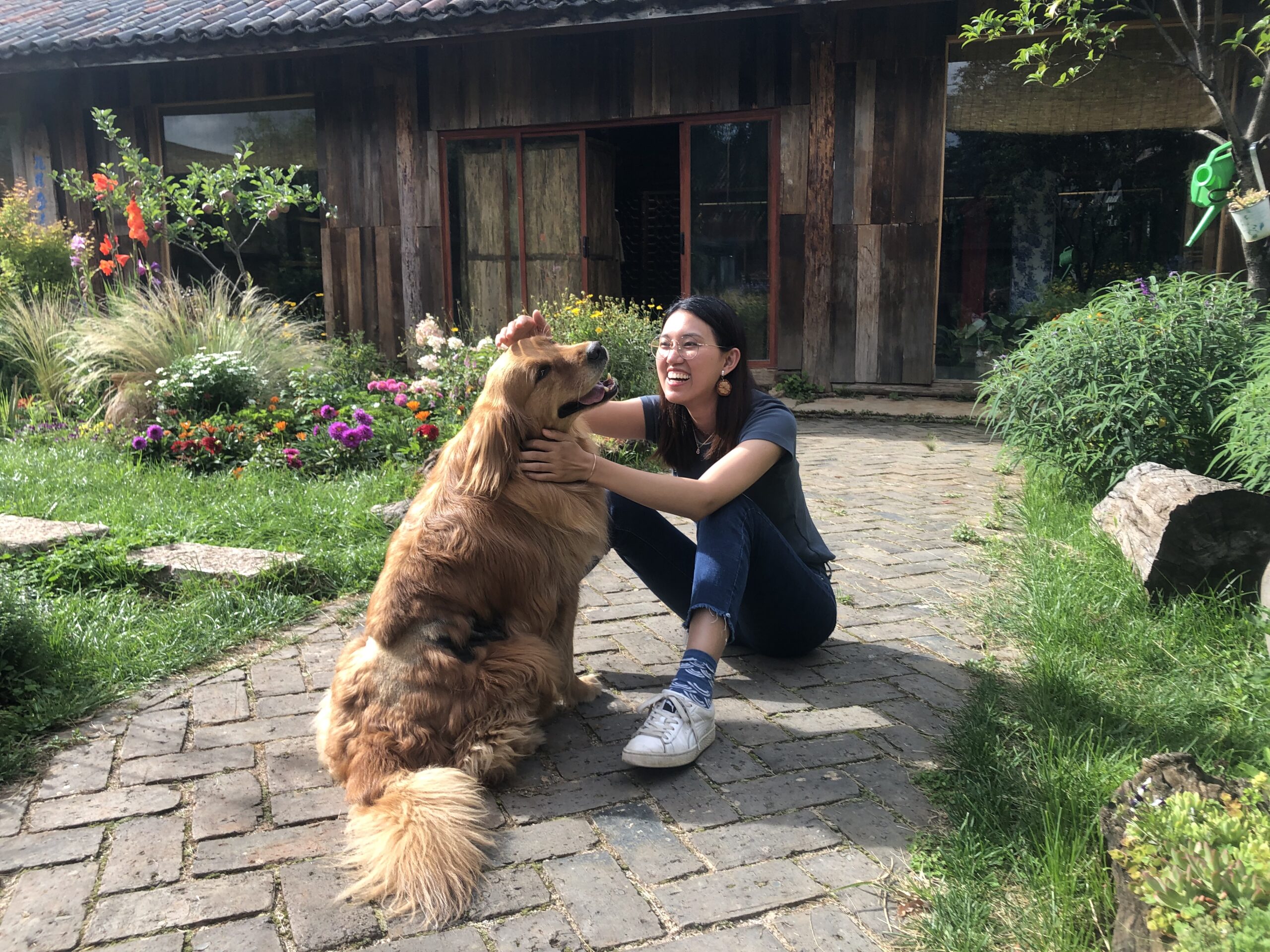
Wenyue
Wenyue is the founder of MoonianPet and writes about dog collars, harnesses, waterproof pet gear, and everyday dog care. Growing up with dogs inspired her lifelong interest in pet care and practical dog gear. Through MoonianPet, she researches dog collars, harnesses, waterproof materials, and everyday solutions that help active dogs stay comfortable during daily adventures.