
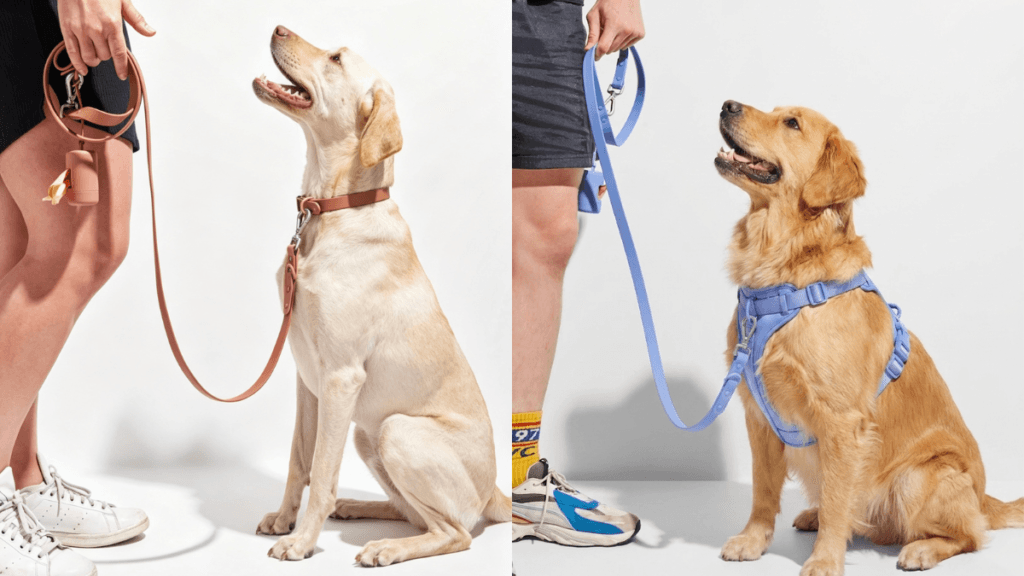
Walk into any pet shop and you will find an entire wall of collars and harnesses. Both clip to a lead. Both keep your dog with you. But beyond that, they work very differently — and choosing the wrong one for your dog’s size, breed, and behaviour can make walks harder than they need to be.
The collar vs harness debate does not have a single right answer. It depends on your dog’s age, build, tendency to pull, and how you walk together. Some dogs do better in one; some dogs genuinely need both. This guide breaks down exactly how collars and harnesses compare across every factor that matters — so you can make the right call for your dog.
Collar vs Harness: What Is Actually Different?
A dog collar fits around the neck. When your dog pulls or the lead goes taut, the pressure is concentrated at the neck. A harness distributes that same pressure across the chest and shoulders — a much larger surface area with no vulnerable structures like the trachea or spine in the way.
That single difference in pressure distribution is what drives most of the practical differences between the two. Everything else — ease of use, control, suitability for different dogs — flows from there.
Both have legitimate uses. Neither is universally better. The goal is matching the right tool to the right dog in the right situation.
The Case for Collars
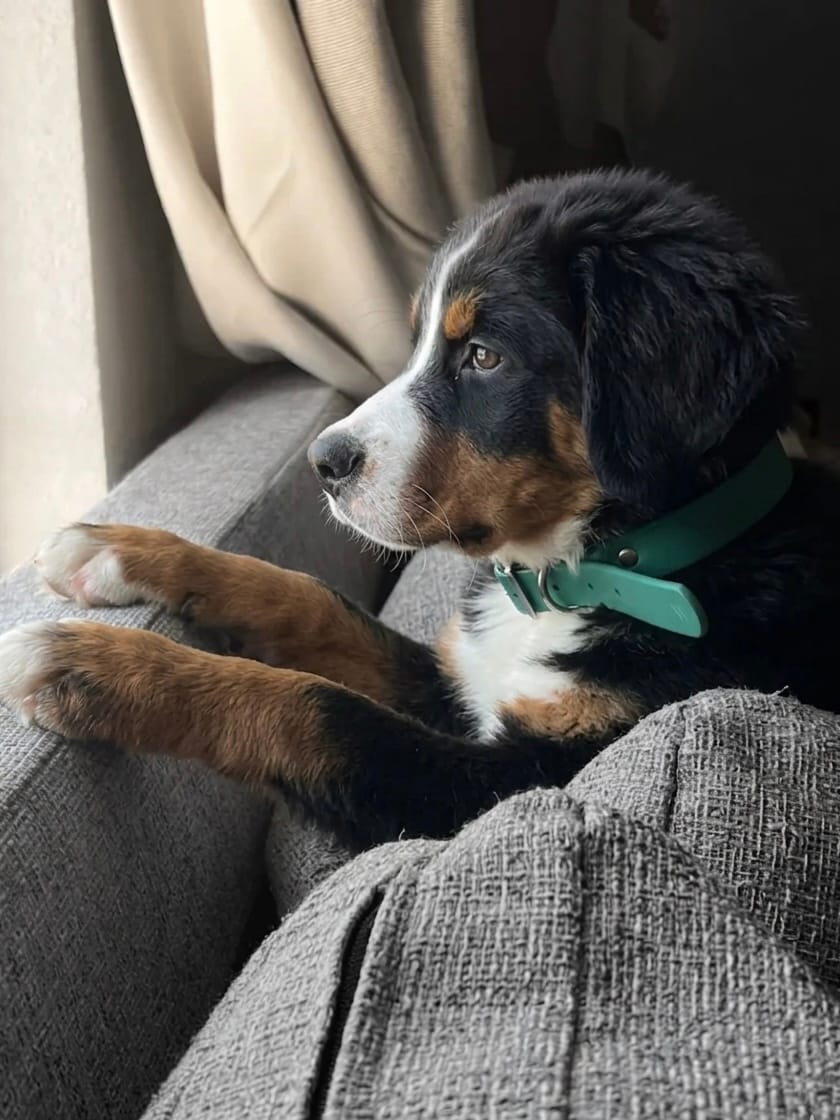
Collars have been the default dog accessory for centuries — and for good reason. They are simple, lightweight, and serve a function that harnesses do not: they carry your dog’s ID tags and registration. Most countries legally require dogs to wear identification when out in public, and a collar is the standard way to do this.
For calm dogs that walk without pulling, a flat collar is all you need. It sits comfortably at the neck, clips to a lead, carries tags, and stays on 24/7 without any fuss. The simplicity is genuinely valuable — nothing to put on before a walk, nothing to adjust, nothing to forget.
Collar material matters more than most people realise. A nylon collar that gets wet and stays damp against the skin for hours creates a persistent bacterial environment — which is why so many collars develop that unmistakable musty smell after a few months. Our post on whether nylon is safe for dogs covers exactly what happens to skin and coat under a fabric collar over time.
A waterproof coated webbing collar — like the MoonianPet Waterproof Dog Collar — solves these problems. The sealed PVC surface repels moisture, will not develop odour, and sits smoothly against the neck without the abrasive texture of woven nylon. If your dog swims, see our guide on the best dog collar for swimming for what to look for.
Collars work best for:
Dogs that walk calmly without pulling. All-day ID tag wearing. Dogs that swim or get wet regularly (waterproof collar essential). Simple, low-maintenance everyday wear. Dogs that dislike the sensation of a harness around their body.
 |
 |
The Case for Harnesses
A harness becomes the right choice the moment pulling enters the picture. When a dog pulls against a collar, the force is concentrated on the trachea and the delicate structures of the neck. For most dogs, occasional light pressure is not a serious concern — but for dogs that pull consistently and hard, the cumulative pressure on the neck and spine is a genuine welfare issue.
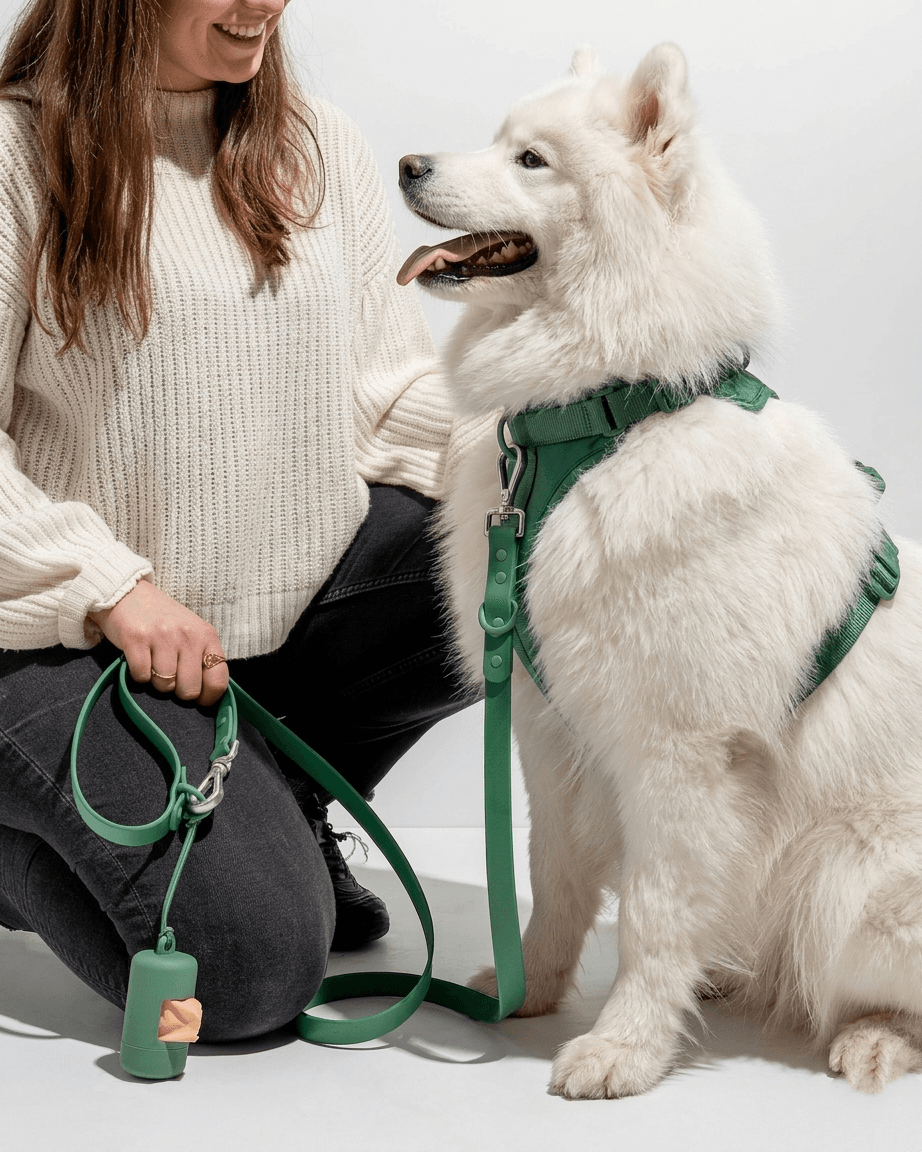
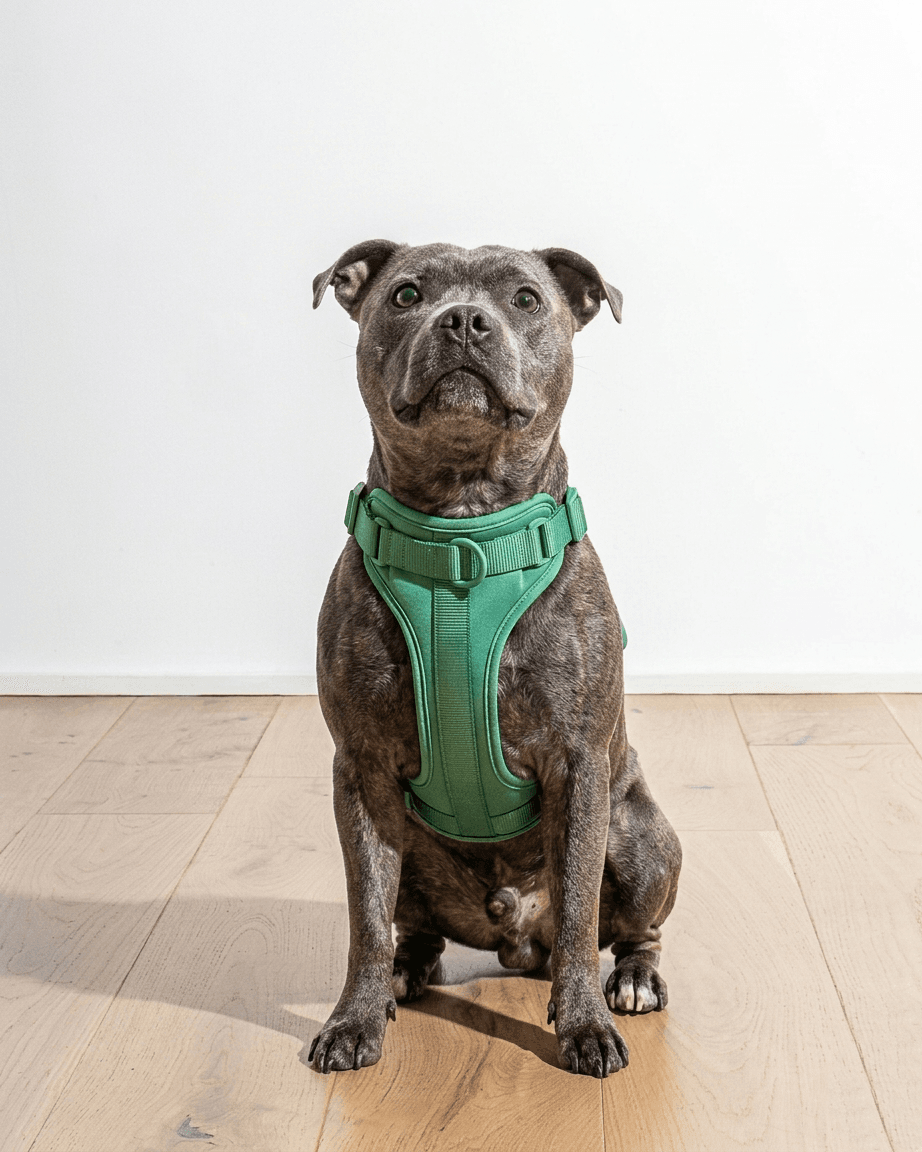
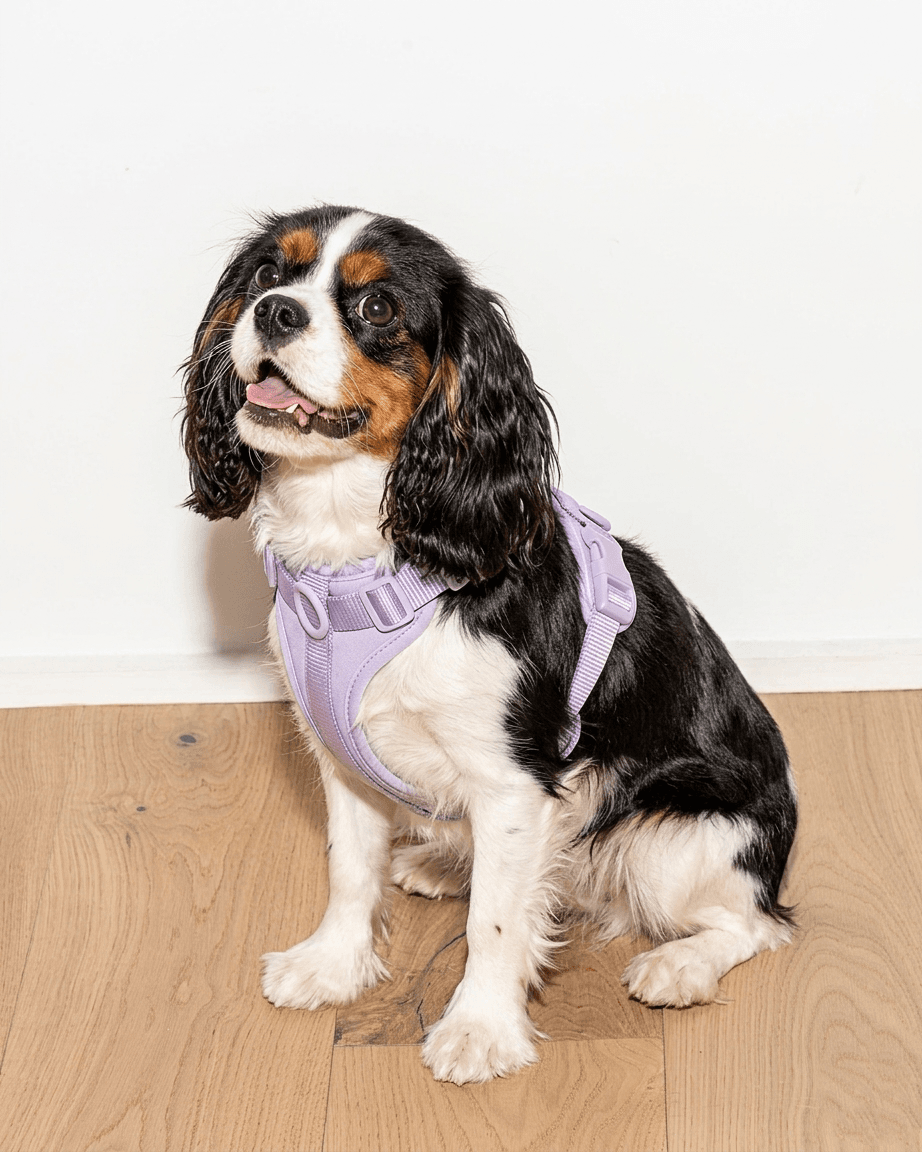
A well-fitted harness moves that pressure to the chest and shoulders. There are no vulnerable structures in the way. Your dog can pull without risking damage to their throat, and you maintain control without feeling like you are choking them every time they lunge at a squirrel.
Front-clip harnesses go further — they change the physics of pulling entirely. When the lead attaches at the chest rather than the back, a pulling dog is redirected sideways rather than allowed to power forward. Most dogs find this counterintuitive enough that it naturally discourages pulling without any training intervention. The MoonianPet No-Pull Dog Harness uses exactly this principle — a front D-ring for pullers and a back D-ring for calm daily walks, giving you both options in one harness.
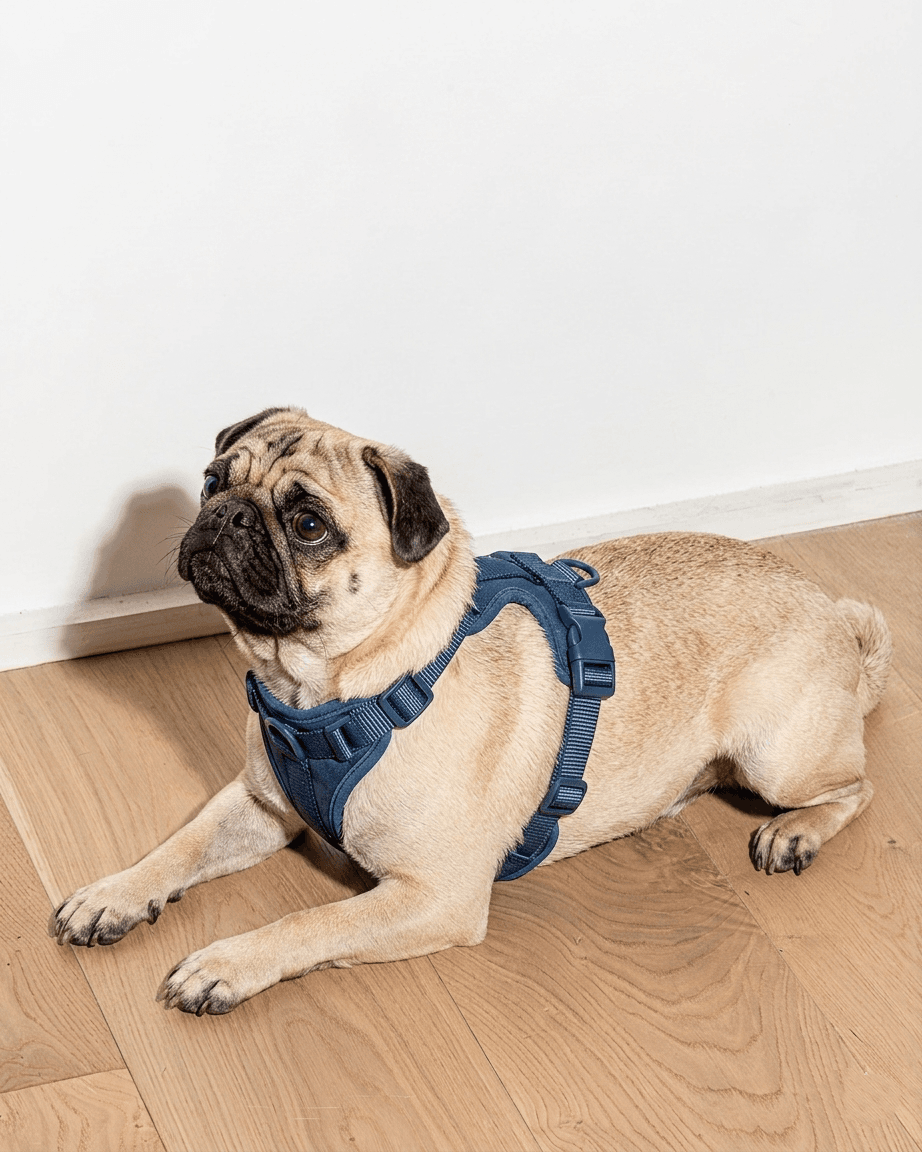
Harnesses are also the right choice for specific breeds — flat-faced dogs like Bulldogs and Pugs, whose compressed airways make any neck pressure uncomfortable; small dogs like Chihuahuas and Yorkshire Terriers, whose delicate tracheas are vulnerable to collar pressure; and Greyhounds and Whippets, whose narrow heads mean a collar can slip over the head easily.
Harnesses work best for:
Dogs that pull on the lead. Flat-faced breeds (Bulldogs, Pugs, French Bulldogs). Small breeds with delicate tracheas (Chihuahuas, Yorkshire Terriers). Dogs recovering from neck or spine injuries. Puppies still learning to walk on a lead. Dogs prone to slipping out of collars.
 |
 |
Collar vs Harness: Side-by-Side Comparison
| Factor | Collar | Harness |
|---|---|---|
| ID tag attachment | Yes, standard | No, not designed for tags |
| Good for pullers | No, neck pressure risk | Yes, chest distribution |
| Ease of use | Yes, always on | Put on before walks |
| Flat-faced breeds | No, airway risk | Yes, recommended |
| Escape-proof | Risk with slim-headed breeds | Yes, more secure overall |
| Suitable for swimming | Yes, with waterproof collar | Check material first |
| 24/7 wear | Yes, designed for this | No, remove when unsupervised |
| No-pull training | No, limited effect | Yes, front clip redirects pulling |
| Puppies | For ID only | Yes, better for lead training |
Do You Need Both? The Case for Using Collar and Harness Together
Many experienced dog owners use both — and this is often the most practical approach. Here is why it works:
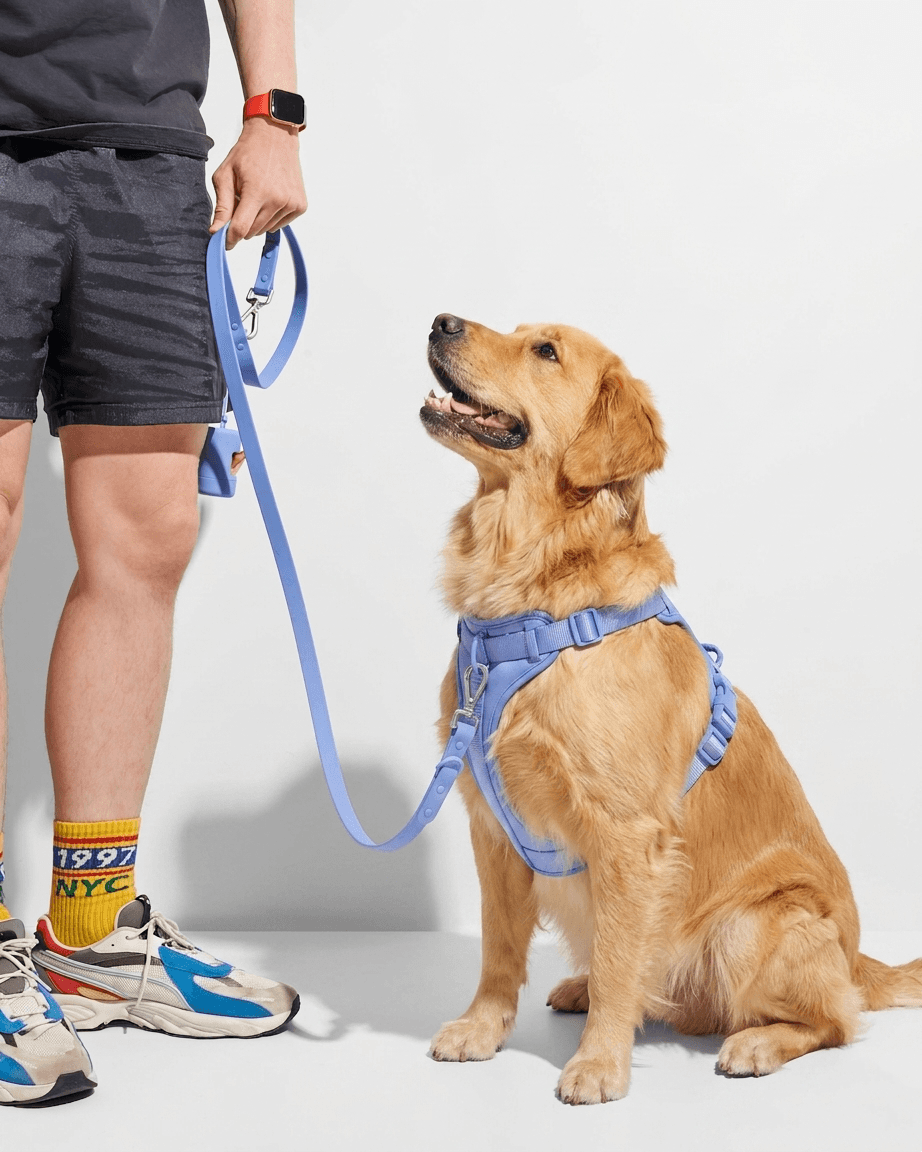
A collar stays on all the time and carries ID tags. The harness goes on for walks, providing better control and removing lead pressure from the neck. When you get home, the harness comes off — the collar stays on. Your dog always has identification, and you always have proper walking control.
Some owners also clip the lead to both the harness and collar simultaneously as a safety backup — particularly useful for dogs that are escape artists or in high-traffic areas. If one attachment point fails, the other holds.
The MoonianPet No-Pull Harness and Waterproof Collar are designed to work together — available in matching colours so your dog’s gear coordinates without looking mismatched. Pair them with our Waterproof Dog Leash for a complete, cohesive setup.
How to Choose: A Simple Decision Guide
Choose a collar if:
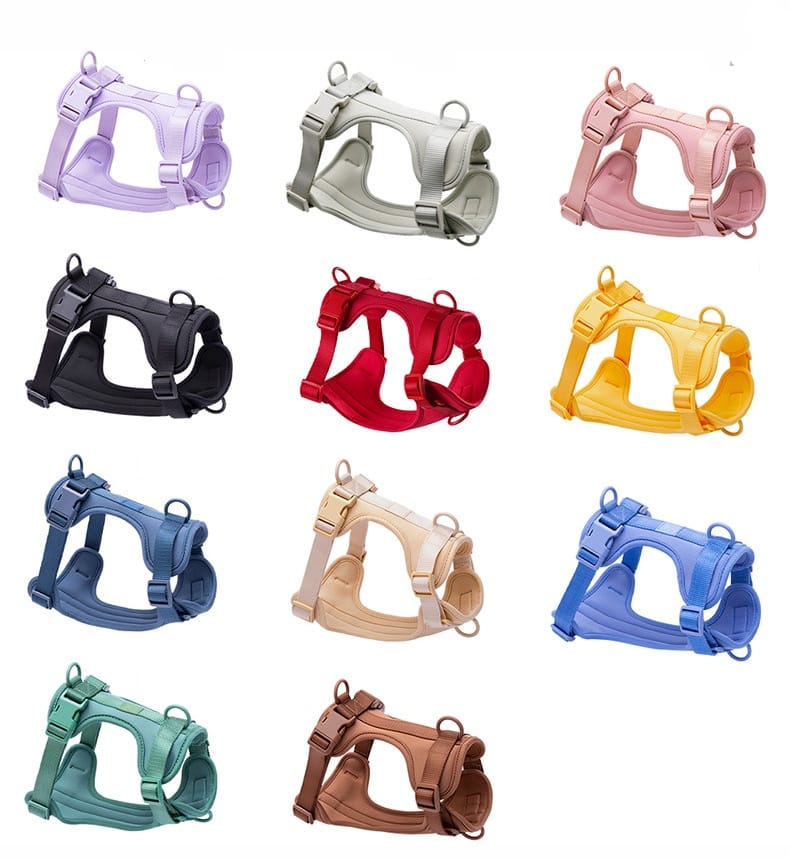
Your dog walks calmly without pulling, you need all-day ID tag wear, or your dog is an active swimmer — in which case a waterproof coated webbing collar is essential. Not sure which size? Our collar sizing guide walks you through measuring in under a minute. For colour options, our collar colour guide covers all 11 shades.
Choose a harness if:
Your dog pulls on the lead, is a flat-faced breed, has a delicate trachea, or is a puppy still learning to walk. The MoonianPet No-Pull Harness has a front D-ring for active pullers and a back D-ring for calmer walks. Not sure about sizing? Our harness sizing guide covers chest measurement and fit checks.
Use both if:
You want the best of both worlds — ID tags on the collar at all times, harness for walking control. This is what most experienced dog owners do, and it is the most practical long-term setup for any active dog.
Getting the Fit Right
Fit matters more for a harness than a collar. A poorly fitted harness can rub, restrict movement, or — if too loose — allow your dog to back out of it entirely. The key measurement for a harness is chest girth at the widest point behind the front legs, not neck size.
For collars, the standard rule is the two-finger test — you should be able to slide two fingers flat under the collar, but no more. Our full guide on how to measure your dog for a collar covers this in detail, including a full size chart.
For the MoonianPet No-Pull Harness specifically, measure chest girth and refer to our harness sizing guide for a full step-by-step walkthrough. If your dog falls between sizes, size up — the three-point adjustment system gives you room to fine-tune the fit.
Shop the MoonianPet Walking Range
Whether you are looking for a collar, a harness, or both — MoonianPet has the complete setup. All products are available in matching colours and ship worldwide.
Frequently Asked Questions
Is a harness better than a collar for dogs that pull?
Yes, for most dogs. A harness distributes lead pressure across the chest and shoulders rather than concentrating it on the neck — which is safer and more comfortable for a dog that pulls regularly. A front-clip harness goes further by redirecting pulling momentum sideways, which naturally discourages the behaviour. See our full guide on the best harness for dogs that pull for more detail.
Can my dog wear a collar and harness at the same time?
Yes, and many owners do exactly this. The collar carries ID tags and stays on 24/7; the harness goes on for walks and comes off at home. Some owners also clip the lead to both simultaneously as a safety backup in busy areas.
Should puppies wear a collar or harness?
Both — a collar for ID tags, and a harness for lead walking. Puppies are still learning to walk on a lead, and a harness is more forgiving during the pulling and lunging phase of training. It also removes pressure from the neck during the critical growth period when bones and trachea are still developing.
Can my dog sleep in their harness?
No — harnesses should be removed during crate rest and unsupervised sleep. Unlike a flat collar, a harness has multiple straps and adjustment points that can catch on crate bars or bedding. A lightweight flat collar is safe for overnight wear; a harness is not.
What collar material is best for everyday wear?
Coated webbing is the best option for everyday wear. It is smooth against skin, does not absorb moisture, will not develop odour, and maintains its fit for years. For a full breakdown of collar materials, our guide on what dog collars are made of covers every option. For swimming dogs specifically, see our best dog collar for swimming guide.
Are harnesses suitable for flat-faced breeds?
Yes — harnesses are strongly recommended for flat-faced breeds like Bulldogs, Pugs, and French Bulldogs. Their compressed airways mean any pressure on the neck can restrict breathing significantly. A well-fitted harness keeps all lead pressure away from the neck entirely.
Still figuring out sizing? Our collar sizing guide and harness sizing guide both walk you through measuring in under a minute. And if you are choosing between collar materials, our full dog collar material guide covers nylon, leather, and coated webbing side by side.
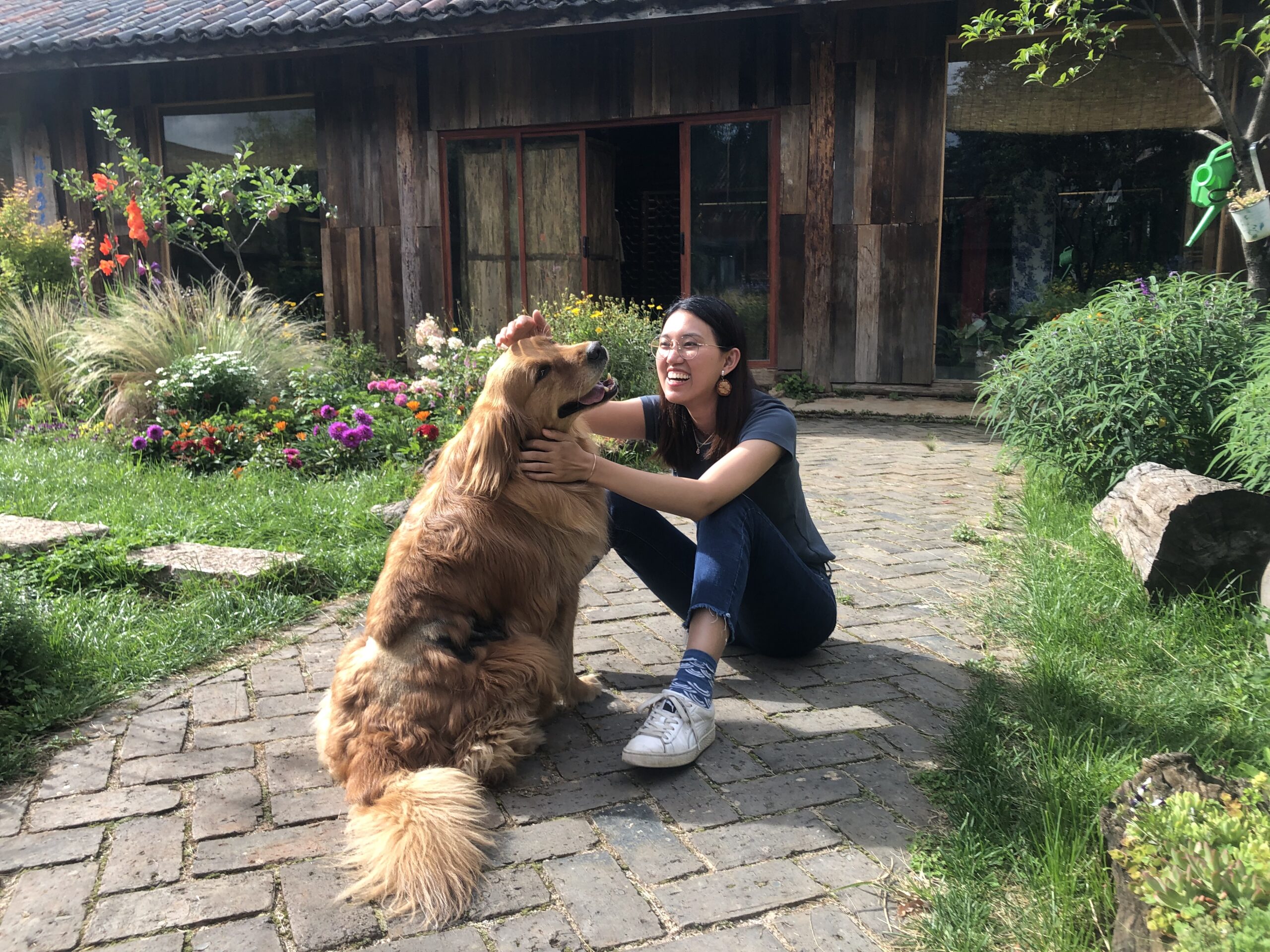
About the Author
Wenyue
Wenyue is the founder of MoonianPet and writes about dog collars, harnesses, waterproof pet gear, and everyday dog care.
Growing up with dogs inspired her lifelong interest in pet care and practical dog gear. Through MoonianPet, she researches dog collars, harnesses, waterproof materials, and everyday solutions that help active dogs stay comfortable during daily adventures.