MoonianPet waterproof dog collars in 5 sizes XS to XL — husky portrait, neck closeup, and golden retriever wearing PVC coated collar

How to Measure Your Dog for a Collar: The 2-Finger Rule Explained

You’ve found a collar you love. The colour is perfect, the material looks great — and then you hit the size dropdown and freeze. S? M? What does that even mean for your dog?

Getting collar size wrong is one of the most common pet-owner mistakes. Too tight and the collar causes discomfort, restricts breathing, and can damage the coat. Too loose and a determined dog can back out of it in seconds — which is a real safety issue on a busy street.

The good news: measuring your dog’s neck for a collar takes about 30 seconds and one piece of soft tape. In this guide we’ll walk through exactly how to do it, what the 2-finger rule means, and how to match your measurement to the right collar size — including our full size chart for the MoonianPet Waterproof Dog Collar.

What You’ll Need

All you need is a soft fabric measuring tape — the kind used in sewing. If you don’t have one, a piece of string works perfectly: wrap it around your dog’s neck, mark where it meets, then lay it flat against a ruler.

Do not use a rigid metal tape measure. You want to follow the curve of the neck, not span it in a straight line.


Husky wearing a gray waterproof dog collar from MoonianPet — shown to illustrate proper collar fit and positioning

How to Measure Your Dog’s Neck: Step by Step

Step 1 — Find the right spot

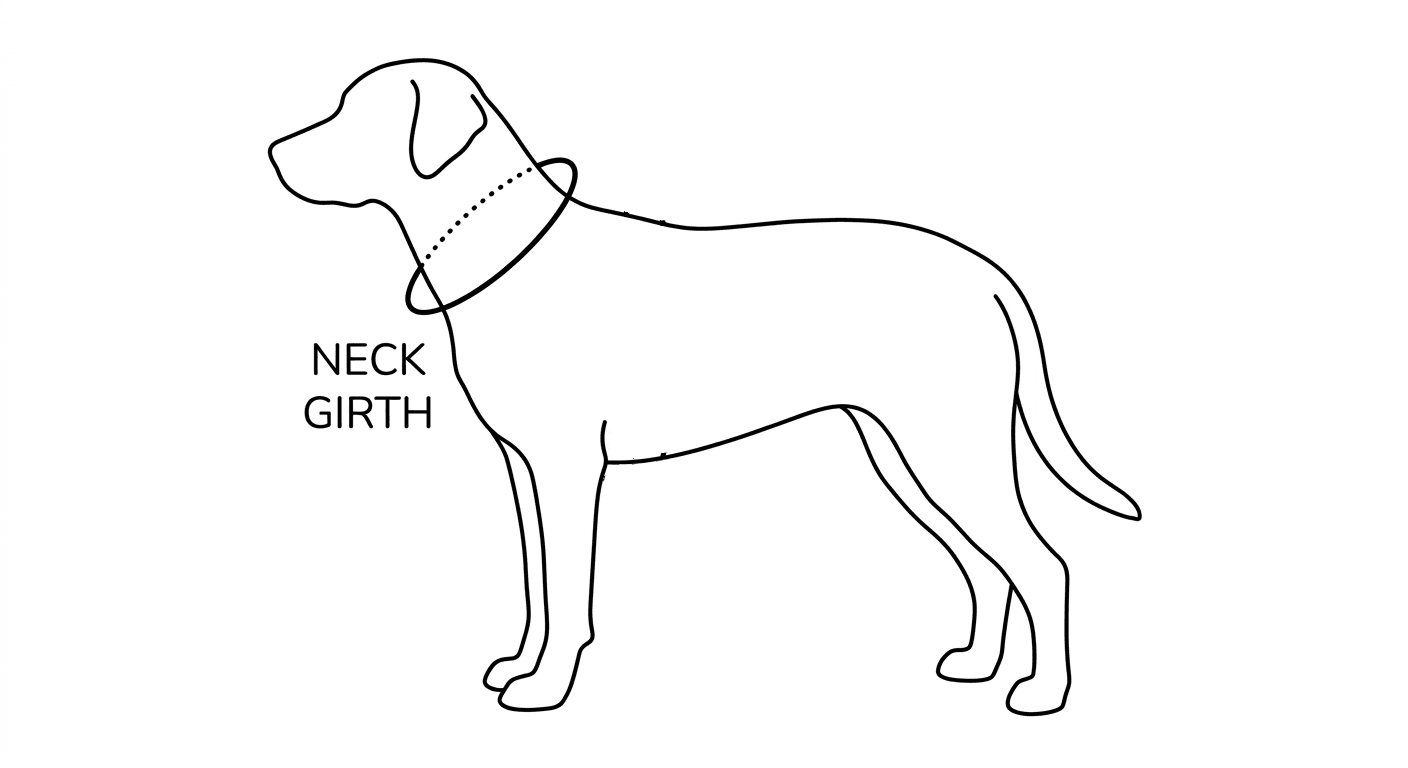
Measure at the base of the neck, just above the shoulders — not around the narrowest part of the throat. This is where a flat collar naturally sits during walks, and it’s typically the widest point of the neck area you’re fitting.

Step 2 — Wrap snugly, not tightly

Wrap the measuring tape around the neck so it sits flat against the coat — firm contact, but not pulling the skin. Your dog should be relaxed and standing upright if possible. If your dog moves around, get someone to help hold them steady.

Step 3 — Note the measurement

Read the number where the tape meets itself. Write it down in both inches and centimetres if possible — different size charts use different units. This raw neck circumference is your starting point.

Step 4 — Add the 2-finger allowance

Slide two fingers (index and middle) flat under the tape, between the tape and your dog’s neck. The collar should fit so that two fingers slide comfortably but the collar doesn’t hang loose. This is the 2-finger rule — your final target measurement includes this gap.


Close-up of a dog's neck wearing a navy waterproof coated webbing collar from MoonianPet, showing correct collar fit and positioning

The 2-Finger Rule: Why It Matters

The 2-finger rule has been the standard collar-fitting guideline for decades, and it exists for a simple reason: a collar that fits perfectly on a relaxed dog may feel tight when the dog pulls, pants, or swallows. The two fingers of slack account for natural movement and breathing.

One finger is too snug for most dogs — fine for calm, indoor dogs but uncomfortable on walks. Three fingers is too loose for most breeds — a determined dog can reverse out of the collar in seconds. Two fingers is the sweet spot.

There is one exception worth noting: for large, deep-chested breeds (Greyhounds, Whippets, Salukis), the neck is often narrower than the head, which means a standard flat collar can slip over the head if it’s loose enough to follow the 2-finger rule. These breeds often need a wider collar or a martingale-style design. For all other breeds, the 2-finger rule applies reliably.

It’s also worth remeasuring seasonally. Dogs’ necks change slightly with coat growth, weight changes, and age — particularly in growing puppies. A collar that fitted perfectly in spring may need adjusting by autumn.


Hand holding a gray MoonianPet waterproof PVC-coated dog collar, showing the smooth leather-like texture and zinc alloy buckle detail

MoonianPet Collar Size Chart

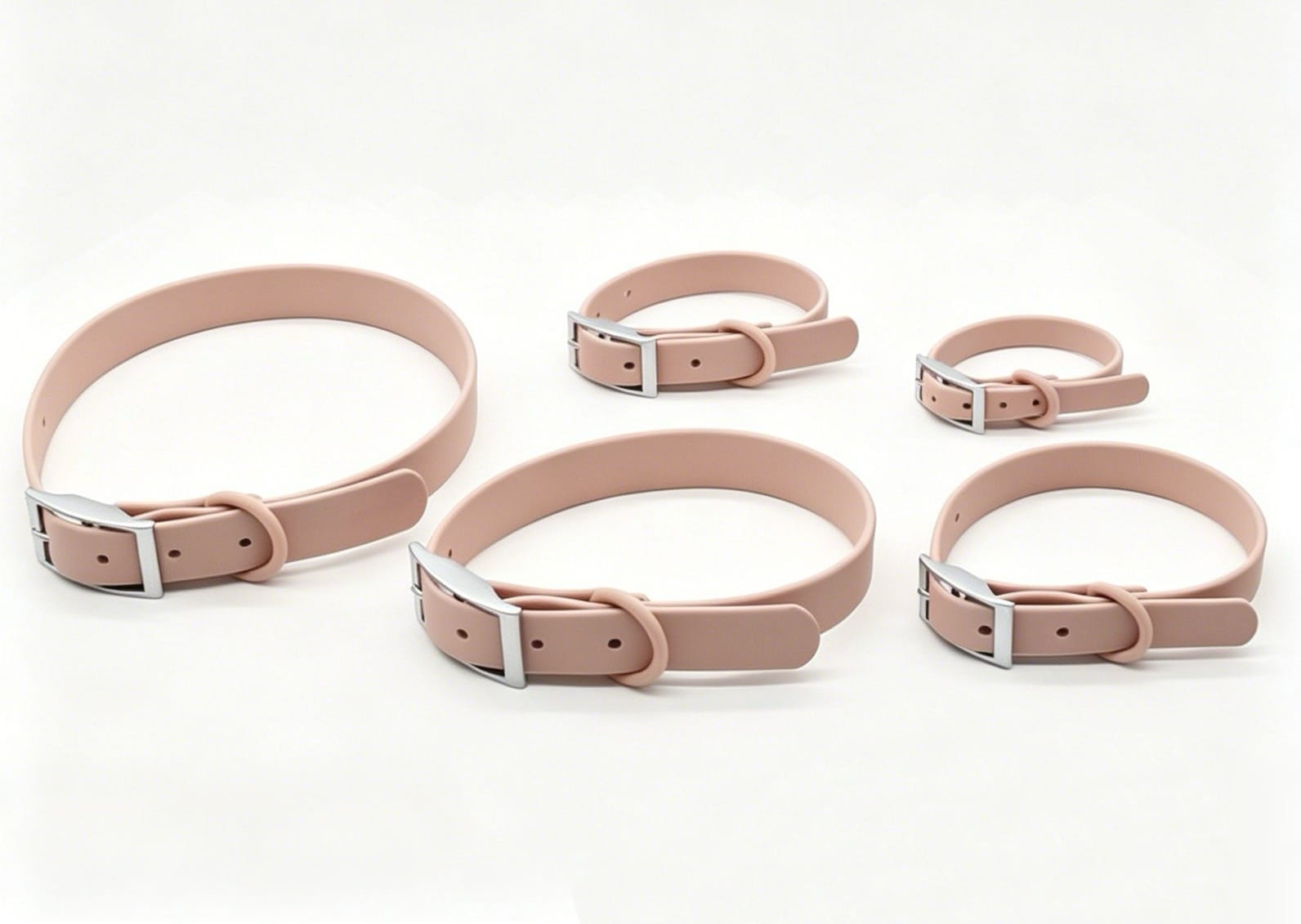
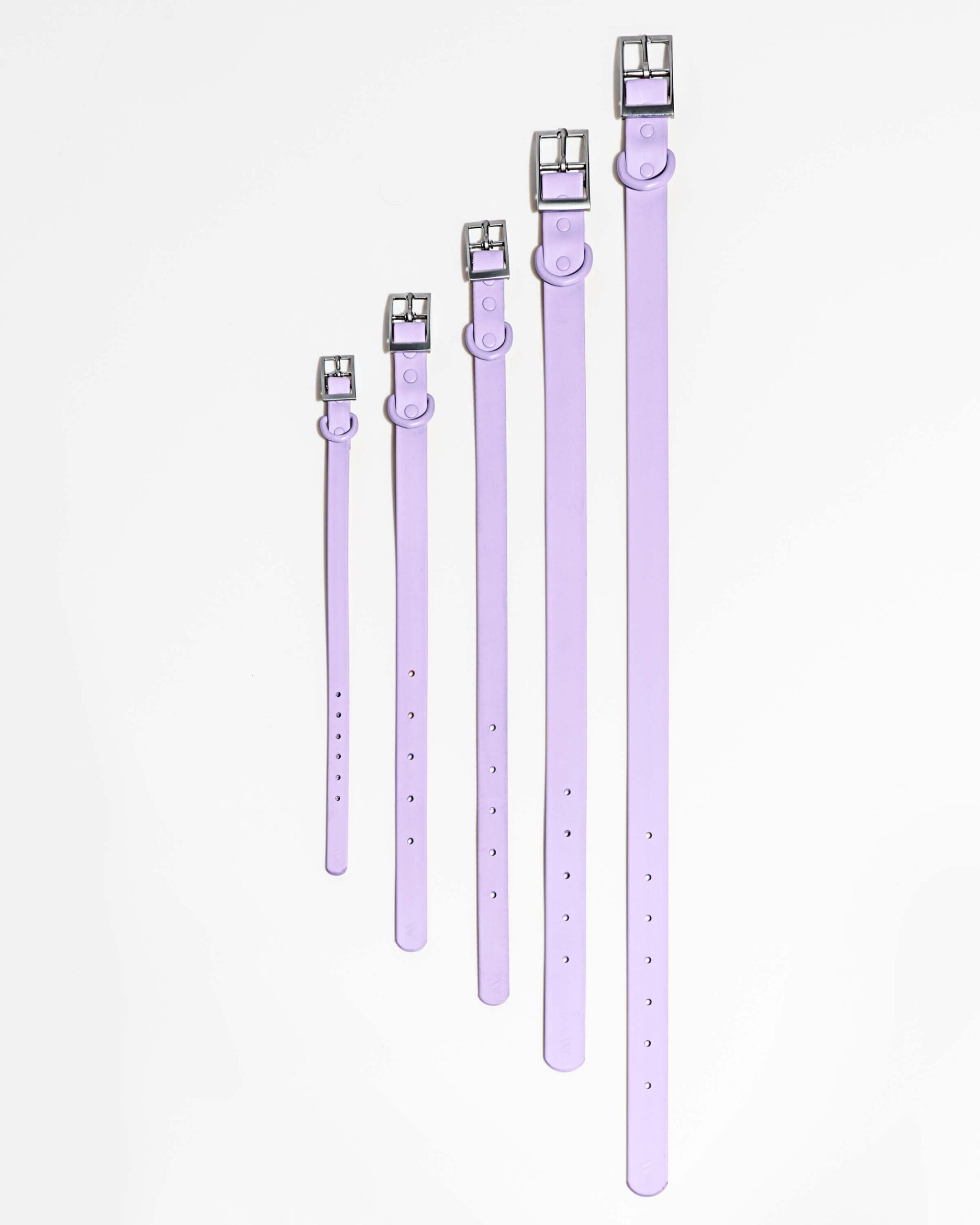
The MoonianPet Waterproof Dog Collar comes in five sizes with an adjustable buckle, which means each size covers a range of neck measurements. Find your dog’s measured neck circumference (including the 2-finger allowance) in the table below:

Size Neck circumference (inches) Neck circumference (cm) Typical breeds
XS 8″ – 10″ 20 – 26 cm Chihuahua, Toy Poodle, Maltese
S 10″ – 13″ 26 – 33 cm Miniature Schnauzer, Dachshund, Shih Tzu
M 13″ – 17″ 33 – 43 cm Beagle, Cocker Spaniel, Corgi, Border Collie
L 17″ – 21″ 43 – 53 cm Golden Retriever, Husky, Labrador, German Shepherd
XL 21″ – 26″ 53 – 66 cm Rottweiler, Great Dane, Bernese Mountain Dog

If your dog’s measurement falls at the top of a size range, we recommend sizing up — the adjustable buckle gives you room to fine-tune the fit.


Golden Retriever wearing the MoonianPet yellow waterproof collar and leash set — large breed collar fit example

What If My Dog Is Between Sizes?

If your measurement sits right on the boundary between two sizes, consider these factors before deciding:

Growing puppy → size up

Puppies grow quickly and an adjustable collar that’s slightly large today will have room to grow into. You’ll save money replacing fewer collars.

Thick-coated breed → size up

Dogs with dense or double coats can appear to have a smaller neck than they actually do once the fur is parted. Measure beneath the coat, and if in doubt, go larger.

Strong puller → size down

Dogs that pull hard on the lead may need a slightly snugger fit to prevent the collar from sliding up toward the ears during walks. Make sure you can still fit two fingers comfortably.

Why Collar Material Affects Long-Term Fit

One thing most sizing guides don’t mention: the material your collar is made from affects how it fits over time, not just on day one.

Nylon collars stretch slightly with regular use and wash cycles, which means a collar that fits well in month one may be noticeably looser by month six. Leather collars soften and stretch too — particularly when they get wet regularly — and can lose structural integrity around the adjustment holes.

Coated webbing — the material used in the MoonianPet collar — doesn’t stretch. The PVC coating seals the surface and prevents the deformation that happens to fabric-based materials over time. The collar you measure and fit today will maintain that fit for years. If you want to understand more about why the material makes such a difference, our guide on dog collar materials covers this in depth.


Brown MoonianPet waterproof coated webbing collar worn on a dog's neck — showing collar width and smooth surface texture

Common Collar Sizing Mistakes to Avoid

Mistake Why it’s a problem What to do instead
Guessing by breed Neck size varies enormously within breeds Always measure the individual dog
Measuring over thick fur Collar sits below the fur in use Part the fur and measure at skin level
Using a rigid tape Spans the neck rather than following its curve Use a soft fabric measuring tape or string
Measuring when dog is lying down Neck is compressed; gives smaller reading Measure while the dog is standing upright
Forgetting the 2-finger allowance Collar will be too tight when buckled Always add 2 fingers’ width to your base measurement
Never remeasuring Neck changes with weight, age, and season Check fit every few months, especially for puppies


Golden Retriever on a boat wearing a red Moonian waterproof dog collar — active lifestyle collar sizing example for large breeds

Ready to Find Your Dog’s Size?

The MoonianPet Waterproof Dog Collar is available in five sizes from XS to XL and 11 colours, with an adjustable buckle so you can dial in the exact fit. It’s made from premium coated webbing — smooth like leather, 100% waterproof, and built to hold its shape and fit for years. And if you want a matching leash to go with it, the Collar & Leash Set saves you $8 on the combination.

Still not sure which size is right? Reach out and we’ll help you work it out — no returns needed.


MoonianPet waterproof dog collars displayed in all 11 colours — black, brown, sand, yellow, green, sky blue, navy, purple, pink, red, and gray

Frequently Asked Questions

How do I measure my dog’s neck if they won’t stay still?

Use a piece of string instead of a tape measure — it’s quicker. Wrap it around the neck, mark it with your finger, then measure it against a ruler. You can do the whole thing in under 10 seconds once the dog is standing. Having someone distract them with a treat often helps.

My puppy is between sizes. Which should I choose?

Size up. An adjustable collar at the larger end of the range gives you more adjustment to work with as your puppy grows. Just make sure the collar can be tightened enough to pass the 2-finger rule right now — if it can’t be adjusted small enough to fit snugly, it’s too big for this stage.

Does the MoonianPet collar stretch over time?

No. The PVC coating on coated webbing doesn’t stretch or deform the way nylon does. The fit you set on day one is the fit you’ll have years later — which is one of the key advantages over fabric-based collars that gradually loosen. You can read more about why in our dog collar material guide.

Can I wash the collar if it gets dirty?

Yes — just wipe it with a damp cloth. Because the surface is non-porous, dirt and mud don’t soak in the way they do with nylon. For a deeper clean, mild soap and water works perfectly. No machine washing needed. More detail on this in our post on why dog collars smell and how to prevent it.

What if the collar still doesn’t fit after I order?

Get in touch and we’ll sort it out. We’d rather you have a collar that fits your dog perfectly than one sitting in a drawer. Message us via the contact page and we’ll advise on the best next step.

Once you’ve found your size, explore the full collar range — available in 11 colours and 5 sizes. Or save $8 with the matching Collar & Leash Set. Wondering which material is best for your dog’s lifestyle? Read our guide on nylon vs leather vs coated webbing.


Leave a Comment

Your email address will not be published. Required fields are marked *

Shopping Cart