
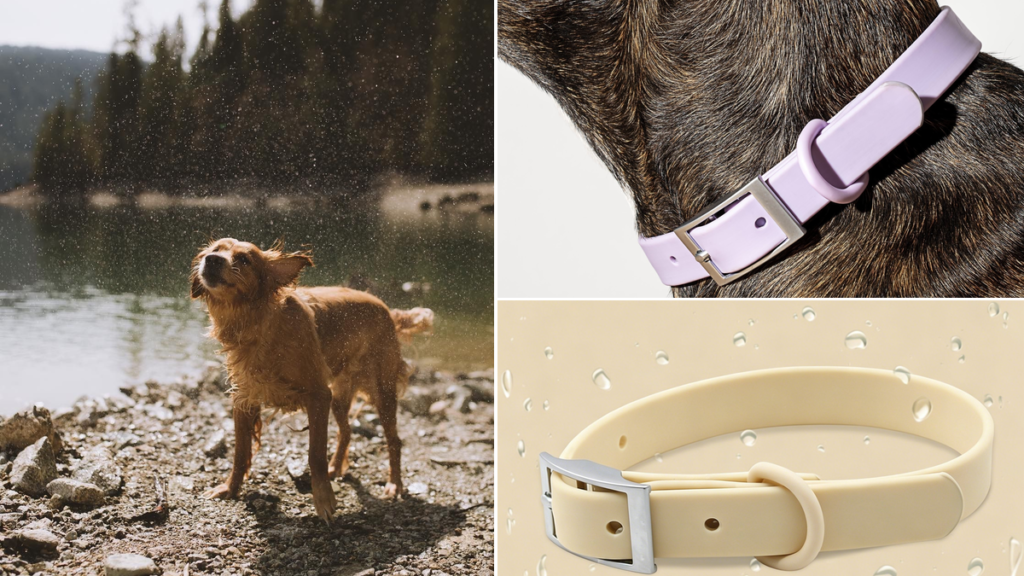
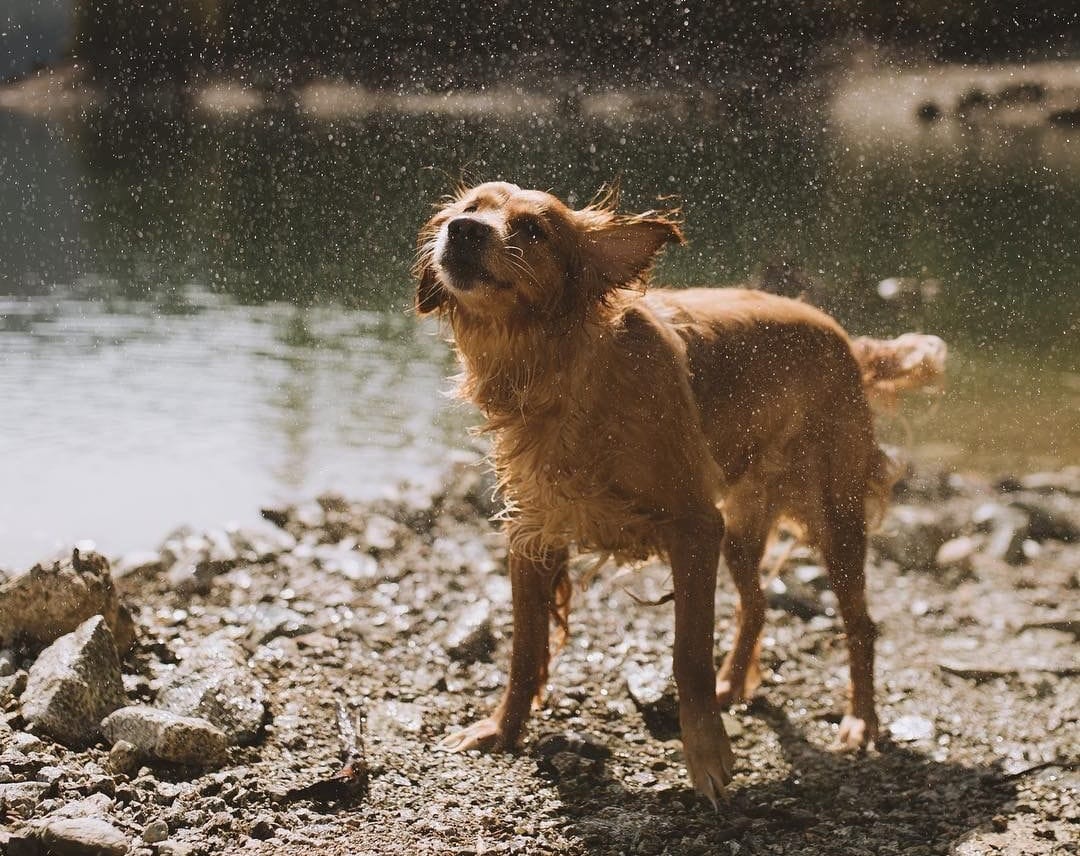
Your dog just had the best swim of their life. They’re happy, shaking water everywhere, tail going like a helicopter. And then you reach down to give them a scratch — and catch a wave of that smell. Musty, sour, unmistakably wet-collar. It clings for days even after the collar dries out.
If your dog swims regularly — at the beach, in a lake, at a pool, or just through every puddle on your morning walk — you’ve probably made peace with this smell as an unavoidable part of dog ownership. But it’s not unavoidable. It’s a material problem, and material problems have material solutions.
In this post we’ll explain exactly why swimming makes collars smell so bad, why the problem gets worse over time, and why switching to a waterproof coated webbing collar eliminates the issue entirely.
Why Swimming Makes Collars Smell So Bad
The smell isn’t caused by the water itself — clean lake water or pool water doesn’t inherently stink. The smell comes from what happens inside the collar material once water gets in.
Most dog collars are made from nylon webbing — a woven fabric that behaves like a sponge when submerged. During a swim, that fabric saturates completely, absorbing not just water but also the organic matter your dog carries: skin oils, dead cells, natural bacteria, and whatever lives in the water your dog just dived into. All of that gets trapped deep inside the fibers.
Once the swim is over, the collar starts to dry — but nylon dries slowly, taking hours to release moisture from the core of the weave. During that drying window, the bacteria trapped inside the fabric have everything they need to thrive: warmth, moisture, and organic material to feed on. Their metabolic waste is what produces that characteristic sour, musty odor.
By the time the collar feels dry to the touch, the bacterial colony is already established. Washing helps remove surface contamination, but it rarely reaches deep enough to fully reset the problem — which is why that smell tends to return faster and stronger after each subsequent swim.

Why the Problem Gets Worse Over Time
A brand new nylon collar doesn’t smell much after its first swim. But the same collar six months later can be nearly unbearable. This isn’t just because more bacteria have accumulated — it’s because the structure of the material has changed.
Repeated soaking and drying cycles cause nylon fibers to break down at a microscopic level, creating more surface area inside the weave. More surface area means more places for bacteria to anchor and organic matter to accumulate. The collar becomes progressively more porous and harder to clean with each cycle.
Hardware accelerates this process. The zinc alloy or brass hardware on most collars develops a thin film of corrosion when repeatedly exposed to water, especially saltwater. That corrosion has its own distinct metallic smell that compounds the organic odor from the fabric. Eventually you end up with a collar that smells bad even before it gets wet — because the bacteria colony has become permanent.
Leather collars have a different but equally serious problem: water causes leather to stiffen, crack, and degrade structurally. A leather collar that regularly gets submerged during swims will show visible damage within months — and the smell from wet, degrading leather is arguably worse than wet nylon. You can read more about how the two materials compare in our full dog collar material guide.
The Real Fix: A Surface That Water Can’t Penetrate
The only permanent solution to swimming-related collar odor is a collar that water simply cannot get into. Not water-resistant — genuinely waterproof, at the material level.
This is what coated webbing was designed to do. Unlike nylon fabric, which is essentially a woven mesh with thousands of tiny gaps, coated webbing has a smooth, sealed PVC surface that is completely non-porous. Water sits on the outside rather than being absorbed. There are no fibers for bacteria to anchor to, no internal structure for moisture to saturate.
When a dog wearing a coated webbing collar jumps in a lake, the collar gets wet on the surface — and that’s it. When they come out, a quick shake removes most of the water. The surface dries in minutes. There is no prolonged damp period for bacteria to multiply, no organic matter trapped inside fibers, and therefore no smell.
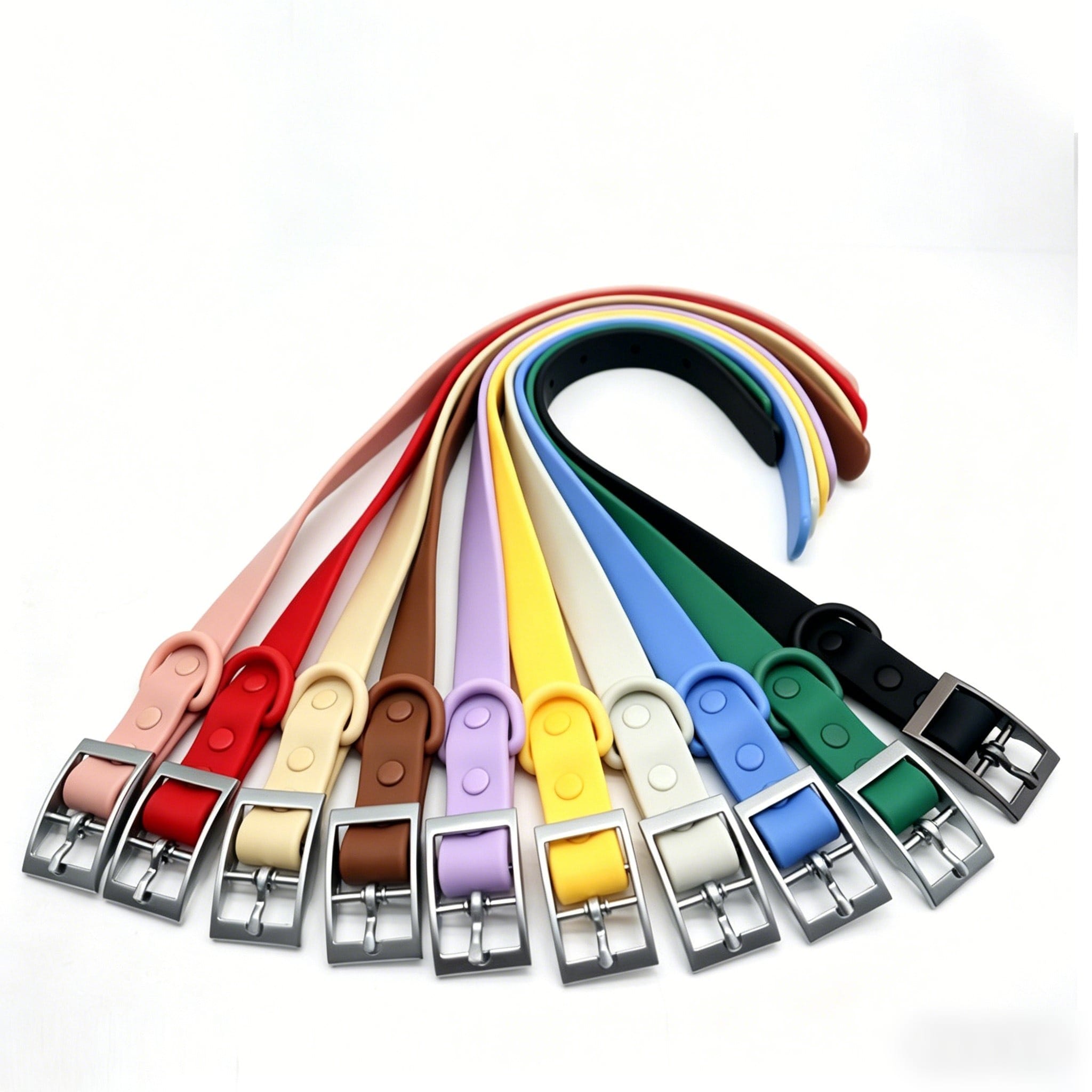
The MoonianPet Waterproof Dog Collar uses exactly this construction — the same BioThane-style coated webbing used in professional working dog gear and equestrian tack, now available in 11 colours and 5 sizes. It has the smooth, leather-like feel that sits comfortably against the neck, with the all-weather performance that active dogs actually need. And if you want to know more about why collars smell in general — not just after swimming — our earlier post covers the full science behind collar odor.

How Different Collar Materials Handle Swimming
| Material | Absorbs water? | Drying time | Smell after swimming | Long-term durability |
|---|---|---|---|---|
| Nylon | Yes — fully saturates | 2–6 hours | Strong, worsens over time | Frays, fades with repeated soaking |
| Leather | Yes — porous surface | 4–12 hours | Musty + degradation smell | Stiffens, cracks, deteriorates fast |
| Coated Webbing | No — sealed surface | Minutes | None | Maintains shape and surface for years |
Signs It’s Time to Replace Your Dog’s Current Collar
Not sure if your current collar has reached the point of no return? Here are the signs that the material has degraded beyond what cleaning can fix:
The smell returns within hours of washing
If washing provides less than a day’s relief before the odor returns, the bacterial colony inside the fibers has become too established to remove through surface cleaning alone.
Visible fraying or discolouration at stress points
Fraying around the buckle or D-ring means the structural integrity is compromised. A frayed collar can fail under pressure — which is a safety issue, not just an aesthetic one.
Hardware is corroding or discoloured
Rust-coloured stains around the D-ring or buckle indicate metal corrosion. Corroded hardware is both unsightly and weaker than new hardware — and it contributes significantly to collar odor.
The collar smells before it gets wet
When a dry collar already has a noticeable odor, the bacteria have colonised deeply enough that the material itself is compromised. At this point, no amount of washing or drying will solve the problem permanently.

How to Clean a Waterproof Collar After a Swim
With a coated webbing collar, post-swim cleaning is almost embarrassingly simple:
After every swim:
- Rinse the collar briefly under fresh water to remove any salt, chlorine, or lake debris.
- Wipe with a dry cloth.
- Done — the collar is ready to wear again immediately.
For a deeper clean after particularly muddy water, mild soap and water works perfectly. The collar will be dry within minutes.
Compare this to a nylon collar, which needs to be soaked, scrubbed, rinsed, and then air-dried for hours — only to smell again within days. For dogs that swim frequently, the difference in maintenance alone makes coated webbing the obvious choice. For a full cleaning guide covering all collar types, see our post on how to clean a dog collar.

Built for Dogs That Actually Use Their Collar
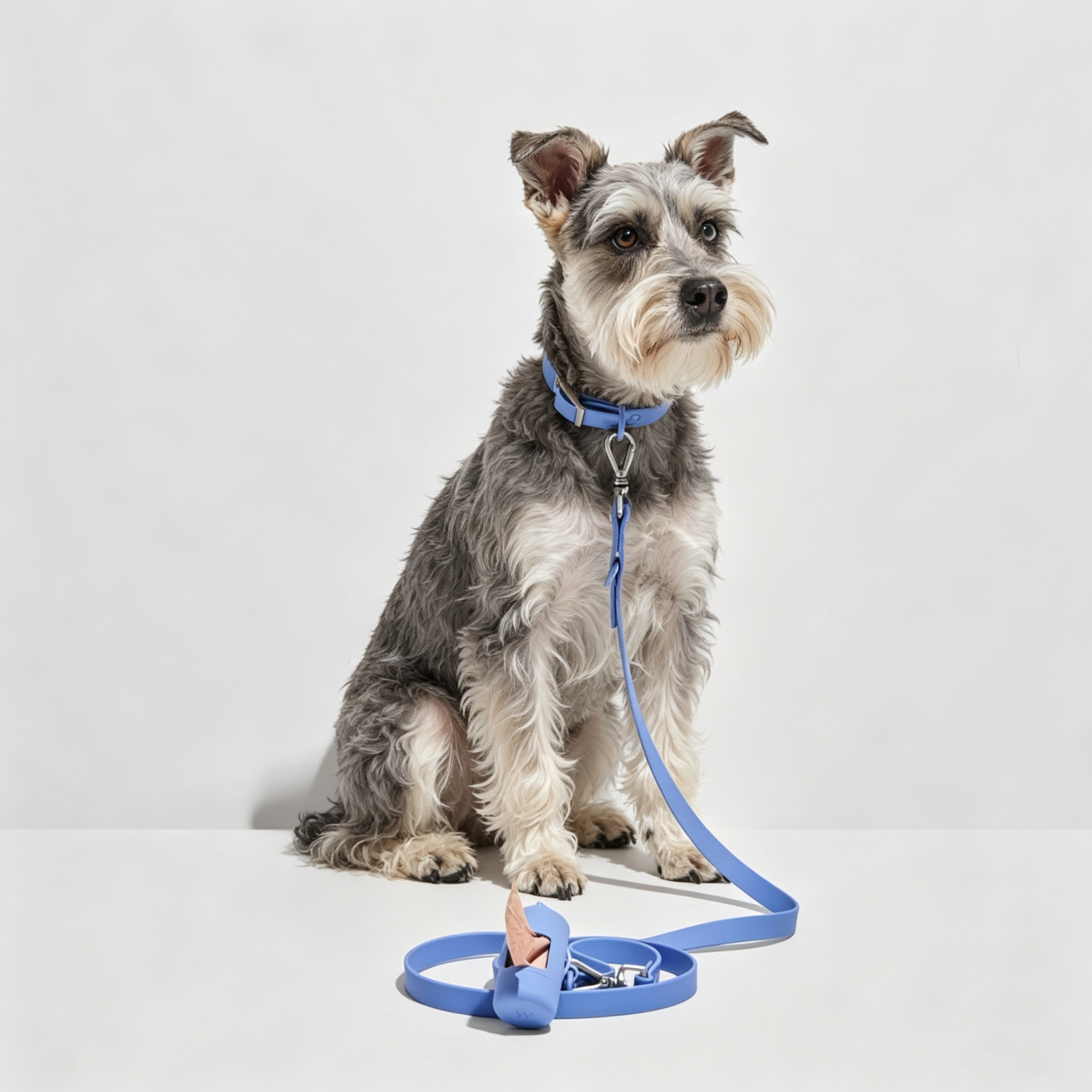
The MoonianPet Waterproof Dog Collar was designed for dogs that swim, run, get muddy, and live their lives outdoors — not dogs that sit still on a cushion. The coated webbing construction means the collar handles everything water can throw at it without absorbing any of it. Pair it with the MoonianPet Waterproof Leash for a fully waterproof setup from clip to collar.
If your dog pulls strongly on walks as well as swims, it’s worth considering whether a harness might suit them better for day-to-day use. Our guide on collar vs harness covers when each is the right choice — or explore the MoonianPet No-Pull Harness if pulling is a concern.
Available in 11 colours and 5 sizes from XS to XL. Not sure which size to order? Our collar sizing guide walks you through measuring your dog’s neck in under a minute.
Frequently Asked Questions
Should I take my dog’s collar off when they swim?
With a nylon or leather collar, removing it before swimming is a good idea — it prevents the collar from absorbing water and developing odor. With a waterproof coated webbing collar, there’s no need. The collar won’t absorb water, won’t smell, and won’t degrade from the exposure. Leave it on and let your dog enjoy the swim.
Is chlorine pool water bad for dog collars?
Chlorine is particularly harsh on fabric-based collars — it accelerates the breakdown of nylon fibers and causes faster fading and fraying. It also reacts with leather, stripping natural oils and causing cracking. Coated webbing is unaffected by chlorine because the sealed surface has no fibers to degrade. A quick fresh water rinse after pool swimming is all that’s needed.
Can I put a smelly nylon collar in the washing machine?
Yes, but it’s a temporary fix. Machine washing removes surface bacteria but rarely penetrates deeply enough to fully reset a collar that has developed a persistent odor. The smell typically returns within a few swims. If you’re machine washing your dog’s collar regularly, that’s a reliable sign it’s time to switch to a material that doesn’t require this level of maintenance.
Will a coated webbing collar get slippery when wet?
The surface has a slight texture that maintains grip when wet — it doesn’t become slippery the way some synthetic materials can. The buckle and D-ring are zinc alloy, which maintains its grip and structural integrity in wet conditions.
How long does a waterproof coated webbing collar last?
Significantly longer than nylon or leather alternatives, especially for dogs that swim regularly. Because the surface doesn’t absorb moisture, it doesn’t degrade from repeated soaking the way porous materials do. With basic care, a quality coated webbing collar should last several years of active daily use — including regular swimming.
Want to understand more about why collars smell and how different materials compare? Read our guide on why dog collars smell and our full dog collar material comparison. Or if you’re ready to size up, our collar sizing guide makes it easy.
About the Author
Wenyue
Wenyue is the founder of MoonianPet and writes about dog collars, harnesses, waterproof pet gear, and everyday dog care.
Growing up with dogs inspired her lifelong interest in pet care and practical dog gear. Through MoonianPet, she researches dog collars, harnesses, waterproof materials, and everyday solutions that help active dogs stay comfortable during daily adventures.