
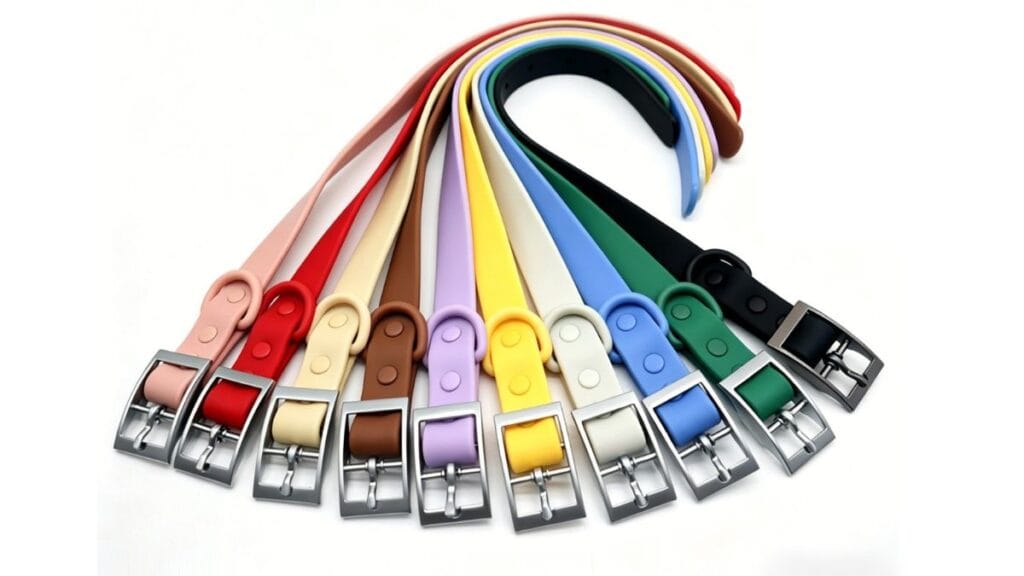
Walk into any pet store and you’ll find dog collars made from nylon, leather, rope, and half a dozen other materials. Most of them look fine on the shelf. The real test comes after three months of muddy walks, swimming sessions, and daily wear — and that’s where most collars quietly fail.
Choosing the right dog collar material matters more than most people realise. In this guide, we break down the three most common dog collar materials — nylon, leather, and coated webbing — across the factors that actually matter: durability, waterproofing, odor resistance, comfort, and long-term value. By the end, you’ll know exactly which dog collar material is right for your dog and why.
Nylon Dog Collars: Affordable, But Not Built for the Long Run
Nylon is the most common dog collar material on the market, and for good reason — it’s cheap to produce, comes in every color imaginable, and holds up reasonably well under light use. For a puppy who’s still growing or a dog that rarely gets wet, a nylon collar can be a perfectly sensible choice.
The problems start when real life kicks in.
Nylon is a woven fabric. That means it has texture — and texture traps things. Dirt, moisture, bacteria, and dead skin cells work their way into the fibers and stay there. Even if you wash it regularly, a nylon collar that gets wet often will develop a persistent odor within a few months. Dog owners who’ve experienced this describe it as a musty, slightly sour smell that never fully goes away no matter how many times they wash it. We cover exactly why this happens in our post on why dog collars smell.
Durability is the other issue. Nylon frays at the edges over time, especially at stress points around the buckle and D-ring. Colors fade with UV exposure and repeated washing. The hardware — typically cheap zinc or plastic — corrodes or breaks before the webbing itself gives out. If you’re looking for something built to last, our waterproof dog collar is made from premium coated webbing that never frays, fades, or traps odor.
There’s also a skin safety angle worth considering. The rough texture of woven nylon causes friction against the coat and skin over time — leading to collar rub, hair loss at the neck line, and irritation in sensitive dogs. Our guide on whether nylon is safe for dogs covers this in detail.

| Factor | Nylon Rating | Notes |
|---|---|---|
| Durability | ⭐⭐⭐ | Frays at edges; fades with UV exposure |
| Waterproofing | ⭐⭐ | Absorbs water; stays damp for hours |
| Odor Resistance | ⭐⭐ | Traps bacteria; persistent smell over time |
| Comfort | ⭐⭐⭐⭐ | Soft when new; can roughen over time |
| Value | ⭐⭐⭐ | Low upfront cost; replaced frequently |
Tired of that sour smell after your dog goes for a dip? Check out our deep dive on why dog collars smell after swimming and how to fix it.
Leather Dog Collars: Premium Feel, With Real Limitations
Leather has been used for dog collars for centuries, and it earns its reputation. A well-made leather collar feels substantial — smooth, dense, and clearly built to last. It sits flat against the neck without curling, doesn’t fray, and develops a patina over time that many dog owners find appealing. For calm, dry-climate dogs with light activity levels, a quality leather collar can genuinely last years.
The problem is that leather and moisture are enemies.
Water causes leather to stiffen, crack, and eventually break down. A dog that swims regularly, lives in a rainy climate, or simply drools heavily will destroy a leather collar far faster than the price tag suggests. You can treat leather with conditioners to slow this process, but it remains fundamentally water-vulnerable — that’s just the nature of the material.
Odor is the other concern. Like nylon, leather is porous. Sweat, oils, and bacteria penetrate the surface over time. Unlike nylon, you can’t just toss it in the washing machine — wet leather warps and cracks. Cleaning options are limited, which means odor tends to accumulate and stay. For dogs that swim regularly, leather is particularly problematic — read more in our post on why dog collars smell after swimming.
There’s also an ethical dimension worth mentioning: leather is an animal product. For dog owners who prefer vegan or cruelty-free gear, it’s a non-starter regardless of performance.

| Factor | Leather Rating | Notes |
|---|---|---|
| Durability | ⭐⭐⭐⭐ | Long-lasting when kept dry; cracks with moisture |
| Waterproofing | ⭐ | Poor — stiffens, warps and degrades when wet |
| Odor Resistance | ⭐⭐ | Porous surface absorbs odors; hard to clean |
| Comfort | ⭐⭐⭐⭐⭐ | Excellent feel; softens naturally with wear |
| Value | ⭐⭐⭐ | High upfront cost; poor lifespan in wet conditions |
Coated Webbing: What Changes When You Seal the Surface
Coated webbing — sometimes called BioThane-style webbing — starts with the same high-tensile nylon core used in performance gear, then seals it completely inside a smooth PVC coating. As a dog collar material, this sealed surface is what changes everything.
There are no fibers exposed to the outside. Nothing for water to soak into. Nothing for bacteria to cling to. Nothing for dirt to embed itself in. When your dog jumps in a lake or rolls through mud, the moisture sits on the surface rather than being absorbed — and wipes off with a damp cloth in seconds.
The result is a collar that behaves like leather in terms of feel and appearance — smooth, flat, slightly flexible — but performs more like technical outdoor gear. The MoonianPet Waterproof Dog Collar uses exactly this construction: it won’t crack when wet, won’t fray at the edges, and won’t develop that lingering wet-dog smell that nylon collars are notorious for.
For dogs that live an active life — regular outdoor walks, beach and river trips, dogs that wear their collar all day and night — coated webbing solves problems that nylon and leather were never designed to handle.


| Factor | Coated Webbing Rating | Notes |
|---|---|---|
| Durability | ⭐⭐⭐⭐⭐ | Sealed surface resists abrasion, UV, and moisture |
| Waterproofing | ⭐⭐⭐⭐⭐ | 100% waterproof — wipes clean instantly |
| Odor Resistance | ⭐⭐⭐⭐⭐ | Non-porous — bacteria can’t penetrate the surface |
| Comfort | ⭐⭐⭐⭐⭐ | Smooth, chafe-free — leather-like feel without the bulk |
| Value | ⭐⭐⭐⭐⭐ | Mid-range price; significantly longer lifespan |
Side-by-Side Comparison: Nylon vs Leather vs Coated Webbing
| Factor | Nylon | Leather | Coated Webbing |
|---|---|---|---|
| Waterproof | ✗ | ✗ | ✓ |
| Odor-proof | ✗ | ✗ | ✓ |
| Wipes clean easily | ✗ | ✗ | ✓ |
| Leather-like feel | ✗ | ✓ | ✓ |
| Safe when wet | ~ | ✗ | ✓ |
| Vegan / cruelty-free | ✓ | ✗ | ✓ |
| Long lifespan | ~ | ~ | ✓ |
| Good for swimmers | ✗ | ✗ | ✓ |
Which Dog Collar Material Should You Choose?
The honest answer depends on your dog’s lifestyle. Here’s how to pick the right dog collar material for your situation:
Choose nylon if:
Your dog is a puppy still growing through sizes, you need a low-cost temporary collar, or your dog has very minimal outdoor activity and rarely gets wet.
Choose leather if:
Your dog lives in a dry climate, rarely swims or gets muddy, and you prioritize classic aesthetics over all-weather performance. Be prepared to condition it regularly.
Choose coated webbing if:
Your dog is active, swims, gets muddy, wears their collar all day, or you’re simply tired of replacing smelly collars. Coated webbing handles everything nylon and leather can’t — while feeling just as premium as the best leather on the market. Start with our Waterproof Collar & Leash Set and save $8 on your first order.


The MoonianPet Difference
Every MoonianPet collar and leash uses premium coated webbing as the core dog collar material — the same BioThane-style construction used in professional working dog gear, now available in 11 colors and 5 sizes. It has the smooth, leather-like feel your dog deserves, with the all-weather performance that modern life actually demands.
No more musty smell after a rainy walk. No more stiff, cracked leather in winter. Just wipe it down and go.
Once you’ve chosen the right material, the next step is finding the right fit — our collar sizing guide walks you through measuring your dog in under a minute. And if you’re not sure which colour suits your dog best, our dog collar colour guide covers all 11 options with breed-specific recommendations.