
Nylon is the most common material used in dog collars worldwide. It’s cheap, light, and available in every pet shop on the planet. Most dog owners have never questioned whether it’s actually safe — it’s just what collars are made of.
But if your dog has ever developed redness, hair loss, or irritation around their neck — and you’ve struggled to figure out why — the collar itself may be the culprit. Not because nylon is toxic, but because of what happens when a woven fabric sits against your dog’s skin 24 hours a day, every day, for months on end.
In this post we’ll look honestly at what nylon does to your dog’s skin and coat over time, which dogs are most at risk, and what a safer alternative looks like in practice.

Is Nylon Itself Toxic to Dogs?
The short answer is no — nylon as a material is not chemically toxic to dogs. It won’t poison your dog through skin contact, and a dog that chews on a nylon collar isn’t going to be seriously harmed by the material itself.
But “not toxic” and “safe” are not the same thing. The problems with nylon collars are physical and biological rather than chemical — and for many dogs, they’re just as significant.
The issues come from three things: the texture of the weave, the material’s tendency to absorb and retain moisture, and the bacterial environment that develops inside the fabric over time. None of these are unique to a particular brand — they’re inherent to how woven nylon works as a material.
The Friction Problem: What Nylon Weave Does to Coat and Skin
Nylon is a woven fabric. Under a microscope, it looks like a mesh of interlocking fibers — and those fibers have edges. Every time your dog moves, those edges are moving against the skin and coat at the collar line.
For most dogs under light use, this friction is minor enough to go unnoticed. But for dogs that wear their collar continuously — especially active dogs that swim, run, and spend a lot of time outdoors — the cumulative effect of that friction adds up. The result is collar rub: a band of thinned, roughened, or missing fur right where the collar sits.
Collar rub is most visible on dogs with longer or finer coats — golden retrievers, collies, spaniels — where a clear line of coat damage appears at the neck. But shorter-coated dogs are affected too; it just shows up as redness or roughened skin rather than visible hair loss.
The friction problem gets worse as nylon ages. New nylon is relatively smooth. But after months of washing, drying, and general wear, the fibers begin to fray and stiffen — and frayed nylon is significantly rougher against skin than fresh nylon. A collar that seemed fine when new can become noticeably abrasive after six months of use.

The Moisture Problem: Why Wet Nylon Is Harder on Skin
Nylon absorbs moisture — from rain, swimming, humid weather, and your dog’s own sweat and skin oils. Once wet, nylon stays wet for hours. And a collar that stays wet against your dog’s skin creates a persistently damp microenvironment right at the neck.
Prolonged skin dampness weakens the skin barrier. In humans we call this maceration — the softening and breakdown of skin from extended moisture exposure. The same process happens in dogs, particularly at pressure points where the collar sits tightest. Softened skin is more vulnerable to friction damage, more susceptible to bacterial infection, and slower to recover from irritation.
For dogs that swim regularly or live in wet climates, this is a near-constant condition. The collar never fully dries before it gets wet again. The skin under it never gets a proper chance to recover. Over time this contributes to chronic low-level irritation that owners often struggle to identify because it develops so gradually.
This is one of the main reasons we built the MoonianPet Waterproof Dog Collar around coated webbing rather than nylon — the sealed PVC surface repels moisture entirely, so the collar dries in minutes and never creates that prolonged damp environment against the skin. For more on how moisture destroys collar materials over time, see our post on dog collar smell after swimming.
The Bacteria Problem: What Lives Inside a Nylon Collar
This is the aspect of nylon collars that most owners don’t think about — but probably should.
Because nylon is porous and absorbs moisture, it also absorbs skin oils, dead skin cells, and the natural bacteria that live on your dog’s skin. These get trapped inside the fiber matrix where they’re warm, damp, and largely protected from washing. Over time a nylon collar that gets wet regularly develops a persistent bacterial colony living inside the fibers.
The smell this produces is the most obvious symptom — that distinctive musty, sour wet-dog odor that comes from the collar rather than the dog. But the smell is just the evidence. What it means is that your dog is wearing a band of warm, bacteria-laden fabric against their skin at all times.
For dogs with healthy skin, this is mostly a hygiene issue rather than a medical one. But for dogs with sensitive skin, allergies, or existing skin conditions, constant contact with a bacteria-laden collar can aggravate symptoms significantly. If your dog has recurring skin issues around the neck that don’t respond to other treatment, the collar is worth considering as a contributing factor.
For a more detailed look at why collars develop this problem and how to prevent it, our post on why dog collars smell covers the science in full.
Which Dogs Are Most Affected by Nylon Collars?
While any dog can experience issues with a nylon collar over time, some dogs are significantly more vulnerable:
Dogs that swim or get wet regularly
The moisture-retention problem is dramatically worse for dogs that swim. A nylon collar that gets submerged and then sits wet against the skin for hours is creating ideal conditions for both skin maceration and bacterial growth.
Dogs with sensitive skin or existing allergies
Dogs that already have skin sensitivities are more reactive to both friction and bacterial exposure. If your dog has been diagnosed with skin allergies or atopic dermatitis, their collar material is worth reviewing as part of their overall management plan.
Dogs with long or fine coats
Breeds like golden retrievers, collies, spaniels, and setters show collar rub most visibly because their finer, longer coats are more susceptible to friction damage. The hair loss at the collar line is often mistaken for a skin condition rather than a mechanical problem.
Dogs that wear their collar 24/7
Continuous wear means continuous friction, continuous moisture exposure, and no rest periods for the skin to recover. Dogs that never have their collar removed are at significantly higher cumulative risk than dogs whose collars come off at home.
Puppies
Puppies have thinner, more sensitive skin than adult dogs, and they’re growing rapidly — which means a collar that fits today may be uncomfortably tight within weeks. A nylon collar that becomes tight on a puppy can cause significant irritation before the owner notices the fit has changed.


Signs Your Dog’s Collar May Be Irritating Their Skin
These signs don’t automatically mean the collar is the problem — but if you notice any of them, it’s worth removing the collar for a few days to see whether the situation improves:
| Sign | What it may indicate |
|---|---|
| Hair loss or thinning at the collar line | Friction damage from rough nylon weave |
| Redness or inflammation under the collar | Skin irritation from friction or moisture |
| Scratching at the neck more than usual | Discomfort from irritation or bacterial build-up |
| Persistent smell from the collar area | Bacterial colony established in the nylon fibers |
| Darkened or thickened skin under the collar | Chronic low-level irritation causing skin changes |
| Hot spots near the neck | Bacterial infection potentially aggravated by collar |
If symptoms are severe or persist after removing the collar, consult your vet — particularly if there are signs of infection, significant hair loss, or your dog seems in pain. The collar may be a contributing factor, but a vet can rule out other causes.
What Makes Coated Webbing Safer for Sensitive Skin
The problems with nylon collars all stem from one root cause: the material is porous and textured. Fix that, and you fix the problems.
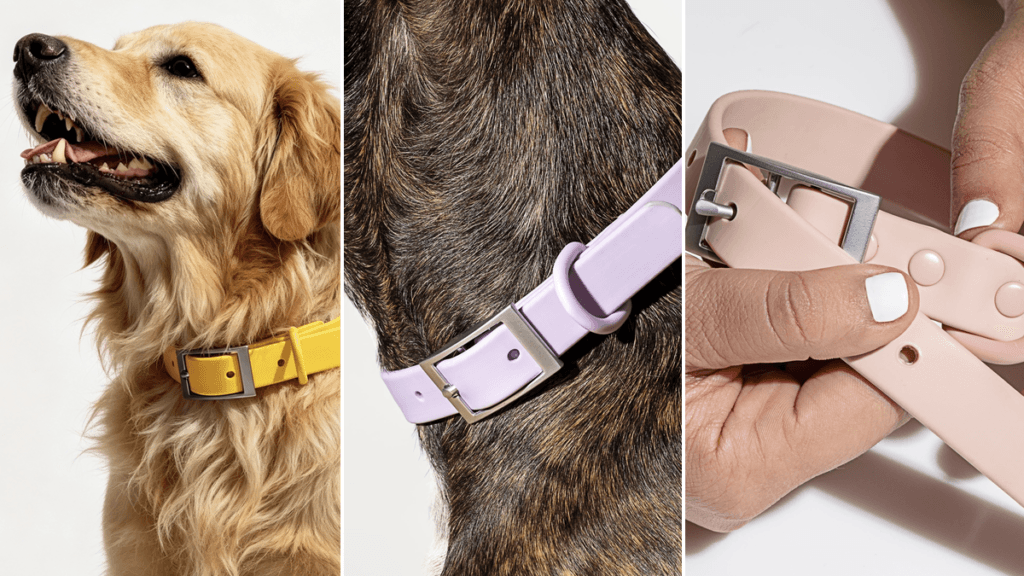
Coated webbing solves this by sealing a strong nylon or polyester core inside a smooth PVC coating. The result is a collar surface that is completely non-porous — no texture for bacteria to anchor to, no fibers to absorb moisture, no rough edges to create friction against the skin.
The surface feels smooth and slightly flexible — similar to the inside of a quality leather collar, without leather’s maintenance requirements or water vulnerability. It sits gently against the neck without the abrasive quality of woven nylon, and because it doesn’t absorb moisture, it never creates the prolonged damp environment that leads to skin maceration and bacterial problems.
For dogs with sensitive skin, allergies, or a history of collar-related irritation, switching to a coated webbing collar is often the simplest first step — before medications, specialist visits, or dietary changes. It removes a significant potential irritant from daily contact with the skin. You can read more about how the materials compare in our full dog collar material guide.

A Collar Your Dog Can Wear Comfortably Every Day
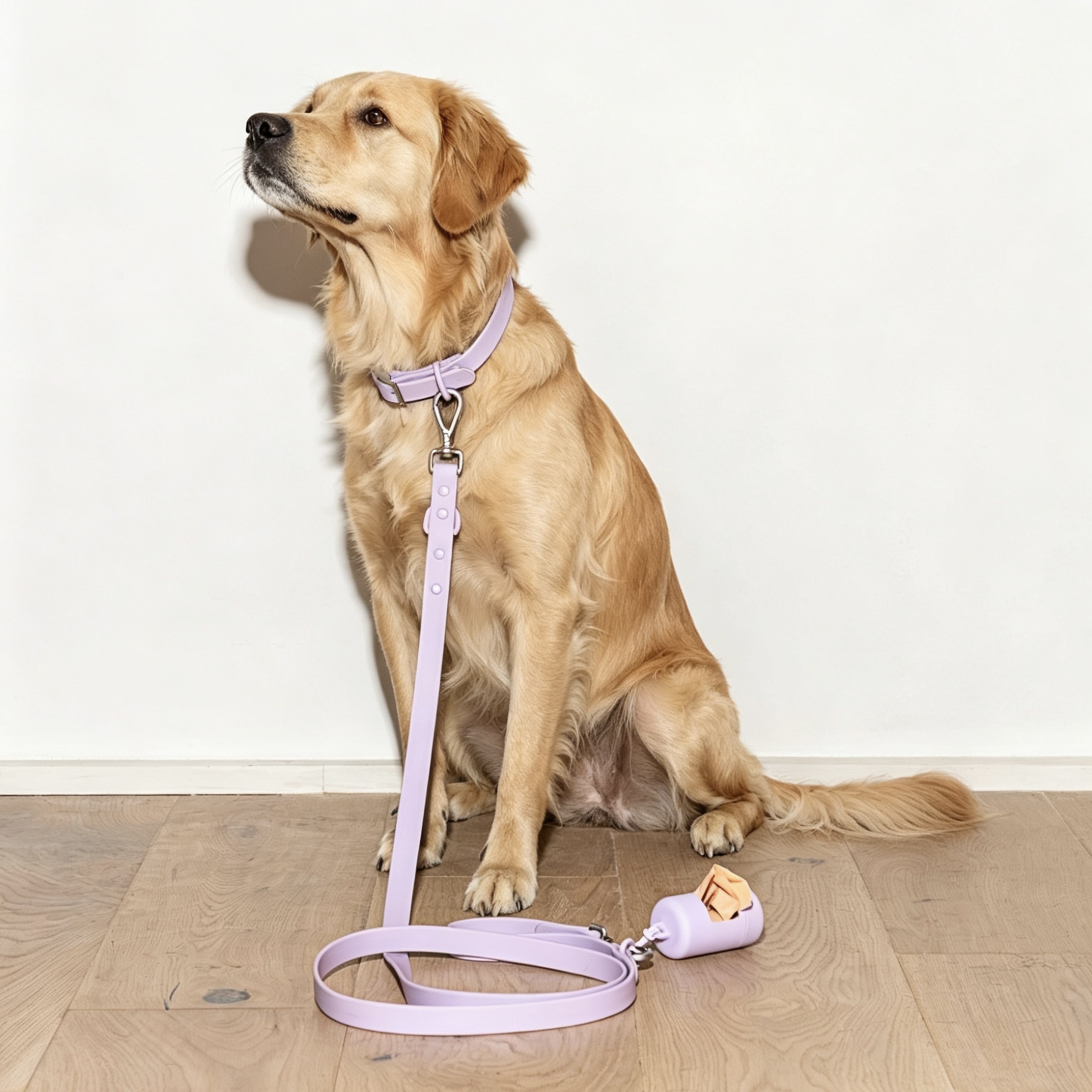
The MoonianPet Waterproof Dog Collar is made from premium coated webbing — smooth, non-porous, and gentle on skin. It won’t fray, won’t absorb moisture, and won’t develop the bacterial build-up that makes nylon collars a problem for sensitive dogs. Pair it with the MoonianPet Waterproof Leash for a fully waterproof, skin-friendly setup.
If your dog pulls strongly and you’re concerned about neck pressure, a harness might be worth considering alongside a collar. Our collar vs harness guide helps you decide, or explore the MoonianPet No-Pull Harness directly.
Available in 11 colours and 5 sizes from XS to XL. Not sure which size fits your dog? Our collar sizing guide makes it easy.
Frequently Asked Questions
Can nylon collars cause allergies in dogs?
Nylon itself is rarely the direct allergen — true nylon allergies are uncommon in dogs. However, the dyes used to colour nylon collars can cause contact allergic reactions in some dogs, and the bacterial build-up inside used nylon collars can aggravate existing skin sensitivities. If your dog reacts to multiple nylon collars, switching to an undyed or coated webbing option is worth trying before pursuing allergy testing.
My dog has lost fur around their neck — is the collar definitely the cause?
Not necessarily — fur loss around the neck can also be caused by thyroid issues, mange, ringworm, or other skin conditions. Remove the collar for 2-3 weeks and see whether the fur begins to grow back. If it does, the collar was likely a contributing factor. If not, consult your vet to investigate other causes.
Is coated webbing safe for puppies?
Yes. The smooth, non-porous surface of coated webbing is actually gentler on puppy skin than nylon weave. The main consideration for puppies is fit — check the collar regularly as puppies grow quickly, and size up when needed. Our sizing guide covers how to measure accurately at any age.
Should I take my dog’s collar off at night?
For dogs wearing nylon collars, giving the skin a rest at night is a good practice — it reduces cumulative friction exposure and allows the skin to breathe. For dogs wearing coated webbing collars, the smooth surface means continuous wear is less of a concern. That said, removing any collar at night is a reasonable habit, particularly for puppies.
How do I clean a coated webbing collar?
Wipe with a damp cloth — that’s genuinely all that’s needed for routine cleaning. For a deeper clean after muddy walks, mild soap and water works perfectly. The non-porous surface means bacteria can’t penetrate, so the collar stays hygienic with minimal effort. For a full cleaning walkthrough, see our guide on how to clean a dog collar.
Want to understand more about how collar materials compare? Read our full guide on nylon vs leather vs coated webbing. Or if collar odor is your main concern, our post on why dog collars smell covers exactly why it happens and how to stop it.
About the Author
Wenyue
Wenyue is the founder of MoonianPet and writes about dog collars, harnesses, waterproof pet gear, and everyday dog care.
Growing up with dogs inspired her lifelong interest in pet care and practical dog gear. Through MoonianPet, she researches dog collars, harnesses, waterproof materials, and everyday solutions that help active dogs stay comfortable during daily adventures.