
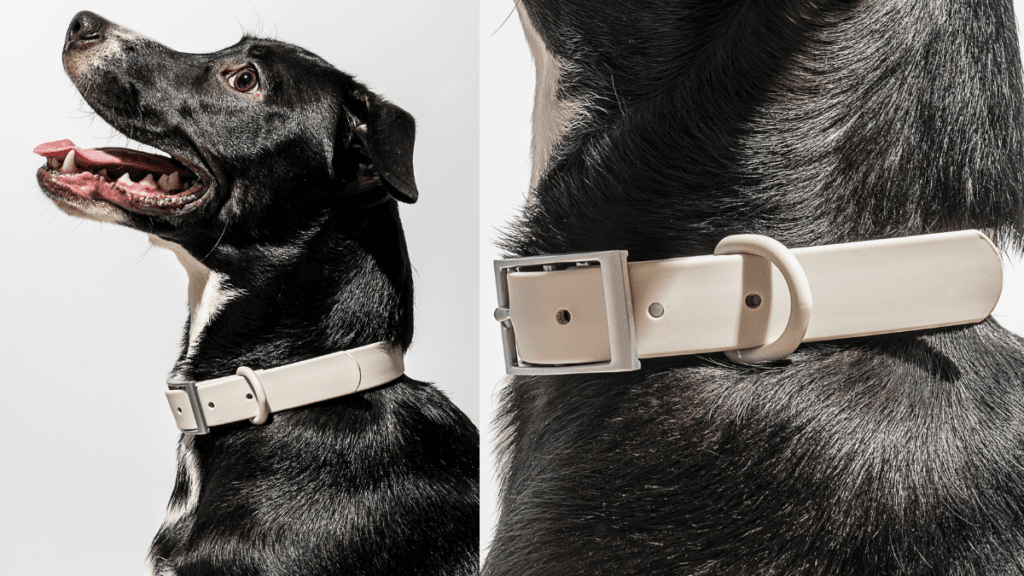
Your dog’s collar is on them every single day. It absorbs sweat, skin oils, mud, rainwater, and whatever they decide to roll in. Left uncleaned, it becomes one of the most bacteria-laden items in your home — and the source of that persistent smell that no amount of air-drying seems to fix.
How you clean a dog collar depends entirely on what it’s made from. The right method for nylon will damage leather. The right method for leather won’t work on coated webbing. And one material barely needs cleaning at all — which is worth knowing before you spend another afternoon scrubbing a collar that will smell again within a week.
This guide covers exactly how to clean every major collar material, how often to do it, and the signs that a collar is past the point where cleaning will help.

Why Dog Collars Get Dirty So Fast
A collar sits against your dog’s neck 24 hours a day. The skin there produces natural oils and sweat, which the collar absorbs continuously. Add in outdoor walks — mud, wet grass, puddles, the occasional roll in something unidentifiable — and you have a piece of gear that accumulates organic matter faster than almost anything else your dog owns.
The smell that develops isn’t from the dirt itself — it’s from the bacteria that feed on organic matter trapped inside the collar material. For porous materials like nylon and leather, that bacteria gets deep inside the fibers where surface cleaning can’t fully reach. This is why a collar can look clean but still smell. The bacteria are inside the material, not on the surface.
Understanding this is the key to cleaning a collar properly — and to understanding why some materials are fundamentally harder to keep clean than others. For a deeper dive into the science, our post on why dog collars smell covers exactly what’s happening inside the material.
How to Clean a Nylon Dog Collar
Nylon is the most common collar material and the most labour-intensive to keep genuinely clean. Because nylon is a woven fabric, dirt and bacteria penetrate the fibers rather than sitting on the surface — which means surface wiping doesn’t work. You need to get water and cleaning solution inside the weave.
Step-by-step: cleaning a nylon collar
- Remove the collar from your dog and remove any ID tags.
- Rinse under warm running water to loosen surface dirt.
- Apply a small amount of mild dish soap or pet-safe shampoo directly to the collar.
- Work the soap into the weave using a soft-bristled brush — an old toothbrush works well for getting into the texture around the buckle.
- Rinse thoroughly until all soap is removed — soap residue left in nylon can irritate skin.
- Shake off excess water and lay flat to air dry completely before putting back on your dog. Do not tumble dry — heat degrades nylon fibers.
How often: Every 2-4 weeks for active dogs, or whenever visible dirt or odour develops. Dogs that swim or get wet regularly may need weekly cleaning.
The limitation: Even thorough washing only partially removes the bacterial colony established inside nylon fibers. The smell typically returns faster after each wash cycle as the colony re-establishes. If you’re washing your dog’s nylon collar more than once a week and it still smells, the material has been colonised beyond what cleaning can fix — it’s time to replace it. Our guide on whether nylon is safe for dogs explains why this happens at a material level.
Can you put a nylon collar in the washing machine? Yes, on a gentle cold cycle inside a mesh laundry bag to protect the hardware. However, machine washing isn’t significantly more effective than hand washing for removing deep bacterial contamination — and repeated machine washing accelerates the fraying and fading that nylon is already prone to.
How to Clean a Leather Dog Collar
Leather requires more careful handling than nylon — the wrong approach can cause cracking, stiffening, or permanent damage. The key rule is simple: keep water away from leather as much as possible.
Step-by-step: cleaning a leather collar
- Remove the collar and wipe away surface dirt with a dry or barely damp cloth.
- Apply a small amount of specialist leather cleaner to a soft cloth — do not apply directly to the collar.
- Work the cleaner into the leather in gentle circular motions.
- Wipe away residue with a clean dry cloth.
- Apply leather conditioner after cleaning to restore moisture and prevent cracking. This step is essential — cleaning removes natural oils from leather, and conditioning replaces them.
- Allow to dry naturally away from direct heat or sunlight.
How often: Clean every 4-6 weeks and condition every 1-3 months. More frequently if the collar gets wet regularly — though if your dog swims, leather is the wrong material entirely.
Never do this: Do not submerge a leather collar in water, put it in the washing machine, or use standard soap or detergent. All of these will cause the leather to dry out, stiffen, and crack. Never use direct heat to dry a wet leather collar — air dry only, slowly.
The limitation: Leather is porous, which means bacteria and odours penetrate the surface and accumulate over time regardless of cleaning. Specialist leather cleaner addresses surface contamination but doesn’t fully reach deep colonisation. For a full comparison of how leather handles moisture and odour versus alternatives, see our dog collar material guide and our BioThane vs leather comparison.

How to Clean a Coated Webbing (BioThane-Style) Collar
This is the section that surprises most people — because the answer is genuinely this simple.
Step-by-step: cleaning a coated webbing collar
- Wipe with a damp cloth.
- Done.
For a deeper clean after particularly muddy walks: mild soap and warm water, wipe, rinse, dry. The collar is ready to wear again in minutes.
The reason cleaning is so simple comes down to the material itself. Coated webbing has a sealed, non-porous PVC surface — there are no fibers for bacteria to anchor to, no internal structure for moisture to saturate. Dirt, mud, and organic matter sit on the outside of the collar rather than being absorbed into it. Wipe the surface and they’re gone.
This is also why coated webbing collars don’t develop that persistent smell. The bacterial colony that forms inside nylon fibers simply can’t establish itself on a non-porous surface. The MoonianPet Waterproof Dog Collar uses this construction — which is why it can be submerged, dragged through mud, and worn by a dog that swims daily without ever developing odour. For more on how it handles swimming specifically, see our guide on the best dog collar for swimming.
How often: As needed — which for most dogs means a quick wipe after muddy walks and nothing else. No schedule required, no specialist products, no soaking or drying protocols.

Cleaning Effort by Material: A Quick Comparison
| Material | Cleaning method | Frequency | Smell returns? | Effort |
|---|---|---|---|---|
| Nylon | Scrub and soak and air dry | Every 2 to 4 weeks | Yes, faster each time | High |
| Leather | Specialist cleaner and conditioner | Every 4 to 6 weeks | Gradually over time | Medium to High |
| Coated Webbing | Wipe with damp cloth | As needed | No | Minimal |
When Cleaning Is Not Enough: Signs It Is Time to Replace
Cleaning extends a collar’s life — but some collars reach a point where no amount of cleaning will restore them to a hygienic condition. Here is how to tell when that point has been reached:
The smell returns within days of washing
When cleaning provides less than a week’s relief, the bacterial colony inside the material is too established to remove through surface cleaning. Replacement is the only permanent solution.
Visible fraying, cracking, or discolouration
Frayed nylon or cracked leather at the buckle or D-ring indicates structural degradation. A compromised collar can fail under load — which is a safety issue, not just an aesthetic one.
Hardware corrosion
Rust or discolouration around the buckle and D-ring means the hardware integrity has been compromised. Corroded hardware contributes significantly to collar odour and weakens the attachment points.
Your dog’s neck shows irritation
Redness, hair loss, or persistent scratching at the collar line suggests the collar is irritating the skin — often from bacterial build-up in the material or physical degradation of the surface texture. Remove the collar for a few days to see if symptoms improve. Our post on whether nylon is safe for dogs covers what prolonged nylon collar wear does to skin.

Do Not Forget the Hardware
The buckle and D-ring accumulate dirt and bacteria just like the collar material does — and they are often overlooked during cleaning. For nylon and leather collars, use a soft toothbrush to scrub around the hardware, paying particular attention to the hinge points and adjustment slots where organic matter collects.
Zinc alloy hardware — as used on the MoonianPet collar — resists corrosion significantly better than cheaper zinc or brass alloys. For coated webbing collars, the hardware can simply be wiped clean at the same time as the collar body. No scrubbing, no soaking.
The Collar That Cleans Itself in Seconds
If you are tired of the soaking, scrubbing, and drying routine — and the smell that comes back anyway — the answer is a material that does not absorb anything in the first place. The MoonianPet Waterproof Dog Collar is built from premium coated webbing: wipe it down after a muddy walk and it is clean. That is the whole routine. Pair it with the MoonianPet Waterproof Leash for a fully wipe-clean setup from collar to clip.
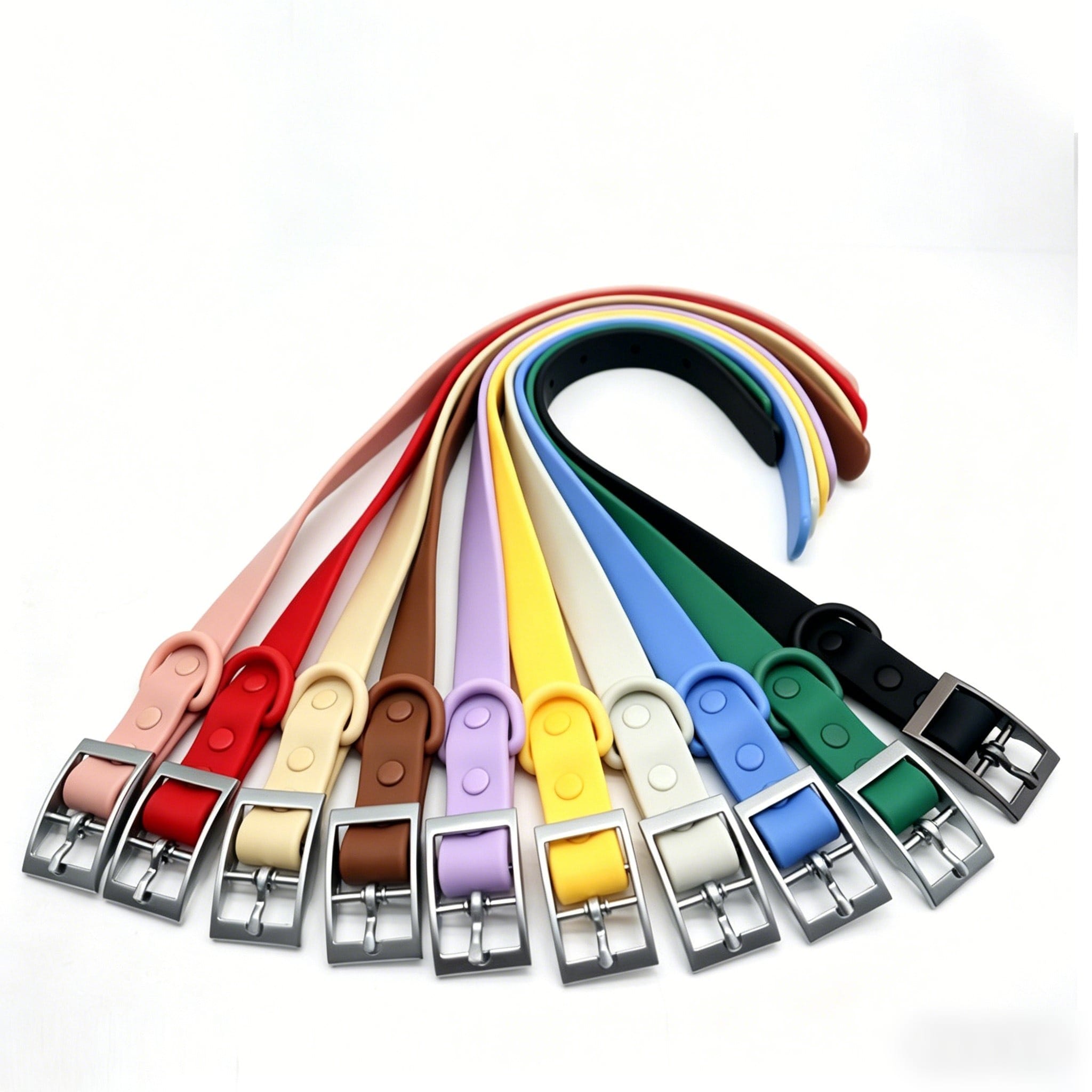
Available in 11 colours and 5 sizes from XS to XL. Not sure which size fits your dog? Our collar sizing guide walks you through measuring in under a minute.
Frequently Asked Questions
How often should I clean my dog’s collar?
For nylon collars, every 2-4 weeks — more often if your dog swims or gets muddy regularly. For leather, every 4-6 weeks with conditioning. For coated webbing, as needed — which for most dogs means a quick wipe after muddy walks and nothing more structured than that.
Can I put my dog’s collar in the washing machine?
Nylon collars can go in the washing machine on a gentle cold cycle inside a mesh bag — but it is not significantly more effective than hand washing for removing deep odour. Never machine wash leather (it will crack and warp) or coated webbing (unnecessary — a wipe is sufficient).
Why does my dog’s collar still smell after washing?
Because the bacteria causing the smell are deep inside the nylon fibers, not on the surface. Washing removes surface contamination, but the colony re-establishes quickly — which is why the smell returns faster after each wash. Our post on why dog collars smell explains this in full, along with the permanent solution.
What is the best thing to clean a dog collar with?
For nylon: mild dish soap or pet-safe shampoo with a soft brush. For leather: specialist leather cleaner followed by conditioner — never regular soap or water. For coated webbing: a damp cloth. Mild soap if needed. Nothing else required.
How do I get the smell out of a dog collar permanently?
For nylon and leather collars, there is no permanent solution — the material is porous and will always be susceptible to bacterial colonisation. The only permanent fix is switching to a non-porous material. Coated webbing does not absorb bacteria in the first place, so there is nothing to remove. For dogs that swim regularly, this is especially worth considering — our post on why dog collars smell after swimming covers exactly why water makes the problem worse.
Want to understand more about why collar materials behave so differently? Our dog collar material guide covers nylon, leather, and coated webbing side by side. Or explore our collar colour guide to find the perfect shade for your dog. Ready to switch to something that does not need scrubbing? Explore the full MoonianPet Waterproof Dog Collar range in 11 colours and 5 sizes.
About the Author
Wenyue
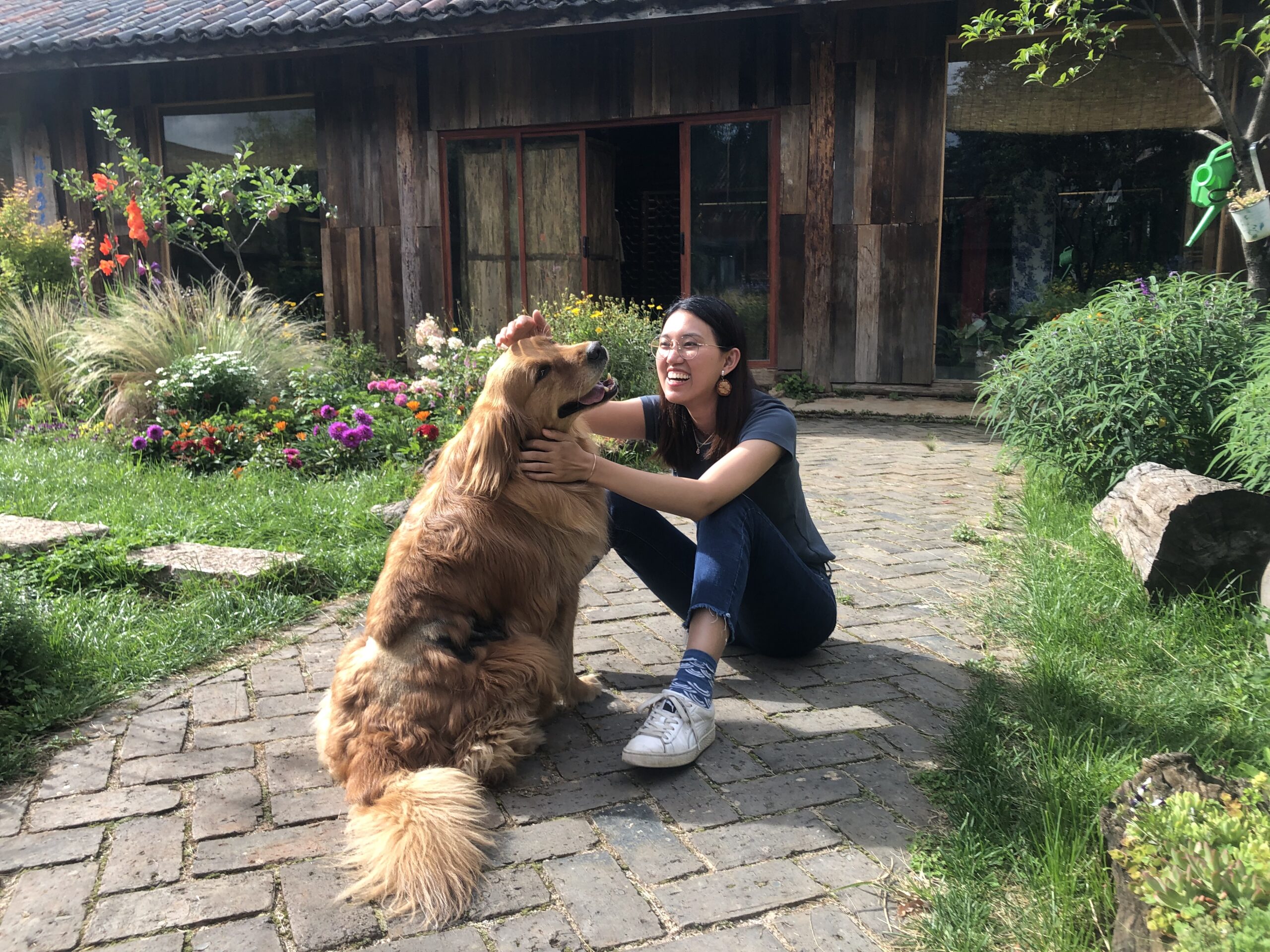
Wenyue is the founder of MoonianPet and writes about dog collars, harnesses, waterproof pet gear, and everyday dog care.
Growing up with dogs inspired her lifelong interest in pet care and practical dog gear. Through MoonianPet, she researches dog collars, harnesses, waterproof materials, and everyday solutions that help active dogs stay comfortable during daily adventures.