
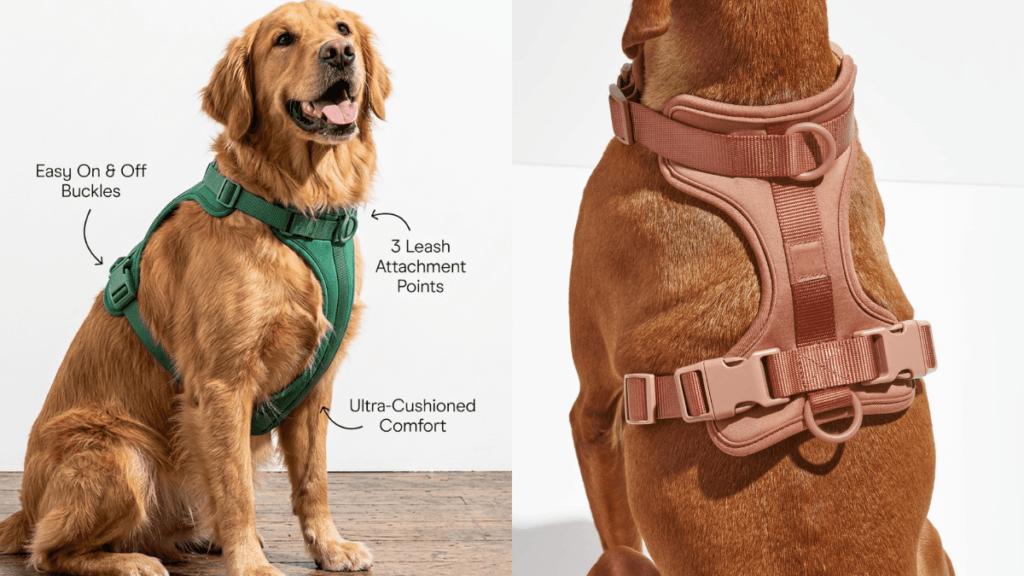
A dog that pulls on the lead is one of the most common frustrations in dog ownership — and one of the most solvable. The right no-pull harness does not just make walks more pleasant; it removes pressure from your dog’s neck, gives you genuine directional control, and in many cases naturally reduces pulling without any formal training intervention.
But not all harnesses work the same way. A back-clip harness on a strong puller actually makes pulling easier — it gives the dog something to lean into. A front-clip harness changes the physics entirely. Padding, fit, and escape-proof design matter just as much as the clip position. Get these things wrong and a harness is either uncomfortable, ineffective, or both.
This guide covers exactly what to look for when choosing a no-pull harness — from clip position and fit to padding, adjustability, and breed-specific considerations — so you can find the right one for your dog the first time.
Why a Standard Harness Will Not Stop Your Dog Pulling
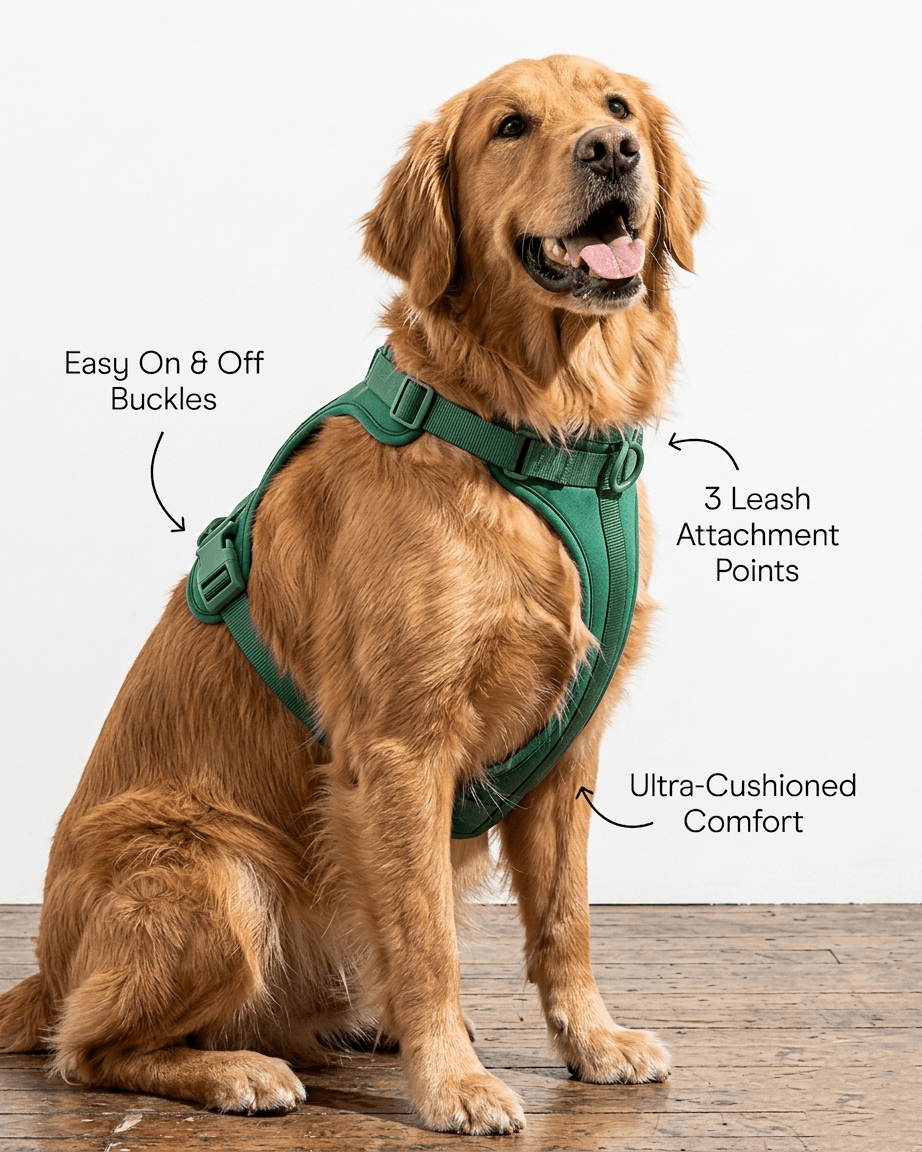
The most common mistake when buying a harness for a puller is choosing a standard back-clip design. Back-clip harnesses are comfortable and easy to use — but they attach the lead at the dog’s shoulders, directly behind the centre of pulling power. A dog that pulls into a back-clip harness is essentially harnessing their chest and shoulder muscles for the task. It’s the same principle as a sled dog setup.
A no-pull harness works differently. The front clip attaches at the dog’s chest, not their back. When the dog pulls forward and the lead goes taut, the tension pulls from the front rather than from behind — which rotates the dog sideways rather than allowing them to power straight ahead. Most dogs find this counterintuitive enough that it immediately disrupts the pulling pattern, even without training.
For a broader comparison of how harnesses and collars differ for walkers and pullers, our guide on dog collar vs harness covers the full picture.
What to Look for in a No-Pull Harness
1. Front Clip (Essential for Pullers)
The front D-ring is the single most important feature on a no-pull harness. Without it, you have a comfortable harness — but not a pulling solution. Look for a front ring that sits flat against the chest without rotating or sliding to the side when the lead is clipped. A poorly positioned front ring reduces effectiveness and can cause uneven pressure on the shoulders.
The best harnesses also include a back D-ring for everyday walking when your dog is not pulling, or for use with a double-ended lead that clips to both simultaneously. The MoonianPet No-Pull Harness has both — front clip for active pullers, back clip for calm walks, giving you both options in one harness.
2. Padding and Breathability
A harness that rubs causes chafing — particularly under the armpits and across the chest where the straps sit closest to the skin. This is more of an issue with harnesses than collars because the contact surface is larger and the straps move more with the dog’s gait.
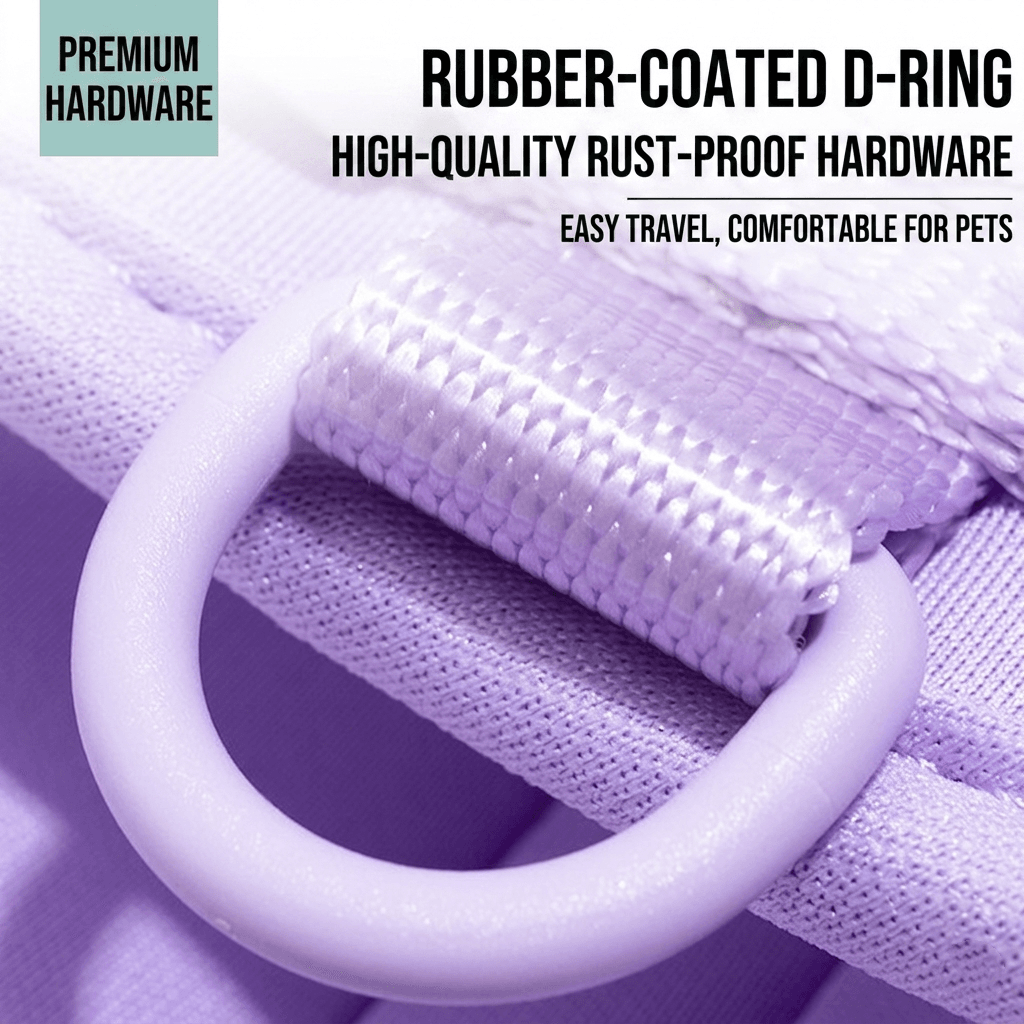
Look for breathable padding rather than solid foam — neoprene is the best option because it’s soft against skin, ventilated to prevent overheating, and lightweight enough not to add bulk. Avoid thick foam padding that traps heat, particularly for active dogs or dogs in warmer climates.
The chest panel — the part that sits against your dog’s sternum — should be wide enough to distribute pressure evenly without a single pressure point forming when the lead goes taut.
3. Escape-Proof Design
Dogs that pull are often also dogs that back up, twist, and work to get out of their gear. A harness that can be slipped out of is worse than no harness at all — particularly near roads or in off-lead areas.
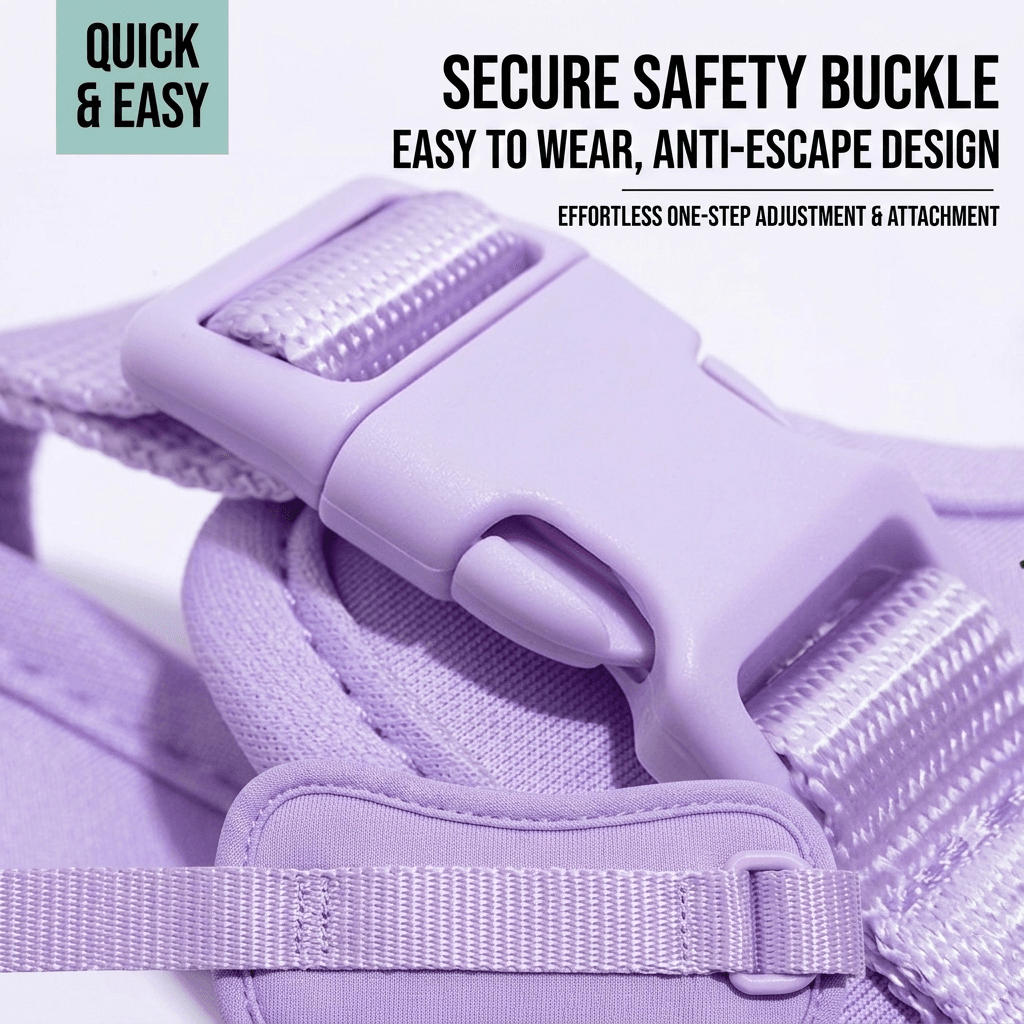
The most reliable escape-proof designs use a dual-layer buckle system — where a secondary locking mechanism prevents the main buckle from releasing under sudden force. Combined with a multi-point adjustment system, this means the harness can be fitted snugly enough to prevent escape without being uncomfortably tight.
The two-finger rule applies here too: with the harness correctly fitted, you should be able to slide two fingers under any strap, but the harness should not shift or rotate significantly when your dog moves.
4. Multi-Point Adjustability
Dogs do not come in standard shapes. A Labrador and a Whippet might have the same chest circumference but completely different body proportions. A harness that adjusts at only one or two points will fit some dogs well and others not at all — which leads to either chafing from a harness that’s too loose or restricted movement from one that’s too tight.
Three-point adjustment — at the neck, chest, and belly — gives you the control to fit the harness precisely to your dog’s individual proportions. This is particularly important for deep-chested breeds (Greyhounds, Boxers), barrel-chested breeds (Bulldogs, Pugs), and dogs with significant weight or shape differences from the average.
5. Hardware Quality
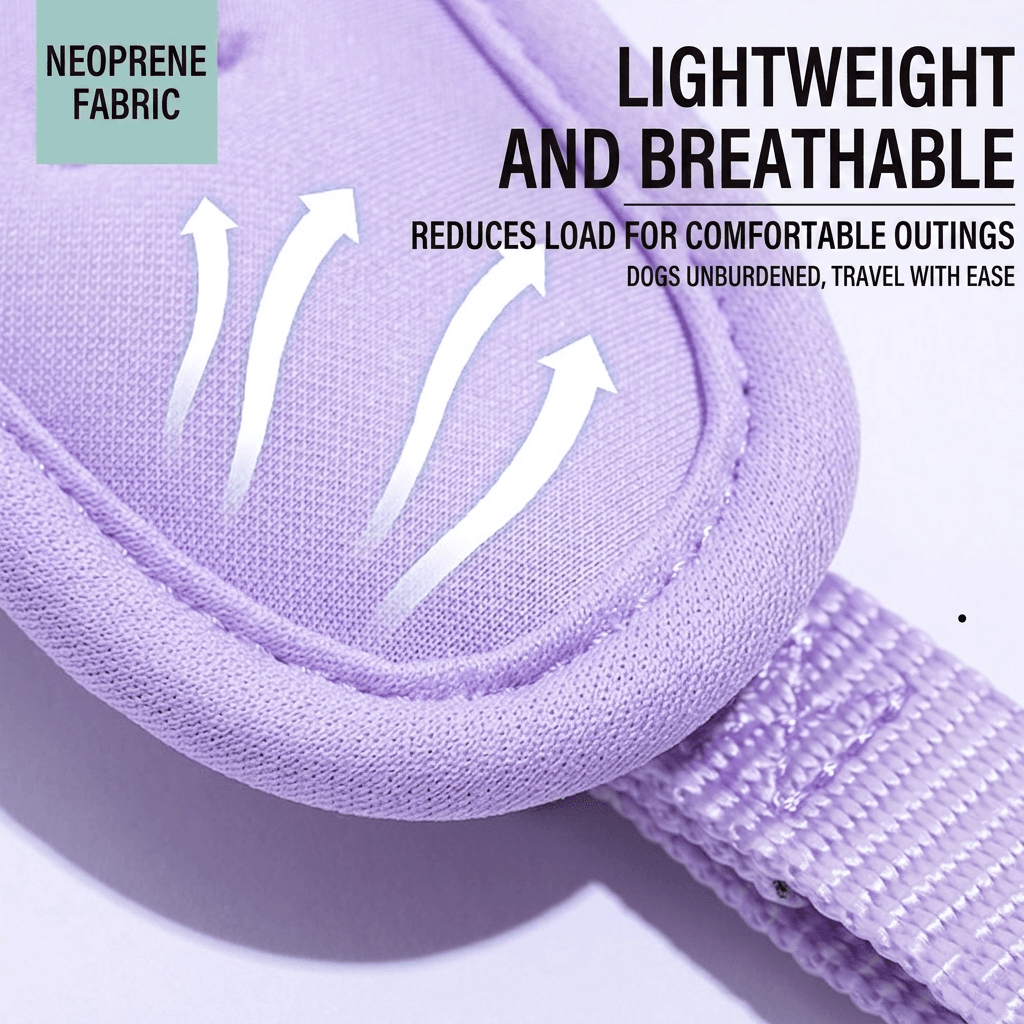
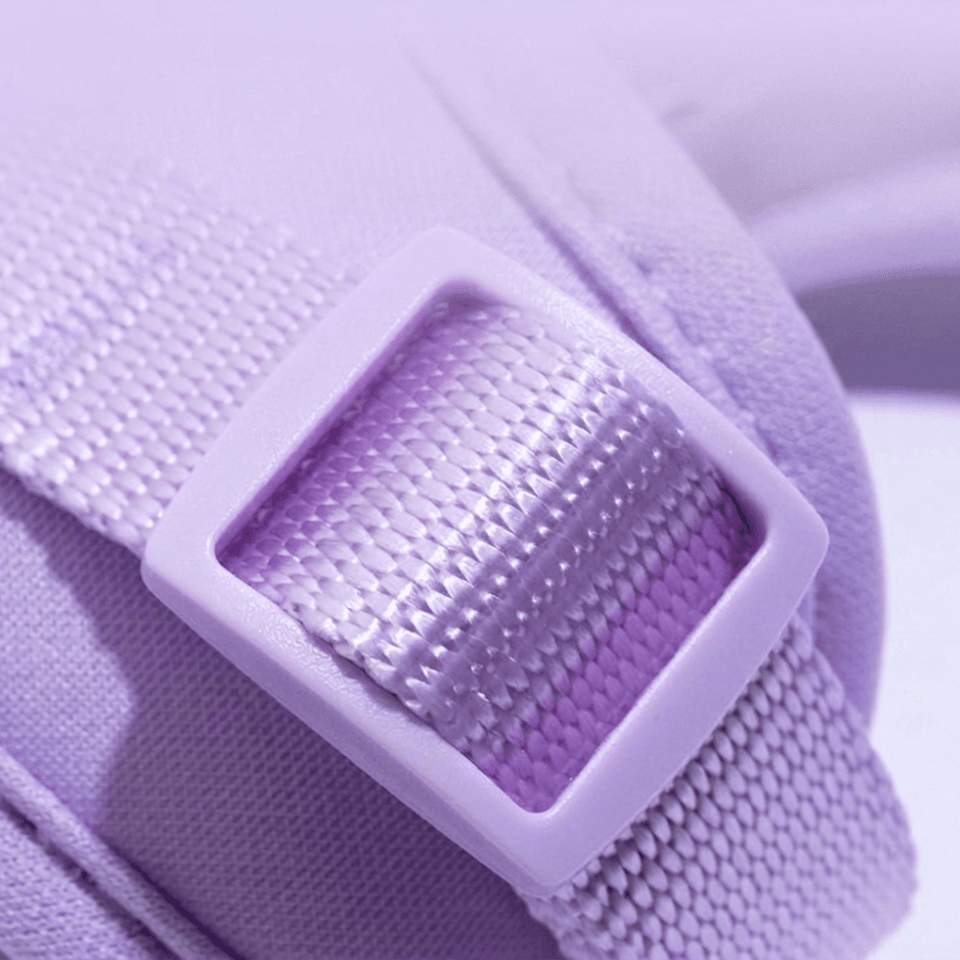
Buckles and D-rings on harnesses take significant force — particularly from large dogs that pull hard. Cheap plastic buckles can crack under sustained load; low-quality metal hardware corrodes and weakens over time. Look for high-strength reinforced buckles (ABS or similar) and rust-proof D-rings. Rubber-coated D-rings are worth the extra cost — they’re quieter, less likely to scratch your dog, and more resistant to corrosion than bare metal.
Breed-Specific Considerations
Different breeds have different harness needs beyond just size. Here is what to consider for the most common body types:
Flat-faced breeds (Bulldogs, Pugs, French Bulldogs)
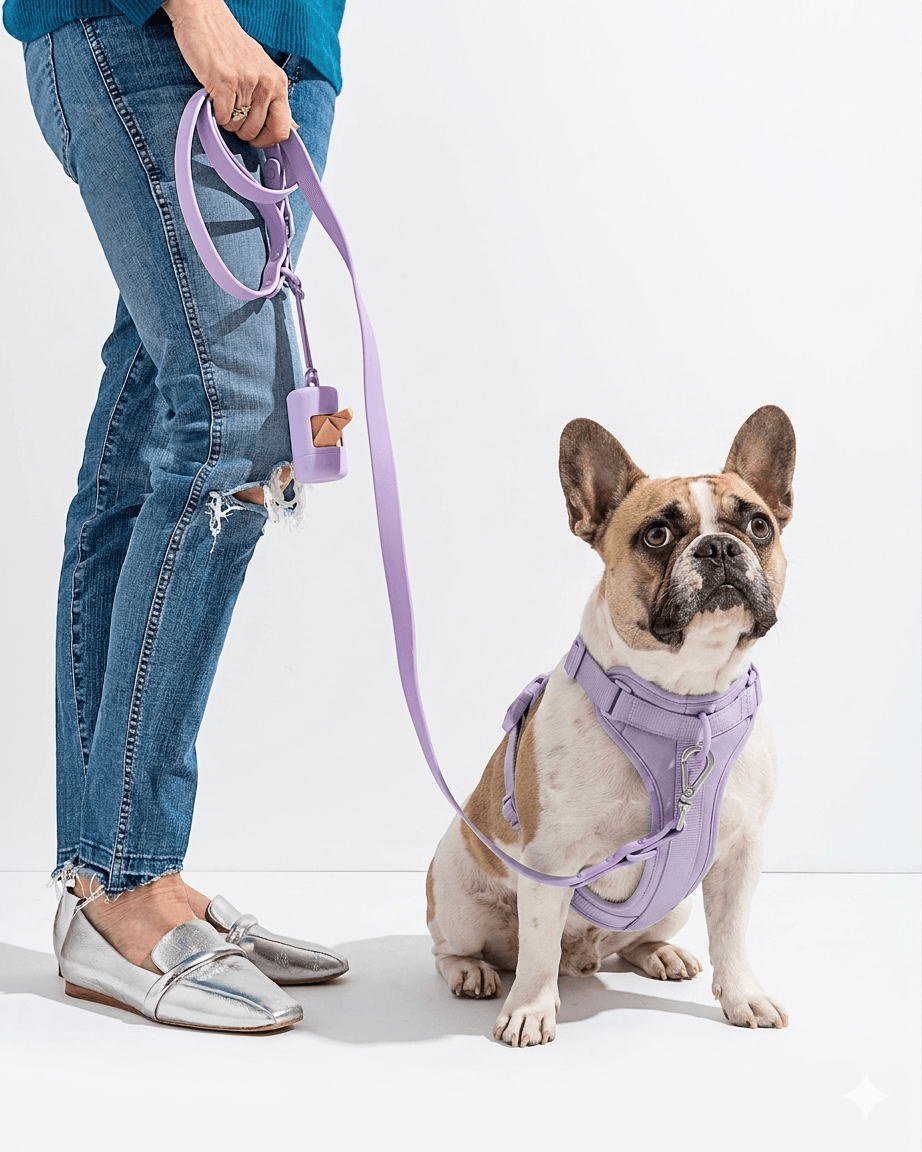
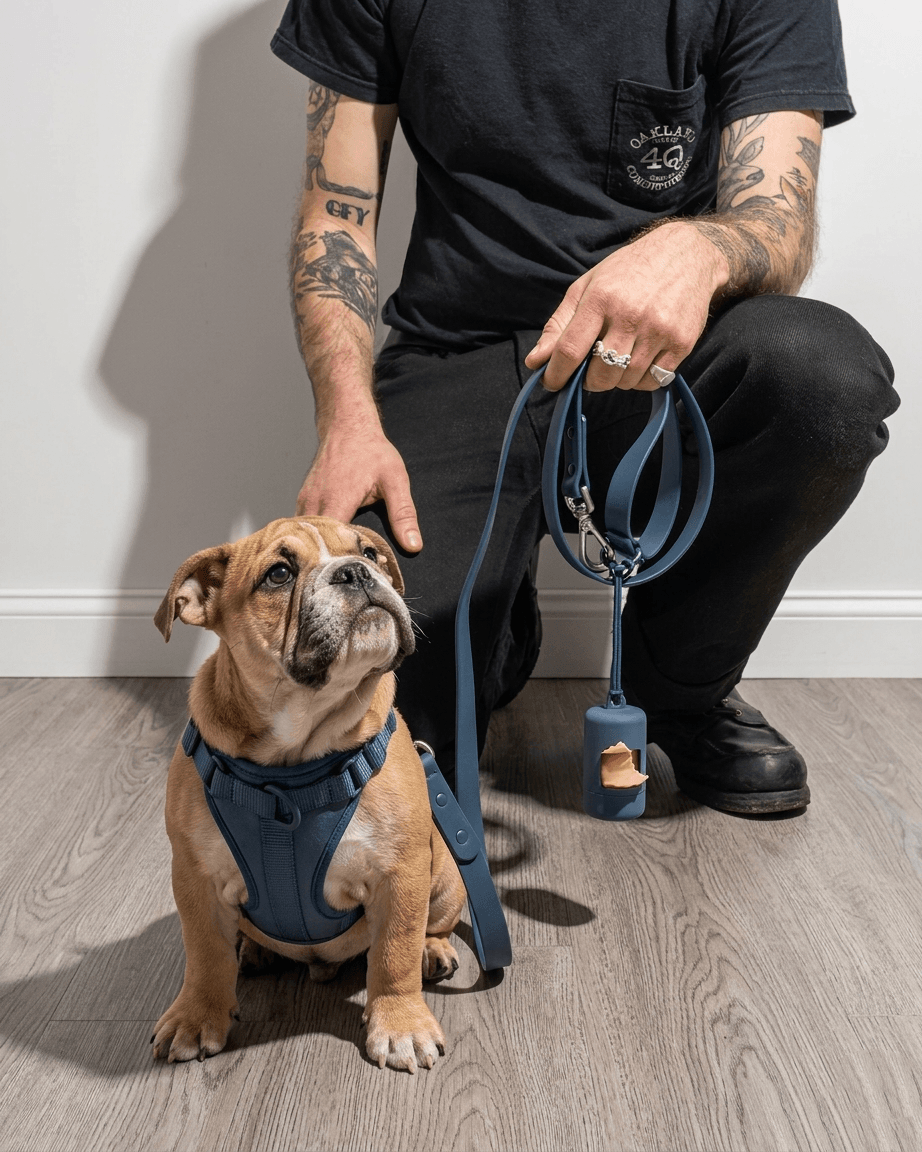
A harness is essential — any collar pressure on the neck risks restricting already-compromised airways. Look for a wide chest panel that sits well below the throat and a harness that does not restrict the natural rolling gait these breeds have. Barrel-chested proportions mean a three-point adjustment system is particularly important.
Large pulling breeds (German Shepherds, Labradors, Huskies)
Hardware strength is the priority. The front D-ring and buckle system need to handle sustained pulling force from a large, powerful dog without flexing or cracking. A wide chest panel distributes the braking force of the front clip across a larger area, reducing the risk of pressure points forming during active walks.
Slim-headed breeds (Greyhounds, Whippets, Salukis)
These breeds can back out of almost any standard collar — which makes a well-fitted harness essential rather than optional. The three-point adjustment is critical here; the belly strap in particular needs to be snug enough to prevent the dog from reversing out. These breeds also tend to have deep, narrow chests, so check the chest panel width fits properly before buying.
Small breeds (Chihuahuas, Yorkshire Terriers, Maltese)
Small breeds are particularly vulnerable to trachea damage from collar pressure — which makes a harness strongly recommended for lead walking regardless of whether they pull. Weight matters at this end of the scale: look for lightweight neoprene or mesh padding rather than heavy foam, which can be disproportionately bulky on a small dog.
 |
 |
How to Fit a No-Pull Harness Correctly
A no-pull harness only works if it fits correctly. Too loose and the dog can slip out or the front clip loses its redirecting effect. Too tight and it restricts movement and causes chafing. Our full harness sizing guide covers measuring and fit checks in detail — here is a quick summary:
How to measure your dog’s neck and chest for the perfect harness fit — step-by-step tutorial.
Step 1 — Measure chest girth first
The most important measurement for a harness is chest girth — measured at the widest point behind the front legs. This is different from neck size, which is what you use for collar sizing. Use a soft measuring tape and measure with your dog standing upright.
Step 2 — Size up if between sizes
If your dog’s chest measurement falls at the top of a size range, choose the larger size. A harness with adjustment room is easier to fit correctly than one that is already at maximum capacity. The three-point system gives you plenty of room to fine-tune the fit.
Step 3 — Apply the two-finger rule to every strap
With the harness on and buckled, slide two fingers under each strap — neck, chest, and belly. You should be able to do this without forcing, but the strap should not be loose enough to slide more than two fingers in comfortably.
Step 4 — Check the front D-ring position
With the harness fitted, the front D-ring should sit flat against the centre of your dog’s chest — not sliding to one side. If it is off-centre, adjust the shoulder straps until it sits symmetrically. A centred front ring is what gives the no-pull redirection its effectiveness.
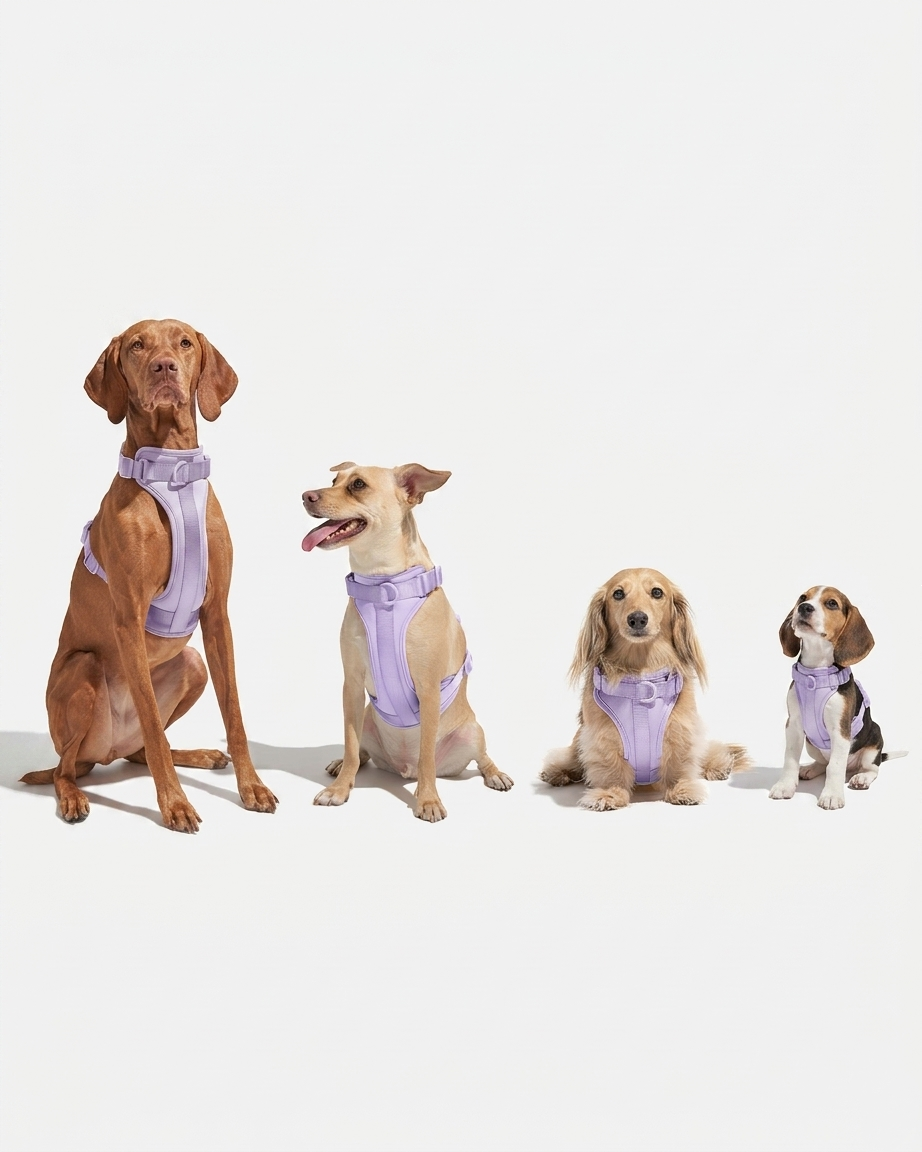
The MoonianPet No-Pull Harness: How It Measures Up
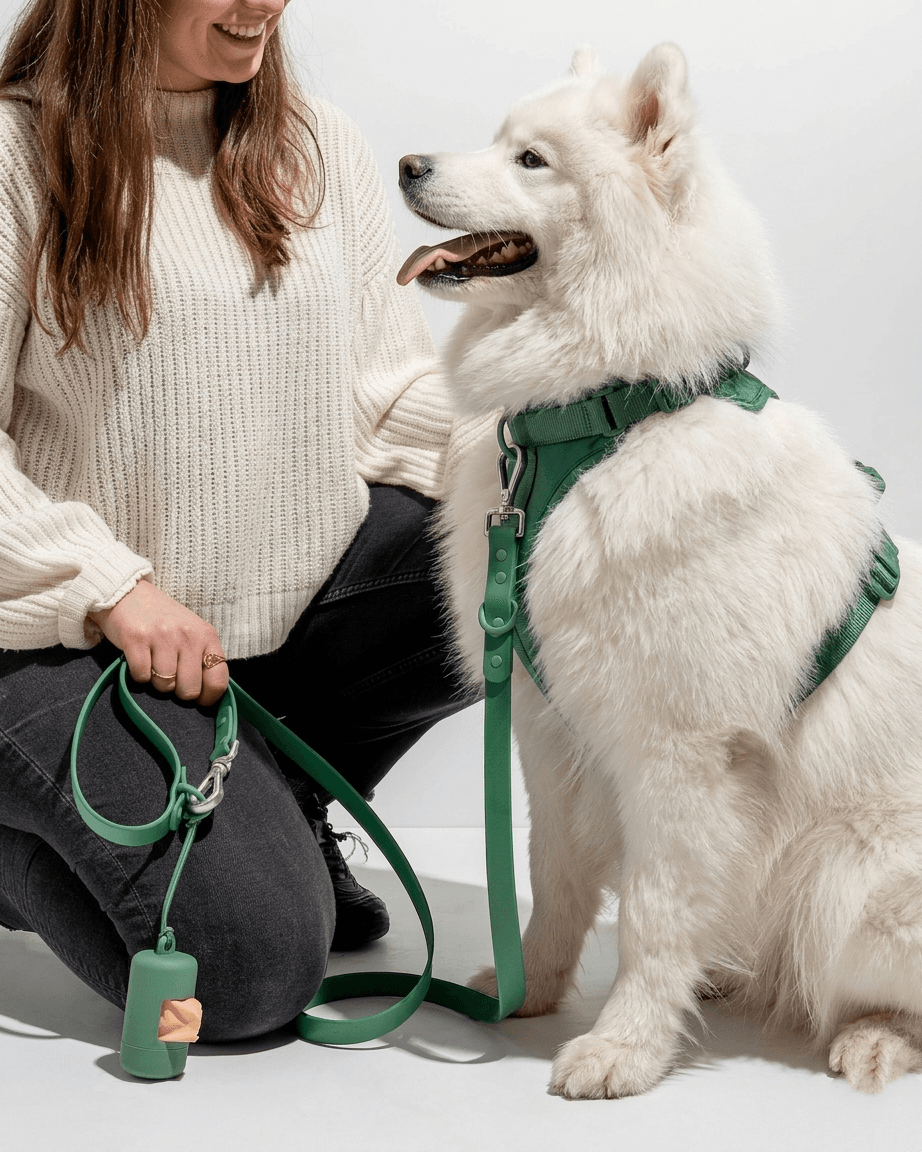
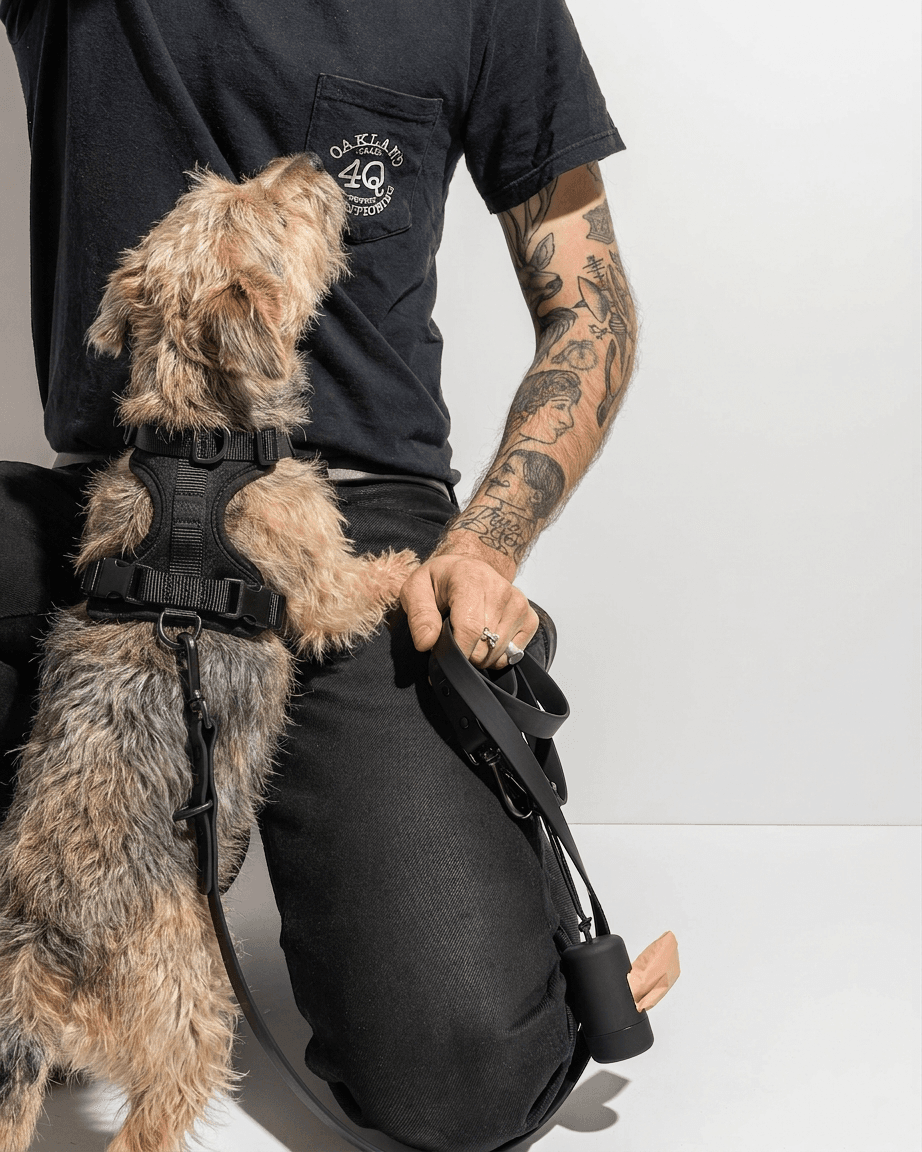
The MoonianPet No-Pull Dog Harness was built around each of the features this guide covers:
| Feature | MoonianPet No-Pull Harness |
|---|---|
| Clip positions | Dual front D-ring for no-pull and back D-ring for standard |
| Padding | Breathable ventilated neoprene, soft, lightweight, cool |
| Escape-proof | Dual-layer safety buckle, holds under pulling and backing |
| Adjustability | 3-point tri-glide system at neck, chest and belly |
| Hardware | Rubber-coated rust-proof D-ring and high-strength ABS buckle |
| Sizes | XS to XL, fits Chihuahua to Rottweiler |
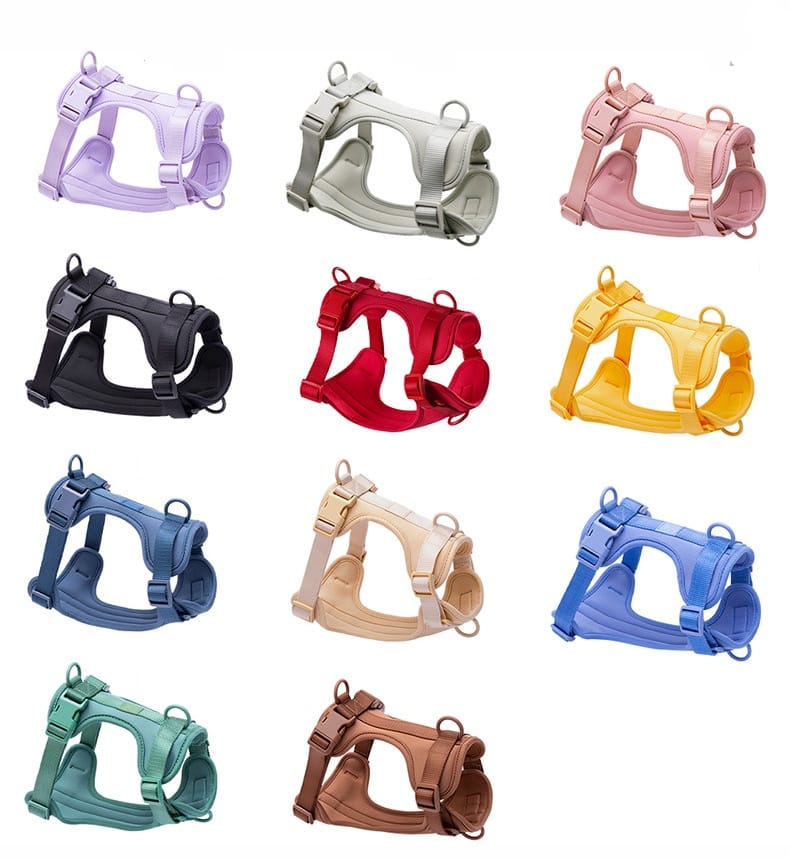
| Colours | 11 including Yellow, Sky Blue, Green, Pink, Purple and more |
 |
 |
 |
 |
Shop the MoonianPet No-Pull Harness
Available in 11 colours and 5 sizes from XS to XL. Compatible with our Waterproof Dog Leash and Waterproof Dog Collar for a complete matching set. Not sure which colour? Our colour guide covers all 11 shades. Ships worldwide.
Frequently Asked Questions
What is the difference between a front-clip and back-clip harness?
A back-clip harness attaches the lead at the dog’s shoulders — which gives a puller something to lean into. A front-clip harness attaches at the chest; when the dog pulls, the tension redirects them sideways rather than allowing them to power forward. For dogs that pull, front-clip is significantly more effective.
Will a no-pull harness work without training?
A front-clip harness naturally reduces pulling for many dogs simply by changing the physics — the sideways redirection disrupts the pulling pattern without any training. That said, combining a no-pull harness with positive reinforcement training produces faster and more lasting results than either approach alone.
How do I know if the harness fits correctly?
Apply the two-finger rule to every strap — you should be able to slide two fingers comfortably under each strap but no more. The front D-ring should sit flat at the centre of the chest. The harness should not shift or rotate significantly when your dog moves. For a full step-by-step guide, see our harness sizing guide.
Can my dog wear a harness and collar at the same time?
Yes — and many owners do. A collar carries ID tags and stays on 24/7; the harness goes on for walks and comes off at home. Some owners also clip the lead to both simultaneously as a safety backup in busy areas. Our collar vs harness guide covers this in detail.
Is neoprene padding better than foam for a dog harness?
Yes, for most dogs. Neoprene is lighter, more breathable, and softer against skin than standard foam padding. It does not trap heat the way solid foam does, which makes it better for active dogs and dogs in warmer climates. It also compresses and recovers more naturally with the dog’s movement, reducing friction during walking.
What size harness does my dog need?
Measure your dog’s chest girth at the widest point behind the front legs — this is the most important measurement for harness fit. If between sizes, size up. See our full harness sizing guide for measurements in cm and inches for XS through XL, plus a step-by-step fit check.
Already sorted your harness? Your dog still needs a collar for ID tags — our Waterproof Dog Collar comes in matching colours. For everything about collar vs harness for different situations, read our collar vs harness guide. And if you swim with your dog, our guide on the best dog collar for swimming covers what to look for.
About the Author
Wenyue
Wenyue is the founder of MoonianPet and writes about dog collars, harnesses, waterproof pet gear, and everyday dog care.
Growing up with dogs inspired her lifelong interest in pet care and practical dog gear. Through MoonianPet, she researches dog collars, harnesses, waterproof materials, and everyday solutions that help active dogs stay comfortable during daily adventures.