

When choosing a dog leash, most owners spend all their time thinking about the length, the colour, or the handle design. But the single most important factor in how a leash performs, how long it lasts, and how it feels to use is the material it is made from.
A cheap nylon leash and a premium waterproof PVC leash might look similar from a distance, but after three months of daily walks through rain, mud, and sea water, they will be in entirely different conditions. The material determines whether your leash absorbs water and smells, whether it frays after a few weeks of pulling, and whether it gives you a secure grip when your dog lunges.
This guide breaks down the four most common dog leash materials — nylon, leather, rope, and PVC-coated webbing — explaining the pros, cons, and best use case for each, so you know exactly what you are buying.
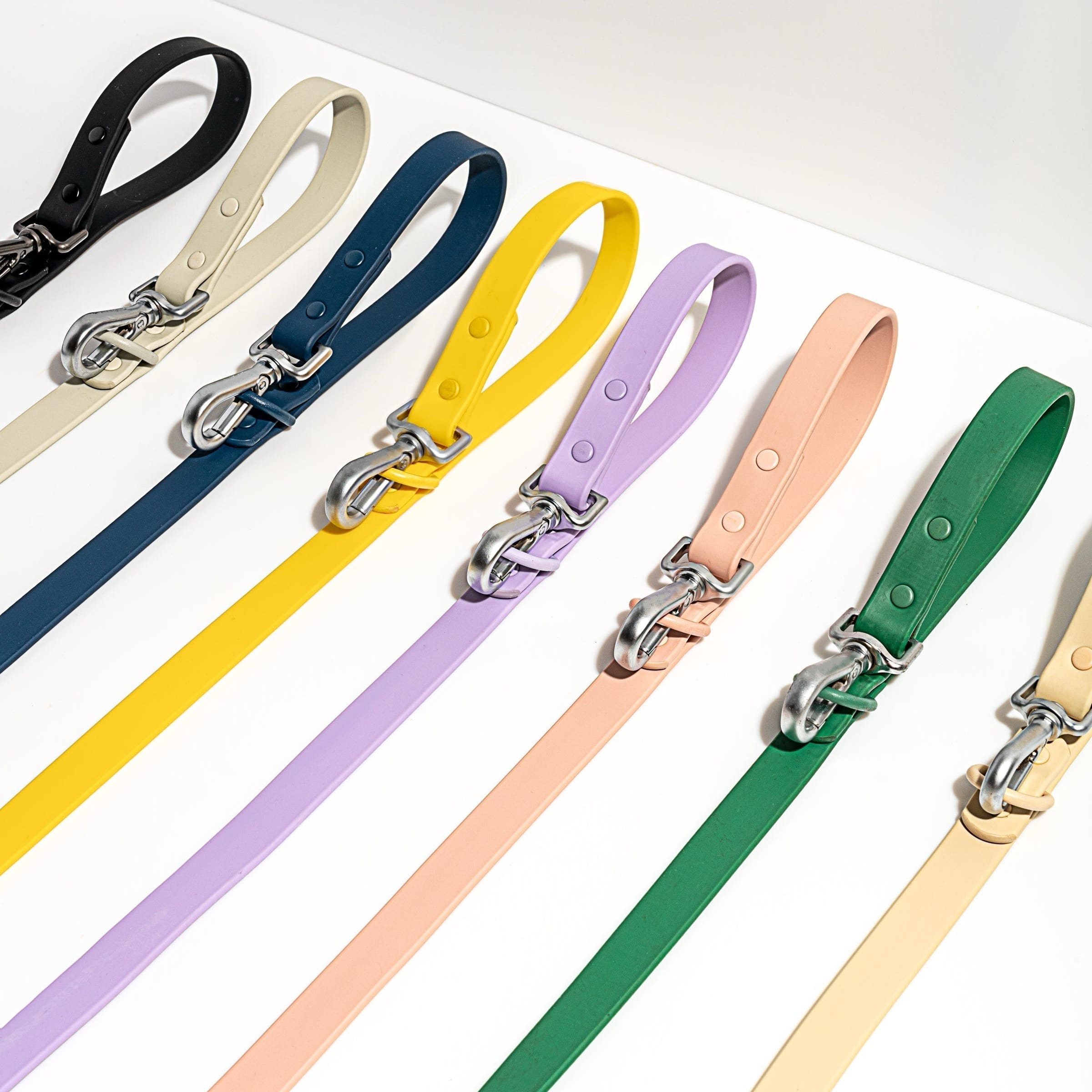
Nylon Dog Leashes
Nylon is the most common material used for dog leashes today. It is cheap to manufacture, available in almost any colour and pattern, and relatively strong. Most standard flat leashes found in pet stores are made from nylon webbing.
Pros of Nylon
Affordable, widely available, lightweight, and comes in a huge variety of colours. It is a perfectly adequate choice for calm dogs that only walk in dry weather.
Cons of Nylon
Nylon is highly porous and absorbs water rapidly. A wet nylon leash gets heavy, slippery, and takes hours to dry. Because it holds moisture, it also harbours bacteria — meaning it will eventually develop a permanent “wet dog” smell. It is also prone to fraying and can be chewed through easily.
Leather Dog Leashes
Leather has been used for dog leashes for centuries. It offers a classic, premium look and provides a natural “break-in” period where the material softens and moulds to the handler’s hand. High-quality leather leashes are strong and durable when properly maintained.
Pros of Leather
Extremely durable, comfortable to hold, and looks better with age. Leather provides excellent grip without stretching.
Cons of Leather
Leather requires regular conditioning to prevent it from drying out and cracking. It is not waterproof — repeated exposure to water will stretch the leather, ruin the finish, and eventually cause it to rot. It is also significantly heavier and more expensive than most other materials.
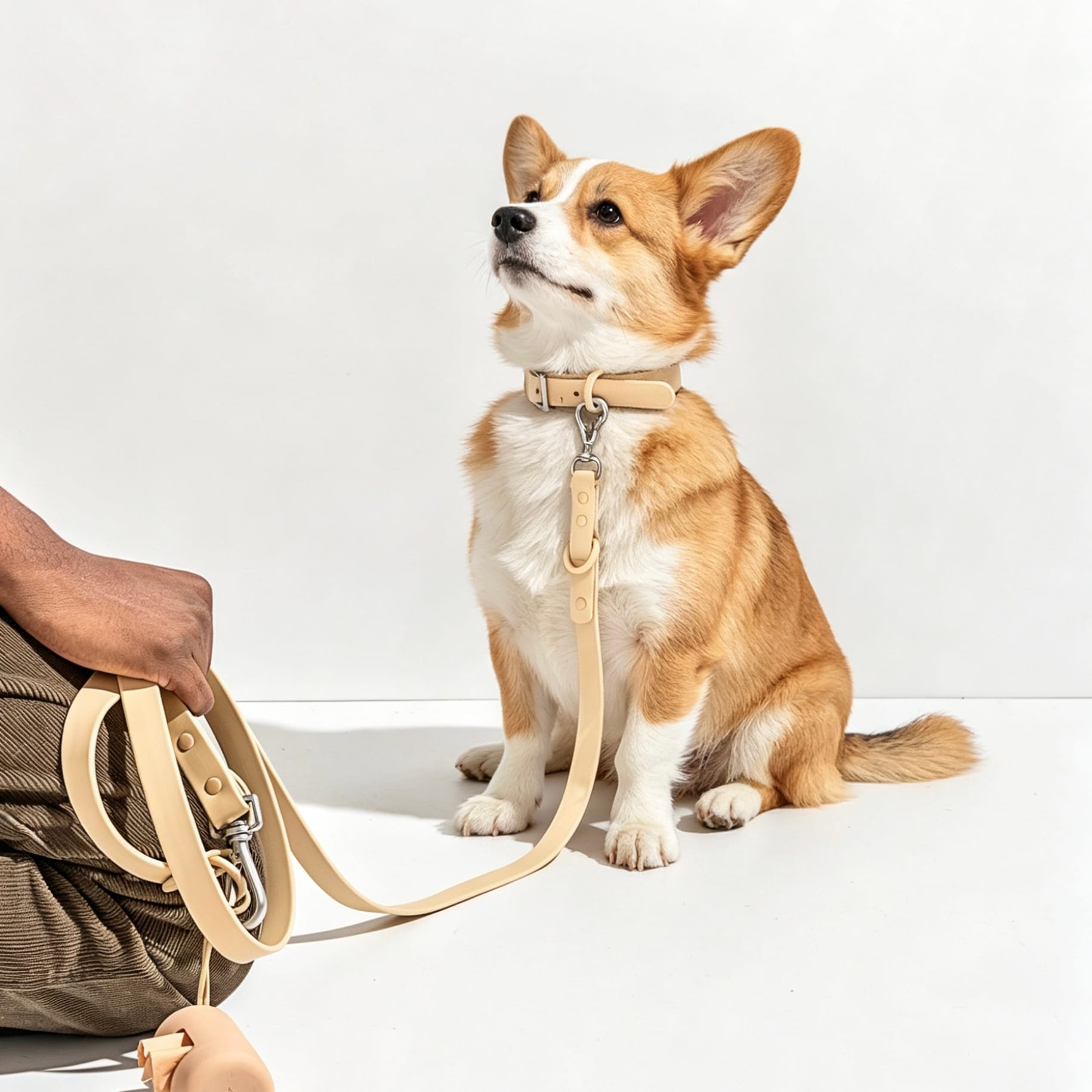
Rope Dog Leashes
Rope leashes, often made from climbing-grade nylon or cotton, have become popular for their soft, rounded feel. They are comfortable to hold and don’t cause “leash burn” if the leash slides through your hands.
Pros of Rope
Soft on the hands, flexible, and often very strong if made from climbing rope. They are a popular choice for training and everyday walking.
Cons of Rope
Rope acts exactly like a sponge. It absorbs water, mud, and odours deeply into its fibres, making it incredibly difficult to clean. If your dog is a chewer, a rope leash can be severed in seconds, leaving dangerous strands of fibre everywhere.
PVC-Coated Webbing (Waterproof)
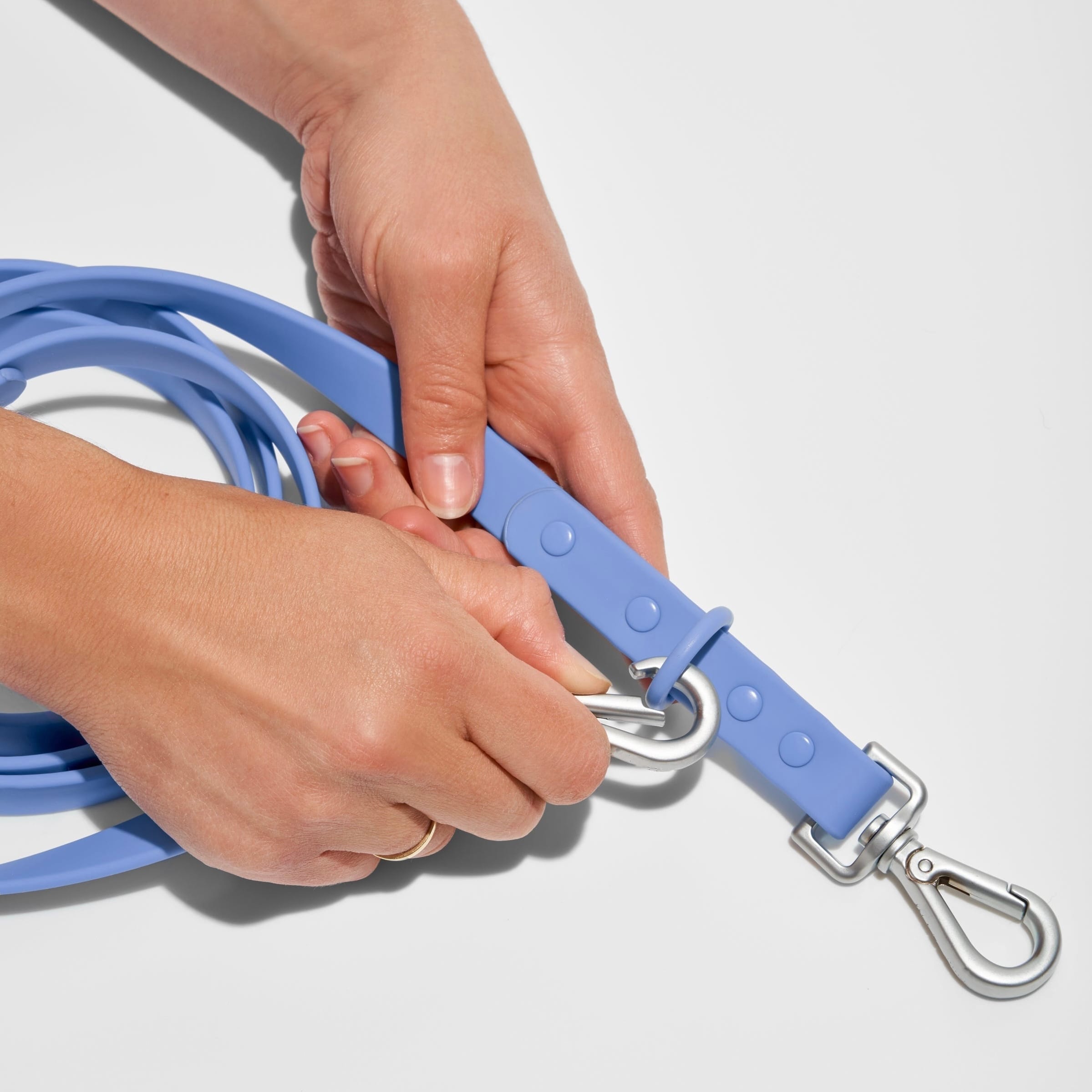
PVC-coated webbing (often referred to as BioThane-style coated webbing) is the modern standard for active and outdoor dog gear. It consists of a strong nylon webbing core entirely encased in a waterproof polymer coating. It offers the strength of nylon with the waterproof, easy-clean properties of plastic.
Pros of PVC-Coated Webbing
100% waterproof and non-porous. It does not absorb water, mud, or bacteria, meaning it never develops a smell. It wipes completely clean in seconds, maintains its grip when wet, and is highly resistant to chewing and fraying. It is also incredibly lightweight.
Cons of PVC-Coated Webbing
It is slightly stiffer than soft cotton or nylon rope, which takes a day or two to get used to. It is also slightly more expensive upfront than standard nylon — though it outlasts nylon by years, making it cheaper in the long run.
Dog Leash Material Comparison
Here is how the four most common dog leash materials compare across the factors that matter most for daily use:
| Material | Waterproof | Odour-Free | Durability |
|---|---|---|---|
| Nylon | No (absorbs water) | No (smells over time) | Low/Medium |
| Leather | No (stretches/rots) | Medium | High (if maintained) |
| Rope | No (acts like sponge) | No | Medium |
| PVC-Coated (Waterproof) | Yes (100%) | Yes (never smells) | Very High |
The Waterproof Leash Built for Every Condition
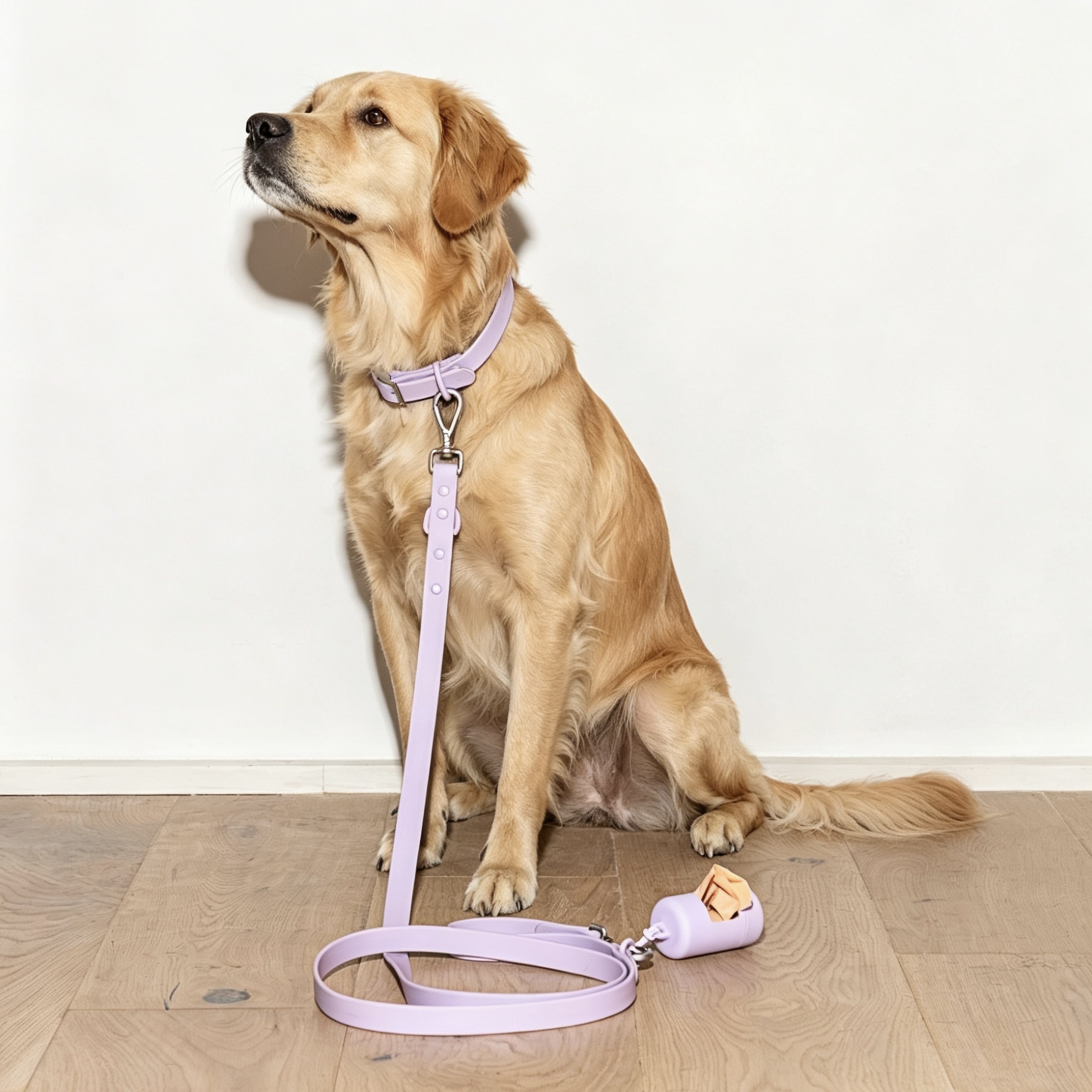
The MoonianPet Waterproof Dog Leash is made entirely from heavy-duty, PVC-coated webbing. It delivers the strength of nylon without any of the water absorption, odour retention, or fraying. The zinc alloy hardware is rust-proof for salt water and fresh water use, and the sealed handle provides a secure grip in all weather conditions. Available in 11 colours and two widths.
Want a matching setup? The Waterproof Collar & Leash Set pairs this leash with a matching waterproof collar in the exact same colour and material.
Frequently Asked Questions
What is the best material for a dog leash?
For most dogs, PVC-coated webbing is the best material. It offers the highest durability, is completely waterproof, does not hold odours, and is incredibly easy to clean. Nylon is acceptable for dry, casual walks, while leather is a premium option if you are willing to maintain it and keep it dry.
What are dog leashes made of?
Most dog leashes are made of nylon webbing, leather, cotton rope, or PVC-coated webbing. The hardware (the clasp and D-ring) is usually made of stainless steel, zinc alloy, or cheaper chrome-plated metal.
Are nylon dog leashes safe?
Yes, nylon leashes are safe for everyday use. However, if your dog is a heavy puller or a chewer, nylon can fray or be chewed through relatively quickly. Nylon can also cause “leash burn” if it slides quickly through bare hands. PVC-coated webbing or leather are generally safer and more durable for strong dogs.
Does leash material affect pulling?
The material itself doesn’t stop pulling — that is what a no-pull harness is for. However, a material with no stretch (like PVC-coated webbing or leather) gives you clearer communication with your dog compared to bungee or stretchy rope leashes, which can actually encourage pulling by letting the dog build momentum before hitting the end of the leash.
Still deciding on the right type of leash for your dog? Our how to choose a dog leash guide covers length, width, and clip styles. Or, if you want to understand how a waterproof leash pairs with a collar, see our