
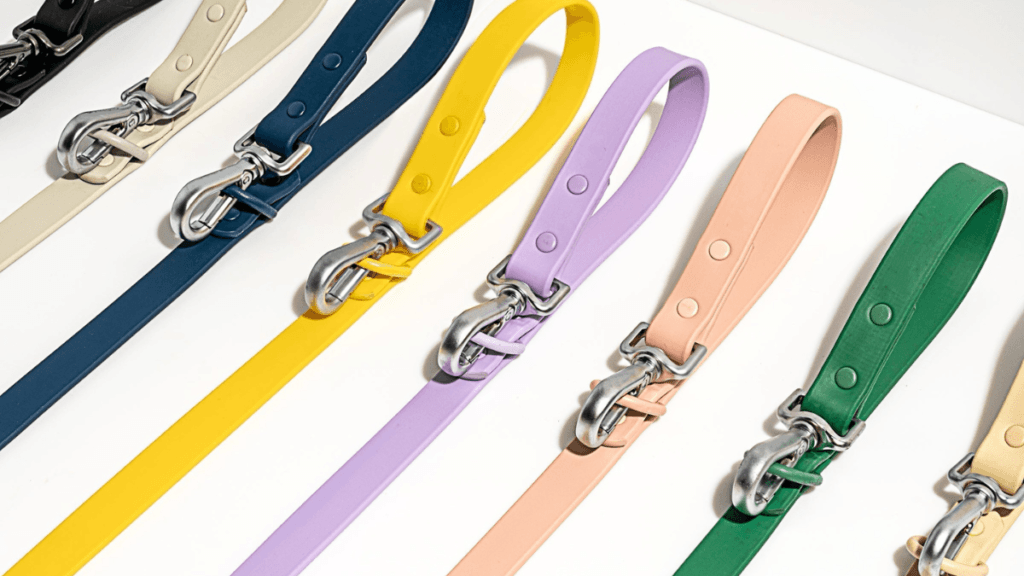
If you have ever wrapped a soggy, mud-soaked nylon dog leash around your bare hand, you already know why waterproof matters. A wet standard leash absorbs water, gets heavy, transfers mud directly to your skin, and within a few weeks of regular use, starts to smell exactly like the swamp you walked through. The leash is the one piece of dog gear you have to physically hold onto the entire walk — when it gets wet and dirty, the experience of walking your dog becomes genuinely unpleasant.
A waterproof dog leash solves this completely. Made from non-porous materials like PVC-coated webbing, a genuinely waterproof leash does not absorb water, does not hold onto odours, and wipes completely clean in seconds. Whether you are walking in the rain, hiking through muddy trails, or letting your dog swim in the sea, the leash stays dry, lightweight, and odour-free.
This guide covers what makes a leash truly waterproof, which materials actually deliver, and what to look for when choosing the best waterproof dog leash for your everyday adventures.
What Makes a Dog Leash Truly Waterproof?
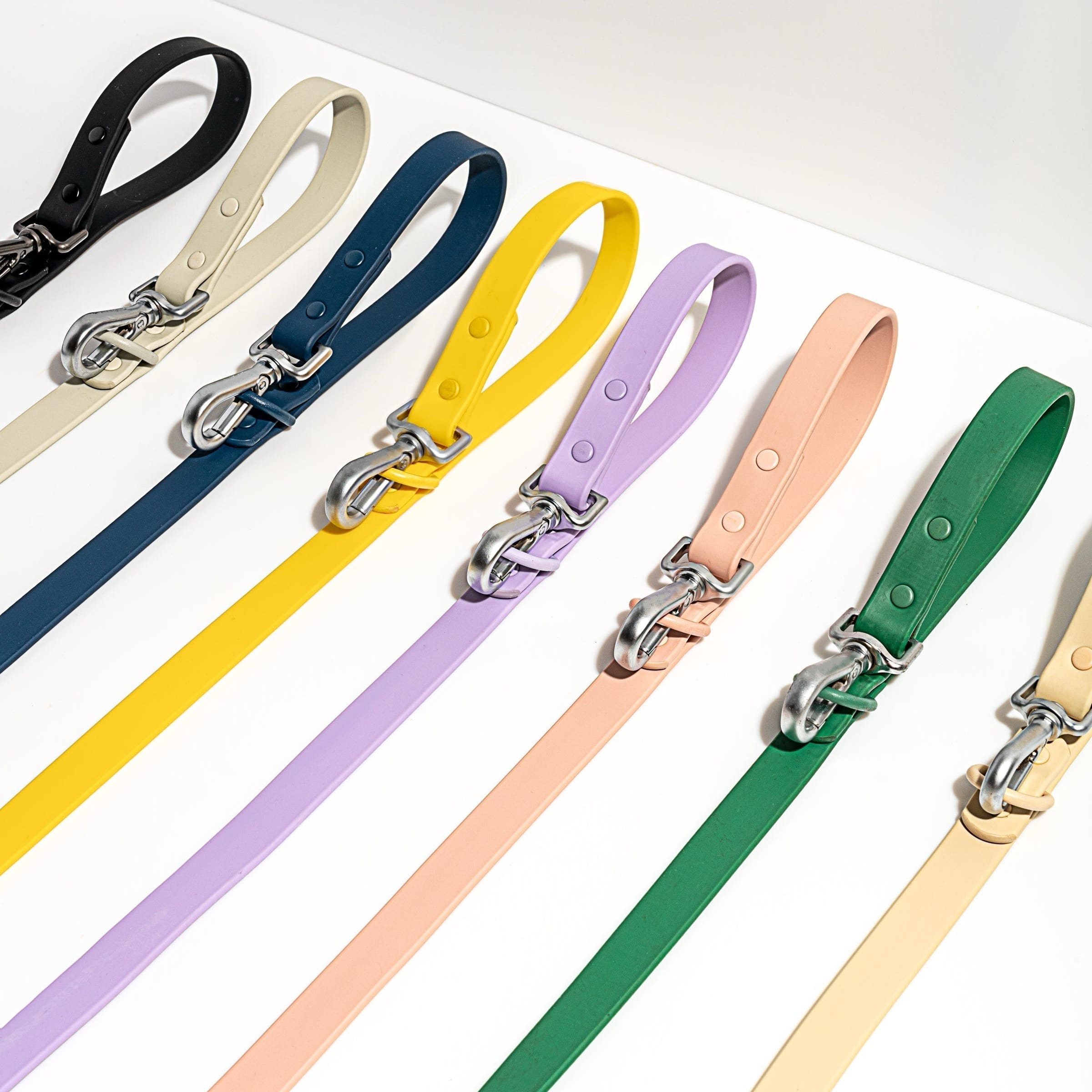
Waterproofing in dog leashes is not a surface treatment — it is a material property. A truly waterproof leash is made from a polymer-coated webbing (often referred to as BioThane-style coated webbing). The woven nylon core inside provides tensile strength, while the outer PVC or TPU coating creates a completely non-porous barrier. Water, mud, and bacteria simply cannot penetrate the surface.
This is fundamentally different from standard nylon, leather, or rope leashes. Nylon fibres absorb water rapidly and hold it inside the weave, which is why a wet nylon leash takes hours to dry and develops a permanent “wet dog” smell. Leather stretches and degrades when soaked repeatedly. Rope acts like a sponge.
A PVC-coated waterproof leash, on the other hand, can be submerged entirely, pulled out of the water, wiped with a towel, and feel completely dry to the touch immediately. For owners who walk their dogs near water or in wet climates, this material difference changes the daily walking experience.
Why a Waterproof Leash is Worth It
Zero odour retention
The bacteria that cause the classic “smelly leash” odour need a porous, damp surface to grow. Because coated webbing is non-porous and dries instantly, there is no environment for bacteria to thrive. A waterproof leash will not smell, even after years of daily use and regular exposure to water.
Easy to clean after muddy walks
A muddy standard leash needs to be soaked and scrubbed, and even then, the dirt trapped in the fabric weave is hard to fully remove. A waterproof leash just needs a quick wipe with a damp cloth or a rinse under the tap. It takes less than thirty seconds to go from mud-caked to completely clean.
Does not get heavy when wet
A standard nylon or rope leash absorbs water and can double in weight during a rainy walk. This puts extra strain on your wrist and changes the weight distribution when communicating with your dog. A waterproof leash weighs the same dry as it does fully submerged.
Dimensional stability and grip
Wet nylon becomes slippery and difficult to grip securely. Wet leather stretches and loses its shape. PVC-coated webbing maintains its shape, flexibility, and grip texture regardless of moisture, giving you consistent control over your dog in all weather conditions.
What to Look For in a Waterproof Dog Leash
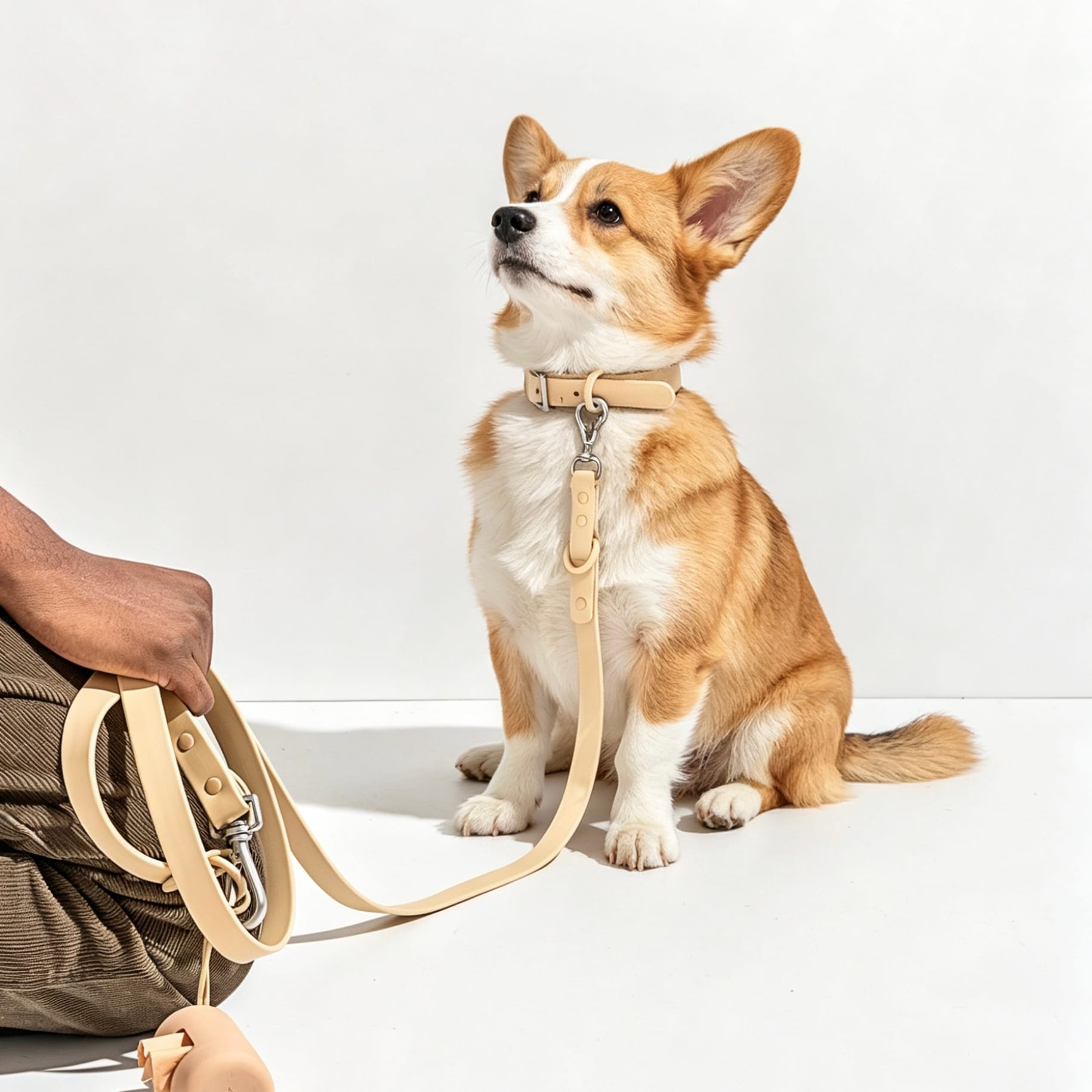
Not all waterproof leashes are built to the same standard. When comparing options, these are the features that determine how well the leash will hold up over time:
Genuine PVC-coated webbing
Look specifically for “PVC-coated”, “TPU-coated”, or “BioThane-style” in the product description. This confirms the leash uses the non-porous polymer coating required for true waterproofing. Avoid leashes simply labelled “water-resistant nylon” — these have a surface treatment that will wash off over time, leaving you with an absorbent standard leash.
Rust-proof hardware
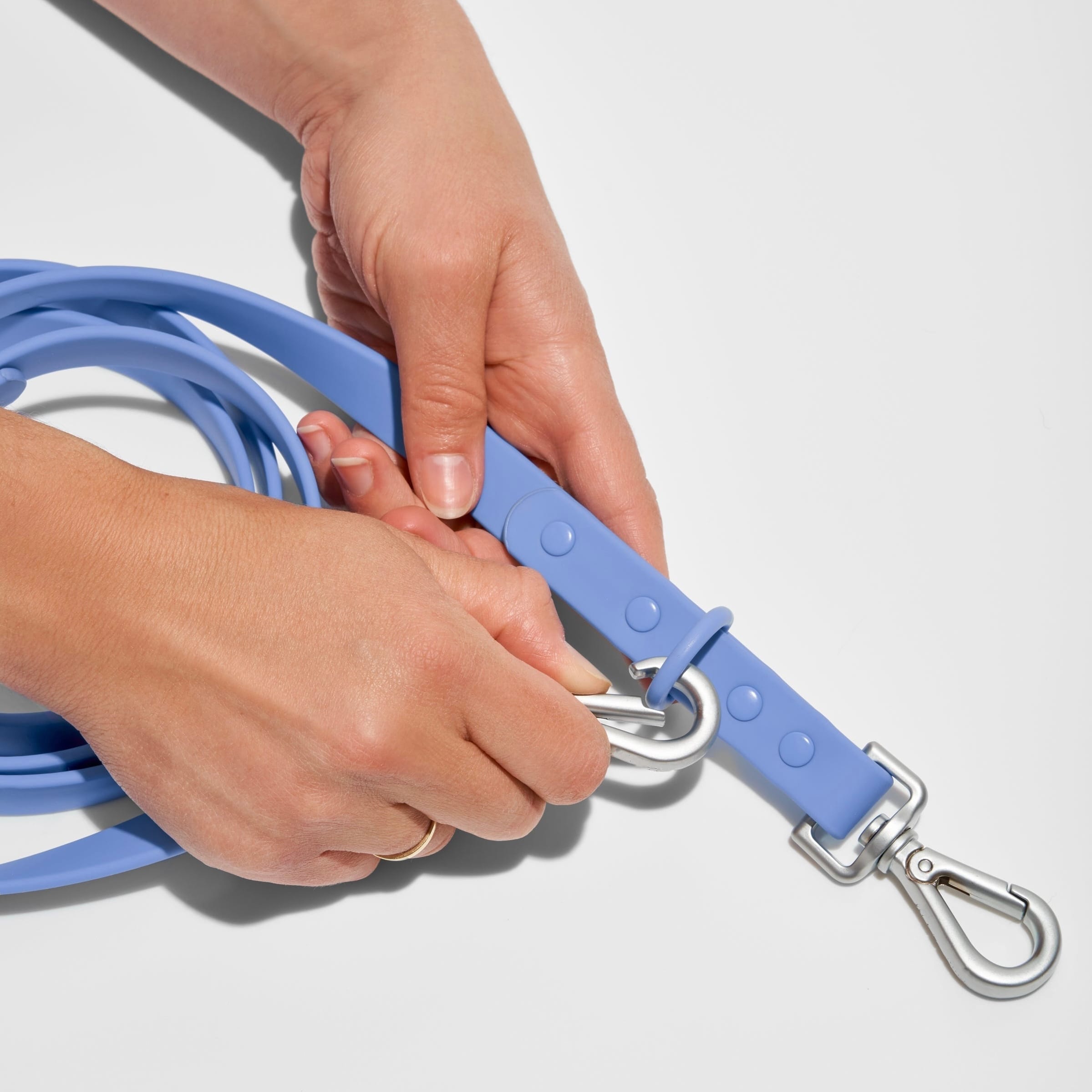
Even if the leash material is waterproof, the metal hardware will fail if it rusts. Look for zinc alloy or stainless steel snap hooks and D-rings. These metals resist corrosion in both fresh and salt water, ensuring the clasp continues to function smoothly after hundreds of wet walks. Avoid chrome-plated hardware, which chips and rusts from the inside out.
Comfortable, sealed handle
Because coated webbing is inherently slightly stiffer than soft nylon rope, the handle design matters. A good waterproof leash will have a loop handle that is sealed or welded smoothly so there are no raw edges to rub against your hand during long walks. The PVC coating itself provides excellent grip even when wet, unlike slippery wet nylon.
Appropriate length and width
For everyday walking, a 4 to 6 foot leash is the standard. A 6-foot leash gives your dog room to sniff while keeping them close enough for control. The width should match your dog’s size — 1/2 inch for small dogs, 3/4 inch for medium dogs, and 1 inch for large, strong breeds. The coated webbing should feel substantial without being overly bulky.
Best Waterproof Leash by Activity
Swimming and beach days
For dogs that swim, a waterproof leash is essential. Standard leashes become waterlogged, heavy, and drag the dog down in the water. A PVC-coated leash stays buoyant, lightweight, and dries instantly when your dog comes out of the water. It also won’t absorb salt water, preventing the stiffness and corrosion that ruins standard leashes after a few beach trips.
Rainy day city walks
In wet urban environments, a waterproof leash means you don’t have to dry your leash out on the radiator after every walk. Wipe it down, hang it up, and it’s ready for the next outing. No damp smells in the hallway, no wet leash draped over furniture, and no muddy hands when you reattach it for the evening walk.
Muddy trail hiking
For off-trail hiking where mud and debris are guaranteed, a waterproof leash is significantly easier to manage. Instead of packing a mud-caked nylon leash into your car, a quick wipe with a damp cloth or a rinse with a water bottle leaves it clean and ready to handle for the drive home.
The MoonianPet Waterproof Dog Leash
The MoonianPet Waterproof Dog Leash is built from heavy-duty, PVC-coated webbing — genuinely 100% waterproof and odour-proof. The zinc alloy snap hook resists rust in fresh and salt water, and the sealed handle provides a secure, comfortable grip even in heavy rain. Available in 11 colours and two widths to suit any dog size.
If you want a fully matched walking setup, the Waterproof Collar & Leash Set pairs the leash with a matching waterproof collar in the exact same colour and material — saving you money compared to buying them separately.

Frequently Asked Questions
Are waterproof dog leashes safe for salt water?
Yes. PVC-coated webbing is completely resistant to salt water degradation. The polymer coating will not dry out, crack, or absorb salt. However, you should rinse the metal hardware (the snap hook and D-ring) with fresh water after a beach walk to prevent salt crystal buildup inside the clasp mechanism, which can make it sticky over time.
How do I clean a waterproof dog leash?
Simply wipe it down with a damp cloth. For heavier mud or grime, run it under a tap and wipe it dry. There is no need to soak it, put it in the washing machine, or use harsh detergents. Because the material is non-porous, dirt sits on the surface and comes off instantly without scrubbing.
Will a waterproof leash smell over time?
No. The bacteria that cause the classic “dog smell” on standard nylon leashes require a porous, damp environment to grow. Because a waterproof leash does not absorb water, there is no environment for bacteria to thrive. Even after years of daily use in the rain and mud, it will remain completely odour-free.
Is a PVC-coated leash comfortable to hold?
Yes. While the coated webbing is slightly stiffer than soft cotton or nylon rope, it provides excellent grip and does not slip through your hands when the dog pulls. The sealed handle loop is smooth and comfortable, and the material actually provides better grip when wet compared to standard nylon, which becomes slippery.
Can I use a waterproof leash with a no-pull harness?
Absolutely. A waterproof leash pairs perfectly with any front-clip or back-clip harness. The lightweight, low-stretch nature of coated webbing actually provides better communication with your dog than stretchy bungee leashes or heavy ropes, making it an excellent choice for loose-leash training. See our leash training guide for more details.
Want to understand how waterproof leashes compare to other materials? See our complete guide on how to choose a dog leash, or if you are looking for a matching waterproof setup, check out our best waterproof dog collar guide.

Wenyue
Wenyue is the founder of MoonianPet and writes about dog collars, harnesses, waterproof pet gear, and everyday dog care. Growing up with dogs inspired her lifelong interest in pet care and practical dog gear. Through MoonianPet, she researches dog collars, harnesses, waterproof materials, and everyday solutions that help active dogs stay comfortable during daily adventures.