
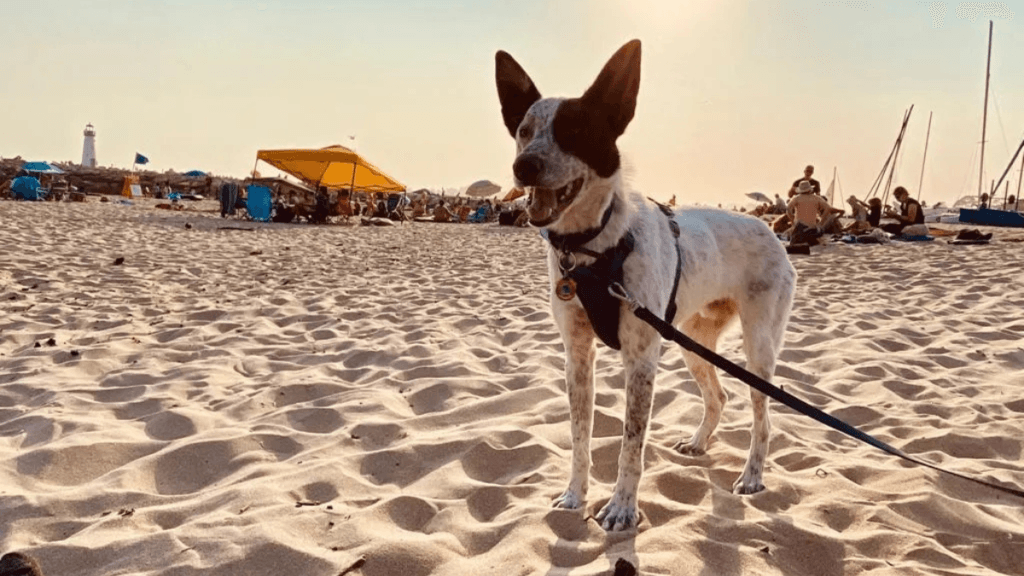
A waterproof collar without a waterproof leash is only half a solution. After a swim, the collar wipes dry in seconds — and then the nylon leash drips onto your hands for the next twenty minutes, gradually developing the wet dog smell that becomes permanent after a few months of regular beach trips. A matched waterproof set treats the whole walking system as a unit, which is how it functions in practice.
The market for waterproof sets has grown considerably — but as with individual waterproof collars, the terminology is inconsistently used. A set described as waterproof may have a coated webbing collar paired with a nylon leash, or water-resistant nylon throughout, or a genuinely non-porous coating on both pieces. The difference in performance over a summer of beach walks is significant.
This guide covers what makes a collar and leash set genuinely waterproof, what to look for when buying for beach or swimming use, and which features separate sets that hold up from those that do not.
What Makes a Collar and Leash Set Truly Waterproof
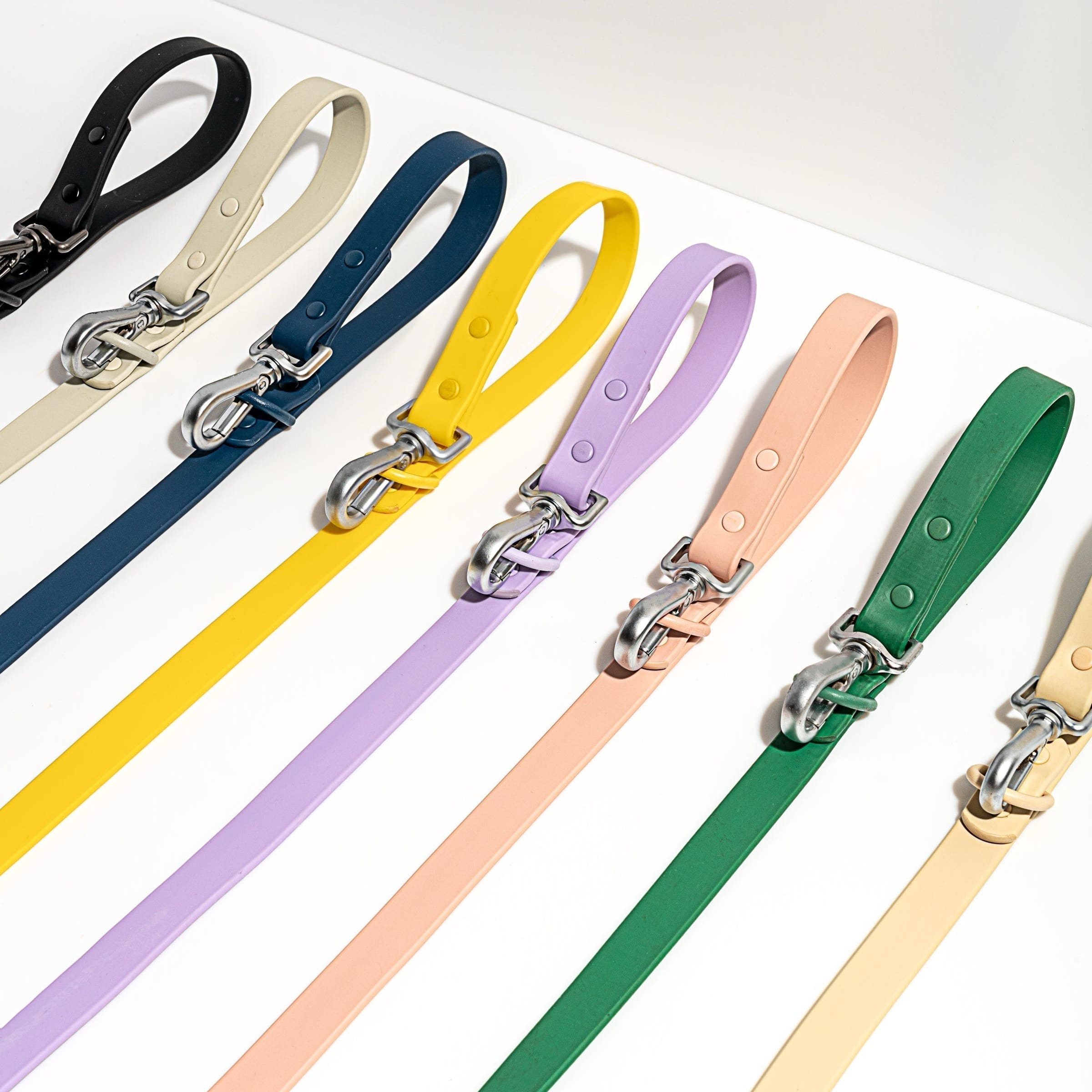
Both pieces need to be made from genuinely non-porous material for the set to perform as a waterproof unit. PVC-coated webbing — the same BioThane-style construction used in working dog equipment and marine applications — is the standard. The polymer coating does not absorb water, does not harbour bacteria, and does not develop odour regardless of how many times it gets wet.
A set marketed as waterproof where only one piece is coated webbing and the other is treated nylon will show the performance difference within a few weeks of regular swimming. The nylon piece develops odour first — usually the leash, which spends more time wet in the handler’s hand. For a full explanation of the material difference, see our guides on water resistant vs waterproof and BioThane-style coated webbing.
What to Look For in a Waterproof Set
PVC-coated webbing on both collar and leash
The material specification needs to apply to both pieces — not just the collar. Check that the leash is described as coated webbing, PVC-coated, or BioThane-style rather than nylon. The easiest test: a genuinely coated leash feels smooth and slightly stiff rather than soft and fabric-like. It wipes clean with a damp cloth and does not feel damp in the hand after a swim.
Rust-proof hardware on both pieces
The leash clip, collar D-ring, and collar buckle all need to be zinc alloy or stainless steel for beach and salt water use. A 360° swivel clip on the leash prevents the leash from twisting during active beach play and reduces stress on the attachment point. Check that the swivel mechanism itself is metal rather than plastic — plastic swivels seize up with salt water exposure over time.
Matched color from the same material batch
A matched set should use the same material in the same color for both pieces — not just the same color name applied to different materials. The same PVC-coated webbing in the same color batch ages at the same rate, fades at the same rate, and maintains its matched appearance over years of use. Separately sourced collar and leash in the “same” color often diverge in shade after a few months of outdoor exposure.
Comfortable handle on the leash
A coated webbing leash handle feels different from a nylon handle — firmer and less stretchy. The handle needs to be wide enough to hold comfortably on a long beach walk and smooth enough not to cause friction on the palm during sustained grip. A loop handle rather than a flat grip is more comfortable for most hands over extended use. Some coated leashes also include a traffic loop near the clip for close-control moments near water entry points.
Correct leash length for beach use
For beach walks where the dog will be entering and exiting the water, a 150cm (5ft) leash gives enough freedom of movement without becoming unmanageable in wet conditions. Shorter leashes — 120cm — give more control in crowded beach areas. Avoid retractable leashes at the beach entirely — the mechanism fills with sand and salt water, and the thin cord provides no real control over a dog moving at speed toward waves or other animals.

Best Set by Activity Type
Beach and salt water swimming
Salt water is more demanding on both material and hardware than fresh water. The collar and leash material needs to be genuinely non-porous — PVC-coated webbing handles salt water without absorbing salt residue that would otherwise accumulate in nylon fibres. Hardware needs to be zinc alloy or stainless steel specifically — chrome-plated hardware corrodes at exposed edges with repeated salt water contact. After each beach session, rinse the set with fresh water and wipe dry. For more on salt water collar care, see our best collar for swimming dogs guide.
River and lake swimming
Fresh water is less corrosive than salt water but creates the same odour problem for absorbent materials over repeated use. A coated webbing set used on a dog that swims in rivers daily stays odour-free indefinitely — the same dog on a nylon set will have a noticeably smelling collar and leash within four to six weeks. For river use, the hardware specification is less demanding than for salt water — zinc alloy is more than adequate.
Muddy outdoor walking in all weather
For dogs that do not swim but walk in wet, muddy conditions year-round, the main advantage of a waterproof set is maintenance. A PVC-coated collar and leash after a muddy walk: wipe with a cloth, done. A nylon set after the same walk: soak, scrub, dry — and repeat every few days. Over a year of daily muddy walks, the maintenance saving is significant and the nylon set starts to smell regardless of how often it is washed.
Everyday active use in varied conditions
For dogs that experience a mix of dry walks, occasional rain, and infrequent swimming, a waterproof set is still a good investment — it handles every condition without adjustment or special care. The set that works equally well on a dry city walk and an unexpected rain walk, without requiring different maintenance for each scenario, is simpler to own than a set optimised for one condition only.

Caring for a Waterproof Set After Beach or Swimming Use
After salt water
Rinse both collar and leash with fresh water to remove salt residue from the surface and hardware. Salt left to dry on zinc alloy hardware is harmless but can leave a white residue — a quick rinse prevents this. Wipe dry with a cloth. The whole process takes under two minutes and keeps the set looking new indefinitely.
After fresh water and mud
Wipe with a damp cloth. Mud on coated webbing does not penetrate the surface — it sits on top and wipes off cleanly. No soaking or scrubbing required. For heavier mud buildup in the stitching or hardware, a quick rinse under a tap and a wipe clears it completely.
Storage
No special storage requirements — coated webbing does not mildew, does not need to be dried flat, and does not degrade with UV exposure the way some nylon dyes do. Coil the leash loosely rather than bending it sharply at a single point repeatedly, which can stress the hardware connection over time.
A Matched Set Built for Water
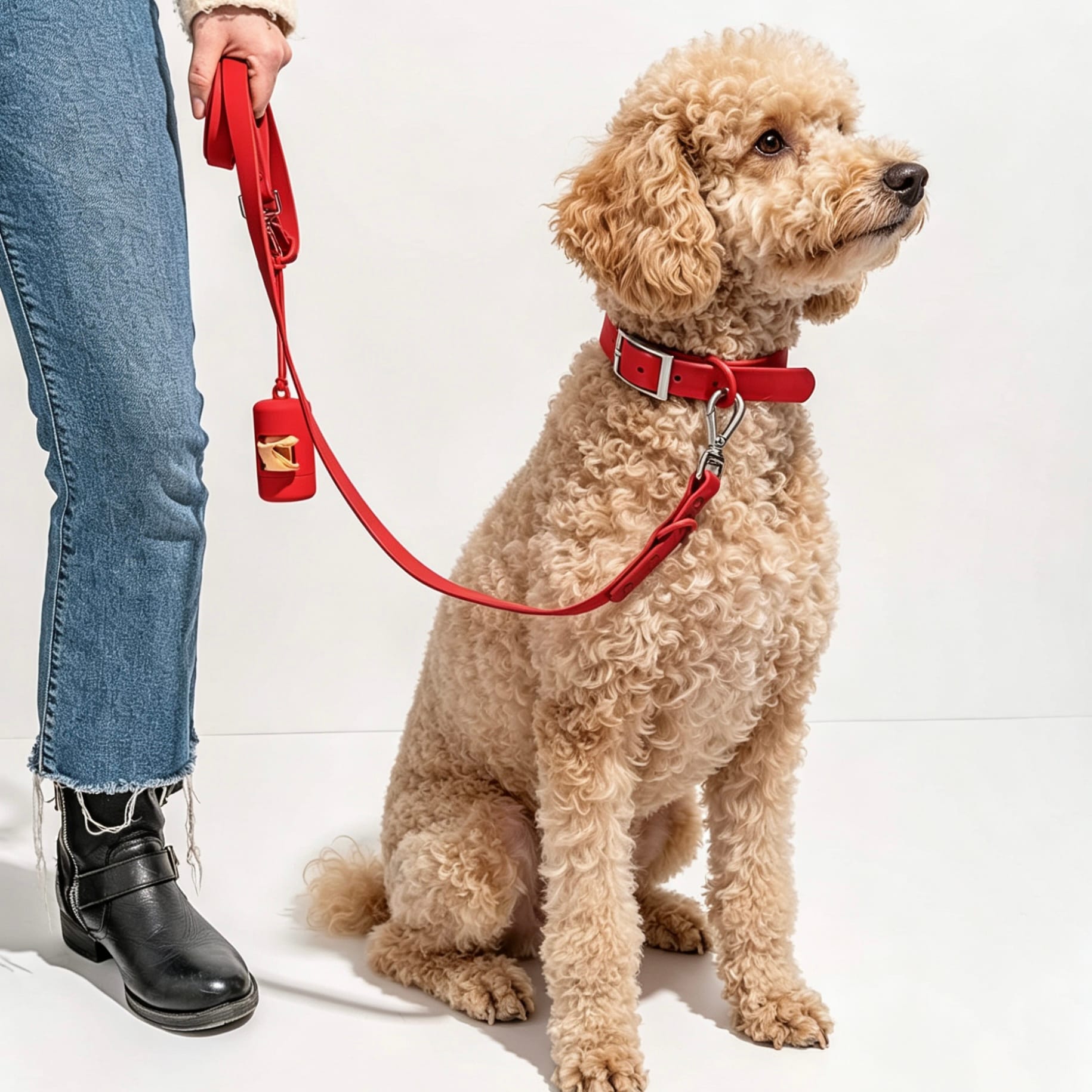
The MoonianPet Waterproof Collar & Leash Set is PVC-coated webbing on both collar and leash — the same material, the same color batch, the same non-porous performance on both pieces. Zinc alloy hardware throughout, including a 360° swivel clip on the leash rated for large dog use. Collar in 5 sizes from XS to XL; leash in two lengths. Available in 11 colors.
If you already have a collar you want to keep, the MoonianPet Waterproof Leash is available separately. Or if you want the collar alone, the Waterproof Dog Collar is sold individually across all 11 colors and 5 sizes.
Frequently Asked Questions
What is the best waterproof collar and leash set for beach dogs?
For beach and salt water use, the set needs PVC-coated webbing on both collar and leash — not just one piece — and zinc alloy or stainless steel hardware on both. The MoonianPet Collar & Leash Set meets both specifications: coated webbing throughout, zinc alloy hardware including a 360° swivel leash clip, and colour-matched from the same material batch for long-term visual consistency.
Can my dog swim with a collar and leash on?
A collar yes — dogs swim safely with a well-fitted collar on. A leash during swimming is less practical — the leash creates drag and can tangle, and most handlers unclip the leash for open water swimming and reattach it on exit. A waterproof collar handles the swim without degrading; a waterproof leash handles repeated attachment and reattachment in wet conditions without developing odour or corrosion.
How do I clean a waterproof collar and leash set after the beach?
Rinse with fresh water to remove salt residue, then wipe dry with a cloth. Both pieces are ready to use again immediately — no drying time required. The non-porous coating means no odour develops and no soaking or scrubbing is needed. The whole post-beach cleanup takes under two minutes.
Is a waterproof leash different from a regular leash?
Yes — a genuinely waterproof leash uses PVC-coated webbing rather than nylon. The feel is firmer and smoother than nylon, it does not absorb water into the material, and it does not develop odour with regular use. A nylon leash marketed as water resistant will eventually smell after regular swimming use; a coated webbing leash will not.
What length leash is best for beach use?
150cm (5ft) is the most practical length for beach walking — enough freedom for the dog to move naturally while remaining manageable in wet conditions and around other beach users. Shorter leashes (120cm) give more control in crowded areas. Avoid retractable leashes at the beach — the mechanism is incompatible with sand and salt water, and the thin cord provides little real control.
Looking for more on waterproof collar options before deciding on a set? Our best waterproof dog collar guide covers individual collar options in detail. Or if you want to understand the full material difference between water resistant and waterproof, see our water resistant vs waterproof guide.

Wenyue
Wenyue is the founder of MoonianPet and writes about dog collars, harnesses, waterproof pet gear, and everyday dog care. Growing up with dogs inspired her lifelong interest in pet care and practical dog gear. Through MoonianPet, she researches dog collars, harnesses, waterproof materials, and everyday solutions that help active dogs stay comfortable during daily adventures.