
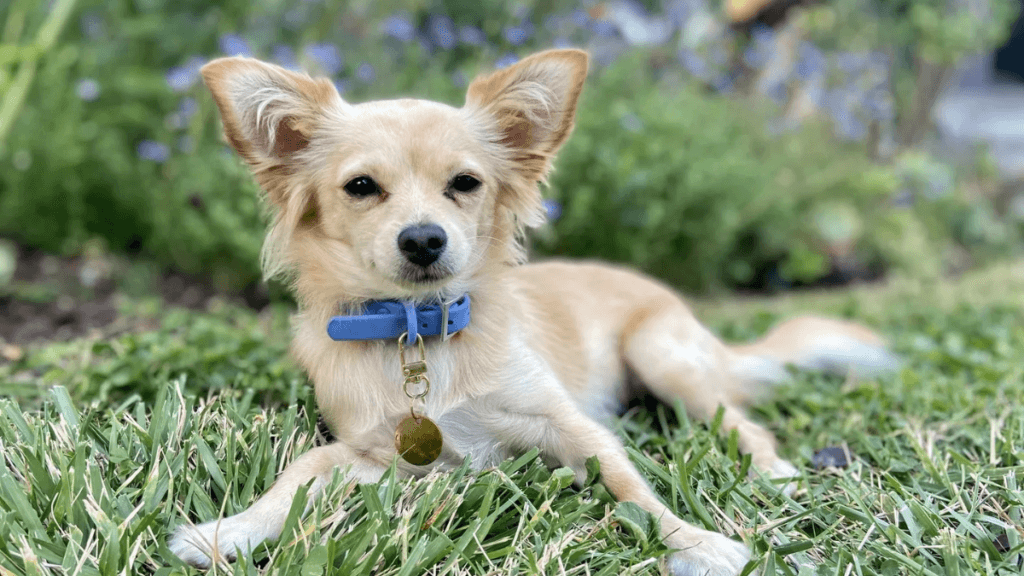
A waterproof collar with a name plate sounds like the ideal combination — your dog’s ID is permanently on the collar, there are no tags jangling or catching on things, and the whole setup handles water without degrading. In practice, it is a genuinely useful option for some dogs and a poor fit for others. The decision comes down to a few practical questions about how your dog lives, how often information changes, and what happens to the collar over time.
Engraved name plates and silicone ID sleeves are the two most common methods of adding permanent identification to a collar. Both have advantages over traditional hanging tags in specific situations — but both also have limitations that are worth understanding before buying a collar specifically for this purpose.
This guide covers the practical case for and against a name plate collar, what to look for in a waterproof version, and what the alternatives offer if a name plate turns out not to be the right fit for your situation.

The Case for a Name Plate Collar
There are genuine practical reasons to prefer a name plate over a hanging tag in specific situations:
No jingle
Hanging metal tags against a metal D-ring produce a persistent jingle that many owners find annoying — particularly at night when the dog moves around. A name plate or ID sleeve eliminates this entirely. For light sleepers with restless dogs, or for dogs that spend time in quiet environments, this is a genuine quality-of-life improvement.
No snagging
Hanging tags can catch on crate bars, furniture, undergrowth, and fencing — occasionally resulting in the tag bending, the ring breaking, or the tag being lost entirely. A flush-mounted name plate or a silicone sleeve sitting flat against the collar has nothing to catch on. For dogs that spend time in crates or dense undergrowth, this is worth considering.
Always readable
Hanging tags rotate and flip, meaning the information faces away as often as it faces toward whoever is reading it. An engraved name plate on the underside of the collar band reads clearly from whichever angle the collar presents. For a dog that has been found and is being held, a clear immediately-readable name and number is more useful than a tag that needs to be flipped over.
Cleaner appearance
Multiple hanging tags — ID tag, rabies tag, licence tag — cluster at the D-ring and create a cluttered look. A name plate keeps the collar clean and minimal in appearance, which some owners strongly prefer. For a dog that wears a premium collar, a name plate maintains the aesthetic rather than competing with it.
The Case Against — What to Consider Before Buying
Information cannot be updated
An engraved name plate is permanent. If your phone number changes, you move house, or the dog’s name changes, the plate cannot be updated — you need a new collar. For owners who move frequently or expect information to change, a hanging tag is more practical: replace the tag for a few dollars rather than the whole collar. Silicone sleeves with printed text are slightly more flexible — some can be replaced individually — but check before buying whether the sleeve is replaceable or fixed.
Engraving quality varies significantly
Laser-engraved name plates on quality collars are legible for years. Stamped or low-depth engravings on cheaper options can become difficult to read after months of wear — particularly on metal plates exposed to repeated water and outdoor use. The engraving depth and method matter as much as the collar material. Check reviews specifically for engraving legibility over time, not just at the point of purchase.
Name plate adds weight and bulk
A metal name plate attached to a collar adds 10–20 grams and a small amount of bulk at the attachment point. For large dogs, this is imperceptible. For toy breeds and very small dogs, the additional weight is more noticeable. A silicone sleeve is significantly lighter and flatter — more appropriate for XS and S sized collars.
The collar is the ID — if it comes off, both are gone
With hanging tags, a lost tag does not mean lost identification — the other tags on the collar remain, and the collar itself is still on the dog. With a name plate collar, if the collar comes off — which can happen with persistent escape artists or in certain outdoor scenarios — all identification goes with it. A well-fitted collar from a reputable brand significantly reduces this risk, but it is worth pairing a name plate collar with a microchip for backup identification.

What to Look For in a Waterproof Name Plate Collar
If a name plate collar is the right choice for your dog, these are the features that determine whether it performs well long-term:
Waterproof collar base — PVC-coated webbing
The collar itself needs to be genuinely waterproof for the combination to make sense. A name plate on a nylon collar still results in a collar that smells and degrades with regular water exposure — the plate solves the tag noise problem but not the material problem. PVC-coated webbing does not absorb water, does not develop odour, and maintains its shape and stiffness when wet — keeping the name plate securely positioned. For more on what truly waterproof means for collar materials, see our best waterproof dog collar guide.
Stainless steel or anodised aluminium name plate
The name plate material needs to match the waterproof performance of the collar. Stainless steel does not rust in fresh or salt water. Anodised aluminium is lightweight and corrosion-resistant. Standard brass or chrome-plated plates will tarnish and corrode with regular water exposure, making the engraving harder to read over time. For a dog that swims, specify stainless steel or anodised aluminium explicitly.
Deep laser engraving, not stamping
Laser engraving cuts deep into the plate surface and remains legible for the lifetime of the plate. Stamping produces a shallower impression that wears more quickly with outdoor use. Check the engraving method in the product description — “laser engraved” is the specification to look for.
Secure attachment method
The name plate needs to be attached to the collar in a way that does not loosen with water exposure. Riveted plates are more secure than plates attached with adhesive or friction fit. Check that the attachment method is specified and that reviews do not mention plates becoming loose or detaching after extended use.
Alternatives to a Name Plate Collar
Silicone ID sleeve
A silicone sleeve slides over the collar band and holds a rolled paper or printed insert with your contact details. Lightweight, flexible, and easily replaced if information changes. Waterproof by nature — silicone does not absorb water. The limitation is that the text is printed rather than engraved, so legibility can reduce faster than a deep-engraved plate. A practical middle-ground between hanging tags and permanent engraving.
AirTag holder on a waterproof collar
An AirTag attached to the collar provides location tracking through the Find My network — useful as a supplement to visual identification, particularly for dogs that range widely or are prone to escaping. A waterproof collar provides the stable, dimensionally consistent base that keeps an AirTag holder in position when wet. For full advice on choosing a waterproof collar for AirTag use, see our AirTag waterproof collar guide.
Waterproof collar plus quiet tag
A rubber-coated or silicone-wrapped tag does not jingle against a metal D-ring the way bare metal tags do. For owners whose main objection to hanging tags is the noise, a rubber-coated tag on a waterproof collar resolves the issue without the permanence of an engraved plate. Updateable, inexpensive, and compatible with any collar.
The Waterproof Base for Any ID Solution
Regardless of which ID method you choose — name plate, silicone sleeve, AirTag holder, or hanging tag — the collar base needs to be genuinely waterproof for active dogs. The MoonianPet Waterproof Dog Collar is PVC-coated webbing throughout — non-porous, odour-proof, and dimensionally stable in wet and dry conditions. The 25mm flat band holds any standard loop-style holder or sleeve securely, and the zinc alloy D-ring provides a stable, rust-proof attachment point for tags or accessories.
Available in 11 colors and 5 sizes from XS to XL. For a fully matched waterproof setup, the Collar & Leash Set pairs the collar with a PVC-coated leash in the same color.

Frequently Asked Questions
Is a name plate collar better than a tag for dog ID?
Better in some ways — no jingle, no snagging, always readable — and worse in others. The main disadvantage is that engraved information cannot be updated if your number or address changes, meaning a new collar is required. A name plate collar makes the most sense for dogs with stable contact information who are walked in environments where tag snagging is a real issue.
What information should go on a dog’s name plate?
At minimum: the dog’s name and your primary phone number. Adding a secondary number or your street name is useful if space allows. In some regions, including a microchip number or rabies vaccination number is recommended or required — check local requirements. Keep it concise: the more text, the smaller the font, and the harder it is to read at a glance.
Can I add a name plate to an existing waterproof collar?
Yes — silicone ID sleeves can be added to any collar after purchase by sliding them over the band. These are the most practical retrofit option. Riveted metal plates typically require professional attachment and are better specified at the point of collar manufacture. For a waterproof collar that already has a stable flat band for sleeve attachment, the MoonianPet collar’s 25mm width accommodates most standard silicone sleeve sizes.
Does a waterproof collar affect how well a name plate attaches?
PVC-coated webbing is actually a better base for name plate attachment than nylon. The smooth, stiff surface of coated webbing does not compress or deform under attachment hardware the way softer nylon can, keeping the plate more securely positioned over time. The dimensional stability of the material when wet also means the plate does not shift as the collar softens with moisture — a problem that can develop with nylon-based name plate collars.
Should I still microchip my dog if they wear a name plate collar?
Yes — always. A microchip is permanent identification that cannot be lost, removed, or become illegible. A collar — whether it has a name plate, tags, or nothing — can come off. Microchipping is also a legal requirement in many regions. A name plate collar and a microchip are complementary forms of identification, not alternatives to each other.
Looking for a waterproof collar for a dog that swims? Our best waterproof collar guide covers what to look for by activity type. Or if you want to understand why PVC-coated webbing outperforms nylon for active dogs, see our BioThane collar guide.