
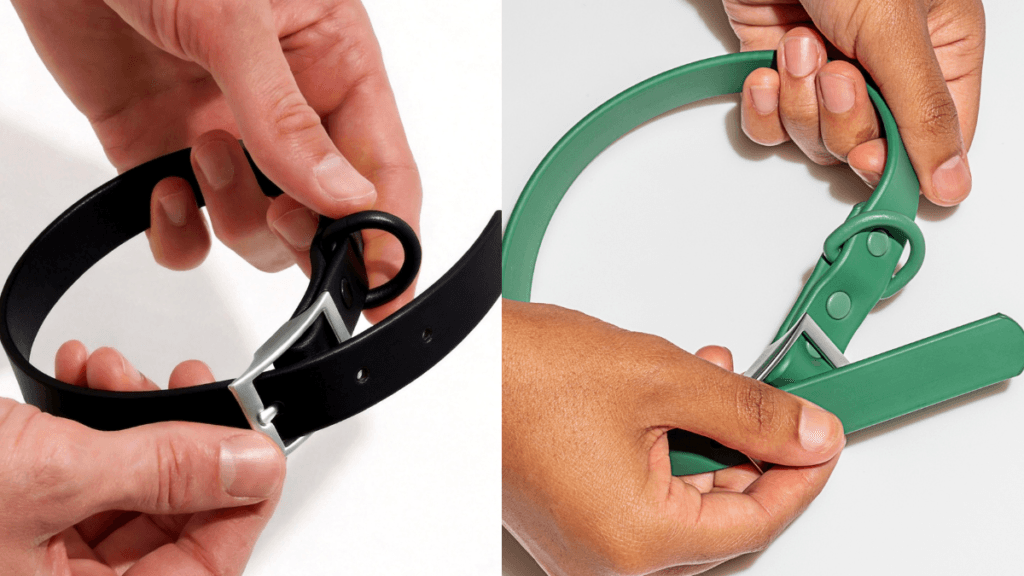
BioThane is a brand name that has become a generic descriptor — like Velcro or Bubble Wrap — for a category of coated webbing material used in collars, leashes, and working dog equipment. If you have seen collars described as BioThane, coated webbing, or PVC-coated — they are all variants of the same basic construction: a woven polyester core with a polymer coating that makes the material waterproof, odour-proof, and significantly more durable than standard nylon.
BioThane collars have developed a strong following among owners of active, outdoor, and working dogs — and the reputation is warranted. The material genuinely performs differently from nylon in conditions that expose the collar’s limitations: swimming, mud, daily wet weather, and the accumulated body oils and bacterial growth that make nylon collars smell within months of regular use.
This guide covers what BioThane-style coated webbing actually is, how it performs in practice, how it compares to nylon and leather, and what to look for when buying a coated webbing collar.
What BioThane Actually Is
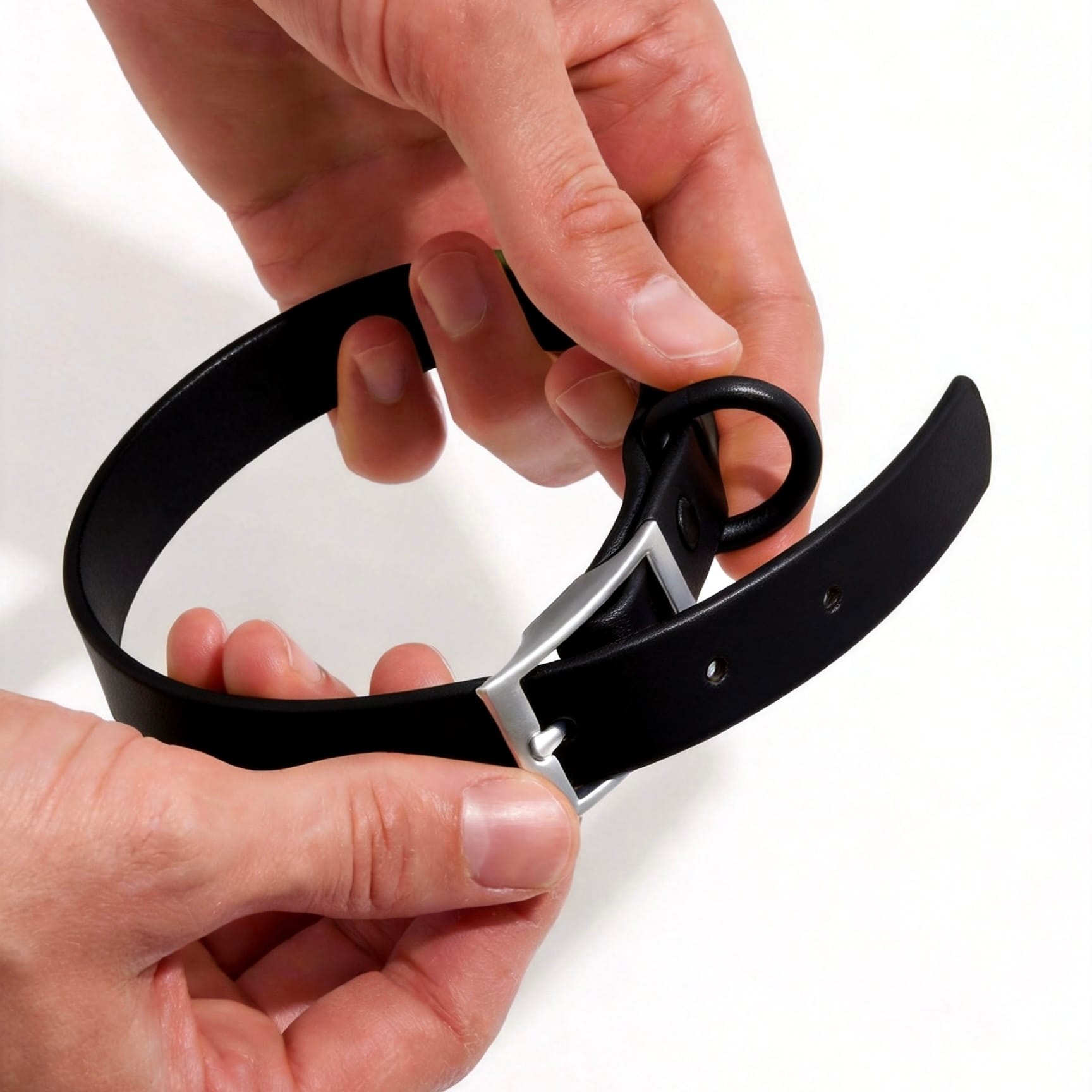
BioThane is a registered trademark of the Bio-Thane Company, but the construction method it pioneered — a woven polyester webbing core with a thermoplastic polyurethane or PVC coating — has been widely adopted across the industry. Most “BioThane-style” or “coated webbing” collars use this same basic structure, regardless of brand.
The woven core provides tensile strength — the ability to withstand pulling force without stretching or breaking. The polymer coating provides everything else: waterproofing, odour resistance, UV stability, ease of cleaning, and the smooth, slightly leather-like feel that makes the material comfortable in the hand and against the dog’s neck.
The coating is the critical element. Unlike a DWR surface treatment applied to nylon — which repels water temporarily but degrades over time — a PVC or TPU coating is a structural part of the material. It does not wear off, does not need reapplication, and performs identically on day one and day one thousand.
How BioThane-Style Collars Perform in Practice
Water — no absorption, instant drying
The polymer coating is non-porous. Water beads off the surface and the collar is effectively dry within seconds of leaving the water — shake it once and it is done. After a swim, a BioThane-style collar does not feel cold or heavy the way a soaked nylon collar does, and there is no drying time required before it can be worn again or stored. This is the single most noticeable practical difference for owners of dogs that swim regularly.
Odour — does not develop smell
Collar smell comes from bacteria growing in the damp fibres of an absorbent material. A non-porous coating leaves bacteria nowhere to establish — there are no fibres, no moisture retention, and therefore no bacterial growth. A BioThane-style collar used on the same dog, in the same conditions, that would make a nylon collar smell within two months will remain odour-free indefinitely. This is not a temporary property that degrades — it is a permanent consequence of the material being non-absorbent. For more on why collars smell and how material addresses it, see our guide on dog collar smell after swimming.
Cleaning — wipe and done
Mud, salt water, grass stains, and general outdoor grime wipe off a BioThane-style collar with a damp cloth. No soaking, no scrubbing, no machine washing required. After a muddy walk: wipe. After a salt water swim: quick rinse under a tap. The cleaning time over a year of daily walks, compared to weekly washing of a nylon collar, is a meaningful practical difference.
Durability — years, not months
Nylon collars on active dogs typically need replacing every twelve to eighteen months as odour becomes permanent, the material stiffens, and hardware corrodes. A PVC-coated collar on the same dog in the same conditions lasts three to five years with no meaningful degradation — the coating does not absorb the moisture and contaminants that degrade nylon. The higher upfront cost pays for itself within the first replacement cycle.
Feel and appearance — leather-like, colour-stable
BioThane-style coated webbing has a smooth, slightly supple feel that is often described as similar to leather — it has the look and feel of a quality leather collar without the maintenance requirements or susceptibility to water damage. The colour is embedded in the coating rather than applied as a dye, which means it does not fade or wash out with repeated exposure to sun, water, and cleaning.
BioThane vs Nylon vs Leather
BioThane-style vs nylon
Nylon is cheaper, lighter for its width, and available in a wider range of patterns. It is the right choice for a dog that rarely gets wet and is walked in dry conditions. For any dog that swims, walks in rain, or simply generates enough body heat and sweat to make a collar smell — nylon’s absorbency is a meaningful disadvantage. BioThane-style coated webbing costs more upfront and lasts significantly longer, makes less mess in terms of cleaning, and never smells. For an active outdoor dog, the total cost of ownership over three years is lower for a coated collar than for multiple nylon replacements.
BioThane-style vs leather
Leather looks and feels premium, ages beautifully when well-maintained, and is genuinely durable for a dry-condition dog. Its limitations are water sensitivity — leather softens when wet, requires conditioning to stay supple, and is not suitable for dogs that swim regularly — and maintenance requirements that coated webbing simply does not have. BioThane-style collars deliver most of leather’s aesthetic qualities without any of its upkeep requirements, at a lower price point than quality leather. For a detailed head-to-head comparison, see our BioThane vs leather collar guide.
Is a BioThane Collar Worth It?
For active outdoor dogs — dogs that swim, walk in wet conditions regularly, or simply generate enough activity to make a nylon collar smell within months — yes, unambiguously. The performance difference in odour, cleaning time, and lifespan is significant enough that the price premium pays for itself quickly.
For a dog that walks briefly on dry days, stays mostly indoors, and is bathed infrequently, the advantage is smaller. A good nylon collar serves perfectly well in that context and costs less. The decision comes down to how much water and outdoor use the collar will face — the more wet and active the dog, the more clearly BioThane-style wins.
For the full breakdown of all collar materials including nylon, leather, and coated webbing, see our collar material guide. For a full comparison of the best waterproof collars available, see our best waterproof dog collar guide.
What to Look For When Buying
Material specification — PVC or TPU coating, not “waterproof nylon”
Verify the collar is described as PVC-coated webbing, coated webbing, or BioThane-style — not “waterproof nylon” or “water resistant.” The former indicates a structural polymer coating over a woven core. The latter indicates a surface treatment applied to nylon, which degrades over time and does not provide the same odour-proof performance. The distinction matters for long-term performance.
Zinc alloy or stainless steel hardware
The D-ring and buckle need to be rust-proof to match the waterproof performance of the collar material. Zinc alloy and stainless steel do not corrode with water exposure. Chrome-plated hardware will eventually rust at the exposed edges, particularly with salt water use. Check both the D-ring and the buckle — a zinc D-ring with a plastic buckle is only half-waterproofed.
Wide adjustment range within the size
A good coated webbing collar adjusts across a meaningful range within its size — not just a few centimetres. This allows the collar to fit in the middle of its range rather than at the extremes, which is both more comfortable and more durable for the adjustment mechanism. Check the specific adjustment range in the size chart and aim for your dog’s neck measurement to fall in the middle third.
Colour consistency — dye in the coating, not on the surface
Quality coated webbing has colour embedded in the polymer coating rather than applied as a surface dye. Surface-dyed coated webbing fades and can transfer colour to light-coloured fur or pale skin. Embedded colour stays consistent through years of UV exposure, washing, and outdoor use. This is a quality indicator worth checking — ask about dye method if the product listing does not specify.
BioThane-Style, Built for Daily Outdoor Use
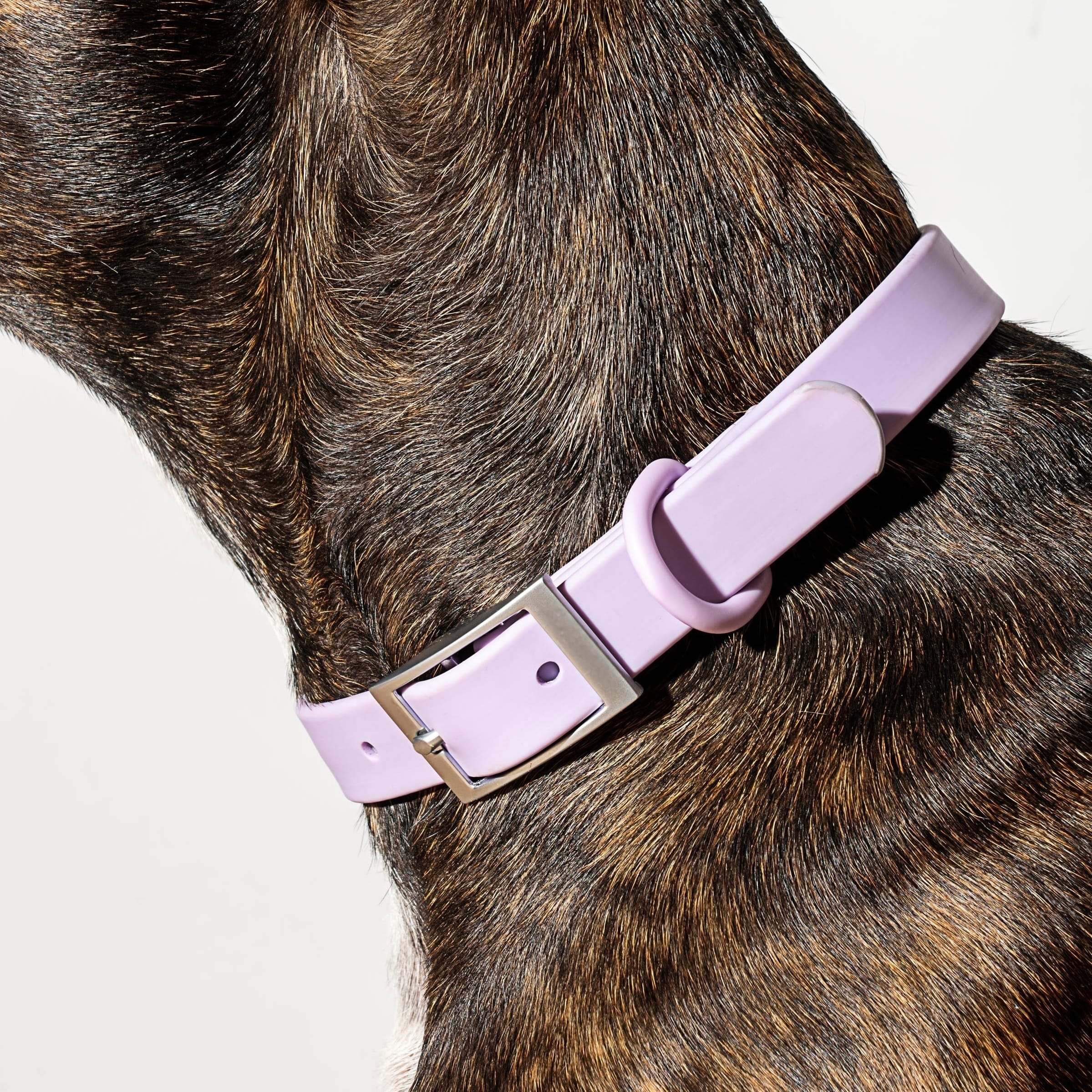
The MoonianPet Waterproof Dog Collar is made from PVC-coated webbing — BioThane-style construction with a non-porous coating that does not absorb water, odour, or contaminants. Zinc alloy D-ring and safety buckle rust-proof for fresh and salt water use. Colour embedded in the coating for long-term consistency. Available in 11 colors and 5 sizes from XS to XL.
For a matched waterproof leash in the same material, the Collar & Leash Set is the most practical option — both pieces age at the same rate, clean the same way, and stay matched in color and texture over time.

Frequently Asked Questions
What is a BioThane dog collar?
BioThane is a brand name for coated webbing — a woven polyester core with a polymer (PVC or TPU) coating. The name has become a generic term for this category of material. BioThane-style or PVC-coated webbing collars are waterproof, odour-proof, easy to clean, and significantly more durable than nylon for active outdoor use. The feel is similar to leather — smooth and supple — without any of leather’s maintenance requirements.
Is BioThane better than nylon for dog collars?
For active dogs that get wet regularly, yes — significantly. BioThane-style coated webbing does not absorb water, does not develop odour, and lasts three to five years versus one to two years for nylon in the same conditions. For dogs that walk briefly in dry conditions and rarely get wet, nylon is adequate and costs less. The more outdoor and water activity a dog has, the more clearly BioThane-style wins.
How do I clean a BioThane dog collar?
Wipe with a damp cloth. For heavier soiling, rinse under running water and wipe dry. No machine washing, soaking, or scrubbing required — and because the material is non-porous, there is no embedded odour to address. The entire cleaning process takes under a minute.
Does BioThane stretch or stiffen over time?
No — PVC-coated webbing is dimensionally stable. It does not stretch with use, does not soften when wet, and does not stiffen when dry. The fit set on day one remains accurate indefinitely because the material does not change with water exposure or wear. This is one of its practical advantages over nylon, which stretches slightly with repeated soaking.
Is BioThane safe for dogs?
Yes — PVC-coated webbing is widely used in working dog equipment, equestrian tack, and marine applications where material safety is a practical requirement. The coating is stable and does not off-gas compounds under normal use conditions. It has been used in direct contact with animals for decades without reported safety issues.
Comparing BioThane to leather specifically? Our BioThane vs leather guide covers the full head-to-head. Or for a broader overview of all collar materials, see our complete collar material guide.

About the Author
Wenyue
Wenyue is the founder of MoonianPet and writes about dog collars, harnesses, waterproof pet gear, and everyday dog care.
Growing up with dogs inspired her lifelong interest in pet care and practical dog gear. Through MoonianPet, she researches dog collars, harnesses, waterproof materials, and everyday solutions that help active dogs stay comfortable during daily adventures.