
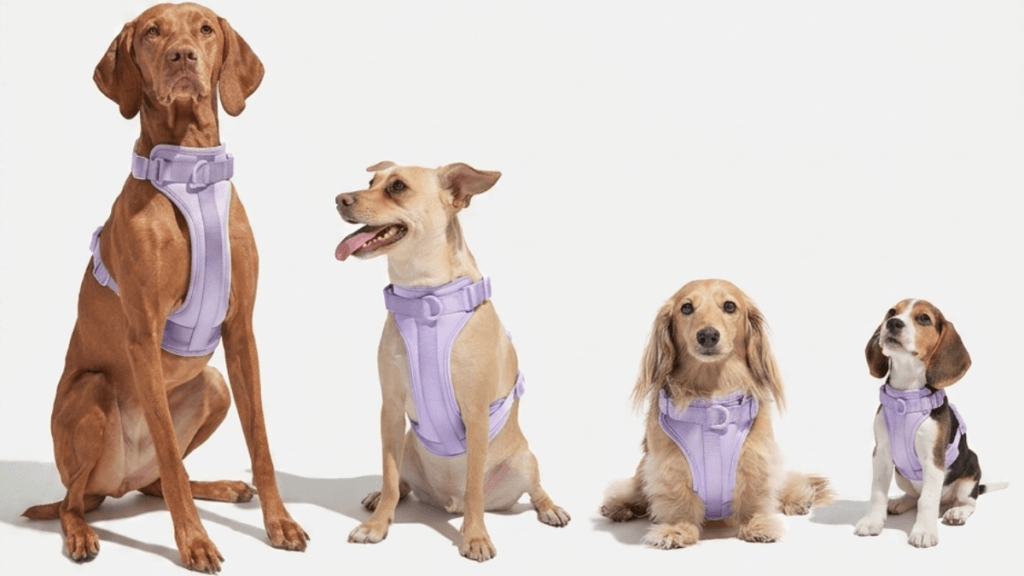
The Gentle Leader and the no-pull harness are two of the most commonly recommended tools for dogs that pull on the leash. Both avoid the discomfort of a choke or prong collar. Both use redirection rather than pain to interrupt pulling. And both are frequently recommended by trainers — often for very different dogs.
The Gentle Leader is a head collar: it fits over the muzzle and behind the ears, attaching at the chin. The no-pull harness fits over the body, attaching at the chest. That single difference in where the tool connects produces meaningfully different experiences for dog and owner — different acceptance rates, different suitability by breed, different use cases, and different long-term results.
This guide explains exactly how each works, where each succeeds and struggles, which dogs are better matched to each, and what to look for if you decide the no-pull harness is the right direction.

How the Gentle Leader Works
The Gentle Leader fits a loop over the dog’s muzzle and a second loop behind the ears, with a leash clip sitting under the chin. When the dog pulls forward, the leash tension rotates the head sideways and downward — where the nose points, the body follows, so the dog is redirected rather than restrained by force.
This mechanism is highly effective on strong pullers because the head is the lightest, most easily redirected part of the body. A moderate leash force produces a significant directional change — more than the same force applied to a chest harness. For owners who physically struggle to hold a powerful dog during lunges, this additional leverage is the primary reason trainers recommend head collars.
The central challenge is acceptance. Most dogs strongly dislike the sensation of the nose loop when it is first fitted — pawing at their face, refusing to move forward, rubbing the muzzle on the ground. The manufacturer recommends a gradual desensitisation process over several days to weeks before the first walk, using high-value treats to build a positive association. Some dogs accept this quickly; others never fully tolerate it regardless of how patiently the introduction is handled.
How the No-Pull Harness Works
A front-clip no-pull harness fits over the dog’s chest and shoulders, with a D-ring on the sternum. When the dog pulls, the leash redirects the chest sideways — turning the dog’s momentum and making straight-line pulling mechanically harder to sustain. The effect is less dramatic than head control but works across the whole body rather than just the head, and most dogs accept it immediately without any adjustment period at all.
Effectiveness depends on leash length. A short leash means the redirecting mechanism engages before the dog builds forward momentum — a gentle interruption. A long leash lets the dog accelerate before the front clip engages, which significantly reduces the effect. Most of the practical benefit comes from keeping the leash short enough to engage the chest D-ring early in any forward movement.
A dual-clip harness also provides a back clip for exercise, running, or any activity where natural free movement is the priority. The ability to switch between front and back clip for different activities — without changing equipment — is one of the key practical advantages over a head collar. For more on when to use each clip, see our front clip vs back clip guide.
Key Differences That Actually Matter
Immediate pulling control
The Gentle Leader gives more immediate mechanical control on very powerful pullers — particularly large breeds where the owner cannot physically manage a full lunge. The no-pull harness requires consistent short-leash technique to achieve its best effect. If your dog is large and strong enough to pull you off your feet on a lunge, the head collar’s additional leverage may matter more to you than the harness’s easier introduction.
How quickly your dog will accept it
A harness goes on and the dog walks — most dogs accept it from the first use. The Gentle Leader requires a dedicated introduction period. For owners who need something that works now, or who don’t have time for a multi-week desensitisation process, the harness is the practical choice. For owners who have the time and a dog that accepts the nose loop without significant distress, the Gentle Leader’s additional control may be worth the investment.
Use across different activities
A no-pull harness works for walking, running, hiking, dog sports, car travel, and general daily use. The Gentle Leader is designed for controlled walking only — it is not appropriate for running or any activity where a hard lunge at speed could occur, because the sudden force on the chin attachment redirects the head sharply and risks neck strain. One piece of equipment for every activity is a meaningful practical advantage for active owners.
Breed suitability
The Gentle Leader does not fit brachycephalic breeds — Pugs, French Bulldogs, Bulldogs, Boston Terriers, and similar short-muzzled dogs cannot be safely fitted with a nose loop that restricts the airway they already have limited access to. It also struggles to fit correctly on very narrow or very wide muzzles. The no-pull harness fits all breeds and body shapes with appropriate sizing. For breed-specific harness guidance, see our French Bulldog harness guide.
Public perception
Many people mistake head collars for muzzles. This creates unnecessary concern from other dog walkers, children, and passers-by — particularly in busy areas. Some owners find this stressful on what should be a relaxing walk. A harness never creates this confusion.
Which Dogs Suit Each Tool
Dogs that tend to do better with the Gentle Leader
Very large, very powerful dogs where the owner genuinely cannot hold on during a lunge. Dogs that have already been successfully introduced to head collars and accept them calmly. Reactive dogs in high-traffic environments where maximum directional control and fast head redirection are needed — for example, to quickly interrupt visual fixation on another dog before a reaction escalates.
Dogs that tend to do better with a no-pull harness
Any brachycephalic breed where muzzle restriction is unsafe. Dogs that are highly stressed by anything over the face. Puppies being introduced to walking equipment for the first time — a harness is the gentler, less confrontational starting point. Active dogs that need one piece of equipment across multiple activities. Dogs with any history of neck or spinal issues where head restraint is contraindicated. Dogs whose owners want something that works immediately without a prolonged introduction process.
Using both together
For dogs that need the maximum available management — very powerful reactive dogs, for example — some trainers recommend using both simultaneously: the Gentle Leader for directional head control, the harness for body restraint, with the leash attached to both. This distributes force across two attachment points and provides more overall control than either tool alone. If you’ve tried a no-pull harness and found it insufficient on its own, this approach is worth exploring with a certified trainer before giving up on either tool.
What to Look for in a No-Pull Harness
If the no-pull harness is the right direction for your dog, these are the features that separate a harness that holds up from one that doesn’t:
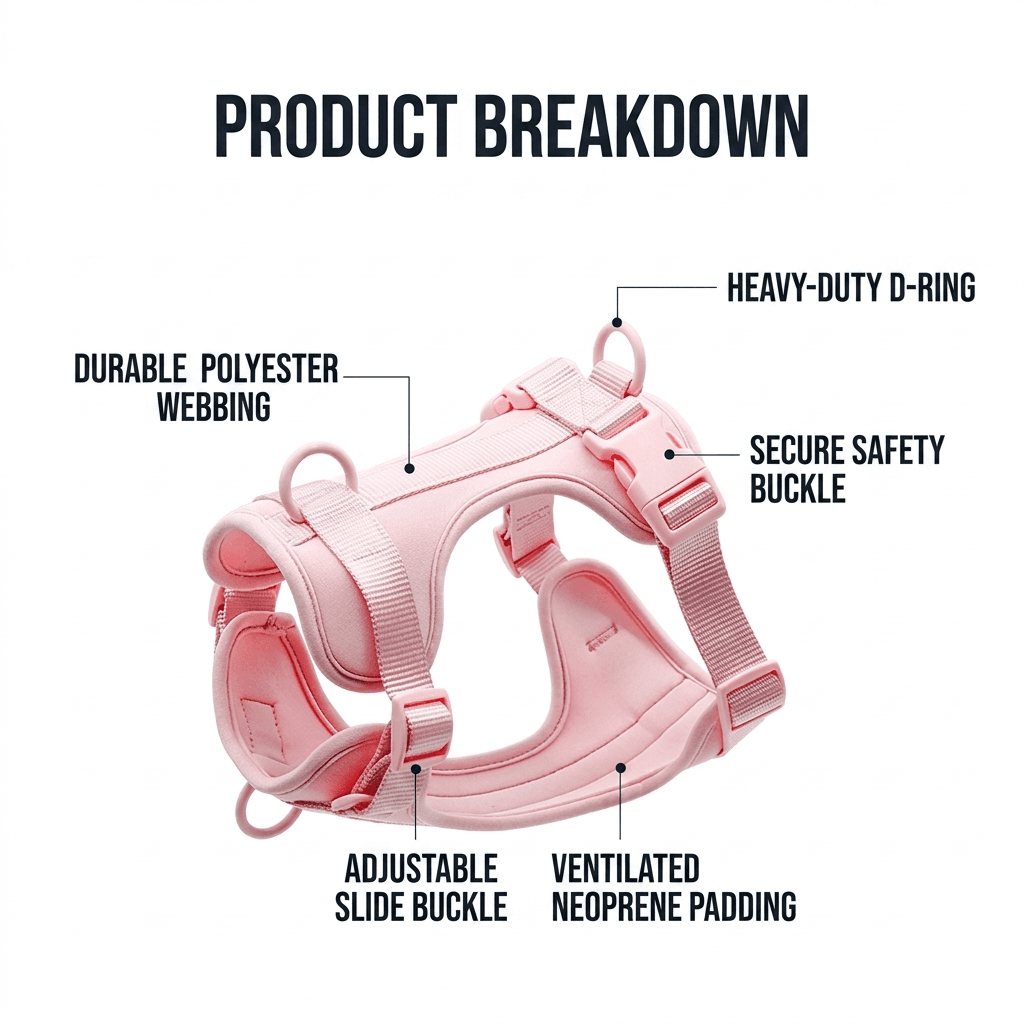
Zinc alloy D-rings at both clips
The front chest D-ring on a pulling dog is under constant tension throughout every walk. Plastic D-rings gradually deform under this sustained load — losing their centred position and reducing the no-pull mechanism’s effectiveness over time. Zinc alloy D-rings maintain their shape and centred position indefinitely under sustained tension.
Three-point independent adjustment
Neck, chest, and belly straps that adjust independently allow a precise fit across body shapes that a two-point harness can’t achieve — deep-chested breeds, narrow-waisted breeds, or any dog where the neck and chest measurements don’t follow a standard proportion. Full sizing guidance in our dog harness size guide.
Metal tri-glide sliders
On a consistent puller, plastic sliders gradually allow the strap to creep through under sustained tension — the harness loosens slowly during the walk without any obvious adjustment. Metal sliders grip the strap under load and hold the set fit from start to finish of the walk.
Reinforced quick-release buckle
Easy to open for daily use, but resistant to lateral stress — a pulling dog twisting sideways applies significant lateral force to the buckle throughout the walk. An ABS-reinforced buckle that clicks firmly locked gives both ease of use and structural reliability. For a full hardware breakdown across the best available options, see our best no-pull harness guide.
Ready to Try a No-Pull Harness?
The MoonianPet No-Pull Dog Harness uses zinc alloy D-rings, metal tri-glide sliders, and a reinforced ABS quick-release buckle throughout — hardware rated for consistent pullers, not just occasional use. Three-point independent adjustment means a precise fit on any body shape, from deep-chested breeds to narrow-waisted ones.
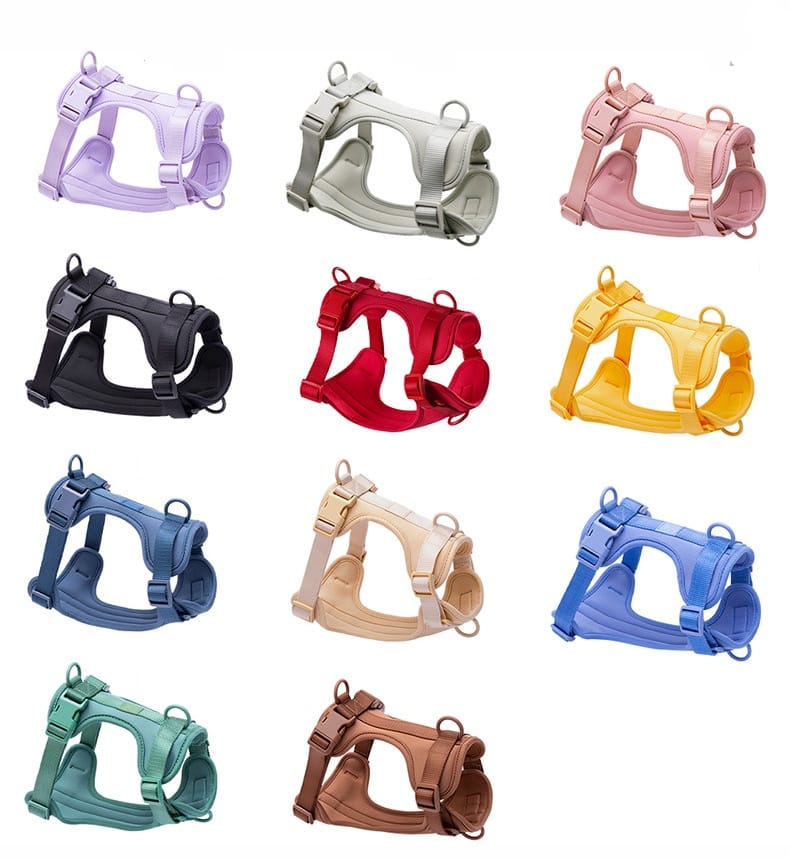
Made from lightweight, breathable neoprene that doesn’t absorb moisture — practical for dogs that spend time outdoors regardless of conditions. Available in five sizes from XS to XL and 11 colours. For a complete matched walking setup, the Harness & Leash Set pairs the harness with a heavy-duty PVC-coated leash — waterproof, odour-proof, and easy to wipe clean after muddy walks.
Frequently Asked Questions
Is the Gentle Leader better than a no-pull harness?
It depends on the dog. The Gentle Leader provides stronger mechanical control on very powerful pullers because it controls the head directly. A no-pull harness is easier to introduce, suits more breeds, and is more versatile across activities. For most dogs — particularly those that dislike anything over the face, short-muzzled breeds, or dogs being introduced to walking equipment for the first time — a front-clip no-pull harness is the more practical starting point.
Does the Gentle Leader hurt dogs?
A correctly fitted Gentle Leader used with a short leash does not hurt dogs. The risk is using it with a long leash — if a dog reaches the end of a long leash at speed, the sudden force on the chin clip can cause neck strain. The Gentle Leader should always be used with a short leash and attentive handling, never with a flexi-lead.
Can I use a Gentle Leader on a French Bulldog or Pug?
No — brachycephalic breeds have shortened muzzles and restricted airways. Anything that fits over the muzzle and adds restriction to the face is contraindicated for these breeds. A front-clip no-pull harness is the appropriate alternative. See our French Bulldog harness guide for fit details.
How long does it take a dog to accept a Gentle Leader?
The manufacturer recommends a gradual introduction over several days to two weeks — starting indoors with short sessions, pairing the nose loop with high-value treats, building positive association before the first walk. Some dogs accept it within a few days; others take longer. A small number of dogs remain highly resistant regardless of how patient and consistent the introduction is, in which case a no-pull harness is a better direction.
Will a no-pull harness stop pulling completely?
A front-clip harness significantly reduces pulling and makes walks more manageable, but works best as a management tool combined with consistent reward-based loose-leash training. Dogs that pull as a default behaviour will pull less in a front-clip harness, but continuing to pair harness use with training produces the best long-term results. Most owners see meaningful improvement within four to six weeks of consistent combined use.
Comparing other anti-pull options? Our Halti vs no-pull harness comparison covers the Halti head collar in more detail. For a full overview of harness styles and how they differ, see our types of dog harnesses guide.
Wenyue
Wenyue is the founder of MoonianPet and writes about dog collars, harnesses, waterproof pet gear, and everyday dog care. Growing up with dogs inspired her lifelong interest in pet care and practical dog gear. Through MoonianPet, she researches dog collars, harnesses, waterproof materials, and everyday solutions that help active dogs stay comfortable during daily adventures.