
The first time I stood in a pet shop trying to pick a harness for my dog, I counted seven different styles on the rack and had no idea what any of them actually did differently. Front clip, back clip, step-in, overhead, Y-harness, H-harness — the labels meant nothing to me. I picked one that looked about the right size and hoped for the best. It didn’t fit properly, and three weeks later I was back buying another one.
That experience is more common than it should be, because the differences between harness types are actually quite simple once someone explains them clearly. The style of harness determines where the leash attaches, how the harness goes on, and how the dog’s body is supported — which in turn determines whether it helps with pulling, suits your dog’s breed shape, and is practical enough that you’ll actually use it every day.
This guide goes through every major harness type in plain terms — what each one does, which dogs it suits, and what to watch out for — so you can choose with confidence rather than guesswork.
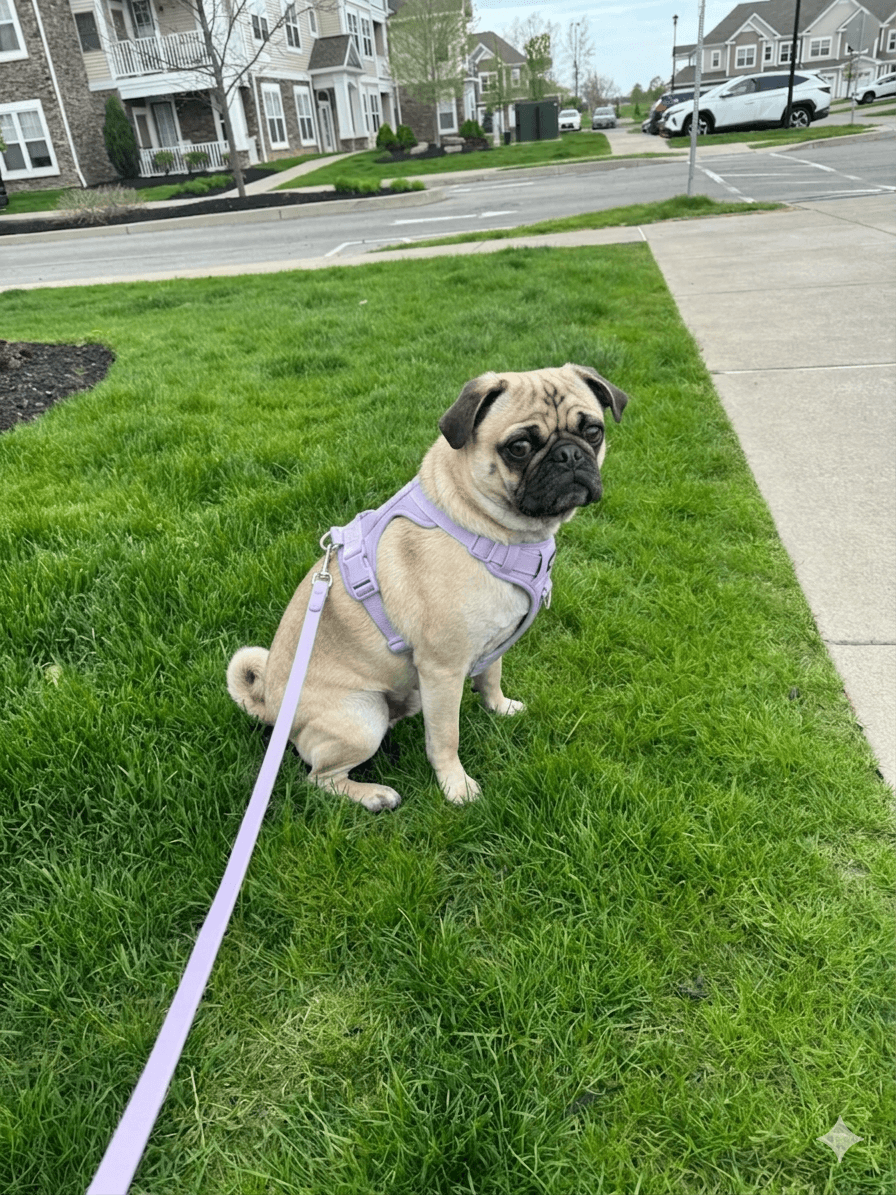
Front-Clip (No-Pull) Harness
This is the harness style most commonly recommended by trainers for dogs that pull, and it’s the one I wish I’d understood from the beginning. The leash attaches to a D-ring on the dog’s chest — and when the dog pulls forward, the leash redirects the chest sideways rather than letting them power straight ahead. It doesn’t hurt; it just makes sustained pulling mechanically awkward.
The effect is noticeably different from clipping to the back. On my first walk using a front-clip harness, I kept waiting for the pulling to start — and it barely did. The dog tried, felt the sideways redirect, and eased off. It’s not magic, and a dog with serious pulling habits will still need consistent training alongside the harness, but the difference on day one is real.
Best for
Dogs that pull on the leash, regardless of size. Works on everything from a Chihuahua that drags you toward the neighbour’s cat to a Labrador that turns every walk into a workout. Also well-suited for dogs being introduced to harness walking for the first time, since the front-clip naturally discourages the lunging behaviour that can develop with back-clip use.
Watch out for
Leash length matters a lot. A long, loose leash lets the dog build momentum before the redirect engages — reducing the effect significantly. Keep the leash short enough that it goes taut before the dog reaches full pulling speed. Also check that the front D-ring is metal, not plastic — plastic deforms under sustained tension and eventually shifts out of the centred position, reducing effectiveness. Full guidance in our best no-pull harness guide.
Back-Clip Harness
The leash clips to a D-ring on the dog’s back, between the shoulder blades. This is the most comfortable configuration for the dog — nothing pulling at the chest, free natural movement, no redirection. It’s the setup you want for running, hiking, swimming, or any activity where you want the dog to move freely and you’re not fighting pulling.
The limitation is that it does nothing to discourage pulling — and for some dogs, it actually makes pulling easier by giving them a more stable anchor point. If your dog is already a committed puller, a back-clip harness on a regular walk will feel like you’re attached to a sled.
Best for
Dogs that walk calmly on a loose leash and don’t pull habitually. Running, hiking, and active exercise where free movement matters. Small breeds whose tracheas are sensitive to any forward tension — though a front-clip harness is equally safe on the trachea, since neither attachment point puts pressure on the neck.
Watch out for
Using a back-clip harness on a young dog or a breed with strong pulling instincts can reinforce pulling — they learn that pulling forward is rewarded with forward movement. If you’re also trying to train loose-leash walking, save the back clip for exercise and use the front clip for regular walks.
Dual-Clip Harness (Front and Back)
This is the most versatile option and the style I’d recommend for most owners — a single harness with both a front chest clip and a back clip, so you can switch between them depending on the activity without changing equipment. Front clip for walks and training, back clip for running and exercise. One harness, everything covered.
Some dual-clip harnesses also allow a double-ended leash to clip to both points simultaneously — which gives additional body control for reactive dogs in high-traffic situations. For a detailed breakdown of when to use each clip, see our front clip vs back clip guide.
Step-In Harness
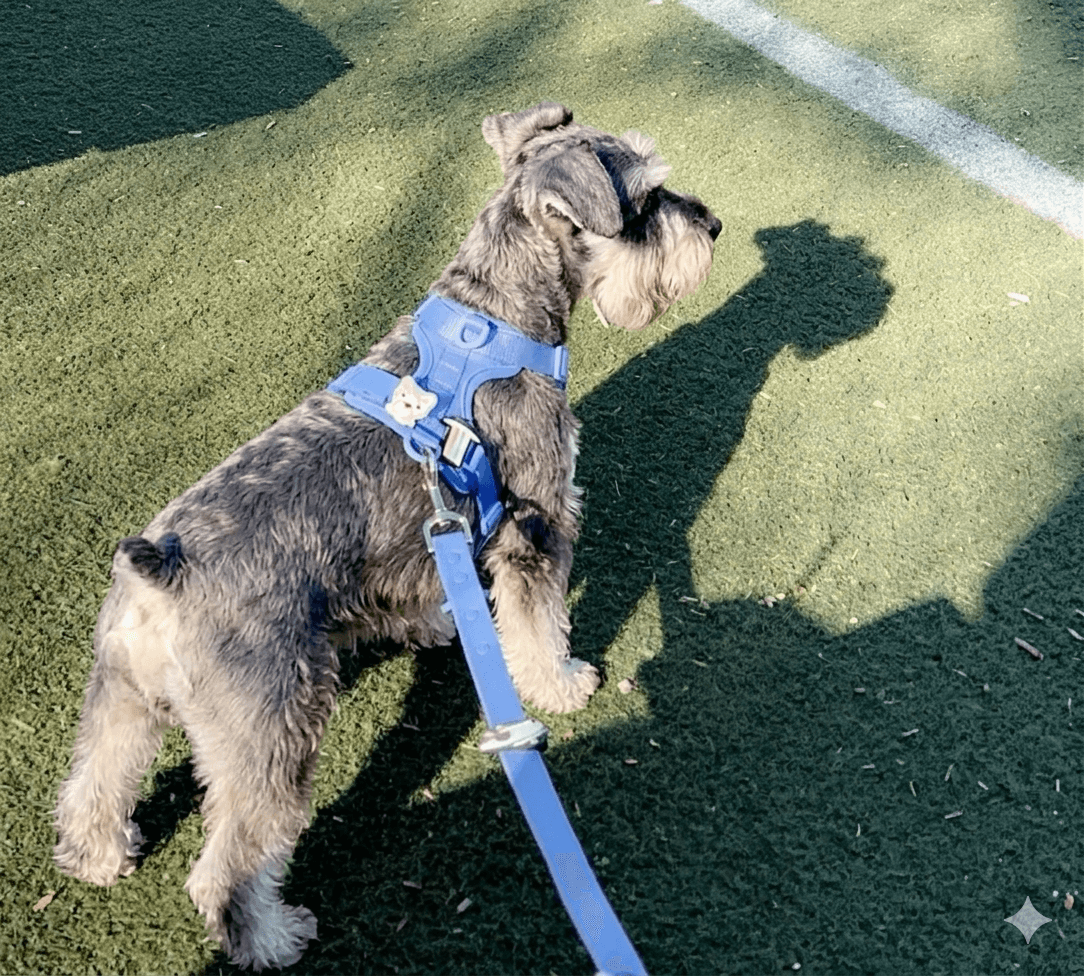
The step-in harness lies flat on the ground, the dog steps their front paws into two loops, and the harness is lifted and clipped at the back. No pulling anything over the dog’s head — which matters more than it might sound. Some dogs tolerate having things pulled over their head without complaint. Others treat it as a negotiation every single morning.
The design is genuinely easier for nervous dogs, head-shy dogs, and dogs that have learned to back away the moment they see the harness coming. The step-in approach feels less confrontational — the dog walks into it rather than being dressed.
Best for
Head-shy dogs, nervous dogs, or any dog that makes harness time more difficult than it needs to be. Also useful for owners who have mobility issues that make pulling a harness over a dog’s head awkward. Particularly popular for small breeds where the overhead harness loop can get tangled in face fur.
Watch out for
Step-in harnesses tend to have less independent strap adjustment than overhead harnesses — the loop geometry means fit options are more limited. Dogs with unusual body proportions (very deep chest and narrow waist, for example) may not get a precise fit. For dogs that need careful fitting for escape prevention — Huskies, Whippets, Greyhounds — an overhead harness with three-point adjustment is more reliable.
Overhead Harness
The overhead harness has a neck loop that goes over the dog’s head, with the body of the harness then positioned over the chest and shoulders. Most no-pull harnesses use this design, and the reason is that the overhead construction allows three independent adjustment points — neck, chest, and belly — which gives a more precise and secure fit than a step-in.
For dogs with escape tendencies, the overhead construction with a properly snug neck loop is harder to back out of than a step-in. The neck loop sits behind the skull — and if it’s correctly fitted to the two-finger rule, it physically cannot be pulled forward over the widest point of the head. This is why most trainers recommend overhead harnesses for breeds known to escape, like Huskies and Greyhounds. For fitting details, see our no-pull harness fitting guide.
Y-Harness
Named for the Y-shape formed by the straps across the dog’s chest, this harness style is designed to leave the shoulder blades completely free — the straps run from a central chest point outward and upward to the sides, rather than across the front of the shoulders. The idea is that a strap across the shoulder restricts the dog’s natural forward reach, while a Y-shape leaves the gait completely unimpeded.
This makes the Y-harness popular for dog sports, canicross, and any activity where natural movement efficiency matters. It is also commonly recommended by canine physiotherapists for dogs recovering from shoulder injuries. For everyday walking and pulling management it performs similarly to a standard front-clip harness.
H-Harness
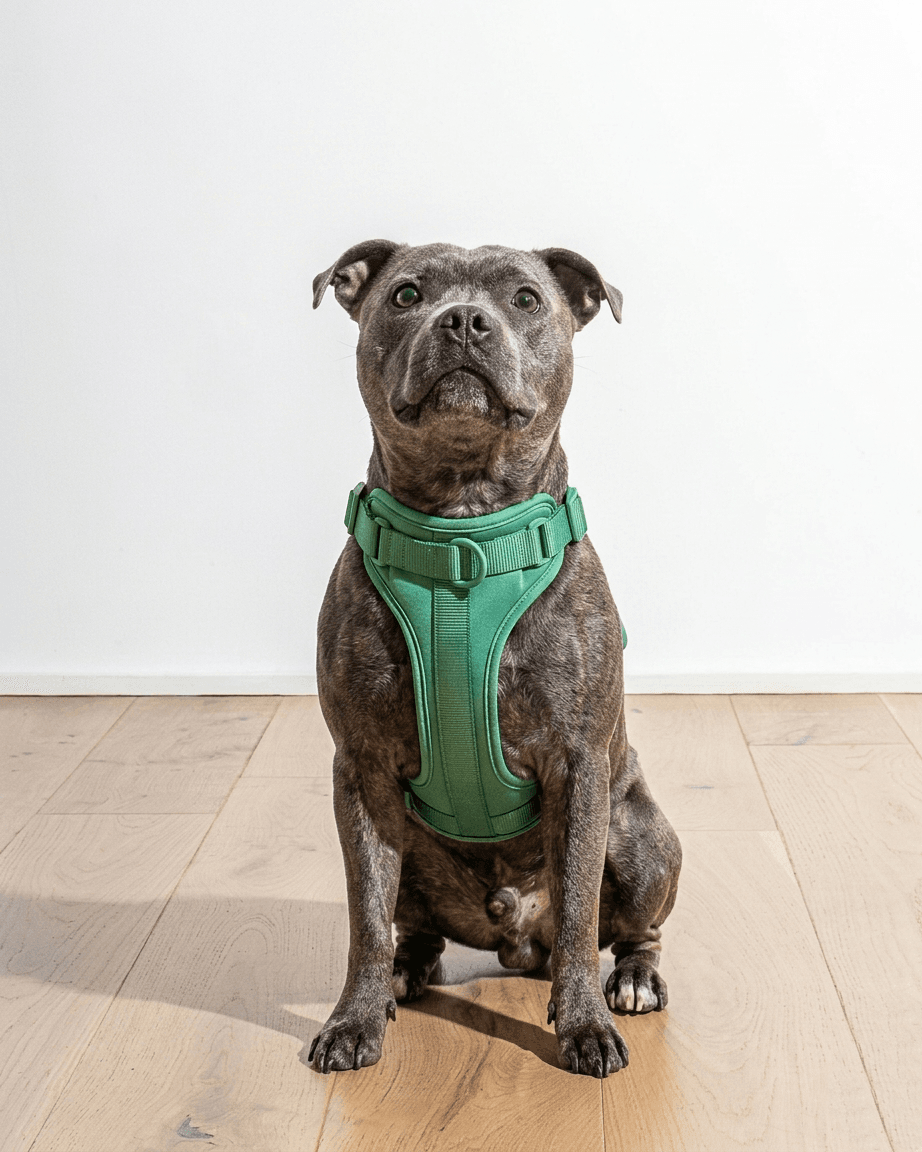
The H-harness (sometimes called a Roman harness) has two loops — one around the neck and one around the belly — connected by a strap running along the dog’s back, forming the shape of an H when laid flat. It typically clips on the back only.
It is a simple, low-cost design that works well for calm dogs that don’t pull. Because there’s no front clip option, it offers no pulling management — and the two-loop design can be prone to twisting and shifting during active walks. For dogs that need fitting flexibility or pulling management, the overhead front-clip harness is a more reliable design.
Vest Harness
The vest harness uses a padded panel — sometimes mesh, sometimes neoprene or fleece — that covers the dog’s chest and sides rather than individual straps. The wider contact area distributes pressure over a larger surface, which can be more comfortable for dogs with sensitive skin or for very small breeds where individual straps feel disproportionately thick.
The tradeoff is that the panel can trap heat in warm weather, and the wider coverage means fit is harder to fine-tune for unusual body shapes. For small breeds in mild climates, a vest harness is often a comfortable everyday option. For active dogs or warm climates, a breathable strap harness is usually more practical.
Which Type Is Right for Your Dog?
Dog pulls on the leash → Front-clip or dual-clip overhead harness
The front chest D-ring is the single most effective harness feature for reducing pulling. Pair with a short leash and consistent reward-based training for the best results. See our no-pull harness guide for a full breakdown.
Dog hates having things over its head → Step-in harness
Worth trying before assuming your dog simply hates harnesses. Many dogs that resist an overhead harness accept a step-in without complaint. If pulling management is also needed, look for a step-in that includes a front chest clip.
Active dog, running and hiking → Dual-clip or Y-harness with back clip
Use the back clip for exercise to allow natural free movement, and switch to the front clip for regular walks if pulling is an issue. A dual-clip harness covers both without carrying separate equipment.
Escape artist → Overhead harness with three-point adjustment
The neck loop must pass the two-finger snug rule and not be pullable forward over the skull. Three independent adjustment points allow every strap to be set correctly regardless of body shape. See our escape-proof harness guide for Huskies for detailed fitting steps.
Small or sensitive breed → Vest harness or well-padded strap harness
Pressure distribution matters more on small bodies where individual straps represent a proportionally larger contact area. A padded chest piece and soft strap lining reduce the chance of rubbing, particularly behind the armpits where most harness irritation occurs. For small breed harness specifics, see our small dog harness guide.

One Harness That Covers Most of the Above
The MoonianPet No-Pull Dog Harness is an overhead dual-clip design with a front chest D-ring and a back D-ring — zinc alloy throughout, with metal tri-glide sliders and a reinforced ABS quick-release buckle. Three-point independent adjustment covers neck, chest, and belly separately for a precise fit across any body shape. The lightweight neoprene construction doesn’t absorb moisture, stays breathable during active use, and maintains its shape through daily wear.
Available in five sizes from XS to XL and 11 colours. For a matched walking setup, the Harness & Leash Set pairs it with a PVC-coated waterproof leash — odour-proof and easy to wipe clean after muddy walks.
Frequently Asked Questions
What is the best type of harness to stop a dog pulling?
A front-clip harness — one with a D-ring on the chest rather than the back. When the dog pulls, the leash redirects the chest sideways, making sustained straight-line pulling mechanically harder. It works on any breed and size. Combine with a short leash and reward-based loose-leash training for the best long-term results.
Is a step-in harness better than an overhead harness?
Neither is universally better — they suit different situations. A step-in is easier to put on dogs that resist having things over their head. An overhead harness typically offers more adjustment points and a more secure, precise fit — which matters more for escape-prone breeds or dogs that need careful fitting for pulling management.
Do harnesses restrict a dog’s movement?
A correctly fitted harness does not restrict movement. A harness that is too tight, positioned incorrectly, or with straps crossing the shoulder joint can restrict the front leg’s range of motion. The two-finger rule on every strap — enough room that two fingers slide through with light resistance — ensures the harness is snug enough to stay in place without being tight enough to impede movement.
Should I use a harness or a collar for everyday walking?
For dogs that pull, a front-clip harness is safer than a collar — pulling against a collar puts pressure on the trachea and neck, which over time can contribute to neck issues, particularly in small breeds. A harness distributes force across the chest and shoulders instead. Most vets now recommend a harness as the primary walking tool, with a collar kept for ID tags only. For a full comparison, see our dog collar vs harness guide.
What size harness does my dog need?
Measure the chest girth at the widest point just behind the front legs, and the neck girth at the base of the neck. Cross-reference both measurements with the size chart — don’t size by weight or breed alone, as body proportions vary significantly even within breeds. Full measurement guide and size chart in our dog harness size guide.
Now that you know the harness types, the next step is getting the fit right. Our dog harness measurement guide walks through exactly how to measure, and our fitting guide covers every strap adjustment step by step.
Wenyue
Wenyue is the founder of MoonianPet and writes about dog collars, harnesses, waterproof pet gear, and everyday dog care. Growing up with dogs inspired her lifelong interest in pet care and practical dog gear. Through MoonianPet, she researches dog collars, harnesses, waterproof materials, and everyday solutions that help active dogs stay comfortable during daily adventures.