
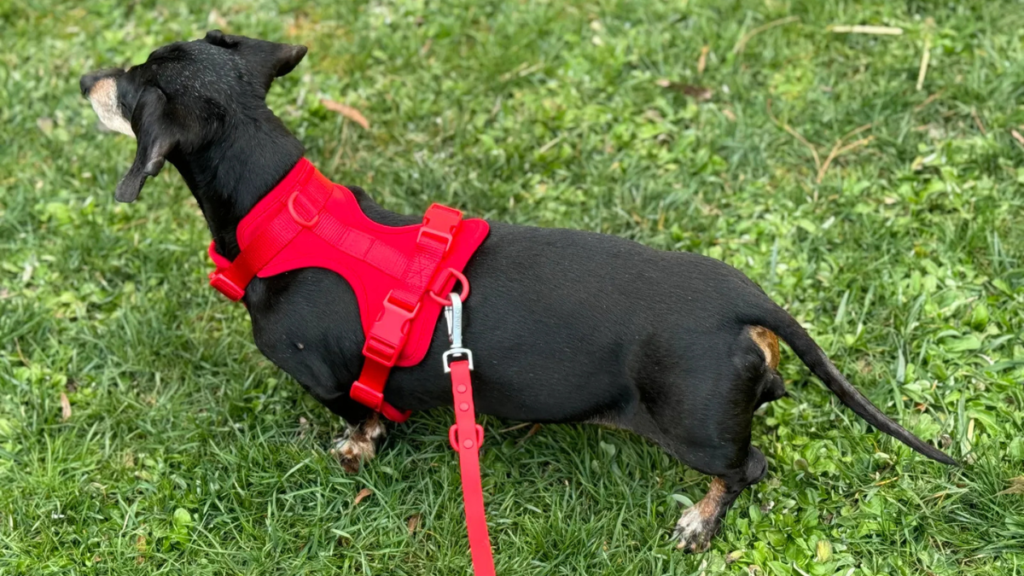
Small dogs need harnesses just as much as large ones — sometimes more. A small dog that pulls has the same forward momentum relative to their body weight as a large dog, and a collar on a small neck carries the same choking risk regardless of size. The difference is that finding a harness that actually fits a small dog is harder than it looks.
Most harnesses are designed with medium and large dogs in mind and then scaled down. The result is a small harness that still has proportions that do not work for a Chihuahua, a Dachshund, or a French Bulldog — straps that sit in the wrong places, chest pieces that are too wide, or adjustment ranges that cannot get snug enough on a narrow body.
This guide covers what to look for in a small dog harness, which breeds need special consideration, and how to get the fit right first time.
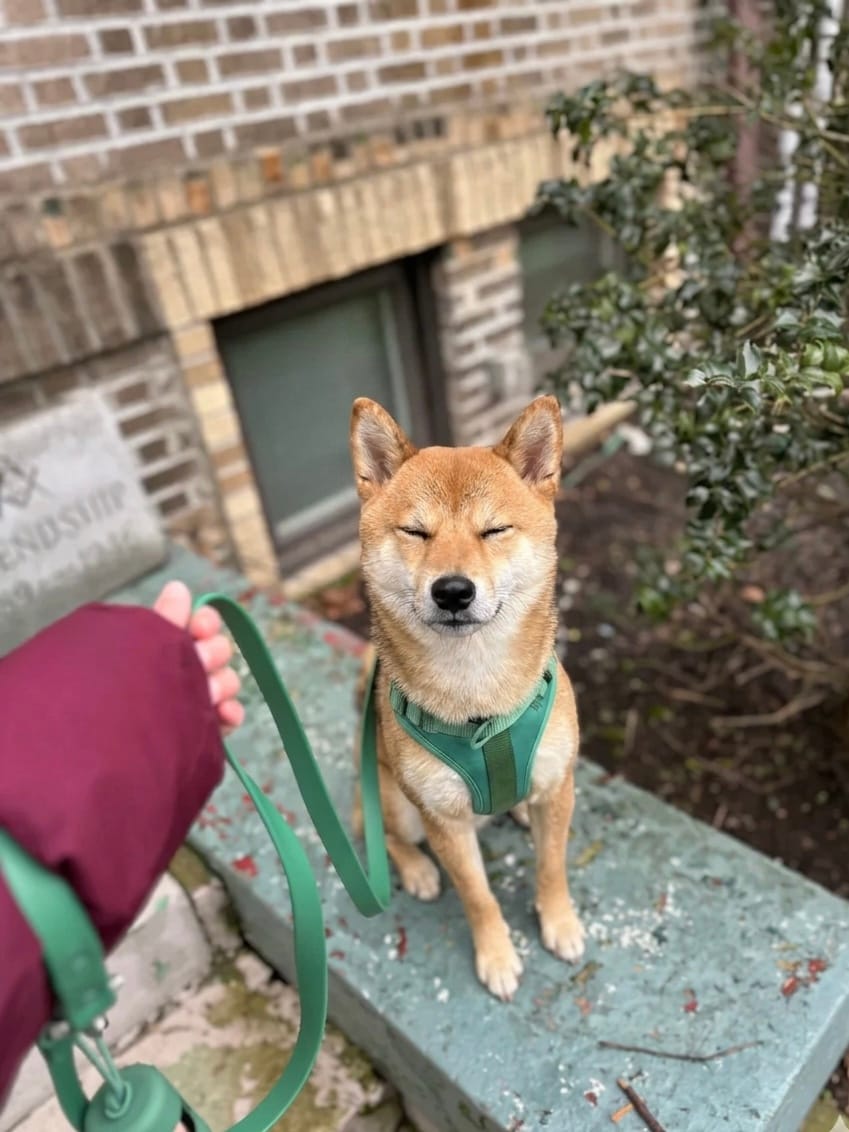
Why Small Dogs Need a Harness More Than a Collar
Small dogs are disproportionately at risk from collar pressure. Their tracheas are smaller and more delicate, and many small breeds — particularly Toy Poodles, Chihuahuas, and Yorkshire Terriers — are prone to tracheal collapse, a condition where repeated pressure on the windpipe causes the tracheal rings to weaken over time.
A harness distributes leash pressure across the chest and shoulders instead of concentrating it on the neck. For any small dog that pulls, lunges, or tends to strain against the leash, this is not a minor comfort consideration — it is a direct health benefit.
For a full breakdown of when a harness makes more sense than a collar, our collar vs harness guide covers the comparison in detail. For small dogs that pull specifically, the case for a no-pull harness is particularly strong.
What to Look for in a Small Dog Harness
Not all harnesses labeled “small” are actually designed well for small dogs. These are the four things that genuinely matter:
A wide adjustment range at chest and neck
Small dogs vary enormously in body shape even within the same size category. A Dachshund and a Pomeranian might both wear an “S” harness, but their proportions are completely different. A harness with multiple tri-glide adjustment points — neck, chest, and belly — can accommodate that variation in a way that a single-adjustment harness cannot. This independent adjustment is also what prevents small dogs from backing out of the harness when they pull backward.
Lightweight construction
A harness that weighs 300g on a 5kg dog is proportionally enormous. Small dog harnesses should be light — the MoonianPet XS harness weighs 99g and the S weighs 130g, which keeps the harness from affecting natural movement or tiring a small dog out on longer walks.
Soft padding at contact points
Small dogs have less muscle mass cushioning their bones, which means hard webbing edges cause chafing faster than on a larger dog. Neoprene padding at the chest piece and under the belly strap makes a real difference for day-long wear.
A front D-ring for pullers
Small dogs can be just as determined pullers as large dogs — and a front-clip no-pull harness works the same way regardless of body size. When the leash clips to the chest D-ring, forward pulling momentum is redirected sideways, which disrupts the pulling motion without any discomfort or correction.
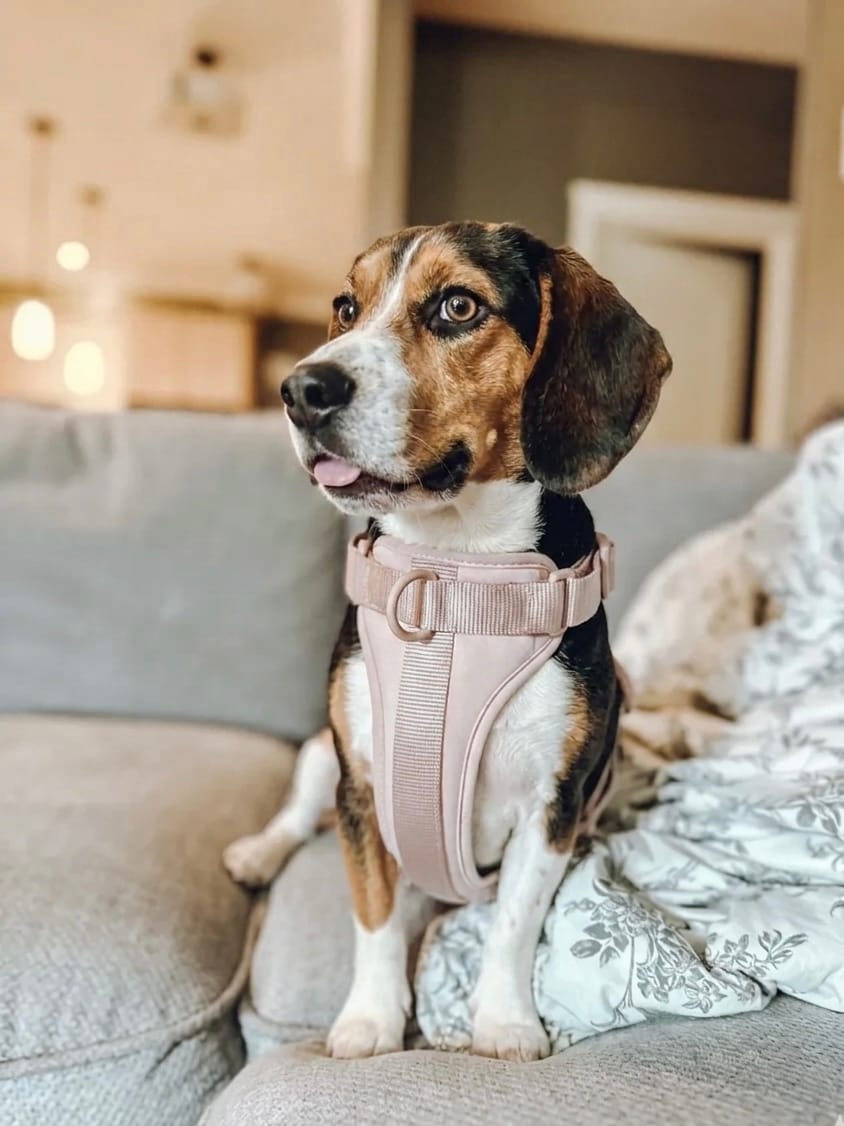
Small Dog Harness Size Guide
For small dogs, chest girth is the measurement that matters most. Measure around the widest point of the chest, just behind the front legs, with your dog standing in a relaxed position.
| Size | Chest Girth ⭐ | Neck Girth | Weight | Best For |
|---|---|---|---|---|
| XS | 13.4–16.9″ 34–43 cm |
10.2–11.8″ 26–30 cm |
99g / 3.5oz | Chihuahua, Toy Poodle, Maltese, Pomeranian |
| S | 15.4–21.3″ 39–54 cm |
11.0–13.8″ 28–35 cm |
130g / 4.6oz | Dachshund, Shih Tzu, Mini Schnauzer, Yorkie |
| M | 20.9–28.0″ 53–71 cm |
13.8–16.5″ 35–42 cm |
203g / 7.2oz | Beagle, French Bulldog, Corgi, Cavapoo |
* French Bulldogs and Pugs often need size M despite their small frame — their barrel chest runs wide. Always measure before ordering.
Breed-Specific Harness Advice for Small Dogs
French Bulldog
Frenchies have a wide, barrel-shaped chest that is significantly larger relative to their neck than most dogs. Do not size by neck — size by chest girth. Most French Bulldogs need a size M even though they appear small. The wide chest piece on the MoonianPet harness accommodates their build without pressing into the armpits.
Dachshund
Dachshunds are long-bodied and low to the ground, which makes standard harness proportions awkward. Look for a harness with a wide belly strap adjustment range — the belly strap on a Dachshund sits further back than on a shorter-bodied breed. The S size works for most standard Dachshunds; miniature Dachshunds typically fit XS.
Chihuahua
Chihuahuas are prone to tracheal collapse, which makes a harness essential rather than optional. The XS size is designed specifically for very small necks and chests. The 13mm width webbing on the XS avoids the bulky look and feel that scaled-down medium harnesses often have on tiny frames.
Yorkshire Terrier & Maltese
These breeds are very fine-boned and lightweight. Prioritize harness weight — anything over 150g is proportionally heavy for a 3–4kg dog. The MoonianPet XS at 99g and S at 130g both keep the harness weight well within what is comfortable for long walks.
Pug
Like French Bulldogs, Pugs have a barrel chest that runs wide for their size. They also have shortened airways, making neck pressure from a collar particularly risky. Size by chest girth, expect to need a size M, and make sure the neck strap is not pressing into the throat when the harness is on.
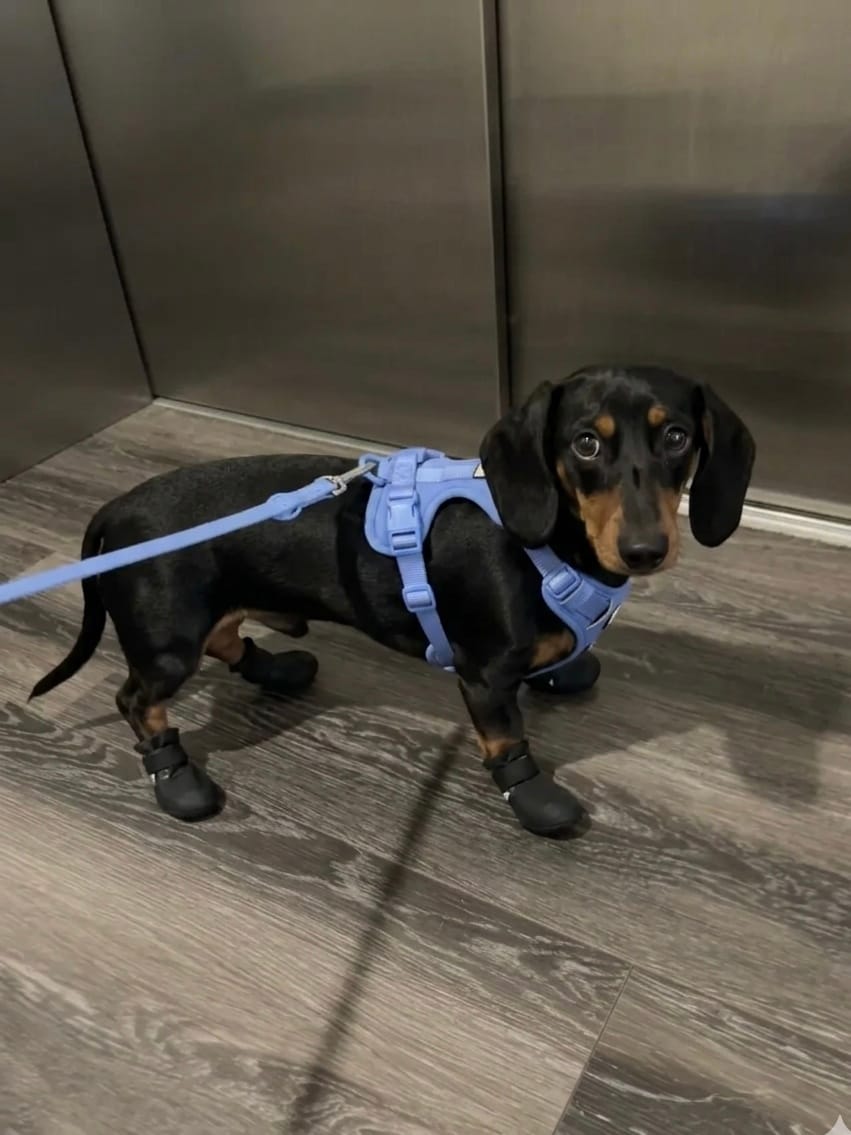
How to Fit a Harness on a Small Dog
Small dogs can be wiggly and impatient during harness fitting. A few practical tips that make the process easier:
Loosen everything before you start
Loosen all three adjustment straps fully before attempting to put the harness on. A loose harness slips on easily in seconds. A tight one takes three times as long and stresses the dog out unnecessarily.
Use treats to create positive associations
Hold a treat at nose level while slipping the neck loop over the head. Small dogs that anticipate the treat stay still long enough to get the harness positioned correctly. After a few repetitions, most dogs start presenting themselves for the harness at walk time.
Always fit on a standing dog
A sitting small dog has a compressed chest — particularly Dachshunds and Corgis whose long body folds more than a taller dog. Fit on a standing dog and re-check the two-finger rule with the dog standing and moving.
The “Skull Test” for escape prevention
Small dogs often have neck circumferences equal to or wider than their skulls, making them escape artists. Once fitted, grab the chest panel and pull it firmly forward toward the dog’s ears. If the neck loop slides over the widest part of the skull and can be pulled off the head, it is too loose. Tighten it one notch and test again. If it cannot pass the skull, the harness is escape-proof.
Check for underarm rubbing after the first walk
The most common small dog harness issue is chafing under the front legs, where the chest strap passes through the armpits. After the first walk, check for any redness or hair loss in those areas. If you find any, raise the chest strap slightly and re-test on the next walk.
For the complete step-by-step guide to putting on a no-pull harness, see our dedicated post on how to put on a no-pull dog harness — it covers all four steps with fit checks for each strap.
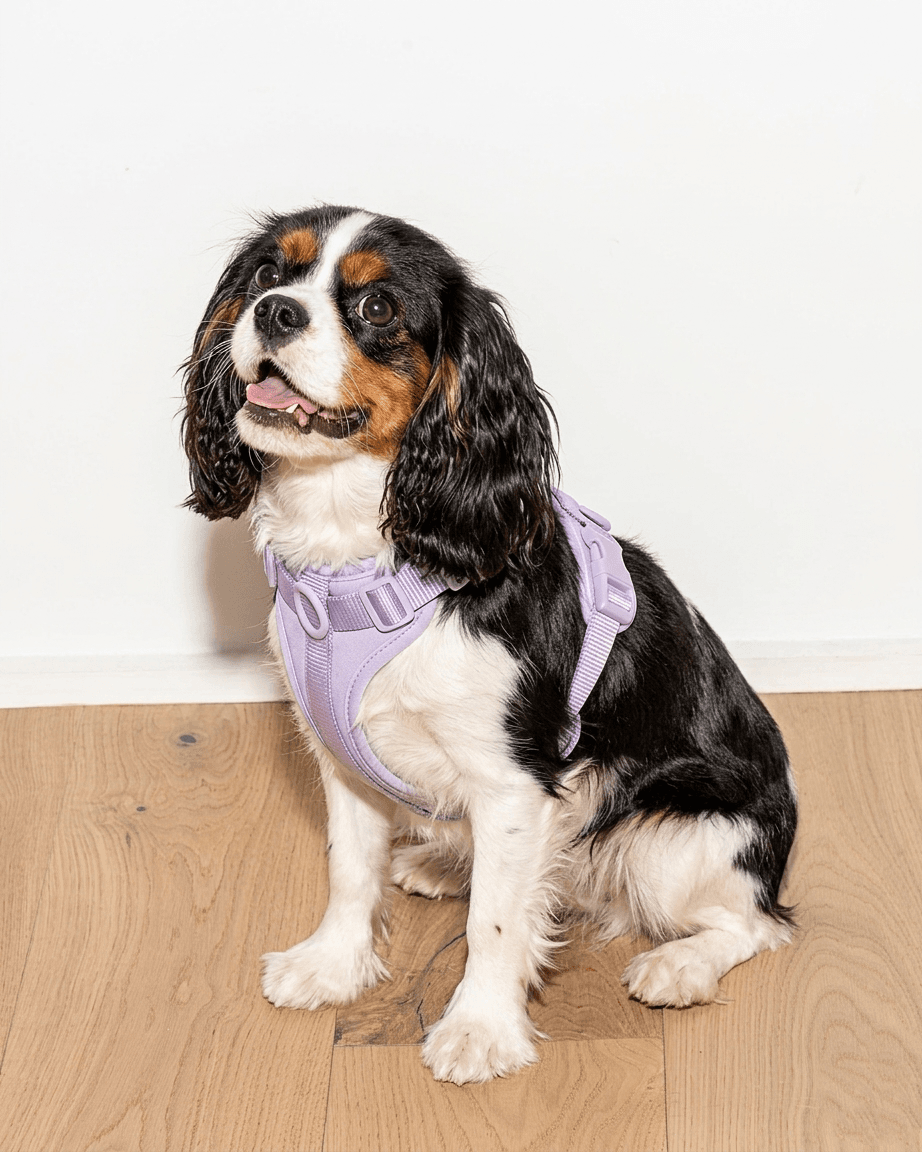
Front Clip vs Back Clip for Small Dogs
The front clip (chest D-ring) is the no-pull attachment point. When a small dog pulls forward, the front clip redirects their momentum to the side — interrupting the pulling motion without any choking or discomfort. This is particularly effective on small dogs because their lighter body weight means the redirection happens with very little force from the handler.
The back clip (back D-ring) is the standard walking attachment for dogs that already walk calmly. It gives more natural movement and is more comfortable for extended walks. Most owners start with the front clip until their small dog’s leash manners improve, then transition to the back clip for everyday walks.
The No-Pull Harness Built for Small Dogs
The MoonianPet No-Pull Dog Harness starts at XS — designed specifically for dogs from Chihuahua size up — with lightweight neoprene padding, 3-point tri-glide adjustment, and dual D-rings for front and back clip options. The XS weighs just 99g and the S 130g, keeping the harness proportionate and comfortable on small frames.
Available in 11 colors and 5 sizes. Pair with the MoonianPet Waterproof Leash for a matching set, or save with the Harness & Leash Set.
Not sure which size? Use our dog harness size guide to measure chest and neck girth in under two minutes.
Frequently Asked Questions
Are no-pull harnesses safe for small dogs?
Yes — a front-clip no-pull harness is safer for small dogs than a collar, because it eliminates neck pressure entirely. The front clip redirects pulling sideways rather than applying any pressure to the throat. For breeds prone to tracheal issues like Chihuahuas, Yorkshire Terriers, and Toy Poodles, a no-pull harness is the recommended choice over any collar-based solution.
My French Bulldog keeps slipping out of harnesses. What am I doing wrong?
Frenchies escape harnesses because their wide chest and narrow neck create an unusual proportion — a harness sized for their neck is too loose around the chest, and one sized for their chest can be pulled backward over the head if the neck strap is not tight enough. Make sure you are sizing by chest girth (usually M), then tighten the neck strap until you can fit two fingers underneath but not three. The escape-proof buckle on the MoonianPet harness also adds an extra layer of security.
Should I use a collar as well as a harness on my small dog?
Many owners use a lightweight collar for ID tags and the harness for leash attachment — this is safe and practical. Just make sure the collar fits loosely enough not to press into the harness neck strap. For very small dogs, an ID tag clipped directly to the harness D-ring is a simpler alternative to wearing both.
How do I stop my small dog from pulling on the leash?
Start with the front clip — clip the leash to the chest D-ring rather than the back. This gives you immediate mechanical assistance. Combine with short, frequent walks where you stop and change direction whenever your dog starts to pull, rewarding them for returning to your side. Most small dogs show improvement within a week of consistent front-clip walking.
How do I measure my small dog for a harness?
Use a soft tape measure and measure the chest girth first — wrap the tape around the widest point of the chest, just behind the front legs, with your dog standing. Round up if you are between numbers, and if chest and neck measurements suggest different sizes, go with the larger. Full measurement instructions are in our dog harness size guide.
Looking for step-by-step instructions on how to put the harness on? See our guide on how to put on a no-pull dog harness. Or if you are deciding between a collar and a harness for your small dog, our collar vs harness guide covers the full comparison.
Wenyue
Wenyue is the founder of MoonianPet and writes about dog collars, harnesses, waterproof pet gear, and everyday dog care. Growing up with dogs inspired her lifelong interest in pet care and practical dog gear. Through MoonianPet, she researches dog collars, harnesses, waterproof materials, and everyday solutions that help active dogs stay comfortable during daily adventures.