
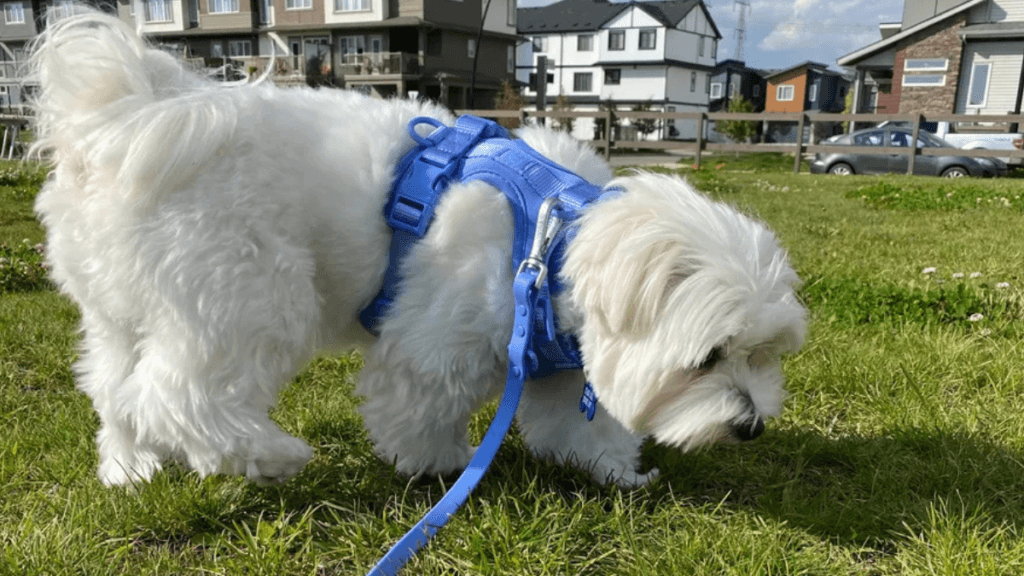
If your dog pulls on the leash, you have probably come across two names more than any other: the 2 Hounds Design Freedom Harness and the PetSafe Easy Walk. Both are marketed as no-pull solutions. Both have genuine followings. And both work — but in different ways, for different dogs, with different trade-offs.
The confusion is understandable. From the outside, most front-clip harnesses look similar. But the mechanism that controls pulling, the fit system, the hardware quality, and the long-term durability vary considerably between these products — and choosing the wrong one means spending weeks dealing with a harness that either does not fit, does not stop pulling, or falls apart faster than expected.
This comparison breaks down exactly how each harness works, where each one excels, where each falls short, and what to look for if you are ready to move beyond the two most-marketed options.
How No-Pull Harnesses Actually Work
Before comparing specific products, it helps to understand the underlying mechanism — because every front-clip harness uses the same basic principle, and that principle is what makes or breaks them.
When a dog pulls forward and the leash is clipped to the back of a standard harness, the force goes straight in the direction the dog wants to travel. The handler is effectively playing tug-of-war against a dog using its entire body weight. A front-clip harness changes that equation: the leash attaches to a D-ring on the chest, so when the dog pulls, the leash redirects them sideways or back toward the handler rather than forward. Forward momentum is interrupted before it builds.
This works best as part of a training approach rather than as a standalone fix. But as a management tool — something that makes walks easier while training is ongoing — a properly fitted front-clip harness is the most effective option available without resorting to aversive equipment. The difference between the Freedom Harness, Easy Walk, and other no-pull options comes down to how well each executes this mechanism and what else it offers.
2 Hounds Design Freedom Harness
The Freedom Harness from 2 Hounds Design is widely regarded as one of the better-constructed no-pull harnesses in the mid-price range. It uses a dual-clip system — front ring on the chest and back ring between the shoulder blades — along with a connecting loop that links both points when using a double-ended leash.
What works well
The dual-clip design with a martingale loop is genuinely effective for dogs that pull hard. When both clips of a double-ended leash are used simultaneously, the front ring handles directional control while the back ring reduces the amount of turning force on the dog’s body. The nylon webbing construction is reasonably durable, and the velvet-lined chest strap is a thoughtful touch for dogs prone to rubbing. The Freedom Harness also comes in a wider size range than many competitors, which helps for non-standard body shapes.
Where it falls short
The Freedom Harness requires a double-ended leash to use the full dual-clip system — a standard single-clip leash only uses one attachment point. Many owners buy it without realising this and end up using it as a basic front-clip harness, missing the mechanism that justifies the price. The nylon webbing also absorbs moisture and odour over time, which is noticeable on dogs that swim or get wet frequently. It is not a waterproof harness. Sizing can also be tricky — the Freedom Harness measures by girth but the fit varies noticeably between body types, and exchanges are common.
PetSafe Easy Walk Harness
The Easy Walk is one of the best-selling no-pull harnesses on the market, largely because of PetSafe’s retail distribution. It is a front-clip-only harness with a straightforward design: a chest strap, a belly strap, and a front D-ring. The concept is simple, the price is accessible, and it is widely available.
What works well
The Easy Walk is genuinely easy to put on — the side-release buckle on the chest strap snaps closed quickly, and there is no threading or adjusting required once you have the right size. For owners who are new to no-pull harnesses and want something simple to start with, it is a low-commitment entry point. It is also one of the most affordable options in the category.
Where it falls short
The Easy Walk has a well-documented fitting problem. The chest strap tends to migrate sideways and sit across the front of the shoulder joint rather than the sternum, which restricts the natural forward movement of the front legs. This does reduce pulling — but partly because it is physically uncomfortable to stride normally, not just because the directional mechanism is working. Over time, this can contribute to gait changes and shoulder strain, particularly in dogs walked on it for long periods. The adjustment system is also limited, and the plastic hardware is not rated for larger, stronger dogs. Dogs over roughly 50 pounds who pull consistently will find the buckles and D-ring under meaningful stress.

Freedom Harness vs Easy Walk: Head to Head
Pulling control
The Freedom Harness is more effective for serious pullers, particularly when used with a double-ended leash. The Easy Walk works for moderate pullers but can slide into a position that restricts shoulder movement on consistent hard pullers. Edge: Freedom Harness.
Ease of use
The Easy Walk is simpler — one buckle, clear clip-in points. The Freedom Harness has more adjustment points and requires a double-ended leash to use properly, which adds complexity. For daily use with an uncooperative dog, simplicity wins. Edge: Easy Walk.
Fit and adjustability
Neither harness excels here. The Easy Walk has limited adjustment points and is notorious for slipping out of position. The Freedom Harness adjusts at more points but still requires the correct body proportions to fit well. Both generate significant return and exchange volume. Tie.
Durability and materials
Both use nylon webbing, which absorbs moisture and odour and shows wear over time. Neither is waterproof. The Freedom Harness uses slightly heavier webbing, but the plastic hardware on both is a limiting factor for larger dogs. Slight edge: Freedom Harness.
Price
The Easy Walk is typically $20–25. The Freedom Harness runs $40–50, sometimes more. For what each delivers, neither represents standout value. Edge: Easy Walk for budget, Freedom Harness for build quality relative to price paid.
What to Actually Look For in a No-Pull Walking Harness
The Freedom Harness and Easy Walk represent two ends of the no-pull market. But looking past brand names, these are the features that determine how well any no-pull harness performs day to day:
A centered front D-ring that stays in position
The front D-ring must sit flat against the sternum — not slide sideways onto the shoulder joint. This requires a chest strap that is both well-padded and well-secured. A harness whose chest strap migrates during the walk loses its no-pull effectiveness and can restrict movement. Look for a harness where the chest piece is anchored by the belly strap below and cannot rotate independently.
Three-point adjustment
Neck circumference, chest girth, and belly girth all vary independently between dogs. A harness with adjustment at all three points can accommodate that variation. A harness with one or two adjustment points forces the dog to fit the harness rather than the harness fitting the dog — which is why so many return rates are high in this category.
Neoprene padding, not mesh or thin foam
Padding on the chest strap and underarm straps is what determines comfort over a long walk. Thin mesh padding compresses flat within a few weeks of daily use. Neoprene maintains its structure, resists moisture, and stays soft through months of use. For any dog that walks daily, neoprene padding is not a luxury — it is the difference between a harness that causes chafing and one that does not.
Metal hardware on medium and large dogs
Plastic D-rings and adjustment sliders are adequate for small, calm dogs. For any dog over about 30 pounds that pulls consistently, plastic hardware flexes and deforms under load. The D-ring rotating out of position under a hard lunge defeats the entire no-pull mechanism. Zinc alloy hardware is the standard to look for — strong, rust-resistant, and rated for repeated stress.
Both front and back clip options
A dual-clip harness gives you options as your dog’s leash manners improve. Start every walk with the front clip to redirect pulling. As training progresses and your dog walks more calmly, trial the back clip on quieter routes. A harness that only offers one clip position is less versatile and means replacing the harness when training goals change. For a deeper look at when to use each clip position, see our guide on front clip vs back clip harnesses.

Which Harness Is Right for Your Dog?
Strong pullers, medium to large breeds
The Freedom Harness is the better choice of the two mainstream options, used with a double-ended leash. For a neoprene-padded alternative with metal hardware throughout and a proper three-point adjustment, the MoonianPet No-Pull Harness covers all the requirements that both the Freedom and Easy Walk fall short on — without the chest strap migration problem. Our guide to no-pull harnesses for large dogs covers sizing and hardware requirements in detail.
Moderate pullers, small to medium breeds
Either harness will work for lighter dogs that pull occasionally rather than consistently. The Easy Walk’s simplicity is an asset for small dogs. If your dog is between 15 and 40 pounds and pulls regularly, the Freedom Harness or a neoprene alternative will give better long-term results and better hardware durability.
Dogs with sensitive skin or skin conditions
Nylon webbing — used in both the Freedom Harness and Easy Walk — can cause friction irritation on dogs with sensitive skin, especially when wet. Neoprene padding significantly reduces this risk. If your dog has had chafing or skin reactions from previous harnesses, the material of the chest strap and underarm sections should be your first consideration, not the clip position.
Dogs that swim or get wet frequently
Neither the Freedom Harness nor the Easy Walk is designed for water use. Nylon absorbs water and takes time to dry, which leads to odour and strap stiffness. If your dog swims regularly or walks in wet conditions, a harness with waterproof or water-resistant construction will hold up significantly better over time. For overall collar and leash waterproofing advice, see our guide on the best dog collar for swimming.
A No-Pull Harness Built for Daily Use
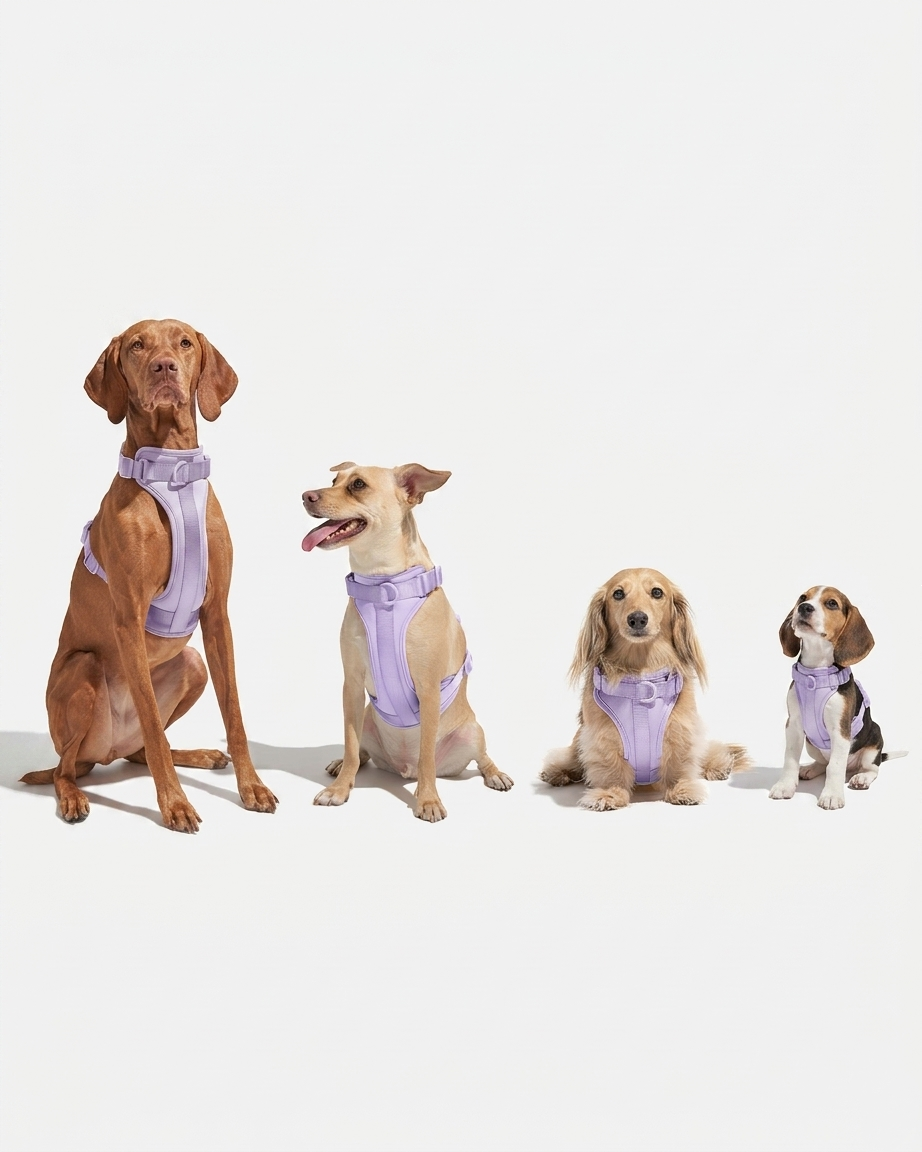
The MoonianPet No-Pull Dog Harness addresses the gaps in both the Freedom Harness and Easy Walk: neoprene padding on chest and straps, zinc alloy hardware throughout, a three-point tri-glide adjustment that fits most body shapes without returning for a different size, and dual front and back D-rings on a single harness. Available in XS to XL across 11 colors.
If you want a matched walking setup, the Harness & Leash Set pairs the no-pull harness with a waterproof PVC-coated leash — odour-proof, easy to wipe clean, and available in the same 11 colors.

Frequently Asked Questions
Is the Freedom Harness better than the Easy Walk?
For most dogs, yes — particularly medium to large dogs that pull consistently. The Freedom Harness has better construction, more adjustment points, and a dual-clip system that gives more control when used with a double-ended leash. The Easy Walk is simpler and cheaper, but the chest strap tends to migrate onto the shoulder joint during walks, which can restrict natural stride and cause discomfort over time.
Do I need a double-ended leash to use the Freedom Harness?
To use the Freedom Harness as designed — with both front and back clips working simultaneously via the martingale loop — yes, a double-ended leash is required. With a standard single-clip leash, you are only using one attachment point, which means you are effectively using it as a basic front-clip harness. Many owners are not aware of this when they purchase it.
Why does my dog still pull with a no-pull harness?
The most common reason is fit — a harness that has slipped out of position loses its redirecting effect. Check that the front D-ring is sitting flat on the sternum, not migrated to the shoulder. The second reason is that no-pull harnesses are management tools, not instant training solutions. Consistent reward-based training alongside the harness produces the best results. For a step-by-step guide on fitting, see our post on how to put on a no-pull dog harness.
Can a no-pull harness hurt my dog?
A properly fitted no-pull harness does not hurt dogs. The risk comes from a harness that sits incorrectly — specifically a chest strap that sits over the shoulder joint rather than the sternum, which can restrict natural gait and cause shoulder strain over time. This is one of the documented issues with the Easy Walk. A harness with neoprene padding and three-point adjustment significantly reduces the risk of pressure points and chafing.
What size no-pull harness does my dog need?
Measure chest girth — the widest point of the ribcage, just behind the front legs — with a soft tape measure while your dog is standing. This is the primary sizing measurement for most no-pull harnesses. Full instructions and size charts are in our dog harness size guide.
Deciding between a collar and harness altogether? Our collar vs harness guide covers every scenario. Or if you want to understand the full front clip vs back clip debate, see our dedicated comparison.
Wenyue
Wenyue is the founder of MoonianPet and writes about dog collars, harnesses, waterproof pet gear, and everyday dog care. Growing up with dogs inspired her lifelong interest in pet care and practical dog gear. Through MoonianPet, she researches dog collars, harnesses, waterproof materials, and everyday solutions that help active dogs stay comfortable during daily adventures.