
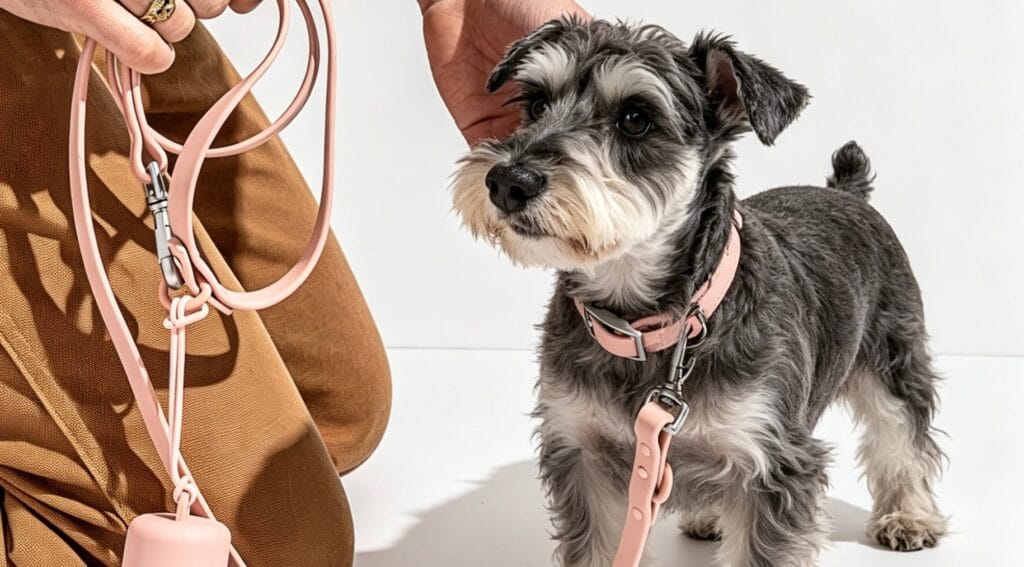
Getting a collar for a new puppy feels straightforward until you realise how fast puppies grow. A collar that fits perfectly at eight weeks may be dangerously tight by ten weeks, and a collar bought slightly large to allow for growth may be loose enough to slip over the head on day one. The sizing window for puppies is narrow and it moves quickly.
The good news is that measuring a puppy for a collar is quick and the adjustment process is simple once you know what to look for. The key is checking the fit frequently — not just when you first put the collar on, but every week or two throughout the growth phase.
This guide covers how to measure your puppy’s neck correctly, which size to start with for common breeds, how to check the fit as they grow, and the signs that tell you it is time to size up.
When Can a Puppy Start Wearing a Collar?
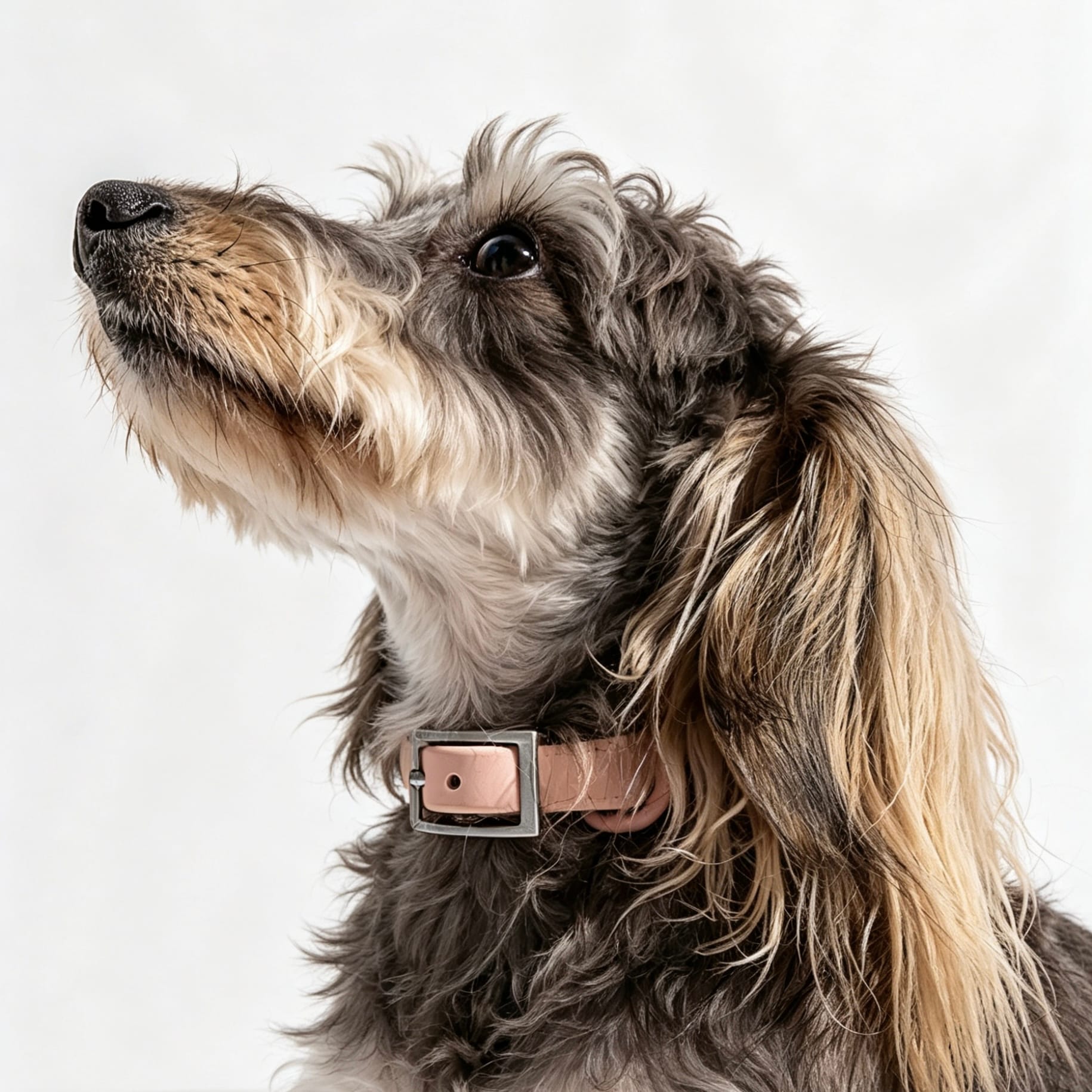
Most puppies come home at around eight weeks old, and a collar can go on from day one — there is no developmental reason to wait. The collar serves two purposes at this stage: ID tags, which in many places are a legal requirement for dogs in public, and getting the puppy used to the sensation of wearing something around their neck before it needs to matter on a walk.
For the first few weeks at home, before vaccinations are complete and outdoor walks begin, the collar is mostly about habituation. Put it on during the day and remove it overnight — particularly if the puppy sleeps in a crate, where a collar can catch on the bars and cause injury.
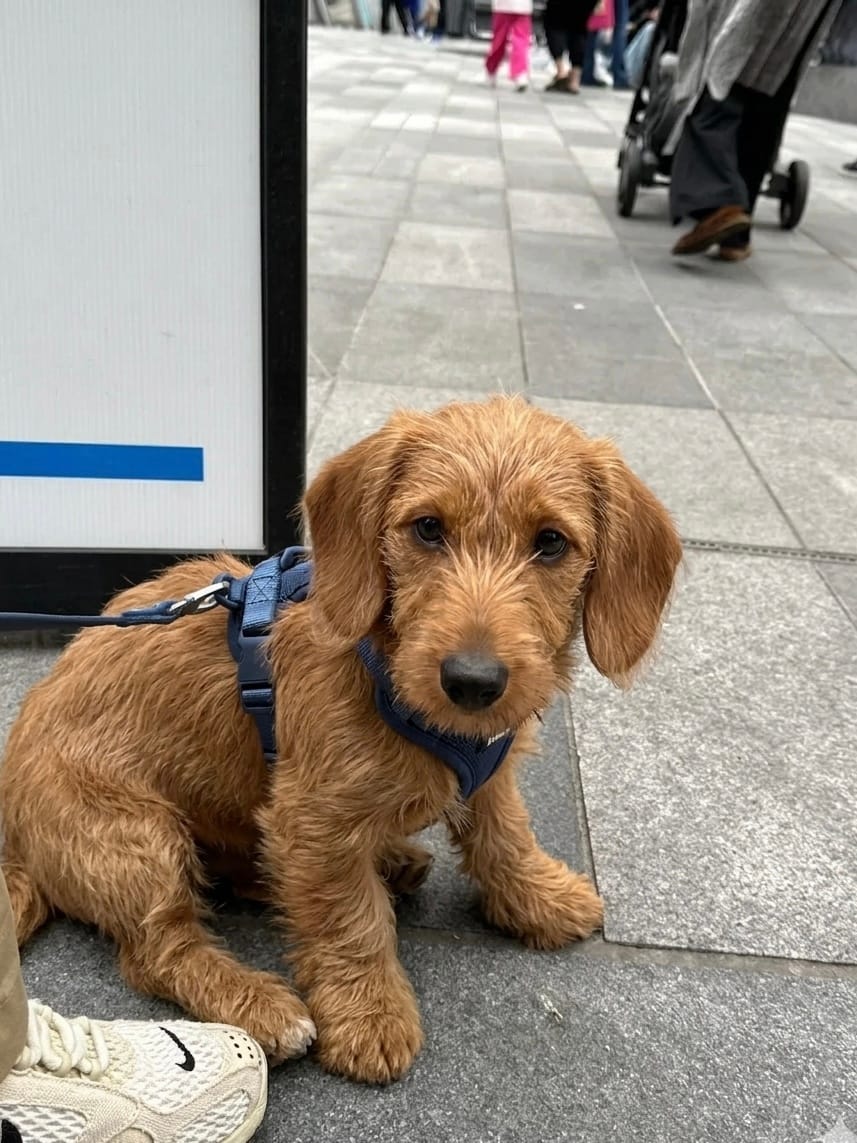
For leash attachment during those first outdoor walks, a harness is a better choice than the collar for most puppies — puppies are unpredictable on the leash and the force of their erratic movements is better distributed across the chest than concentrated on a developing neck. The collar stays on for ID; the harness takes the leash. For more on this, see our guide on puppy’s first walk.
How to Measure a Puppy’s Neck for a Collar
The process is the same as measuring an adult dog, with one practical adjustment — puppies do not hold still, so you may need a helper or a treat to keep them occupied for the thirty seconds it takes.
Step 1: Get the puppy standing
Measure with the puppy standing, not sitting. A seated puppy has a slightly compressed neck profile that gives a different measurement than a standing one. Hold a treat at nose level to keep them still for the few seconds you need.
Step 2: Wrap the tape around the mid-neck
Use a soft tape measure or a piece of string. Wrap it around the middle of the neck — not pulled up to the base of the skull, not sitting down at the shoulders, but in the middle where the collar will actually sit. The tape should lie flat against the skin, snug but not compressing the fur or pressing in.
Step 3: Note the measurement in centimetres
Record the bare neck circumference. This is the number you will compare against the collar’s size chart. Write it down — it is useful to track this measurement over the coming weeks to monitor growth rate.
Step 4: Add the two-finger allowance
The correctly fitted collar allows two fingers — held flat — to slide underneath. This means the collar’s set circumference should be approximately 2–3cm larger than the bare neck measurement. When checking a size chart, confirm your puppy’s measurement plus 2–3cm falls comfortably within the collar’s range — not at its maximum setting, which would leave no room to adjust as the puppy grows.
Starting Collar Sizes by Breed Type
These are typical starting sizes at eight weeks — always measure to confirm, as litter variation means puppies of the same breed can differ considerably at the same age:
| Breed Type | Typical Starting Size (8 weeks) | Adult Size |
|---|---|---|
| Toy breeds Chihuahua, Maltese, Toy Poodle |
XS | XS–S (no size change for some) |
| Small breeds Shih Tzu, Mini Schnauzer, Cavalier |
XS–S | S–M |
| Medium breeds Beagle, Cocker Spaniel, Corgi |
S | M |
| Large breeds Labrador, Golden Retriever, Husky |
S–M | L |
| Giant breeds German Shepherd, Rottweiler, Great Dane |
M | L–XL |
* These are starting points only — measure before ordering. For the full size chart with neck circumference ranges, see the dog collar size guide.
How Often to Check the Fit
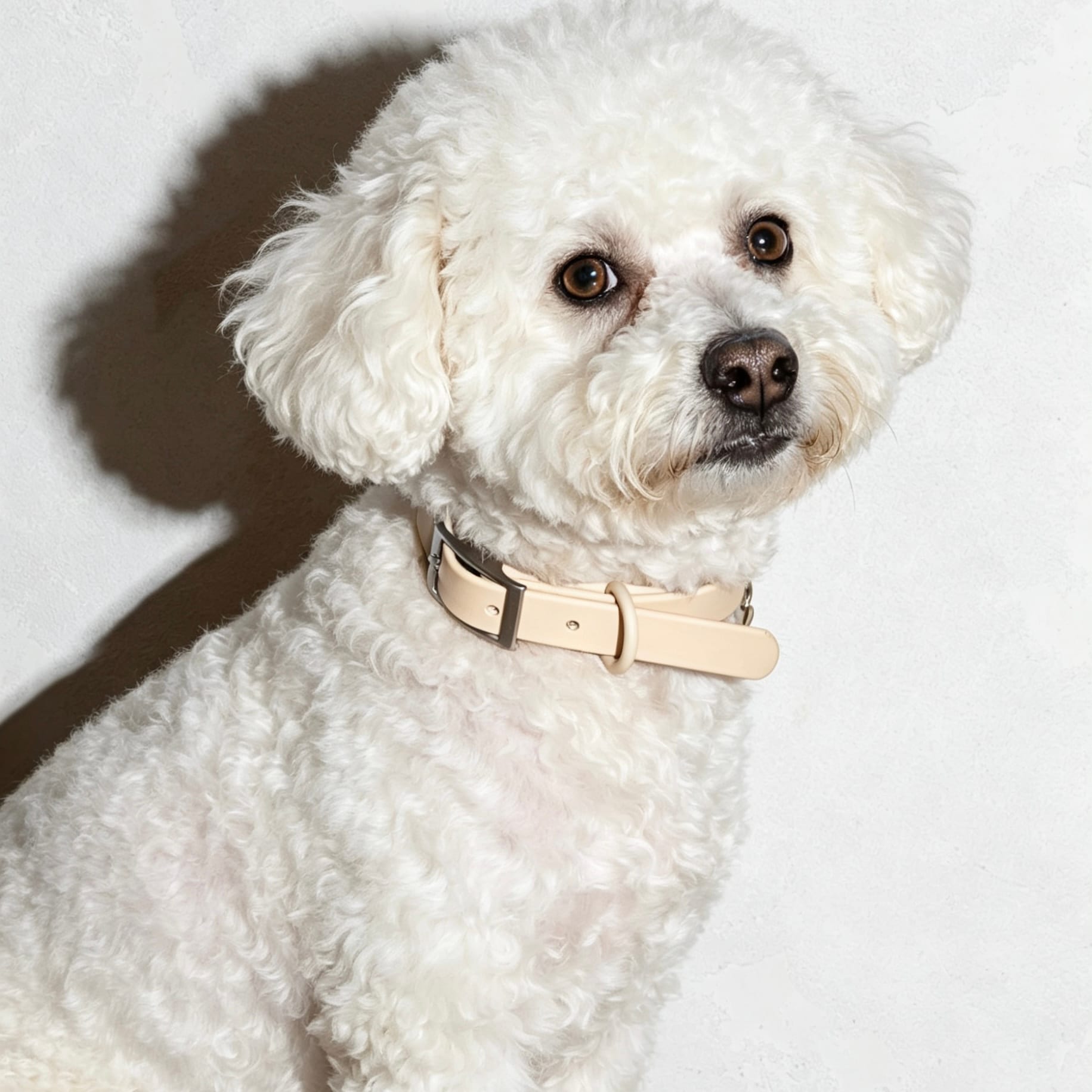
This is the part most new puppy owners underestimate. A puppy’s neck can grow noticeably in two weeks during peak growth phases — particularly in the first six months for large and giant breeds. A collar that passed the two-finger check last week may be genuinely tight this week.
The practical approach is to check the fit every time you put the collar on during the first six months, and to set a calendar reminder to measure with the tape every two weeks. The two-finger check at buckle-on time catches sudden changes; the tape measurement tracks the gradual growth trend and tells you when a size-up is approaching before the current collar becomes uncomfortably tight.
Signs It Is Time to Size Up
You can only fit one finger under the collar
The two-finger check is the clearest signal. If two fingers held flat no longer slide comfortably under the collar, the current size is too tight. Do not wait for the collar to feel obviously tight — one finger is already past the point where the collar should be replaced. Size up immediately.
The adjustment slider is at or near the maximum setting
When you find yourself adjusting the collar to its loosest setting and it is still snug, the current size range is almost exhausted. Do not wait until the collar physically cannot be loosened further — order the next size before you reach that point so there is no gap in coverage.
Visible fur matting or a line under the collar
Remove the collar and check the fur and skin underneath. A persistent line in the fur that does not clear within a few minutes, or any redness of the skin, means the collar has been sitting too tight. This is most likely to happen in puppies with fast growth spurts, where the collar can go from fitting correctly to too tight in under a week.
The puppy scratches at the collar more than usual
Some scratching at a new collar is normal habituation. Persistent scratching in a puppy that previously wore their collar comfortably is often a sign the collar has become uncomfortable — check the fit before assuming a material or allergy issue.
How Many Collar Sizes Will My Puppy Go Through?
It depends on the breed and how much growth happens between the starting size and adult size. Toy and small breeds often only go through one or two sizes total — a Chihuahua that starts in XS may reach adult size still in XS or moving to S. Large and giant breeds can go through three or four sizes between eight weeks and full adult size at eighteen to twenty-four months.
Toy breeds (Chihuahua, Maltese, Toy Poodle)
Often one collar covers the full adult size, or a single size-up from puppy to adult. Growth is slow and the neck circumference change between eight weeks and adult is relatively small.
Medium breeds (Beagle, Cocker Spaniel, French Bulldog)
Typically one to two size changes — starting in S and reaching adult size in M. Most of the growth happens in the first six to nine months, with neck circumference stabilising by around twelve months.
Large and giant breeds (Labrador, German Shepherd, Great Dane)
Two to three size changes are typical — a Labrador puppy might start in S, move to M around four months, and reach adult size in L around twelve to fourteen months. Giant breeds like Great Danes grow for longer and may need a further adjustment at eighteen to twenty-four months when growth plates fully close.
Collar vs Harness for Puppies: Which Should the Leash Attach To?
For a puppy’s first walks, the leash should clip to a harness rather than the collar. Puppies lunge, spin, sit down suddenly, and occasionally do a full backwards scramble — all of which put sudden force on whatever the leash is attached to. On a collar, that force goes directly to the neck and trachea, which is still developing. On a harness, it distributes across the chest and shoulders.
The collar stays on for ID tags. The harness takes the leash. This is the standard setup for puppies during the leash training phase, and many owners keep it as the permanent setup into adulthood for dogs that pull.
The MoonianPet No-Pull Dog Harness starts at XS — designed for puppies from around 3–4kg — with three-point adjustment that lets you dial in the fit as your puppy grows through the first months. For harness sizing alongside collar sizing, the dog harness size guide has the full measurement chart.
The Right Collar for a Growing Puppy
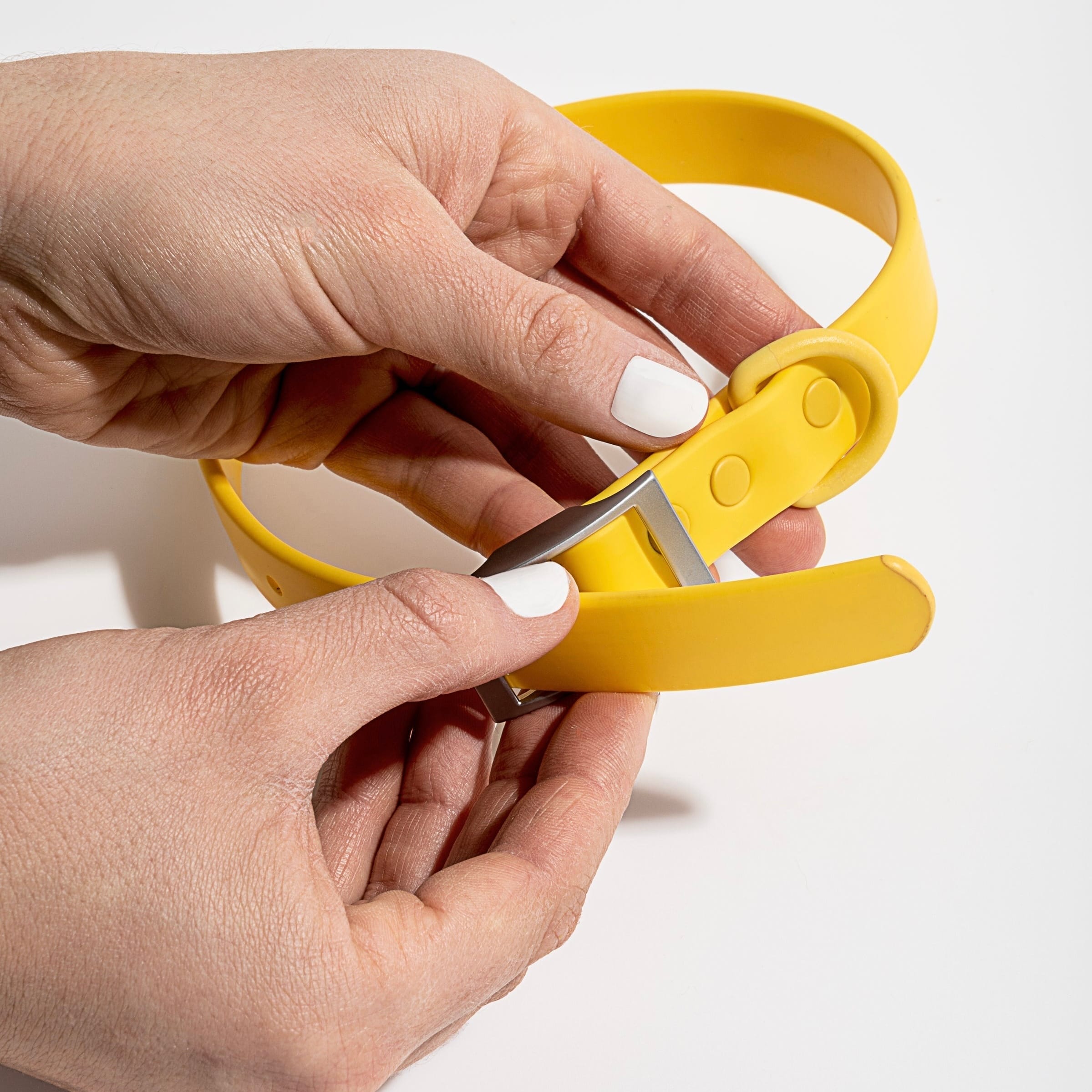
The MoonianPet Waterproof Dog Collar is available in five sizes from XS through XL, with a wide adjustment range within each size and an adjustment slider that holds its position reliably — so the fit you set stays set between checks rather than gradually loosening through daily activity. The PVC-coated webbing does not shrink after washing the way nylon does, which means the fit stays consistent rather than needing to be rechecked every time the collar is washed.
Measure your puppy’s neck, find the right size using the chart above or the full dog collar size guide, and order the size that places your puppy’s measurement comfortably in the middle of the adjustment range rather than at its maximum.
Frequently Asked Questions
What size collar does an 8-week-old puppy need?
It depends on the breed — an eight-week-old Chihuahua and an eight-week-old Great Dane are very different animals. Toy breeds typically start in XS with a neck circumference around 18–22cm. Small breeds start in XS or S around 22–28cm. Medium breeds start in S around 25–32cm. Large and giant breeds often start in S or even M at eight weeks, with neck circumferences already reaching 28–38cm. Always measure rather than guessing from the breed name.
How tight should a puppy collar be?
The two-finger rule applies to puppies the same way it does to adult dogs: two fingers held flat should slide comfortably underneath the collar with the puppy standing. For very small puppies, use two fingers proportionate to the puppy’s size — adult fingers on a tiny Chihuahua puppy may be equivalent to three fingers on a larger dog. Use your judgement and aim for snug but not constricting.
Should I buy a bigger collar to save money on replacements?
No — buy the size that fits correctly now. A collar that is too large for a puppy is a safety risk: puppies back up and shake their heads in ways that can work a loose collar over the head, and an escaped puppy without ID is a genuinely scary situation. The few pounds saved on fewer collar replacements are not worth the escape risk. Buy the correct size, check the fit regularly, and size up when needed.
Can a puppy wear a collar all the time?
During waking, supervised hours — yes. Overnight, and particularly if the puppy sleeps in a crate, remove the collar. Collar loops can catch on crate bars and cause injury or panic if the puppy cannot free itself. Some owners use a lightweight breakaway collar for overnight wear as a compromise, which releases under pressure if it catches on something.
When does a puppy reach their adult collar size?
Small and toy breeds typically reach adult neck size by six to nine months. Medium breeds by nine to twelve months. Large breeds by twelve to fourteen months. Giant breeds — Great Danes, Mastiffs, Saint Bernards — may continue to grow until eighteen to twenty-four months and may need a further collar adjustment in that second year. When in doubt, measure rather than assuming growth is complete.
For the full collar size chart and measurement instructions for all ages, see our dog collar size guide. For your puppy’s first walks and what gear they actually need, our puppy’s first walk guide covers everything from vaccination timing to harness introduction.

Wenyue
Wenyue is the founder of MoonianPet and writes about dog collars, harnesses, waterproof pet gear, and everyday dog care. Growing up with dogs inspired her lifelong interest in pet care and practical dog gear. Through MoonianPet, she researches dog collars, harnesses, waterproof materials, and everyday solutions that help active dogs stay comfortable during daily adventures.