
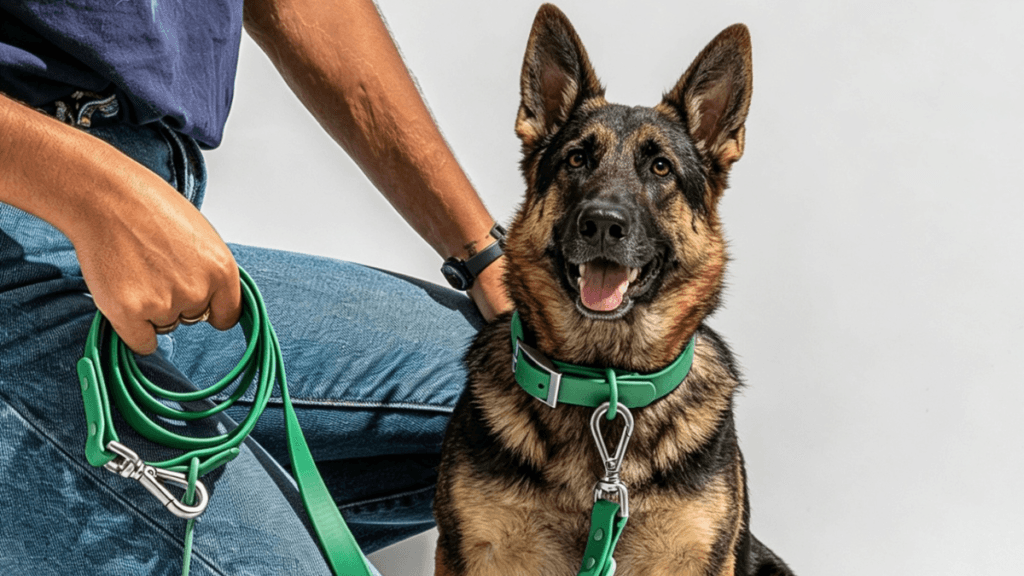
“Tactical” has become one of those words in the dog gear market that means different things to different sellers. At its most meaningful, a tactical dog collar is a heavy-duty, MOLLE-compatible collar designed for working dogs — police K9s, military dogs, search and rescue, protection sports. At its most commercial, it is any collar in a dark colour with a handle sewn onto it, marketed at owners who want gear that looks serious.
The honest question to ask before buying one is: what do you actually need from a collar that a standard quality collar does not provide? For most pet owners, the answer is probably “nothing” — but there are genuine use cases where the tactical design adds real value, and understanding the difference helps you decide which category you fall into.
This guide covers what makes a collar actually tactical, which features matter and which are marketing, and what to use instead if a tactical collar is more than you need.

What Is a Tactical Dog Collar?
A tactical dog collar, in its original sense, is a collar designed for working dogs in demanding operational environments. The defining features are typically:
Heavy-duty webbing construction
Nylon webbing rated to a much higher tensile strength than standard collar webbing — typically 1000D or 1000D Cordura nylon, designed to withstand sustained force from large working dogs in high-stress situations. The webbing width is usually 38–50mm, significantly wider than a standard pet collar.
A handle
A grab handle sewn onto the top of the collar — the defining feature of most tactical collars. This allows the handler to physically control the dog with one hand in situations where a leash is not practical, to lift the dog over obstacles, or to restrain the dog quickly in close-quarters situations. For working dogs, this is a genuine operational requirement. For pet dogs, it is occasionally useful for lifting a dog into a vehicle or over a stile.
MOLLE webbing loops
Modular Lightweight Load-carrying Equipment loops on the collar allow accessories to be attached — ID patches, LED lights, camera mounts, medical pouches. Genuinely useful for working dogs that need to carry or display equipment. For most pet dogs, the MOLLE loops are unused and add bulk and weight for no benefit.
Metal hardware throughout
Stainless steel or heavy-duty zinc alloy buckles and D-rings rated for significantly higher loads than standard pet collar hardware. The hardware on a genuine tactical collar is designed not to fail under the force of a large, powerful working dog. For a 40kg+ German Shepherd or Belgian Malinois in working conditions, this matters. For a 15kg Labrador on a daily walk, standard quality hardware is more than adequate.
Who Actually Needs a Tactical Collar
The honest answer is a fairly small subset of dog owners:
Professional working dog handlers
Police, military, and security dog handlers whose dogs genuinely operate in the environments tactical collars are designed for. The handle, MOLLE compatibility, and heavy-duty construction serve real operational purposes in these contexts.
Protection sports participants
Schutzhund, IPO, French Ring, and similar protection sports involve dogs working at high intensity with handlers who need immediate close-contact control. The grab handle is genuinely functional in these settings, and the heavy-duty construction holds up to the sustained demands of training and competition.
Large dog owners who need a reliable grab point
For owners of large, powerful dogs — Rottweilers, Cane Corsos, large German Shepherds — who want a secure, reinforced grab point for control in close-quarters situations, a collar with a well-sewn handle adds practical value beyond aesthetics. This is a narrower version of the working dog use case but a legitimate one.
Search and rescue volunteers
SAR dogs work in demanding terrain and conditions where equipment durability genuinely matters, and where ID patches and light attachment through MOLLE loops serve operational purposes. If your dog is a certified working SAR dog, tactical gear is appropriate. If your dog is a family pet that occasionally goes on hikes, it is not.

The Tactical Collar Features That Are Mostly Marketing
The commercial tactical collar market has expanded well beyond its working dog origins, and many products sold as tactical are essentially standard collars with added bulk and a military-adjacent aesthetic. Features to evaluate critically:
MOLLE loops with no accessories to attach
MOLLE loops add weight and bulk. If you are not using them to attach anything — and most pet owners are not — they are dead weight on the collar. A collar with MOLLE loops that you never use is heavier and bulkier than a collar without them, with no benefit.
Extremely wide webbing on small dogs
A 50mm wide tactical collar on a 10kg dog is disproportionate and uncomfortable — it restricts neck movement and is heavy relative to the dog’s size. Tactical collar widths make sense for large working breeds. On small or medium dogs, they are impractical regardless of how the marketing reads.
Dark colours as a “tactical” feature
Black and OD green are not inherently more functional than other colours. A black nylon collar is still a nylon collar with all the odour absorption and fraying properties of any other nylon collar. Colour is an aesthetic choice, not a performance feature — and a collar marketed primarily on its colour scheme rather than its actual construction is worth scrutinising more carefully.
What Most Pet Owners Actually Need Instead
For the majority of pet dog owners who are drawn to tactical collars for their durability and no-nonsense aesthetic rather than their working dog features, a high-quality standard collar covers every actual need at less weight and often at a better price.
The specific features that make tactical collars appealing to pet owners — durability, hardware quality, weather resistance — are available in standard collar designs without the MOLLE loops, excessive width, and bulk of tactical construction. A PVC-coated webbing collar with zinc-alloy hardware is genuinely durable, genuinely waterproof, and does not add unnecessary weight or restrict natural movement.
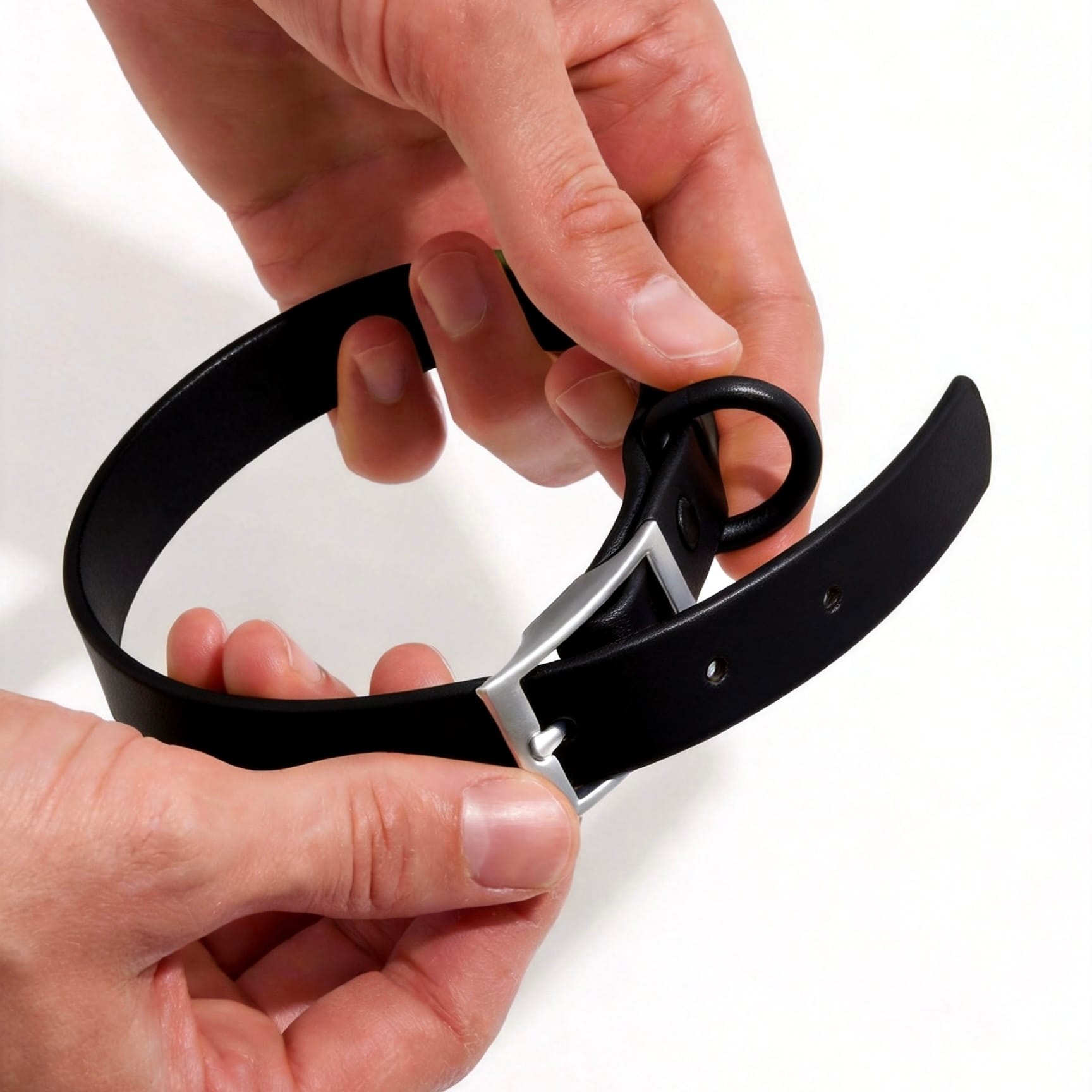
For large, active dogs whose owners want something more robust than basic nylon — the MoonianPet Waterproof Dog Collar is PVC-coated webbing with zinc-alloy hardware throughout. It does not absorb water, does not develop odour, does not fray at the edges, and the hardware holds up to sustained daily use without the corrosion issues that affect lower-grade metals. Available in black and ten other colors, in five sizes from XS through XL. If the main appeal of a tactical collar is the black, low-profile look on an active dog — this covers that without the tactical bulk.
What to Look for If You Do Want a Tactical Collar
If your use case genuinely calls for a tactical collar, these are the features that actually matter:
Reinforced handle stitching
The handle is the point of greatest stress on a tactical collar. Check that the handle is bar-tacked at both ends — multiple rows of stitching running across the webbing at the attachment points. A handle that is only straight-stitched along its length will eventually fail under the force of lifting or restraining a large dog.
Solid metal buckle — not plastic
A tactical collar with a plastic buckle is not a tactical collar in any meaningful sense. The buckle needs to be solid metal — stainless steel or heavy-duty zinc alloy — rated for the loads the collar will encounter. Check the buckle material specifically rather than assuming from the price or branding.
Appropriate width for your dog
Match the collar width to the dog’s size. A 50mm collar on a large working breed distributes force well. The same collar on a medium-sized dog restricts movement and is disproportionately heavy. Most genuine working dog tactical collars specify minimum dog weights or recommended sizes — take those recommendations seriously.
Rated tensile strength
A genuine tactical collar will specify the tensile strength of the webbing and the load rating of the hardware. If a product is marketed as tactical but provides no load rating, it is selling the aesthetic without the engineering. Tensile strength ratings exist for working dog gear — ask for them before buying.
The Durable Everyday Alternative
For active dogs, large dogs, and owners who want genuine durability without tactical bulk, the MoonianPet Waterproof Dog Collar delivers the performance features that matter in a standard collar profile. PVC-coated webbing that does not absorb water or odour, zinc-alloy hardware that does not corrode in wet conditions, and an adjustment slider that holds its set position through daily active use. Available in sizes XS through XL and 11 colors including black.
Pair with the MoonianPet Waterproof Leash for a matched set, or save with the Collar & Leash Set. Not sure which size? The dog collar size guide has measurement instructions and a full size chart.

Frequently Asked Questions
What is the difference between a tactical collar and a regular collar?
A genuine tactical collar is wider, heavier, made from higher-tensile-strength webbing, features a grab handle, typically has MOLLE compatibility, and uses metal hardware rated for significantly higher loads than standard pet collar hardware. A regular quality collar uses lighter webbing, standard hardware, and has no handle or attachment loops. The practical difference matters for working dogs in demanding environments; for most pet dogs, the additional weight and bulk of tactical construction adds nothing useful.
Are tactical collars safe for everyday use?
The construction is safe, but the weight and bulk may be unnecessary for everyday pet use. A 50mm wide tactical collar on a medium-sized dog is disproportionately heavy and may restrict natural neck movement. For everyday walking, a well-made standard collar is lighter, more comfortable, and covers all practical needs. Tactical collars are most appropriate when the specific features — handle, MOLLE, rated hardware — are actually being used.
Can I use a tactical collar for leash training?
For leash training a dog that pulls, the collar attachment point — tactical or otherwise — puts force directly on the trachea when the dog pulls. For any dog that pulls regularly, the leash should clip to a no-pull harness rather than any collar. The tactical construction does not change the physics of neck pressure during pulling. See our guide on collar vs harness for when each is appropriate as a leash attachment point.
What breeds are tactical collars designed for?
Tactical collars in their original working dog context are designed for large working breeds — German Shepherd, Belgian Malinois, Dutch Shepherd, Rottweiler, Dobermann. These are the breeds most commonly used in police, military, and protection sports contexts where the handle and rated hardware serve genuine operational purposes. Tactical collars on smaller breeds are almost always an aesthetic choice rather than a functional one.
Is a heavy duty waterproof collar the same as a tactical collar?
No — they overlap in durability but not in design. A heavy duty waterproof collar like the MoonianPet is built for longevity, weather resistance, and clean-ability in everyday pet use. A tactical collar is built for operational working dog use, with a grab handle, MOLLE compatibility, and rated hardware for high-load applications. Both are durable; they are designed for different use cases. For most pet owners, a high-quality waterproof collar covers every practical durability need without the operational features of a tactical design.
For a full comparison of collar materials and what makes a collar genuinely durable, see our guide on best dog collar material. For sizing your dog for a new collar, the dog collar size guide has the full measurement chart.

Wenyue
Wenyue is the founder of MoonianPet and writes about dog collars, harnesses, waterproof pet gear, and everyday dog care. Growing up with dogs inspired her lifelong interest in pet care and practical dog gear. Through MoonianPet, she researches dog collars, harnesses, waterproof materials, and everyday solutions that help active dogs stay comfortable during daily adventures.