

Night walks are a reality for most dog owners — early mornings in winter, late evenings after work, walks in areas where daylight is short. A dog that is invisible in the dark is a genuine safety risk, both from traffic and from the simple problem of losing sight of them if they slip their leash or wander off at a distance.
Light up dog collars address this in the most direct way possible: they make the dog actively visible rather than relying on reflective material that only works when light hits it from the right angle. For night walking in low-traffic areas, a lit collar is often all you need. For road walking or high-traffic environments, the collar is one part of a visibility setup that should also include the leash and ideally the handler.
This guide covers how light up collars work, what to look for in one, their genuine limitations, and how to build a proper night visibility setup for your dog.

How Light Up Dog Collars Work
Light up dog collars use LEDs embedded in or attached to the collar strap to make the dog visible in the dark. Most offer two or three modes: steady light, slow flash, and fast flash. Battery life varies significantly between products — from a few hours of continuous use to twenty or more hours depending on the LED type and battery capacity.
The technology itself is simple and reliable. The main variables between products are battery life, waterproofing, brightness, and whether the collar is a purpose-built LED collar or a standard collar with an attachable LED strip or pendant.
Purpose-built LED collars integrate the lights into the collar strap itself and tend to be more durable but less flexible — if the LED component fails, the whole collar needs replacing. Attachable LED lights clip to or thread through an existing collar’s D-ring and can be moved between collars or replaced independently when the battery dies. For most owners, the attachable option is more practical.
Light Up vs Reflective: What Is the Difference?
This distinction matters more than most product marketing acknowledges.
Reflective collars — passive visibility
A reflective collar bounces light back toward its source. In headlights, a reflective collar is highly visible. In ambient low light — a poorly lit street, a dark park — reflective material provides very little visibility because there is no strong directional light source to reflect. A dog with a reflective collar walking in a poorly lit area is still largely invisible to a pedestrian or driver until they are very close.
LED collars — active visibility
An LED collar produces its own light and is visible from a much greater distance regardless of ambient lighting conditions. A flashing LED collar can be seen from 100m or more in true darkness. This makes it genuinely useful in conditions where reflective material provides little benefit — dark parks, rural paths, poorly lit streets. The limitation is that LEDs require battery power and will eventually fail or run flat, whereas reflective material is always functional.
What to Look for in a Light Up Dog Collar
Genuine waterproofing — not just water resistance
A light up collar used for evening walks will encounter rain, wet grass, puddles, and potentially swimming. The LED component needs to be genuinely waterproof — IPX5 rating at a minimum, IPX7 if your dog swims. A water-resistant rating means it will survive light rain; an IPX7 rating means it can be submerged up to 1m for thirty minutes. Check the actual IP rating rather than assuming “waterproof” on the label means full submersion tolerance.
Rechargeable vs replaceable battery
Rechargeable (USB) LED collars and attachments are more convenient and cheaper to run long-term. Replaceable battery models may have longer runtime per charge but require you to keep spare batteries. For daily use, a rechargeable option with a runtime of eight or more hours per charge is the practical choice — charge it every few days rather than managing battery replacements. Check how the charging port is protected against water ingress, as this is often the first failure point on cheaper LED collars.
Brightness and visibility distance
Brightness is measured in lumens; visibility distance in marketing claims is often measured under ideal conditions. A collar visible “up to 500m” in its product listing may only achieve that in true darkness with no competing light sources. For practical purposes, look for a collar that is clearly visible at 50–100m in typical evening conditions — which most good quality LED collars achieve without difficulty.
Weight appropriate for the dog’s size
An LED collar or attachment that is heavy relative to the dog’s size affects how the collar sits and moves. For small dogs in particular, a heavy LED pendant can pull the collar sideways or cause it to rotate so the LED faces down rather than out. Choose the lightest option that provides adequate brightness for your dog’s size — a 10g pendant is fine for a large dog, potentially too heavy for a tiny dog.
Simple on/off operation
You will be operating this collar in the dark, often with gloves on. A mode button that requires multiple presses to cycle through modes before reaching “off” is more frustrating than it sounds at 11pm in the rain. Look for a collar with a straightforward operation — ideally a single-click on/off with an optional secondary mode cycle.

The Genuine Limitations of Light Up Collars
Light up collars improve visibility significantly but they do not solve every night walking safety problem — and knowing the limitations helps you build a more complete setup.
The collar only marks one point on the dog
A lit collar around the neck tells a driver or pedestrian there is something at neck height. It does not convey the dog’s full body outline, which matters for a driver trying to judge how far to steer around the animal. A lit collar combined with a reflective or lit leash gives a much clearer picture of the dog’s size and position than the collar alone.
Batteries run flat
An LED collar that runs out of battery mid-walk provides no visibility benefit. Build a charging habit — charge the collar every time it comes off, or set a specific day each week for charging. Many owners find out their collar battery is flat at the start of a walk rather than before it, which is avoidable with a consistent routine.
The handler is often invisible
A well-lit dog walking with an invisible handler creates a confusing picture for a driver — it looks like an animal moving on its own, not a dog being walked. Wearing a reflective jacket or carrying a torch makes the whole scenario — dog and handler together — legible to approaching traffic, which is safer than the dog being lit and the handler being invisible.
Building a Complete Night Visibility Setup
For regular night walking, a layered approach is more reliable than any single product:
LED attachment on the collar — active visibility
A clip-on LED pendant or strip attached to the collar D-ring provides the active visibility that makes the dog clearly locatable from a distance in any lighting condition. This is the primary night safety addition.
Quality base collar that holds accessories securely
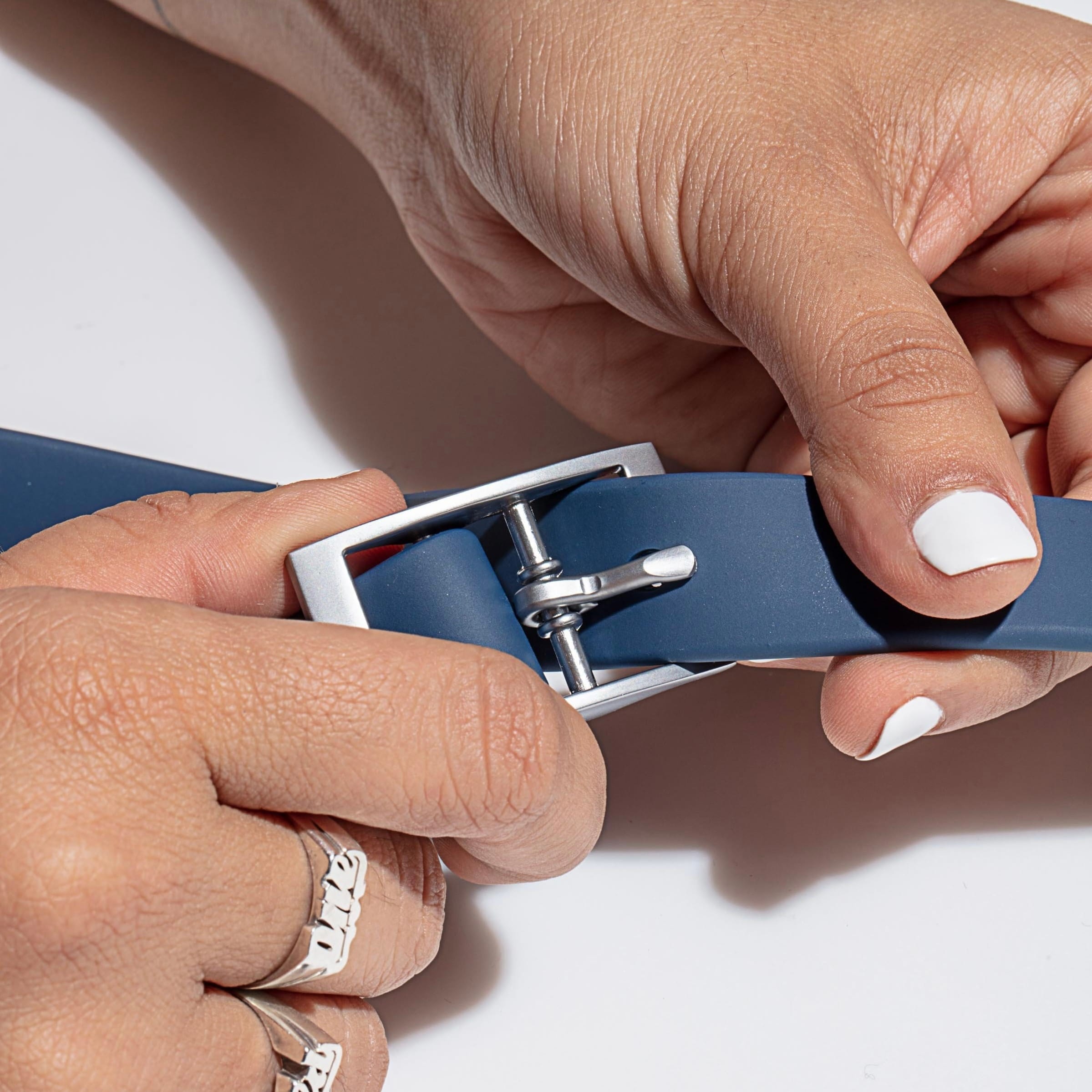
The LED attachment is only as reliable as the collar it clips to. A collar with a solid D-ring that does not flex or rotate under the weight of the pendant keeps the LED facing outward rather than turning to point at the ground. The MoonianPet Waterproof Dog Collar has a fixed zinc-alloy D-ring that holds attachments securely in position regardless of how the dog moves.
A reflective or light-up leash
The leash runs from the dog’s collar toward the handler — roughly parallel to the ground — making it the most effective single piece of kit for showing approaching drivers both the dog’s location and the direction of travel. A light-coloured leash, a reflective-stitched leash, or an LED leash adds significantly more useful visibility information than the collar alone.
Handler visibility
A reflective vest, a torch, or even a reflective armband makes the handler visible and completes the picture for approaching drivers. A dog with an LED collar and a handler in dark clothes is safer than no lighting at all — but a lit dog and a visible handler is considerably safer again.
The Base Collar for Night Walking
Whatever LED attachment you choose, it needs a reliable base collar to attach to. The MoonianPet Waterproof Dog Collar is available in 11 colors including high-visibility options — yellow and sky blue show up well in headlights and ambient lighting without any active lighting component. The zinc-alloy D-ring holds LED pendants and clips securely without flexing, and the PVC coating wipes clean after wet evening walks without absorbing moisture or odour.
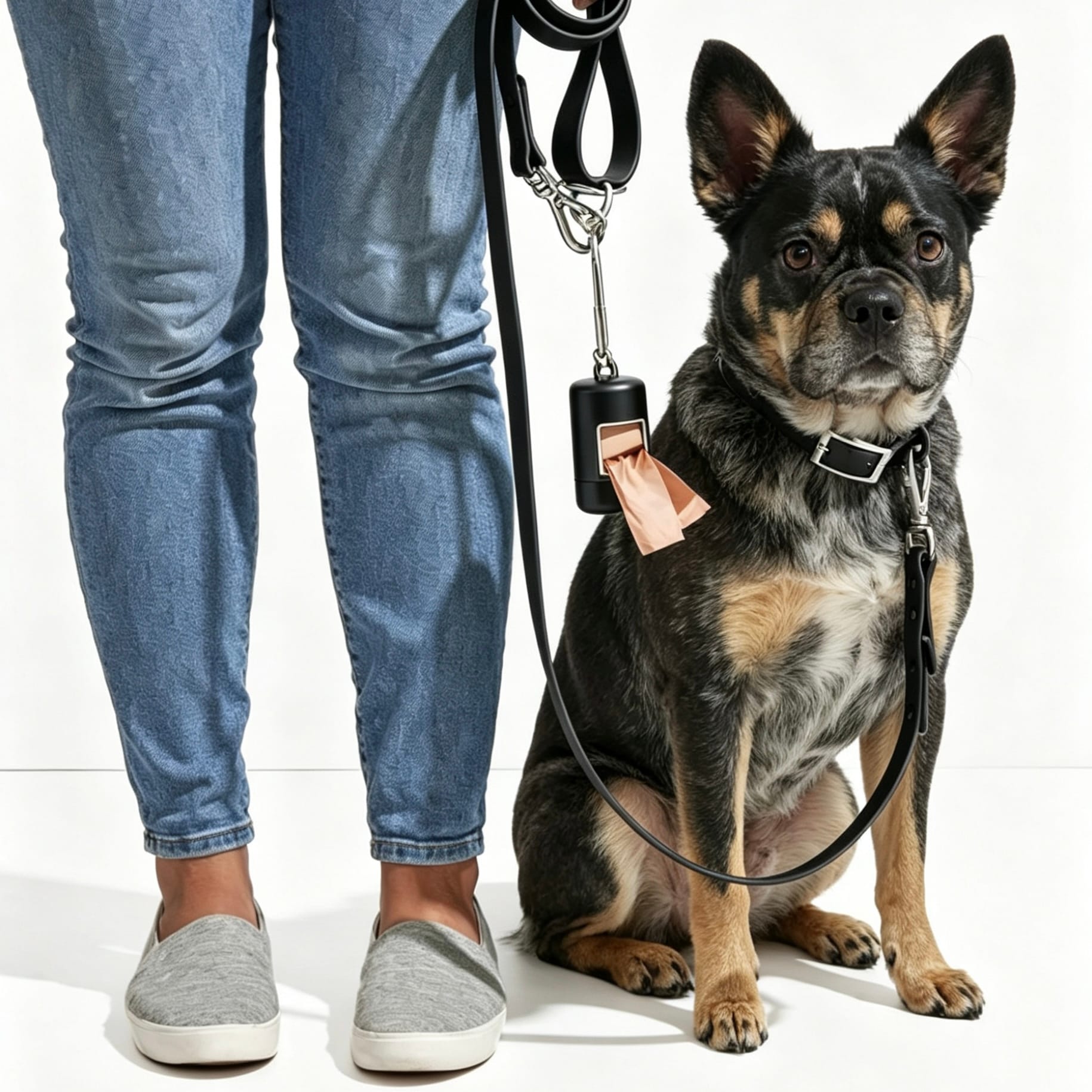
Available in five sizes XS through XL. Pair with the MoonianPet Waterproof Leash — the light-coloured options provide passive visibility on night walks, and the PVC surface catches headlights more effectively than flat nylon. Not sure which collar size? The dog collar size guide has the full measurement chart.
Frequently Asked Questions
Are light up dog collars safe?
Yes — the LED lights themselves are safe for dogs. The main safety consideration is that the LED component is securely attached and cannot be chewed off and swallowed. A clip-on pendant with a secure closure is safer than a loosely attached strip that could fall off during an active walk. The battery housing should be sealed so the dog cannot access the batteries if the casing cracks.
How long do light up dog collars last?
Battery life varies from around three hours for continuous steady light to twenty or more hours in flash mode on quality rechargeable units. The collar strap itself should last as long as any standard collar — the LED component is the part that eventually fails. Buying a collar where the LED component is replaceable or attachable means the collar strap lasts its normal lifespan regardless of the LED’s service life.
Is a flashing or steady light better for visibility?
Flashing light is more attention-catching — the human eye is more sensitive to movement and change than to steady light, so a flashing LED is noticed at greater distance than a steady one of the same brightness. For road-adjacent walking where being noticed by drivers is the priority, flash mode is more effective. For walking in open dark areas where you primarily need to see your dog rather than alert traffic, steady light makes the dog’s position easier to track continuously.
Can I use a light up collar in the rain?
It depends on the collar’s IP rating. A collar rated IPX5 or higher handles rain without issue. IPX4 (splash-proof) is adequate for light rain but not sustained downpour. Many cheaper LED collars have no stated IP rating, which is a risk in British weather where evening rain is common. Check the rating before buying if wet weather use is a regular expectation rather than an occasional occurrence.
Do I still need a reflective collar if I have a light up one?
They serve different purposes. A reflective collar is most effective near roads where headlights provide the reflection source — it works without batteries and is always functional. An LED collar is most effective in genuinely dark environments where there is no strong directional light to reflect. A collar that is both reflective and has a D-ring for attaching an LED pendant gives you both capabilities without needing two separate collars.
For a full comparison of collar materials and what holds up best in wet evening conditions, see our guide on best dog collar material. For sizing a new collar before adding night safety accessories, the dog collar size guide covers measurement in detail.

Wenyue
Wenyue is the founder of MoonianPet and writes about dog collars, harnesses, waterproof pet gear, and everyday dog care. Growing up with dogs inspired her lifelong interest in pet care and practical dog gear. Through MoonianPet, she researches dog collars, harnesses, waterproof materials, and everyday solutions that help active dogs stay comfortable during daily adventures.