
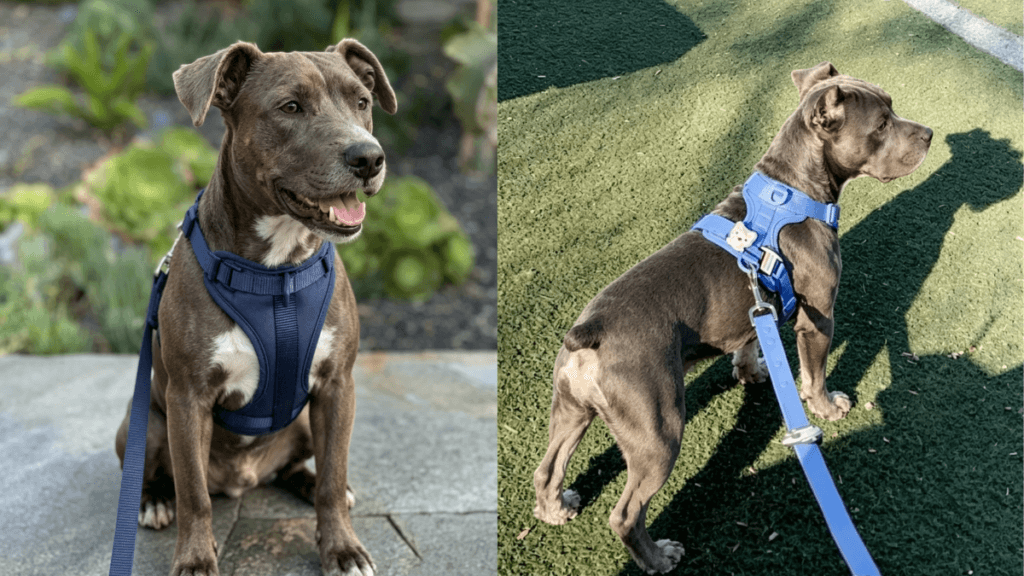
There are few feelings worse than watching your dog back out of their harness in the middle of a walk. One second they are beside you; the next, the harness is dangling from the leash, and your dog is running loose. For sighthounds, spooked dogs, and certain narrow-skulled breeds, this is not a rare accident — it is a persistent risk if the wrong harness is used.
I experienced this myself with a rescue poodle. We were walking through a busy park when a loud motorcycle backfired. He panicked, dropped his head, and backed straight out of his standard step-in harness before I could even tighten my grip on the leash. Fortunately, he ran to a nearby fence rather than into traffic, but the experience taught me a permanent lesson: a harness that can be backed out of is not a secure walking tool.
This guide explains exactly how dogs escape from harnesses, what design features prevent it, and how to choose a truly escape-proof dog harness that keeps your dog safe in any situation.

How Do Dogs Back Out of Harnesses?
Dogs do not magically disappear from harnesses; they exploit a specific anatomical mismatch and a fitting flaw. The most common escape method involves three steps:
1. The Head Drop
The dog lowers their head and points their nose to the ground. This is a natural behavior when they are scared, trying to track a scent, or pulling backward against the leash.
2. The Neck Loop Slack
Because many dogs have a neck circumference that is equal to or wider than their skull, a neck loop that fits comfortably on the neck has enough slack to slide forward over the ears and nose when the head is dropped.
3. The Back-Up
The dog backs up. The chest strap slides down the chest, the belly strap drops, and the dog steps cleanly out of the harness. Step-in harnesses and any harness without independent neck adjustment are highly vulnerable to this.
What Makes a Harness Truly Escape-Proof?
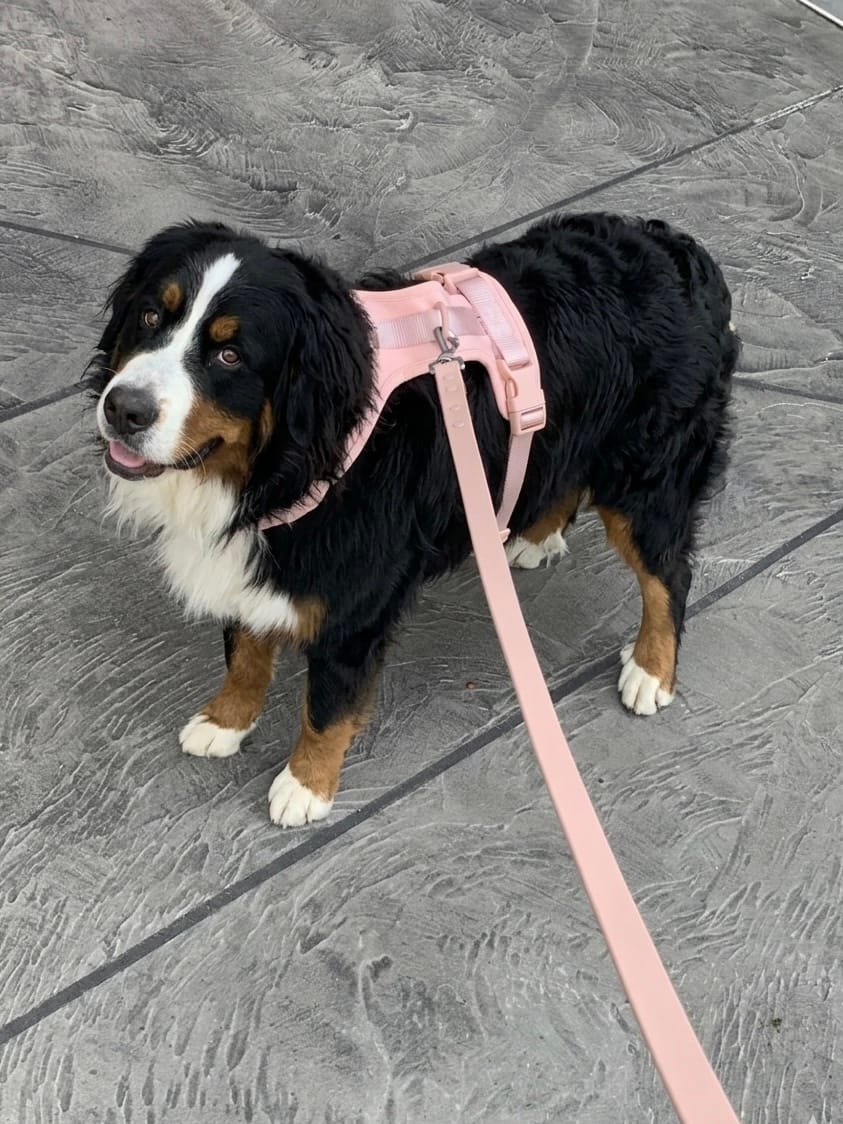
No harness is 100% escape-proof if fitted incorrectly, but the right design features make it nearly impossible for a dog to back out of. These are the non-negotiable features to look for:
Independent Neck Adjustment
This is the single most important feature. The neck strap must be able to tighten independently of the chest strap. If the harness only adjusts at the chest or belly, the neck loop will always be too loose. A harness with three-point independent adjustment (neck, chest, and belly) allows you to set the neck to the exact safe circumference without compromising the chest fit.
Overhead Slip Design
Step-in harnesses (where the dog steps into two loops and it buckles on the back) are notorious for escape. They rarely offer independent neck adjustment, and the geometry allows the dog to easily back out. An overhead harness that slips over the head and buckles under the belly provides a much more secure anchor point.
Multiple Belly Straps
Harnesses with a single belly strap that goes straight across the ribs are easier to twist out of. Harnesses that use a Y-shaped or figure-8 belly strap configuration wrap around the dog’s body more securely, preventing the harness from rotating sideways during a backward panic.
Locking or Metal Hardware
A dog panicking against a harness puts immense lateral force on the buckles. Cheap plastic buckles can pop open under this exact stress. Look for heavy-duty plastic buckles (like ABS) with locking mechanisms, or metal quick-release buckles that do not fail under sideways pressure.

The “Skull Test”: How to Check Your Harness
Once you have a harness with independent neck adjustment, you must fit it correctly. The “Two-Finger Rule” applies (you should only be able to fit two flat fingers between the strap and the dog), but for an escape-proof fit, you must also perform the Skull Test.
Step 1: Tighten the Neck Loop
Adjust the neck strap until it sits snugly at the base of the neck (not high on the throat). Ensure two fingers can slide under it with light resistance.
Step 2: Pull Forward
While the dog is standing, grab the chest panel of the harness and pull it firmly forward toward the dog’s ears. If the neck loop slides over the widest part of the skull and can be pulled off the head, it is too loose. Tighten it one notch and test again. If it cannot pass the skull, the harness is escape-proof.
A Harness Designed to Stay On
The MoonianPet No-Pull Dog Harness is built specifically to prevent backing out. It features a three-point independent adjustment system — meaning the neck, chest, and belly straps can all be tightened separately to achieve the exact safe fit required by the Skull Test. The overhead slip design prevents the chest strap from sliding down, while the reinforced ABS buckle locks securely under lateral stress.
For a fully secure and matched walking setup, the Harness & Leash Set pairs the harness with a heavy-duty, waterproof PVC-coated leash that provides a secure grip without stretching, ensuring you maintain control if your dog lunges.

Frequently Asked Questions
Are step-in harnesses escape-proof?
Generally, no. Step-in harnesses rarely have independent neck adjustment, meaning the neck loop is sized to fit over the dog’s head. If a dog drops its head and backs up, it can easily slip out of a step-in harness. For an escape-proof fit, an overhead harness with a separately adjustable neck strap is much safer.
Can a dog escape a martingale collar?
A properly fitted martingale collar is escape-resistant for sighthounds because it tightens to the dog’s skull circumference when tension is applied. However, a collar only controls the neck. For overall control and to prevent neck injury from pulling, an escape-proof harness is still the better choice for walking. See our martingale collar guide for more details.
Why does my dog try to back out of the harness?
Dogs usually try to back out of harnesses for three reasons: fear (a loud noise spooked them), they want to chase something and are frustrated by the leash, or the harness is fitted poorly and they feel it slipping, which causes them to panic. A correctly fitted, escape-proof harness prevents the initial slip, reducing the panic response.
How tight should an escape-proof harness be?
You should be able to fit two flat fingers between the strap and your dog’s body at the neck, chest, and belly. If the neck strap is tighter than this, it can restrict breathing; if it is looser, the dog can escape. Always perform the Skull Test to ensure the neck loop cannot slide over the widest part of the head.
Looking for breed-specific harness advice? Our Italian Greyhound guide covers fitting for sighthounds prone to escape. Or, to learn how to put on an overhead harness correctly, see our step-by-step fitting guide.
Wenyue
Wenyue is the founder of MoonianPet and writes about dog collars, harnesses, waterproof pet gear, and everyday dog care. Growing up with dogs inspired her lifelong interest in pet care and practical dog gear. Through MoonianPet, she researches dog collars, harnesses, waterproof materials, and everyday solutions that help active dogs stay comfortable during daily adventures.