
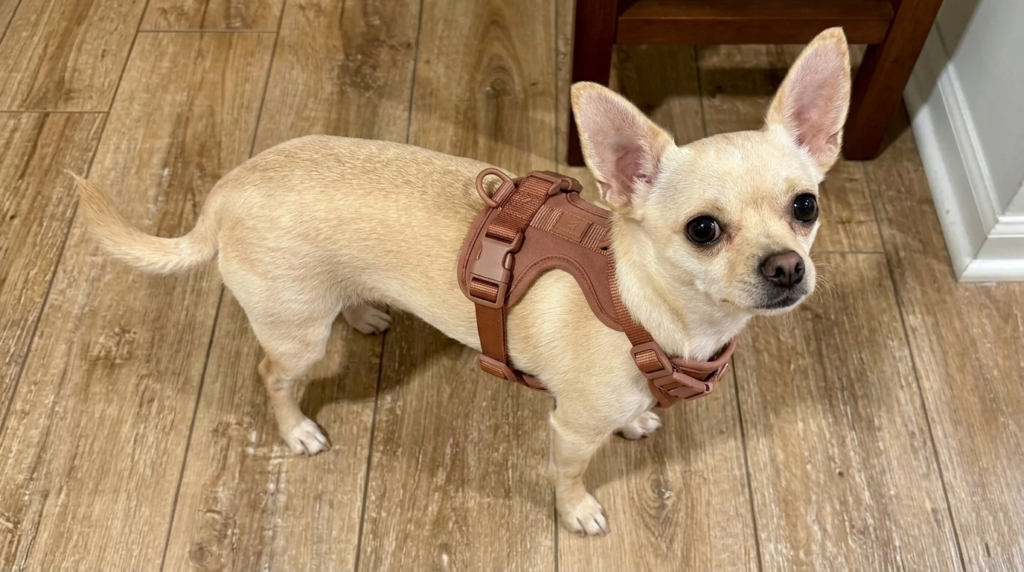
A dog with hip dysplasia, a healing injury, arthritis, or a neurological condition affecting balance doesn’t stop wanting to be part of the walk, the yard, or the trip up the stairs — but their body needs more support to do it safely. A regular harness isn’t built for that job. It’s designed to control direction and prevent pulling, not to help lift, steady, or support a dog’s weight when their own legs can’t fully do it.
“Mobility harness” and “disabled dog harness” cover a range of different needs — a young dog recovering from surgery needs something different from a senior dog with progressive hip weakness, which is different again from a dog with a permanent neurological condition. Getting the right type matters more than getting any harness at all.
This guide covers the situations where a mobility-focused harness genuinely helps, what features actually matter for each situation, and where a standard well-fitted harness is still the right call.
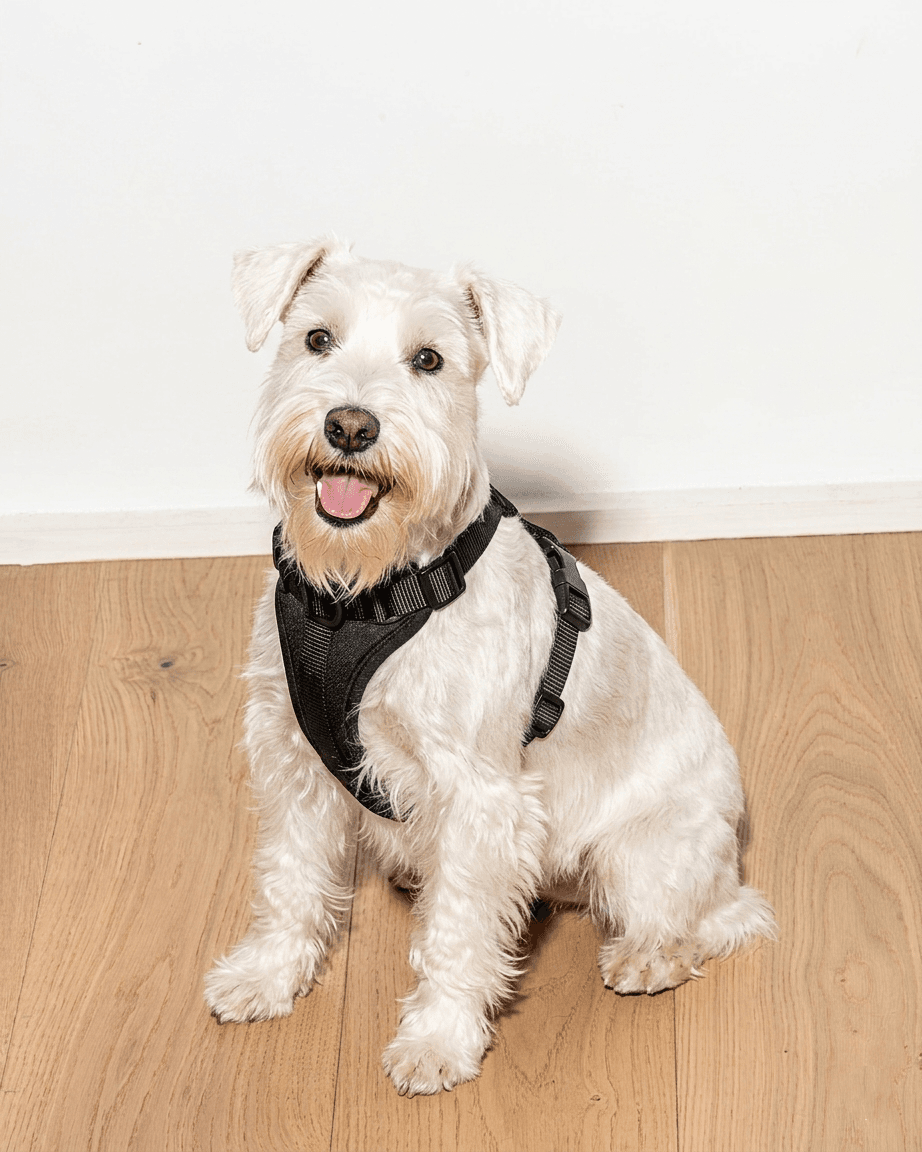
What “Mobility Harness” Actually Covers
Lifting and support harnesses
Built with a sturdy top handle over the shoulders or hips specifically so an owner can help lift or steady a dog’s weight — going up stairs, into a car, or getting up from lying down. These are a genuinely different product category from a walking harness, purpose-built to bear real weight through the handle.
Everyday support harnesses
For dogs who can walk independently but benefit from a secure, well-padded, easy-to-manage harness for daily walks — this is closer to a standard no-pull harness with extra attention to padding and ease of putting on, rather than a dedicated lifting tool.
Situations Where a Mobility-Focused Harness Helps
Hip dysplasia and arthritis
Dogs with hip or joint conditions often need help with specific movements — standing up, navigating stairs, getting into a car — even if they walk reasonably well on flat ground once moving. A rear-support harness or handle specifically over the hips gives an owner a practical way to assist those transition moments without straining the dog’s joints further.
Post-surgery recovery
Dogs recovering from orthopedic surgery — cruciate ligament repair, hip surgery — typically need controlled, supported movement for a defined recovery window rather than permanent support. A harness with a sturdy handle helps manage short, controlled outings exactly as a vet or physical therapist recommends during this period.
Age-related weakness
Senior dogs losing muscle mass and joint strength often benefit from a harness that gives them extra confidence and support on stairs, slippery floors, or getting in and out of the car — without necessarily needing full lifting support for every movement.
Neurological or balance conditions
Dogs with degenerative myelopathy, vestibular disease, or other conditions affecting coordination often need more continuous support than a lifting handle provides for occasional moments — this is where a dedicated mobility harness system, sometimes with rear-wheel cart compatibility, becomes relevant, and where working closely with a vet on the right equipment matters most.
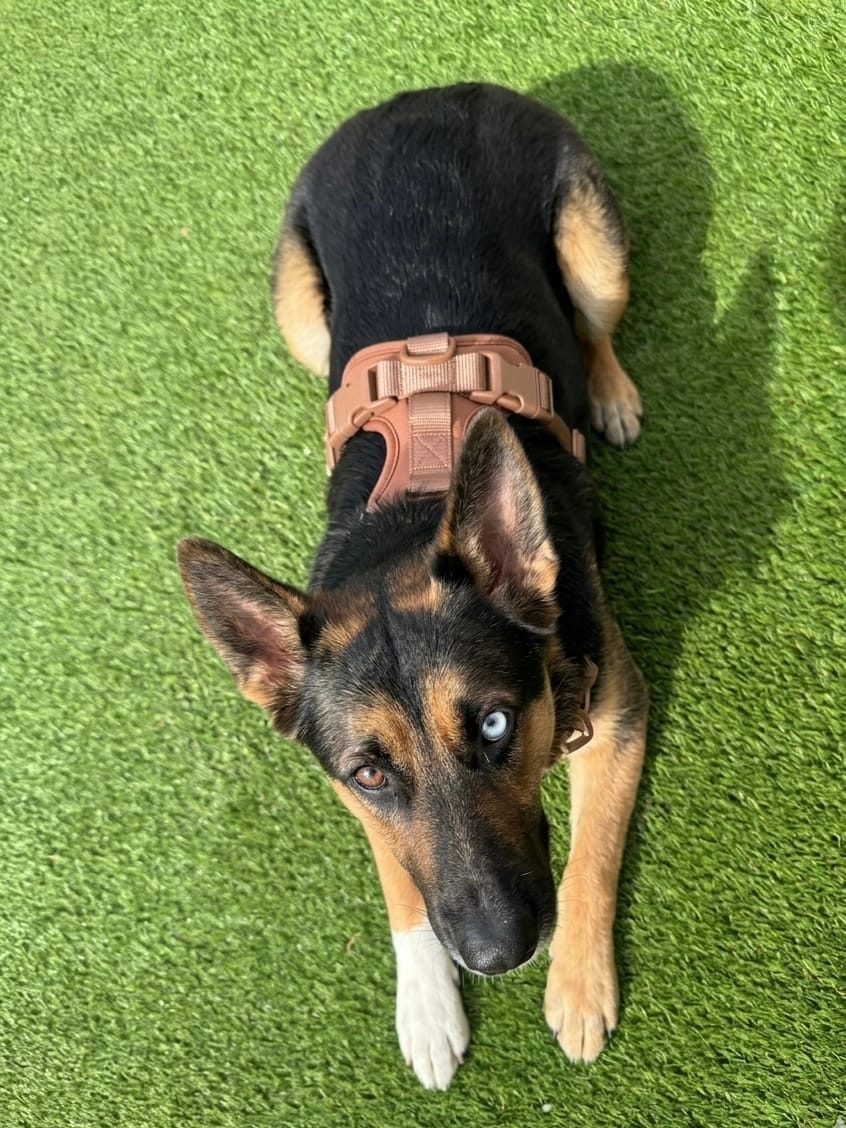
What to Look For
A design that doesn’t restrict natural movement
Straps should sit clear of the shoulder joints and hip movement rather than crossing directly over them, so the dog can move as freely as their condition allows without the harness itself adding restriction.
Padding where it counts
Dogs with reduced mobility often spend more time with weight pressing into the harness — through a handle being used, or simply from less active movement overall — so padding at the chest and belly (if the harness has a belly strap) matters more here than on a standard everyday harness.
Easy to put on without lifting or bending the dog
A dog with limited mobility shouldn’t need to step through loops or have their legs manipulated to get the harness on. Overhead designs that settle into place with minimal handling are usually easier and more comfortable to manage than step-in styles for dogs with reduced flexibility.
A Comfortable, Well-Padded Option for Everyday Support
For dogs who don’t need a dedicated lifting harness but do benefit from a secure, gentle, easy-to-manage everyday harness — an aging dog navigating stairs more carefully, or one recovering well but still needing extra support on walks — the MoonianPet No-Pull Dog Harness offers breathable neoprene padding at the chest and a three-point adjustment system that lets you fine-tune the fit as your dog’s needs change.
The escape-resistant buckle and secure fit mean less strain from sudden movements, and the soft, padded material is comfortable for dogs who may spend more time being handled and adjusted than an average dog. It’s worth confirming fit carefully using our harness size guide, since a dog with changing mobility may also be at a different weight than usual.

When You Need a Dedicated Lifting or Mobility System
If your dog needs regular physical lifting support — for stairs, getting into a vehicle, or standing up — a dedicated lifting harness with a reinforced handle rated for that purpose is the right tool, and it’s a different product from a standard walking harness. For dogs with more significant or progressive mobility loss, talk to your vet about whether a rear-support sling, front-and-rear combination harness, or mobility cart is appropriate — this is specialized equipment where professional guidance on fit and use genuinely matters.
Frequently Asked Questions
What’s the difference between a lifting harness and a regular harness?
A lifting harness has a sturdy, reinforced handle specifically designed to bear a portion of the dog’s weight when an owner assists with stairs, getting into a car, or standing up. A regular harness is built to attach a leash and control direction, not to support weight through a handle.
Can I use a regular harness to help my dog with mild mobility issues?
For mild support needs — extra security on stairs, a gentler everyday walk — a well-fitted, well-padded standard harness can work fine. For any situation involving actually lifting or bearing meaningful weight, a dedicated lifting harness with a reinforced handle is the safer and more appropriate choice.
Should I talk to my vet before choosing a mobility harness?
Yes, particularly for anything beyond mild, occasional support. A vet or veterinary physical therapist can advise on where support should come from (front, rear, or both), how much weight-bearing assistance is appropriate, and whether a harness alone is sufficient or additional equipment is needed.
My senior dog is slowing down but still walks fine — do they need special gear?
Not necessarily a dedicated mobility harness — a comfortable, secure, well-padded everyday harness is often enough for a senior dog who’s simply moving a bit slower. Watch for signs of real difficulty (struggling with stairs, hesitating before jumping, visible discomfort standing up), which are the point to consider more supportive gear or a vet check.
Is a harness enough for a dog with a neurological condition, or do they need a wheelchair?
It depends on the severity and progression of the condition. Mild cases may do fine with a supportive rear harness for occasional assistance, while more advanced conditions often benefit from a dedicated mobility cart or wheelchair. This is a decision best made with your vet, who can assess the specific condition and recommend the right level of support.
If your senior dog is showing early signs of slowing down, our dog harness for old dogs guide covers what changes as dogs age and what to look for day to day. For general fit and sizing questions, our harness size guide has the full measurement chart.
Wenyue
Wenyue is the founder of MoonianPet and writes about dog collars, harnesses, waterproof pet gear, and everyday dog care. Growing up with dogs inspired her lifelong interest in pet care and practical dog gear. Through MoonianPet, she researches dog collars, harnesses, waterproof materials, and everyday solutions that help active dogs stay comfortable during daily adventures.