

Harness weight is not something most buyers think about when choosing a dog harness — but for small dogs and older dogs, it is one of the more important practical considerations. A harness that weighs 400 grams on a 30-kilogram Labrador is barely noticeable. The same harness on a 4-kilogram Chihuahua is the equivalent of a person wearing a 3-kilogram weighted vest on every walk.
For senior dogs, the issue is slightly different. Older dogs often have reduced muscle mass, joint stiffness, and lower energy reserves. A heavy harness adds unnecessary load and can make movement feel harder — particularly around the shoulders and chest, which are the contact points that carry the most weight from the harness during a walk.
This guide covers why harness weight matters, what makes a harness genuinely lightweight without sacrificing durability, and what to look for when choosing for a small or senior dog.
Why Harness Weight Matters
Harness weight affects dogs differently depending on their size, age, and physical condition. For most medium and large adult dogs in good health, it is a minor consideration. For the following groups, it is more significant:
Toy and small breeds under 5kg
At this size, a 200-gram harness represents 4% of the dog’s body weight — equivalent to a 70kg person carrying nearly 3kg around their torso on every walk. A 99-gram harness halves that load. For dogs this small, the lightest harness that still fits securely and has the functional features needed is the right choice. Excess weight at small sizes causes fatigue, affects gait, and can contribute to joint strain over time on daily walks.
Senior dogs with reduced mobility or joint issues
Older dogs often have arthritis, reduced muscle tone, or spinal changes that make carrying additional weight more effortful. A lightweight harness reduces the energy cost of each walk, which matters for dogs with limited stamina. The padding material also matters more for senior dogs — neoprene padding that does not compress flat provides consistent cushioning over bony prominences and sensitive areas that older dogs may have developed over time.
Dogs recovering from surgery or illness
Dogs in recovery are often walked on shorter, gentler outings where comfort is the priority over pulling control. A lightweight harness with soft padding and minimal hardware reduces the physical burden during walks and is less likely to irritate surgical sites or sensitive areas. The ease of putting on and taking off also matters more during recovery — a quick-release buckle that snaps open without requiring the dog to manoeuvre is worth prioritising.
Breeds prone to respiratory or tracheal issues
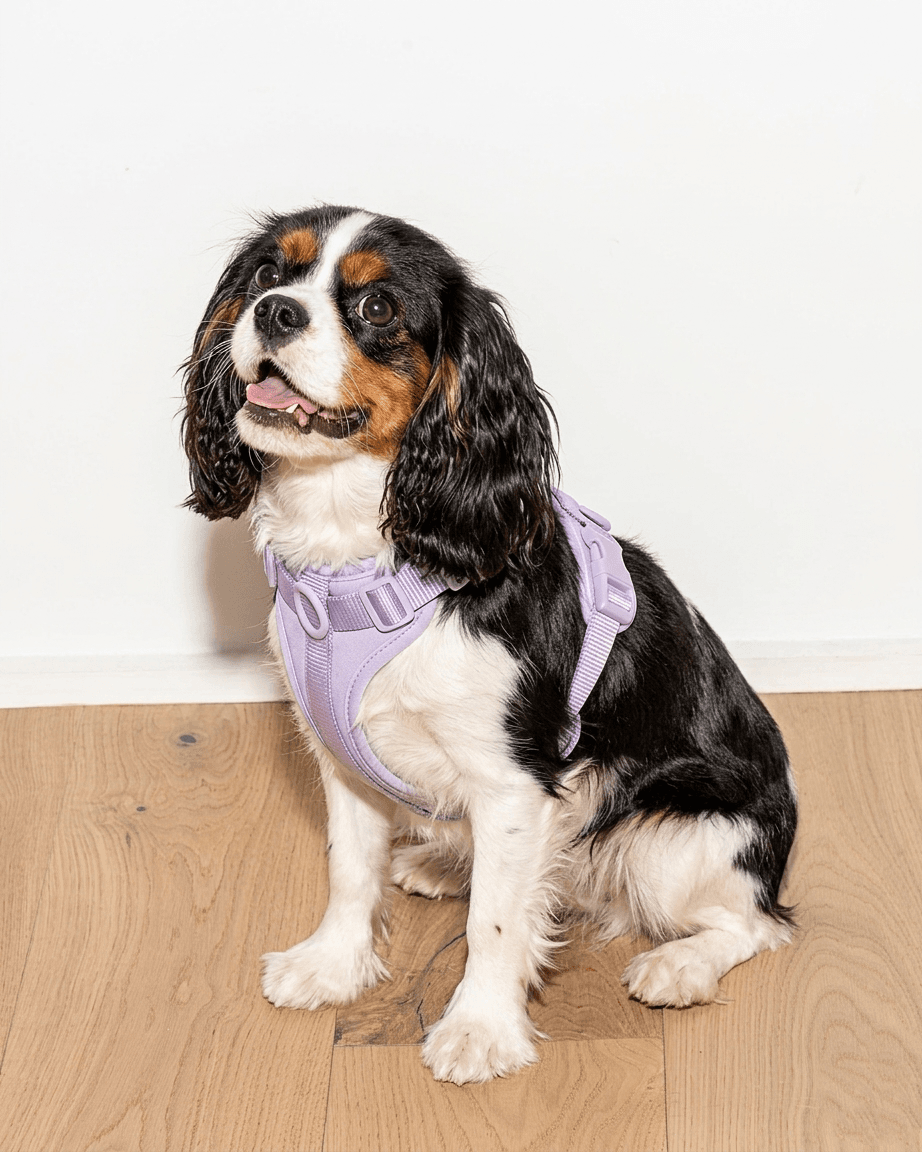
Brachycephalic breeds — French Bulldogs, Pugs, Boston Terriers, Cavalier King Charles Spaniels — and toy breeds prone to tracheal collapse need a harness rather than a collar for leash attachment. For these breeds, a lightweight harness with a front D-ring removes neck pressure entirely while keeping the overall load minimal. The combination of a harness that is both light and correctly fitted is what makes walks comfortable for these dogs rather than exhausting.
What Makes a Harness Genuinely Lightweight
“Lightweight” on a product listing does not always mean much without context. These are the factors that actually determine how heavy a harness feels in use:
Material — neoprene vs nylon vs mesh
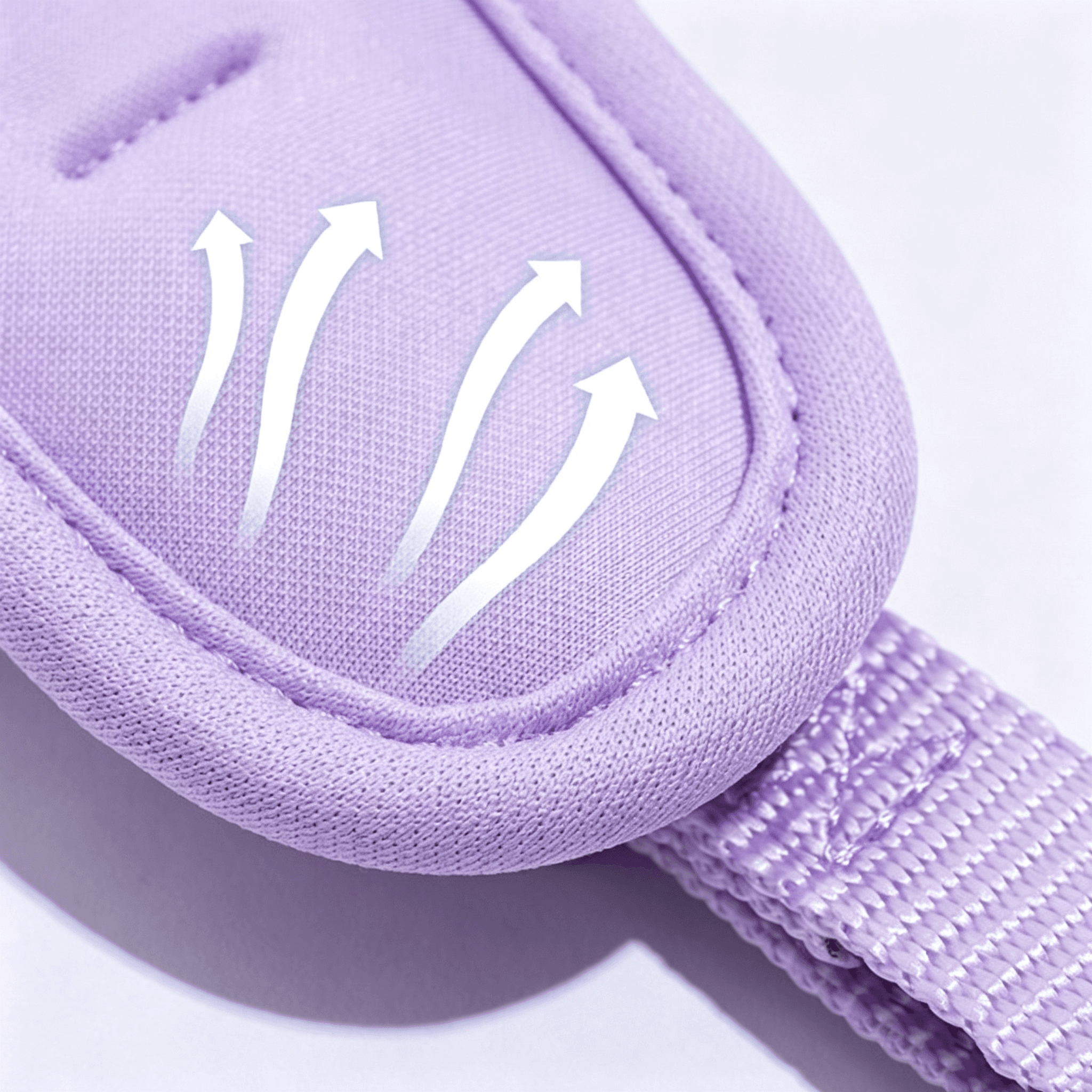
Neoprene is inherently lightweight and compressible — it provides good padding without the bulk of foam inserts or the weight of thick nylon webbing. A neoprene harness at XS weighs approximately 99 grams; a comparable nylon harness with foam padding often runs 150–200 grams at the same size. Mesh harnesses can be lighter but offer almost no padding and tend to lose their shape quickly, which affects fit. For small dogs, neoprene is the best balance of weight, padding, and durability.
Hardware — lightweight metal vs heavy-duty zinc alloy
Hardware adds meaningful weight at small sizes. For dogs under about 10kg that do not pull hard, lighter hardware — smaller D-rings, narrower adjustment sliders — is appropriate and keeps the harness comfortable. For small dogs that pull consistently, or for any dog over 15kg, more substantial hardware is needed even if it adds a small amount of weight. The right balance is hardware adequate for the dog’s size and pulling force, not the heaviest available.
Strap width and construction
Wider straps distribute weight more evenly but add bulk and weight at small sizes. For toy breeds, narrower straps — 15–20mm rather than 25mm — are more proportionate and lighter without sacrificing security. A harness built with proportionately narrower straps for XS and S sizes is better designed for small dogs than one that simply scales a large-dog harness down and keeps the same strap width.

MoonianPet Harness Weight by Size
For reference, the actual harness weights across sizes — useful for calculating the proportional load on small dogs:
| Size | Harness Weight | Chest Girth | Typical Dog Weight |
|---|---|---|---|
| XS | 99g / 3.5oz | 13.4–16.9″ | 2–4 kg |
| S | 130g / 4.6oz | 15.4–21.3″ | 4–8 kg |
| M | 203g / 7.2oz | 20.9–28.0″ | 8–18 kg |
| L | 229g / 8.1oz | 28.0–38.6″ | 18–35 kg |
| XL | 310g / 10.9oz | 28.0–40.2″ | 35kg+ |
Choosing a Harness for a Senior Dog
Senior dogs have specific considerations beyond just weight. These are the features worth prioritising for older dogs:
Soft padding over pressure points
Senior dogs lose subcutaneous fat over time, which means bony areas — the sternum, the shoulders, the spine — have less natural cushioning. A harness with neoprene padding on the chest panel and underarm straps provides consistent cushioning that does not compress flat after repeated use. This matters more for a senior dog on a daily walk than for a young adult dog in good condition.
Back clip for comfort, front clip only if needed
The turning force from a front clip — which redirects the dog sideways when the leash goes taut — can be uncomfortable for senior dogs with reduced joint mobility or spinal issues. For older dogs that no longer pull, the back clip is the more comfortable option for daily walks. A dual-clip harness gives you both, so you can use whichever suits the dog’s current physical condition without replacing the harness. See our front clip vs back clip guide for the full breakdown.
Easy on and off
Senior dogs with arthritis or stiffness may find it harder to stand still and cooperate during harnessing. A quick-release buckle that clips closed with one hand and does not require threading or precise alignment is worth prioritising. For dogs with significant mobility issues, an overhead slip design that requires minimal leg lifting is easier than a step-in that requires each leg to be placed into a loop. For the full comparison on harness types, see our step-in vs overhead harness guide.
What to Avoid in a Lightweight Harness
Mesh padding that compresses flat
Many lightweight harnesses use thin mesh padding to keep weight down. Mesh compresses quickly under the pressure of daily use — within a few weeks, it provides little more cushioning than bare webbing. For a dog that walks daily, this means the harness becomes progressively less comfortable over time. Neoprene maintains its structure and softness through months of use at a similar weight to mesh.
Very narrow straps that concentrate pressure
Some ultralight harnesses reduce weight by using extremely narrow straps — 10–12mm in some cases. At this width, even moderate pulling force concentrates on a very small contact area, which causes chafing and discomfort faster than a slightly wider strap. For small dogs that pull at all, straps under 15mm are too narrow. The weight saving is minimal and the comfort trade-off is significant.
Single-point adjustment
Lightweight harnesses sometimes simplify construction by reducing adjustment points. A harness with only one adjustment point may fit one body shape well and fit another poorly — and on small dogs where proportional variation is large, this causes rotational fit issues quickly. Three-point adjustment is worth the small additional weight it adds.
A Lightweight Harness That Does Not Cut Corners
The MoonianPet No-Pull Dog Harness starts at 99 grams in XS — one of the lightest fully-featured no-pull harnesses available at that size. Neoprene padding on chest and underarm straps, three-point tri-glide adjustment, dual front and back D-rings, and a quick-release buckle. Available from XS to XL across 11 colors, with each size scaled proportionately rather than simply scaled down from a large-dog design.
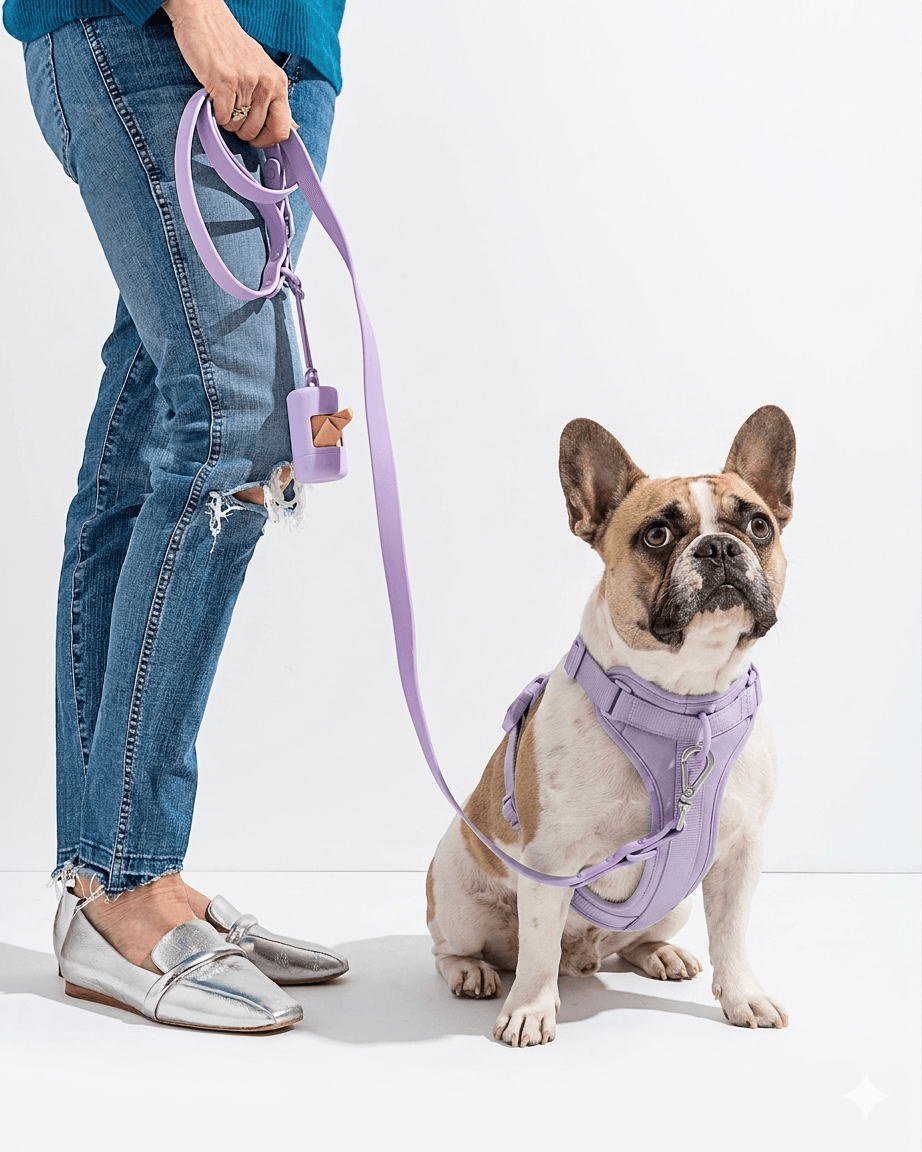
For a matched walking setup, the Harness & Leash Set pairs the harness with a waterproof PVC-coated leash — odour-proof, lightweight, and easy to wipe clean after muddy walks.
Frequently Asked Questions
How light should a harness be for a small dog?
As a rough guide, a harness should represent no more than 3–5% of the dog’s body weight. For a 3kg Chihuahua, that means under 90–150 grams. For a 6kg Dachshund, under 180–300 grams. A harness at 99 grams (XS) or 130 grams (S) sits comfortably within this range for most small breeds while still providing the padding and adjustment features needed for daily use.
Can a harness be too light for a dog that pulls?
Yes — very lightweight harnesses sometimes achieve their weight savings by reducing hardware quality or strap width below what is safe for a pulling dog. A harness with plastic D-rings that deform under pulling force, or straps narrow enough to concentrate pressure on a small contact area, is too light in the wrong way. The goal is a harness that is as light as possible while still using metal hardware rated for the dog’s pulling force and padding adequate for daily contact.
Should senior dogs use a harness instead of a collar?
For most senior dogs, a harness is the better choice for leash attachment. Older dogs often have weakened neck muscles and are more susceptible to tracheal and cervical spine issues — leash pressure through a collar carries a higher risk than in younger dogs. A harness distributes that pressure across the chest and shoulders. For senior dogs that no longer pull, the back clip is usually more comfortable than the front clip. See our collar vs harness guide for a full comparison.
Is neoprene a good material for a lightweight harness?
Yes — neoprene is one of the best materials for small and senior dog harnesses specifically. It is inherently lightweight, provides good cushioning without requiring added foam inserts, does not absorb moisture or odour, and maintains its structure through months of daily use. It is also gentle against skin and fur, which matters more for small dogs with fine coats and senior dogs with thinning skin.
How do I put a lightweight harness on a wriggly small dog?
An overhead slip-and-clip design is the fastest method for wriggly dogs — slip the neck loop over the head, bring the belly strap under, and click the buckle. Practice the motion with treats until the dog associates it with a reward rather than resisting it. For a full step-by-step guide with fit checks, see our post on how to put on a no-pull dog harness.
Looking for breed-specific advice for small dogs? Our small dog harness guide covers fit and recommendations by breed. Or if you are comparing harness types for ease of use, see our step-in vs overhead harness comparison.
About the Author
Wenyue
Wenyue is the founder of MoonianPet and writes about dog collars, harnesses, waterproof pet gear, and everyday dog care.
Growing up with dogs inspired her lifelong interest in pet care and practical dog gear. Through MoonianPet, she researches dog collars, harnesses, waterproof materials, and everyday solutions that help active dogs stay comfortable during daily adventures.