
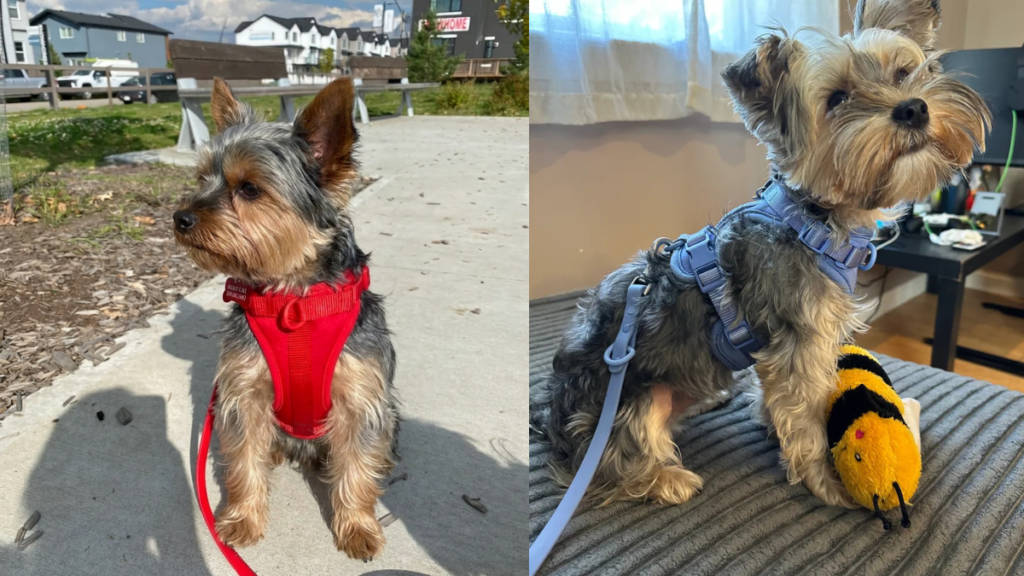
Yorkshire Terriers are one of the most popular small breeds in the world — and one of the most commonly seen with the wrong walking equipment. A standard collar on a Yorkie is not just a sizing issue; it is a genuine health concern. Yorkies have a well-documented predisposition to tracheal collapse, a condition where the cartilage rings supporting the windpipe weaken and the airway narrows under pressure. Collar pressure from pulling, lunging, or even a tight-fitting collar during normal walking can aggravate this condition — or accelerate its onset in a dog already predisposed.
The solution is straightforward: a harness that distributes force across the chest and shoulders rather than concentrating it on the throat. The difficulty is finding one that fits a Yorkie correctly — these dogs are small enough that many harnesses marketed as “small” are proportionally oversized, and a harness that sits incorrectly on a 3kg dog creates its own problems.
This guide covers why a harness is the right choice for most Yorkies, how to measure correctly, what to look for in a harness at this size, and what to avoid.
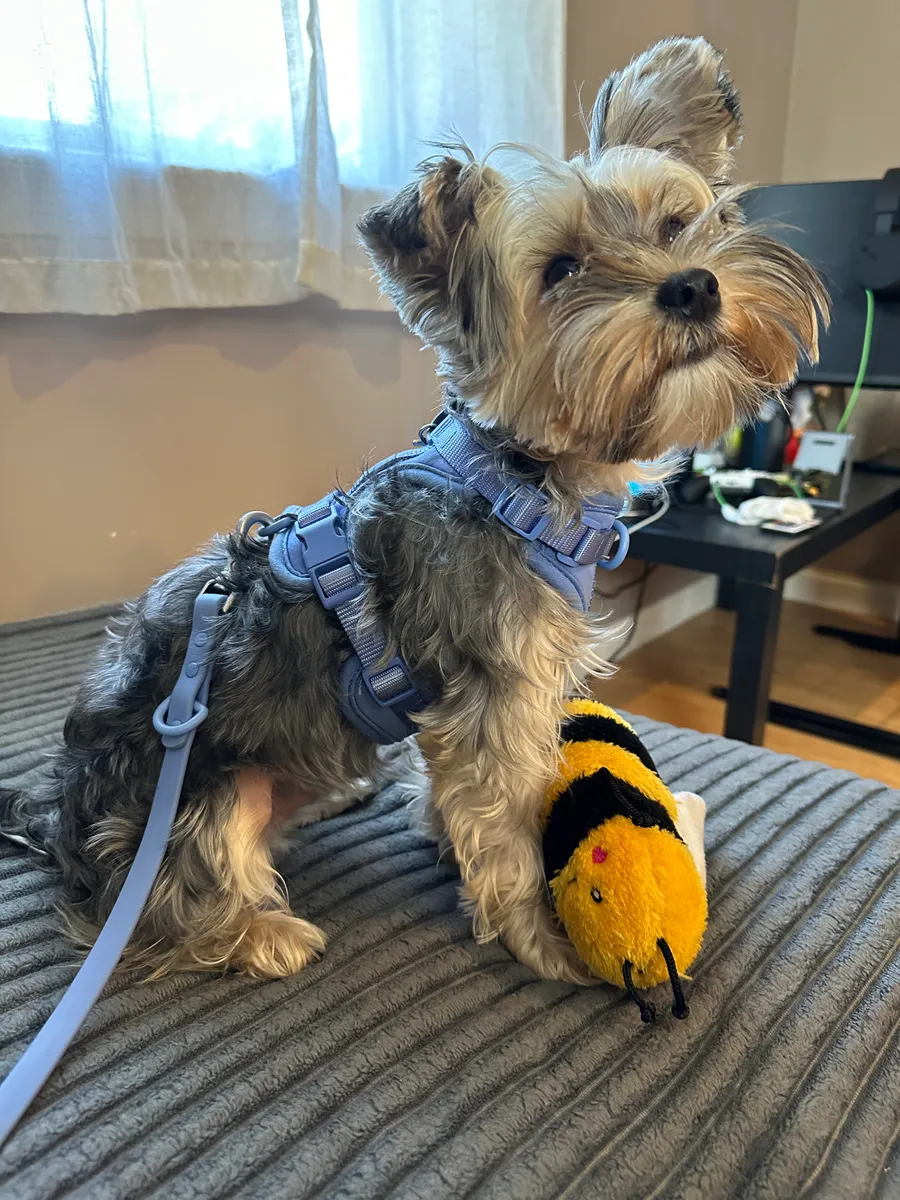
Why Yorkies Need a Harness Rather Than a Collar
Tracheal collapse risk
Yorkshire Terriers are among the breeds most commonly affected by tracheal collapse — a progressive condition where the C-shaped cartilage rings of the trachea weaken and the airway flattens under pressure or during exertion. The characteristic honking cough is the most recognised symptom. While genetics plays the primary role in whether a dog develops the condition, sustained collar pressure on the throat is a known aggravating factor. For Yorkies in particular, most veterinary guidance recommends harness walking as a precautionary measure regardless of whether the dog has been diagnosed with any airway issue.
Proportional neck size
A typical adult Yorkie weighs between 2 and 3.5kg and has a neck circumference of roughly 20 to 28cm. The force a Yorkie can exert against a collar during pulling is small in absolute terms but significant relative to the size of the tracheal structures involved. What feels like a gentle tug on a large dog’s collar is proportionally more impactful on the delicate airway of a toy breed.
Yorkie temperament
Yorkies are terriers — bred for tenacity, alertness, and a willingness to go after things regardless of size. Despite their small frame, they tend to pull toward interesting smells and sights with more enthusiasm than their size might suggest. This combination of small trachea and enthusiastic forward pulling is precisely the scenario that makes collar walking a higher-risk setup for this breed.
How to Measure a Yorkie for a Harness
Two measurements determine harness fit for any dog, and both matter at small sizes where the margin between correct and incorrect fit is narrow:
Chest girth
Measure the widest point of the chest — this is typically just behind the front legs. Hold the tape snug but not tight. For most adult Yorkies, chest girth falls between 28 and 40cm. This is the primary measurement that determines harness size; it is more important than weight or neck measurement for getting the fit right.
Neck girth
Measure around the neck at the point where the harness neck opening will sit — roughly where a collar would rest. For most adult Yorkies, neck girth is between 20 and 28cm. Check that the harness you are considering adjusts through this range at the neck, not just at the chest.
Checking for underarm clearance
Once fitted, the harness should clear the armpits — the straps that pass under the front legs should not rub or press directly into the armpit when the dog is walking. On a Yorkie, this is particularly easy to check because the dog is small enough to see the fit clearly from above. Slide two fingers under the chest strap; it should move freely without being loose enough to shift around during walking.
What to Look for in a Yorkie Harness
Lightweight construction
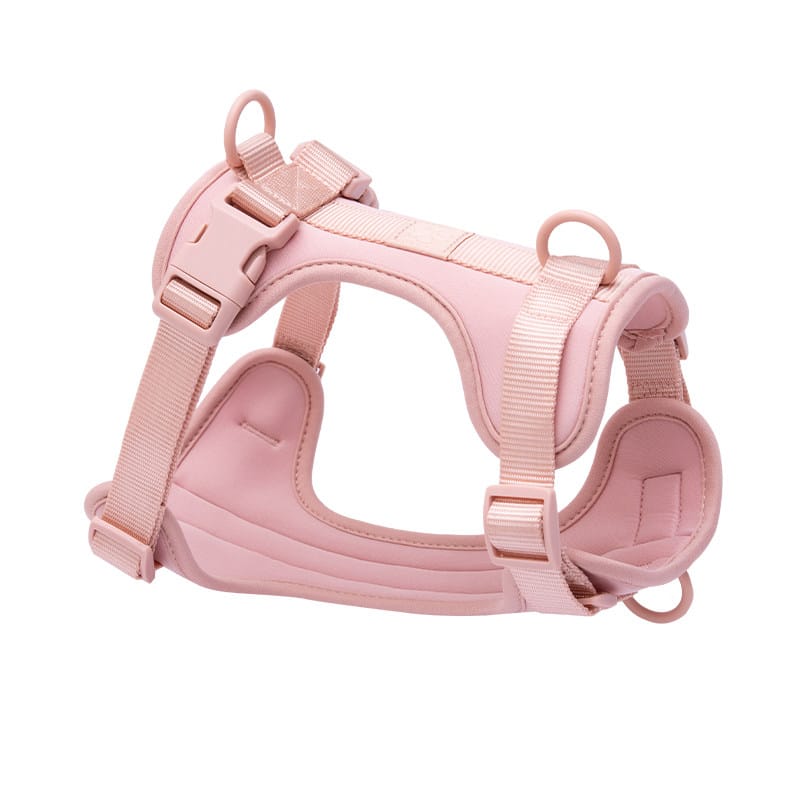
A harness for a 2.5kg dog needs to be proportionally light. Heavy buckles, thick webbing, and bulky padding add weight that is trivial on a 30kg Labrador and noticeable on a small Yorkie. Look for narrow webbing — 10 to 15mm is typically appropriate for toy breeds — and hardware that is scaled to small dog dimensions rather than standard adult dog sizing. The harness should feel almost weightless when held in the hand.
Soft contact material at the chest and underarms
Yorkies have a fine, silky coat that is less protective against friction than a thick double coat. Harness straps that rub against the underarm area or chest will cause coat damage and skin irritation on a Yorkie more quickly than on a heavily coated breed. Neoprene or a smooth-surfaced padding at the contact points significantly reduces this friction. Check that the chest panel and underarm sections have soft edges — no raw webbing edges that could abrade the coat.
Adjustability at both neck and chest independently
Yorkies vary considerably in build — some are leggy and narrow-chested; others are more compact. A harness with independent adjustment at the neck and chest gives you the ability to dial in a precise fit regardless of the individual dog’s proportions. Fixed-size harnesses or harnesses with adjustment only at one point often fit the average but miss the outliers, and at XS sizes the range of variation is proportionally significant.
A front D-ring for no-pull walking
Despite their size, Yorkies can pull with conviction. A front D-ring on the chest panel redirects the dog toward the handler when they lunge forward, reducing the pulling behaviour over time without any correction. The front clip also moves the leash attachment away from the back of the neck — reducing the visual distraction of the leash and the physical interference it can cause with a Yorkie’s long back coat.
Easy to put on and take off
Fitting a harness on a small, wriggly dog is more physically demanding than on a large dog — you are bending close to a small moving target with fiddly buckles. A step-in harness design or a harness with a single top clip rather than multiple buckles reduces the time and frustration involved. For Yorkies that are resistant to harness fitting, a design that requires minimal handling of the legs is the more practical daily choice.
What to Avoid in a Yorkie Harness
Harnesses that press on the shoulder blades
A chest panel that sits too high and presses against the shoulder blades restricts the dog’s front leg movement during walking. On a small active dog like a Yorkie, this restriction is particularly noticeable — the dog will shorten its stride or show reluctance to walk at pace. The chest panel should sit on the sternum, below the shoulder blades, not across them.
Oversized standard harnesses marked “small”
Many harnesses labelled “small” are designed for dogs in the 5 to 10kg range — significantly larger than most Yorkies. A harness that is proportionally too large will shift around during walking, causing the back D-ring to sit off-centre and the chest panel to sit incorrectly. Always verify the specific chest girth range on the size chart rather than relying on the size label.
Very thin cord or wire harnesses
Some harnesses for tiny dogs use very thin cord rather than webbing — these are lightweight but concentrate pressure on a narrow line across the body, which can cause discomfort and coat damage at the contact points. A narrow but flat webbing or a padded neoprene panel distributes pressure more evenly than a thin cord, even though both may look similarly lightweight.
The MoonianPet No-Pull Dog Harness for Yorkies
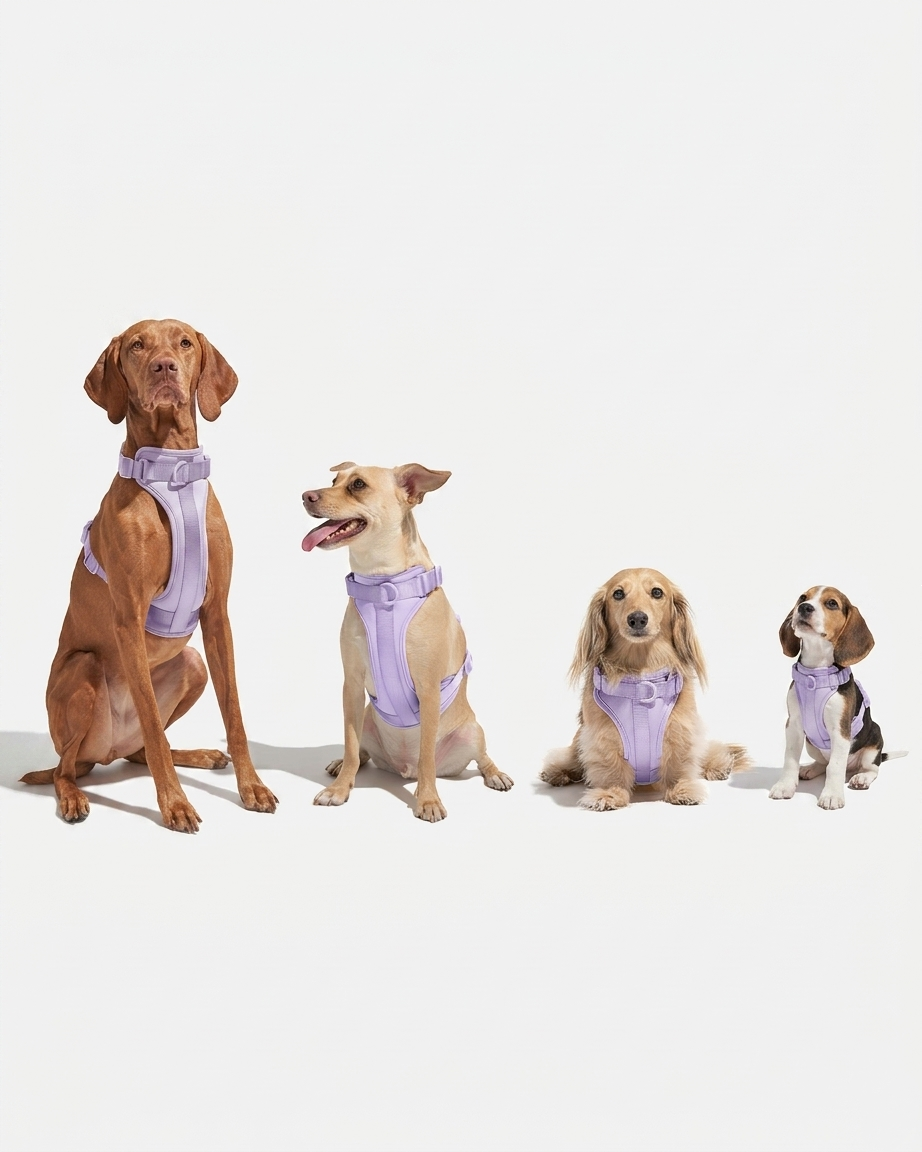
The MoonianPet No-Pull Dog Harness in XS is designed for dogs with a chest girth of 30 to 40cm — which covers most adult Yorkies. The neoprene body is lightweight and soft against the coat, the chest and girth straps adjust independently, and the front D-ring provides a no-pull attachment option for dogs that pull on the walk.
The smooth neoprene surface is particularly well-suited to Yorkies with long show coats, where friction from rough webbing edges causes coat breakage at the contact points. Available in 11 colours including pink, purple, lilac, and sky blue — common choices for Yorkie owners — and the Harness & Leash Set adds a matching waterproof leash for a complete coordinated walking setup.
For sizing, measure chest girth first and use the dog harness size guide to confirm before ordering. If your Yorkie is between sizes, size down and use the adjustment to fine-tune — a snug fit is more effective than a loose one for small dogs.
Frequently Asked Questions
Can I use a collar on my Yorkie at all?
Yes — a collar is still appropriate for carrying ID tags, and many Yorkie owners use a collar for identification and a harness for walking. The concern with collars is specifically about attaching a leash to a collar on a breed predisposed to tracheal issues. A collar worn for identification purposes only, without a leash attached, does not create tracheal pressure. The practical setup for most Yorkies is: collar with ID tag at all times, harness with leash for walks.
My Yorkie hates having the harness put on — what can I do?
Harness resistance in small dogs is almost always about the handling involved in fitting rather than the harness itself. Desensitisation works well: leave the harness on the floor for the dog to investigate and sniff freely for a few days, then reward calm interaction with it before attempting to put it on. When fitting, move slowly, keep treats involved, and avoid the instinct to restrain the dog firmly — tension from the handler creates more resistance. A step-in harness design that avoids lifting the dog’s legs over straps is often easier to introduce to resistant dogs.
Will a harness damage my Yorkie’s coat?
A poorly fitted harness or one made from rough webbing can cause coat breakage at the contact points — particularly in the armpit area where the straps rub during walking. A harness with smooth, soft contact surfaces — neoprene padding or a smooth lining — significantly reduces this risk. Ensuring the harness fits correctly so it does not shift during walking is equally important; a moving harness creates more friction than a static one regardless of material. For Yorkies in full show coat, some owners rotate between two harnesses to reduce repetitive friction at the same contact points.
What size harness does a Yorkie need?
Most adult Yorkies fit a harness with a chest girth adjustment range of 28 to 40cm — typically XS in most size charts. Measure the chest girth at the widest point behind the front legs before ordering. Teacup or particularly small Yorkies under 2kg may require specialist very small sizing; standard XS harnesses may still be too large for these dogs. Check the specific measurement range on the brand’s size chart rather than relying on the XS label alone.
Should I use the front clip or back clip on my Yorkie’s harness?
For a Yorkie that pulls, the front clip is more effective — it redirects the dog’s momentum toward you when they lunge, reducing the pulling behaviour over time. For a Yorkie that already walks calmly on a loose lead, the back clip gives slightly more freedom of movement and is comfortable for relaxed walks. Many owners use the front clip during training walks in higher-stimulation environments and switch to the back clip for quieter neighbourhood walks once the dog is settled. Both are valid; the front clip is the more effective tool for managing pulling.
For a full guide on neoprene harness materials and why they suit small breeds, see our neoprene dog harness guide. For small dog collar sizing and when a collar is appropriate alongside a harness, see our small dog collar guide.
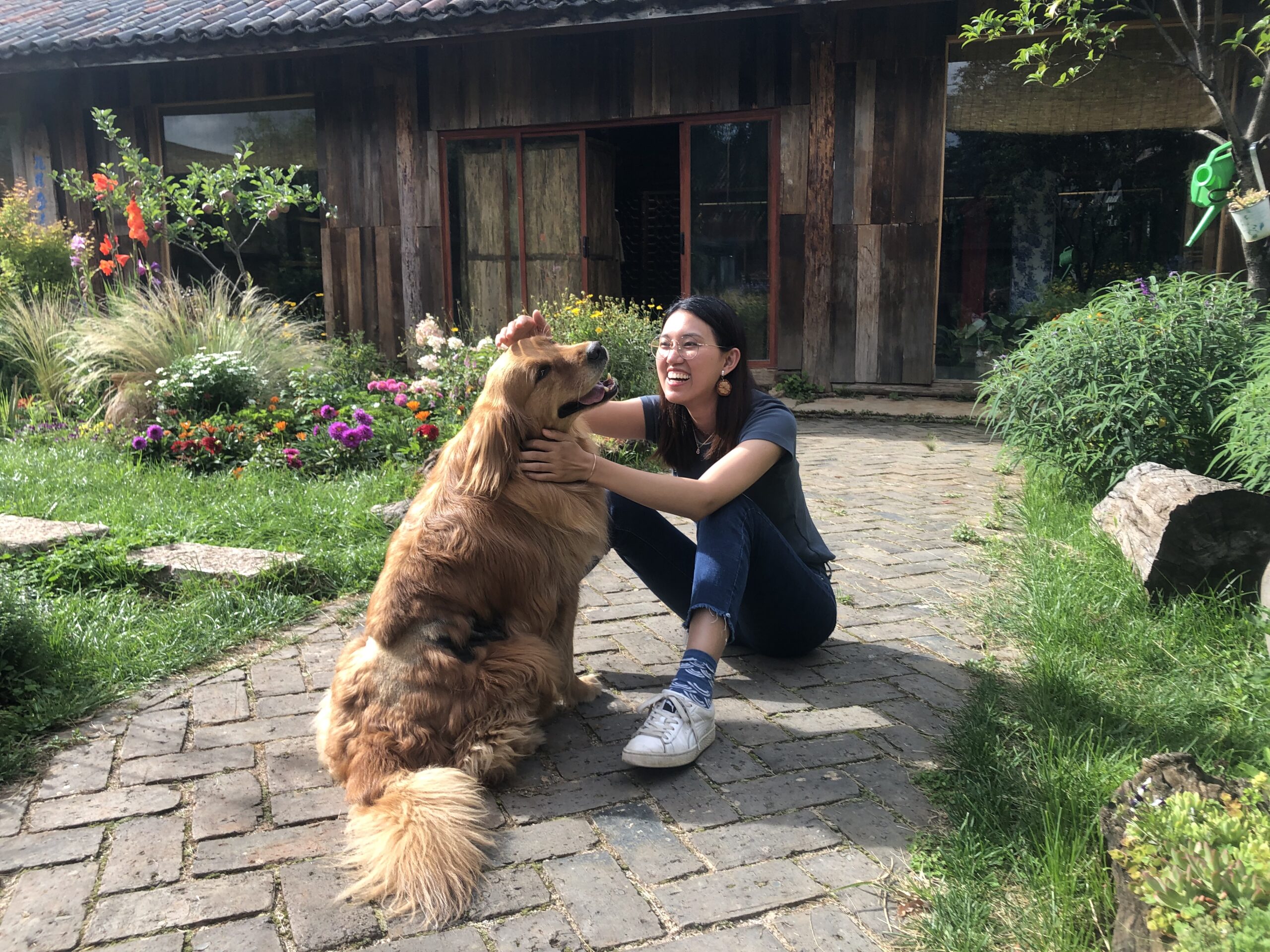
Wenyue
Wenyue is the founder of MoonianPet and writes about dog collars, harnesses, waterproof pet gear, and everyday dog care. Growing up with dogs inspired her lifelong interest in pet care and practical dog gear. Through MoonianPet, she researches dog collars, harnesses, waterproof materials, and everyday solutions that help active dogs stay comfortable during daily adventures.