

A breakaway dog collar is built to do something that sounds counterintuitive: it releases when enough force is applied to it. The buckle is designed to open under a specific level of pull — enough to free a dog that has caught their collar on a fixed object, but not so easily that it opens during normal walking on a leash.
Collar entanglement is a real hazard, particularly for dogs left unsupervised or dogs that play with other dogs. A collar that catches on a fence post, a crate bar, playground equipment, or another dog’s jaw can tighten as the dog panics and pulls away — and a standard buckle collar will not release. A breakaway buckle changes that outcome.
This guide covers how a breakaway collar works mechanically, which dogs benefit from one, the situations where they are most relevant, what to look for when choosing one, and when a standard collar remains the better option.
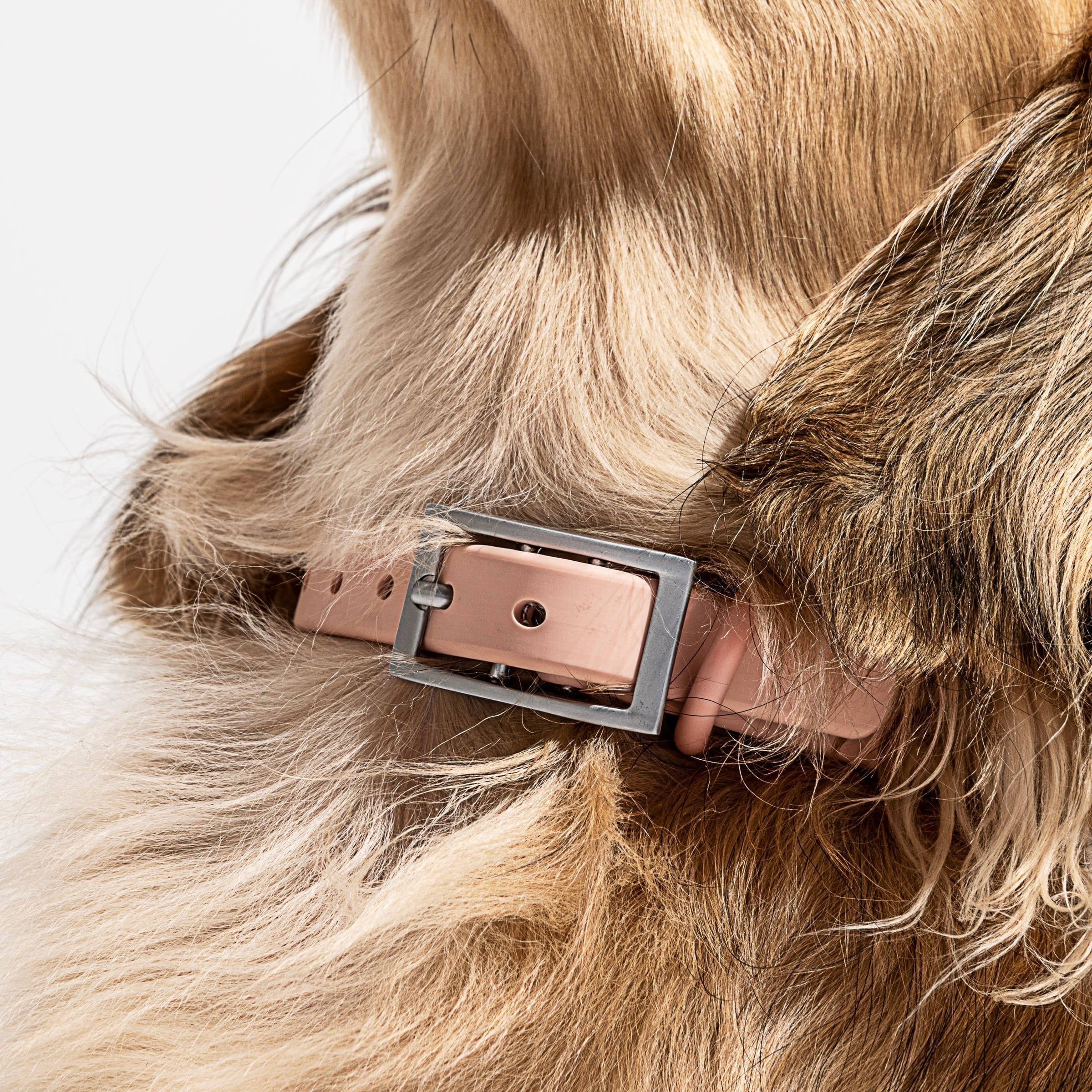
How a Breakaway Collar Works
The breakaway mechanism is built into the buckle. A standard side-release buckle locks closed under tension — the harder you pull, the more securely it holds. A breakaway buckle does the opposite: it is designed with a release threshold. Below that threshold, it holds normally. Above it, the buckle opens.
The typical design uses a two-point release on the buckle that requires simultaneous inward pressure on both sides to open — the same mechanism as a standard side-release buckle. The difference is that the plastic is engineered to flex and release at a specific force level rather than holding indefinitely. When a dog pulls their full body weight against a snagged collar, that force is almost always sufficient to trigger the release.
The important design consideration is that the leash should not be attached to the main collar loop — if it is, normal leash tension could trigger the breakaway. Most breakaway collars include a second set of D-rings, bypassing the breakaway buckle, specifically for leash attachment. The leash clips to these bypass rings; the breakaway function is reserved for the emergency release scenario only.
This means a dog wearing a breakaway collar on a leash behaves exactly like a dog wearing a standard collar on a leash — the leash tension does not reach the breakaway buckle. The breakaway only activates when the collar itself is caught and the dog pulls against the fixed point with their full body weight and panic force.
The Situations Where a Breakaway Collar Matters Most
Dogs left unsupervised with a collar on
The entanglement risk is highest when no one is present to intervene. A dog alone in a garden can catch their collar on a fence hook, a loose wire, or garden furniture. A dog in a crate can catch their collar on a crate bar if they push their head through the bars. A dog sleeping on a bed can catch their collar on a loose thread or a headboard post. These scenarios are low probability but high consequence — without the breakaway function, the outcome of an entanglement can be fatal.
Dogs that play with other dogs while collared
Collar entanglement between two dogs playing is a well-documented hazard. When dogs play, they roll, twist, and get close — and a jaw, tooth, or foot can catch under another dog’s collar. Both dogs then panic simultaneously, each pulling against the other, tightening the entanglement rapidly. A breakaway collar on either dog allows the collar to release before the situation escalates. This is particularly relevant in multi-dog households and at off-lead dog parks.
Puppies and young dogs
Puppies are curious, impulsive, and less aware of their surroundings than adult dogs. They are more likely to push their head into gaps, catch their collar on low objects, and get into positions where a collar entanglement becomes possible. The breakaway collar is a practical safety net during the period when the dog’s behaviour is least predictable and supervision cannot always be total.
Dogs in kennels or day care
In a boarding kennel or day care environment, staff cannot monitor every dog continuously. Many professional kennels now require or strongly recommend breakaway collars precisely because the combination of crate bars, fencing, and multiple dogs creates more entanglement opportunities than a home environment. Check with your kennel whether they have a collar policy before your dog’s first stay.
Which Dogs Benefit Most
Dogs that wear a collar around the clock
Some owners leave a collar on at all times for ID tag purposes. For these dogs, the collar is present during sleep, play, and every unsupervised moment — which is precisely when the entanglement risk is highest. A breakaway collar allows permanent collar wear without the strangulation risk of a fixed buckle.
Dogs in multi-dog households
The inter-dog entanglement risk makes breakaway collars the sensible default in any household where dogs play together regularly. The cost of a breakaway collar is negligible; the cost of a collar entanglement between two dogs that escalates before an owner can intervene is not.
Dogs with any history of getting caught or tangled
If a dog has ever caught their collar on something — even a minor incident that resolved without harm — the risk profile is established. That dog has demonstrated the combination of behaviour and environment that creates entanglement opportunities. A breakaway collar is the direct practical response.
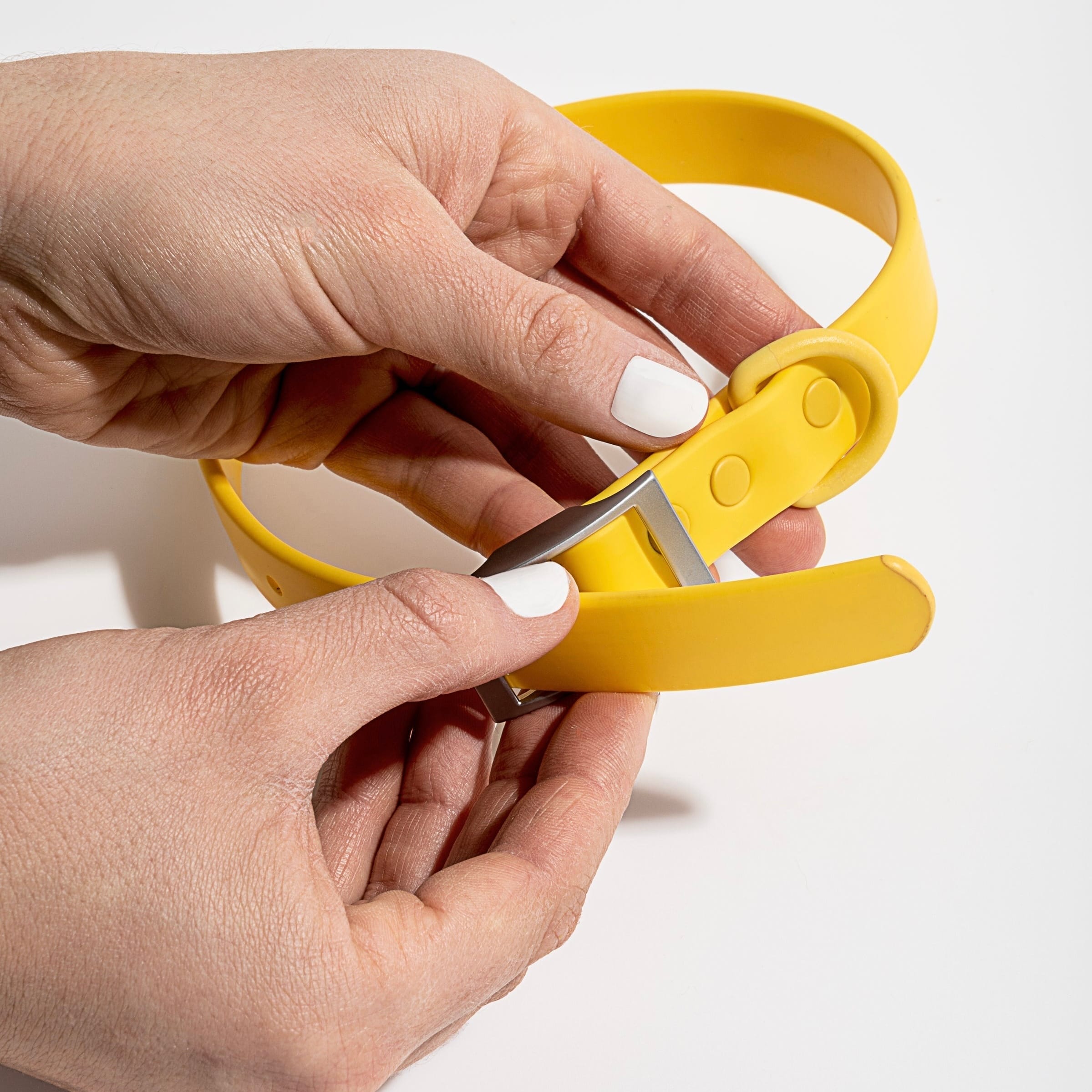
What to Look for When Choosing One
A defined release threshold
The breakaway buckle should release at a force level appropriate to the dog’s size — light enough that a medium dog pulling with full-body panic force can trigger it, but not so light that normal play or a dog shaking its head opens the collar. Quality breakaway collars specify the release threshold in their documentation. For large dogs, this threshold needs to be higher than for small dogs; check that the collar is rated for your dog’s weight range.
Bypass D-rings for leash attachment
A breakaway collar without bypass D-rings cannot be used safely on a leash — if the leash attaches to the main loop, it will trigger the release during normal walking. Most purpose-built breakaway collars include these; confirm they are present before purchasing, especially for dogs that will be walked on a lead daily.
Buckle quality and reset ease
After a breakaway release, the buckle should reset easily — snap back together without requiring tools or complicated re-threading. A buckle that is difficult to reset will be left open or poorly closed after an incident, defeating the purpose. Check reviews for reports of buckle quality and ease of re-closure.
ID tag attachment point
Since the breakaway collar’s main purpose is unsupervised wear — where the ID tag is most needed — the collar should have a reliable tag attachment point that does not interact with the breakaway mechanism. A separate D-ring or tag loop independent of the buckle is the cleanest solution.
When a Standard Collar Is the Better Choice
For dogs that only wear a collar during supervised walks and are collar-free at home — a sensible approach for many owners — the entanglement risk is low and a standard buckle collar is entirely appropriate. The breakaway function is most valuable precisely when supervision is absent; for a dog that is never left alone with a collar on, it is a lower-priority feature.
For dogs used in tracking, working, or sporting contexts where a secure, non-releasing collar is important, a standard buckle collar is the correct choice. A breakaway collar in a working context — where the dog may need to be caught, restrained, or handled quickly by the collar — introduces unwanted unpredictability.
For most pet dogs that wear a collar for identification and walk on a leash daily, the practical decision comes down to whether the collar stays on unsupervised. If it does, a breakaway collar reduces risk meaningfully. If it comes off at home, a standard collar covers the walking use case without compromise. For help choosing the right collar size either way, see our dog collar size guide.
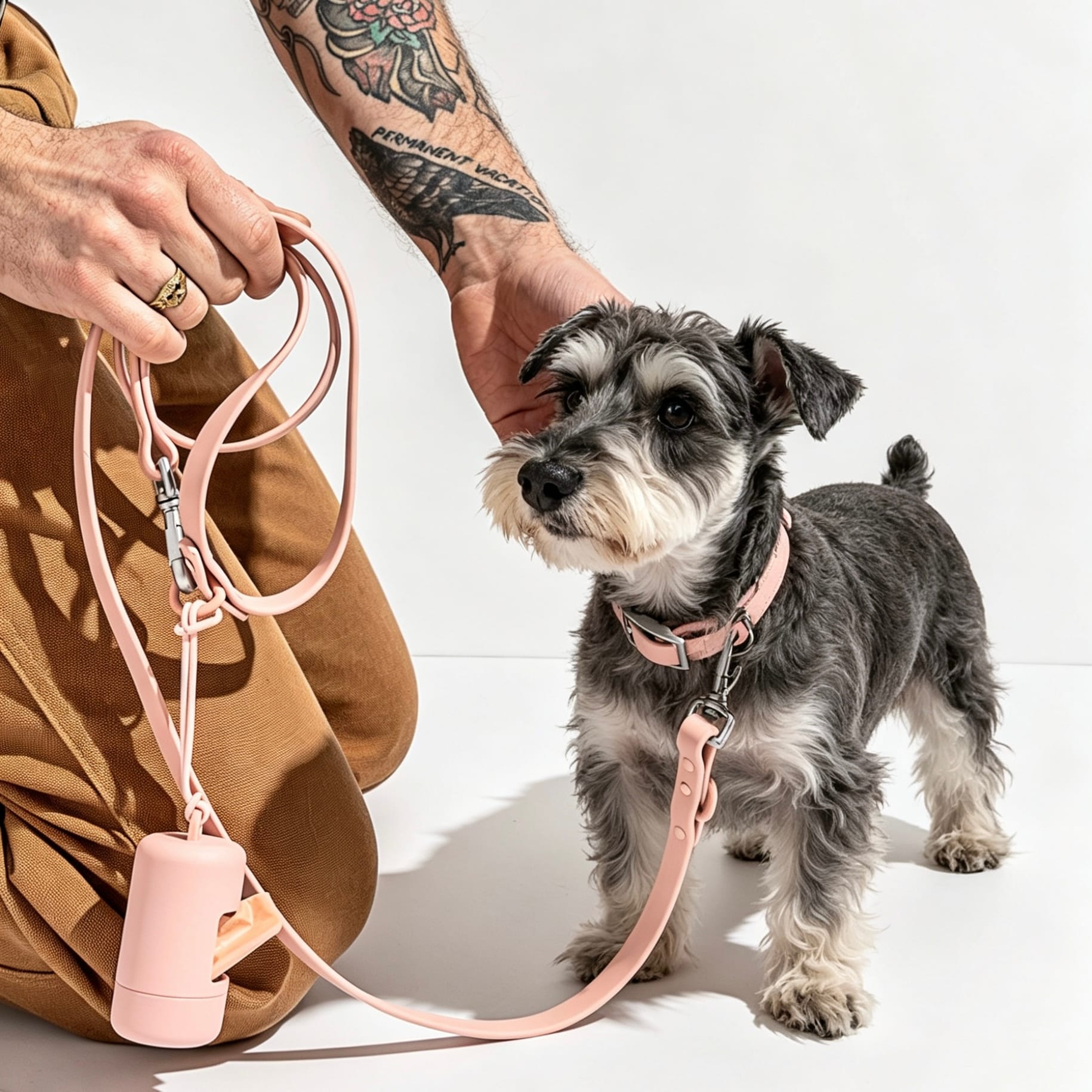
The MoonianPet Waterproof Dog Collar
The MoonianPet Waterproof Dog Collar is a standard flat collar with a secure safety buckle — not a breakaway design. It is suited to supervised walking, everyday use, and dogs that are not left alone with their collar on. The PVC-coated webbing is fully waterproof, odour-resistant, and easy to wipe clean. Available in 11 colours and five sizes XS through XL.
For owners who keep a collar on at all times for ID purposes, the decision between a standard and breakaway collar comes down to the dog’s specific environment and habits. For dogs in multi-dog households or with a history of collar incidents, a purpose-built breakaway collar worn alongside the waterproof collar during walks is the practical two-collar approach many owners use.
The Waterproof Collar & Leash Set pairs the collar with a matching leash in all 11 colours for a coordinated walking setup.
Frequently Asked Questions
Can a breakaway collar come off during a walk?
Not if the leash is attached correctly to the bypass D-rings. The bypass rings route leash tension around the breakaway buckle, so normal pulling on a walk does not trigger the release. The only risk of accidental release during a walk is if the leash is clipped to the main collar loop — which bypasses the bypass rings and puts tension directly on the breakaway mechanism. Always use the correct attachment point.
Should I use a breakaway collar for a puppy?
Yes, for most puppies — particularly those that wear a collar unsupervised, sleep in a crate with the collar on, or play with other dogs. Puppies are the highest-risk group for collar entanglement because they are curious, they push their heads into gaps, and they move unpredictably. The breakaway collar provides meaningful safety during the first year without any practical disadvantage for everyday use.
Will a breakaway collar hold if my dog runs off?
Yes, if the leash is attached to the bypass rings. A dog running on a leash clipped to the bypass D-rings will be stopped by the leash normally — the breakaway buckle is not in the load path. The concern about breakaway collars and runaway dogs usually comes from owners who attach the leash to the main loop, which is incorrect. With the leash in the right place, a breakaway collar behaves identically to a standard collar during a walk.
How tight should a breakaway collar be fitted?
The same as any flat collar — two fingers’ width of space between the collar and the dog’s neck. Fitted too loosely, the collar can slide forward and over the head without triggering the breakaway, which removes both the identification function and the safety function. Fitted too tightly, it is uncomfortable and the breakaway mechanism may need to generate more force to release. Two fingers of space is the standard for all collar types. See our dog collar sizes guide for measurement instructions.
Is a breakaway collar the same as a quick release collar?
Not exactly, though the terms are sometimes used interchangeably. A quick release collar refers to a buckle that opens easily by hand — designed for fast removal by a human in an emergency. A breakaway collar specifically releases under the dog’s own pulling force when the collar is snagged — no human intervention needed. The breakaway function is the more critical safety feature for unsupervised scenarios, because it activates without anyone being present to open the buckle manually.
For a full overview of collar types and how to choose between them, see our guide on types of dog collars explained. For collar sizing and fit, the dog collar size guide covers measurement in detail.

Wenyue
Wenyue is the founder of MoonianPet and writes about dog collars, harnesses, waterproof pet gear, and everyday dog care. Growing up with dogs inspired her lifelong interest in pet care and practical dog gear. Through MoonianPet, she researches dog collars, harnesses, waterproof materials, and everyday solutions that help active dogs stay comfortable during daily adventures.