
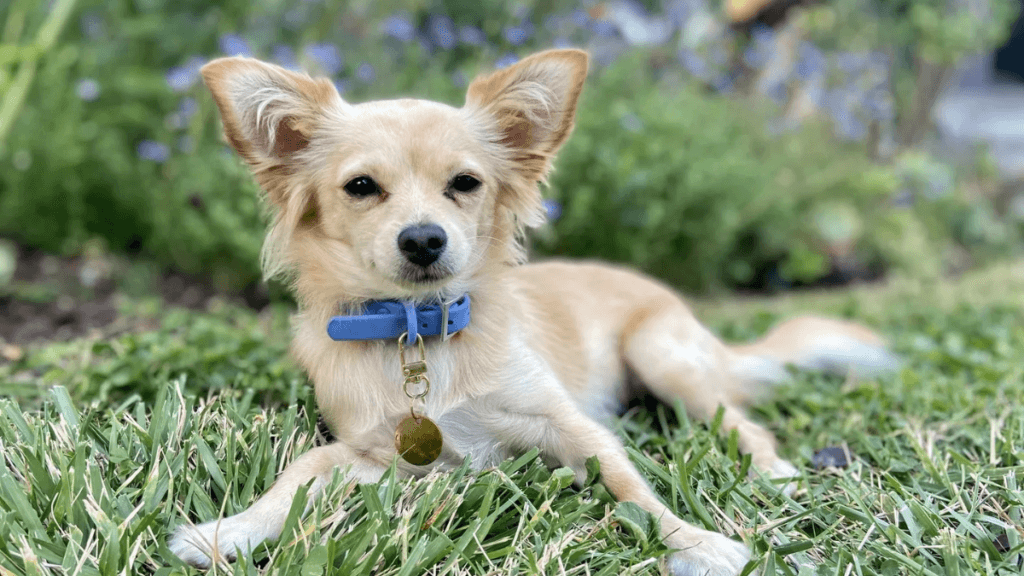
A small dog collar is not simply a large dog collar made narrower and shorter. The proportions change, the hardware scales differently, the fit tolerances tighten, and the consequences of a poorly fitted collar are more immediate on a small dog than on a large one. A collar that is slightly too heavy, slightly too stiff, or slightly too loose on a Chihuahua or a Yorkshire Terrier creates problems that the same fitting error would not produce on a Labrador.
Small dogs also have anatomical differences that matter for collar choice. Many small breeds are prone to tracheal collapse — a condition where the tracheal rings weaken and the airway narrows under pressure — which makes collar pressure on the neck a genuine health concern rather than a minor comfort issue. The collar that works perfectly on a large robust dog can be the wrong tool entirely for a small breed with a delicate throat.
This guide covers what actually changes at smaller collar sizes, how to measure a small dog correctly, what to look for in a collar for a small breed, and when a harness is the more appropriate choice for day-to-day walking.

What Actually Changes at Smaller Sizes
Collar width
A standard adult collar is typically 25mm wide. On a large dog, this width distributes any collar pressure across a reasonable surface area. On a small dog with a neck circumference of 20 to 25cm, the same 25mm width can feel proportionally bulky and stiff. Most collars designed specifically for small breeds use 10mm to 15mm webbing — narrow enough to sit comfortably on a fine neck without adding unnecessary stiffness or weight. A collar that is too wide for the dog’s neck also sits awkwardly, riding up toward the jaw or pressing on the top of the neck rather than lying flat.
Hardware weight and size
The buckle, D-ring, and adjustment slider on a large dog collar are sized for the forces a 30kg dog can generate. On a small dog, the same heavy hardware adds disproportionate weight to the collar — a 15g buckle is trivial on a collar for a 35kg dog and significant on a collar for a 3kg Chihuahua. Heavy hardware can cause the collar to hang unevenly, pull to one side, or simply feel uncomfortable around a small dog’s neck during movement. Small breed collars use scaled-down hardware — smaller D-rings, lighter buckles — that maintains function without adding bulk.
Fit tolerance
The standard two-finger fit check — two fingers between collar and neck — works for most sizes but requires more precision on a small dog. On a large dog, two fingers of space represents maybe 30 to 40mm of slack. On a Chihuahua with a 20cm neck, two fingers of space represents a much higher proportion of the total circumference. A collar that is one notch too loose on a small dog with a narrow skull can slip over the head; one notch too tight is uncomfortable on a delicate throat. Measuring accurately and using a collar with fine adjustment increments matters more at smaller sizes.
Tracheal pressure sensitivity
Small breeds — particularly toy breeds — have proportionally narrower tracheas and are significantly more prone to tracheal collapse than large breeds. Any sustained pressure on the throat, including from a collar during pulling or leash tension, can exacerbate this condition. This is the anatomical reason that many small breed owners, veterinarians, and trainers recommend using a harness for walking and a collar only for ID tags. For dogs already diagnosed with tracheal issues, a collar attached to a leash is not appropriate regardless of size.
How to Measure a Small Dog for a Collar
Measuring is more important for small dogs than for large ones, because the margin between a correct fit and an incorrect one is smaller. Use a soft tape measure or a piece of string measured against a ruler:
Where to measure
Measure the neck at the point where the collar will sit — roughly midway between the base of the skull and the top of the shoulders, not at the thickest part of the throat. Hold the tape snug against the skin but not tight. This gives you the baseline neck circumference.
Adding fit allowance
Add 2 to 3cm to the measured circumference for the fitting allowance on a small dog — this corresponds roughly to two fingers of space. For a dog with a 22cm neck, the collar should be adjustable to sit comfortably at around 24 to 25cm. If the collar’s adjustment range does not include this figure, it is not the right size.
Checking the skull measurement for escape-prone breeds
For small breeds with narrow skulls relative to their neck — Italian Greyhounds, Whippets, some terriers — also measure the widest point of the skull just behind the ears. The collar when closed should be smaller than this measurement to prevent the collar from being pulled over the head. If neck and skull measurements are similar, a limited slip or martingale design is more appropriate than a standard flat collar.
What to Look for in a Small Dog Collar
Narrow webbing appropriate to the neck width
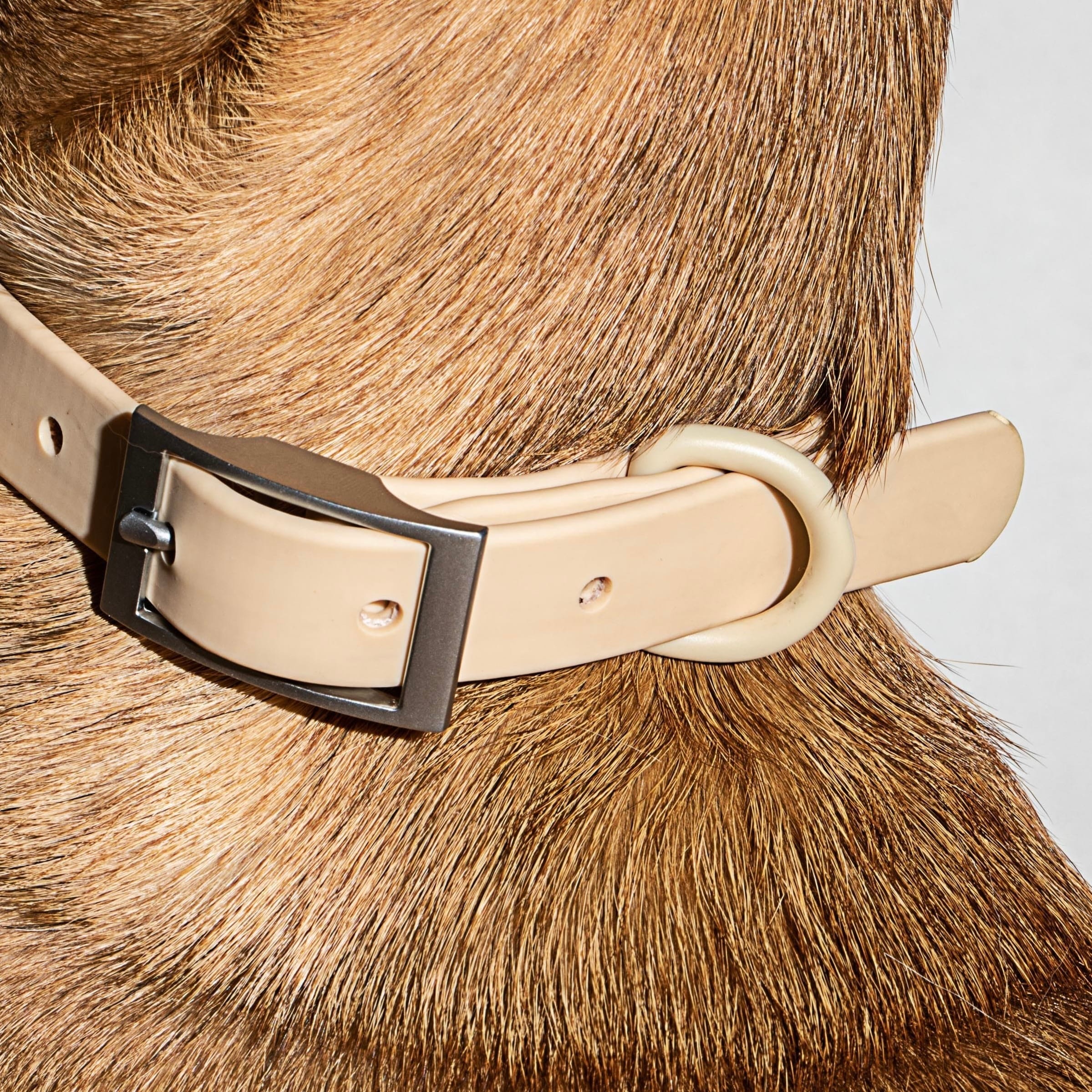
For dogs under 5kg, a 10mm webbing width is typically more comfortable than 20 or 25mm. For dogs between 5 and 10kg, 15mm is usually appropriate. The webbing should lie flat against the neck without curling at the edges — if it curls, it is either too wide or too stiff for the neck circumference.
Lightweight buckle and hardware
The total weight of the collar — webbing plus hardware — should be proportional to the dog’s size. A useful reference: pick up the collar and hold it in your palm. If it feels heavy to you, it will feel heavier to a 3kg dog. Look for collars marketed specifically for small or toy breeds, where the hardware has been scaled to match.
Fine adjustment increments
A collar with adjustment holes every 2.5cm gives less precision than one with holes every 1cm or a continuous slider adjustment. At small neck sizes, 2.5cm is a significant proportion of the total circumference — the difference between comfortable and too tight or too loose. Continuous adjustment collars, or those with closely spaced holes, allow more precise fitting for small breeds.
Soft contact material
Small dogs with fine or short coats — Chihuahuas, Italian Greyhounds, Miniature Pinschers — have less coat between the collar and their skin than heavily coated breeds. The collar material that sits against the neck matters more for these dogs. A smooth, soft-surfaced material — silicone-coated, PVC-coated, or neoprene-lined — reduces friction and skin irritation compared to rough or stiff nylon webbing.
A small, secure D-ring for the tag and leash
The D-ring needs to be large enough to clip a standard leash hook and a standard ID tag ring, but not so large that it hangs heavily from the collar. A 15 to 20mm D-ring is typically appropriate for small breed collars. Welded D-rings hold their shape under load better than bent-and-joined ones — worth checking for even on a small dog’s collar, since the leash attaches here and the ring should not flex open under tension.
When a Harness Is the Better Choice for a Small Dog
For many small breeds, a collar for ID tags and a harness for walking is the more appropriate setup — not because collars do not work, but because attaching a leash to a collar on a small dog that pulls or lunges concentrates force directly on the trachea in a way that the same action on a large dog does not.
Breeds specifically recommended for harness-first walking include: Chihuahuas, Yorkshire Terriers, Pomeranians, Pugs, Shih Tzus, Maltese, French Bulldogs, and any breed with a known predisposition to tracheal collapse. For these dogs, a collar serves its purpose as an ID tag carrier; the harness takes the leash.
For small dogs that walk calmly on a loose leash and do not lunge or pull, collar walking is generally fine — the issue arises when leash tension is sustained, not from the collar existing. If your small dog walks with a consistently loose leash, a well-fitted collar with a leash is a normal, appropriate setup.
The MoonianPet Waterproof Dog Collar
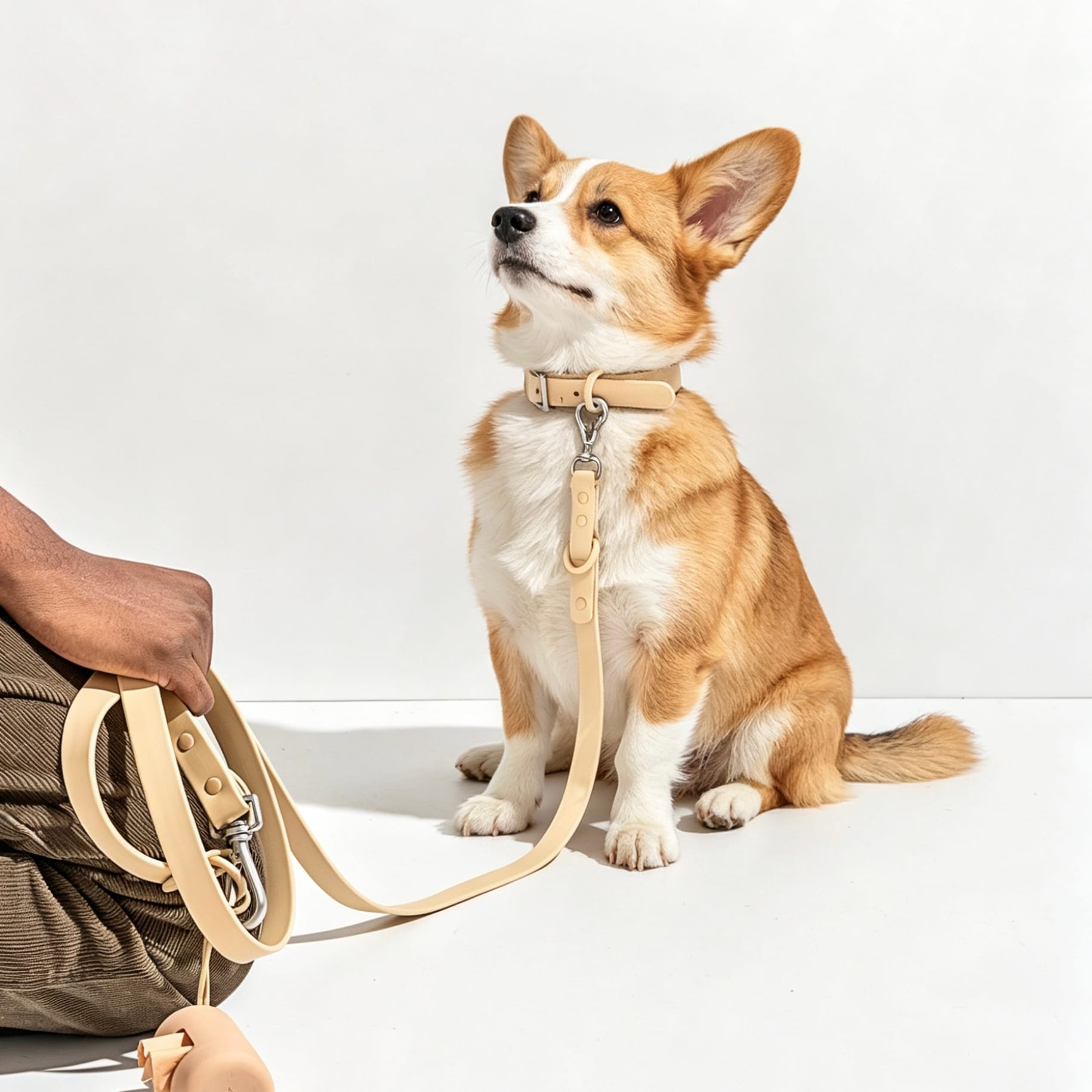
The MoonianPet Waterproof Dog Collar is available in five sizes including XS and S, sized for small breeds. The PVC-coated webbing has a smooth surface that sits comfortably against fine coats and sensitive skin, and the coating keeps the collar waterproof and odour-resistant — practical for dogs that get wet regularly or that wear their collar all day.
Available in 11 colours. Use the dog collar size guide to measure before ordering — for small dogs particularly, measuring rather than estimating by breed is the more reliable approach. The Waterproof Collar & Leash Set is available in matching colours for a coordinated small dog walking setup.
Frequently Asked Questions
What size collar does a Chihuahua need?
Most adult Chihuahuas have a neck circumference between 20 and 28cm, which falls in the XS to S range for most collar size charts. Measure the actual neck rather than using breed as a proxy — individual Chihuahuas vary considerably, and the correct collar size depends on the specific dog’s measurements, not the breed average. Add 2 to 3cm to the measured circumference to find the right adjustment range. See the full collar size guide for the complete chart.
Is it safe to use a collar on a small dog that pulls?
For small dogs that pull consistently, a collar attached to a leash puts repeated tension on the trachea and neck structures. Small breeds have proportionally narrower tracheas and a higher incidence of tracheal collapse than large breeds, which makes sustained collar pressure a greater risk. For a pulling small dog, a harness that distributes force across the chest and shoulders is the safer walking tool. The collar remains appropriate for ID tags and for dogs that already walk on a loose leash.
Can I leave a collar on a small dog overnight?
Many owners leave a collar on overnight for ID purposes, which is generally fine provided the collar is correctly fitted and does not have loose tags or loops that could catch on bedding or crate bars. A breakaway collar is the safer option for unsupervised or overnight wear, since it will release if it becomes snagged. For small dogs that sleep in a crate, removing the collar overnight eliminates the entanglement risk entirely while the dog is in a contained environment where identification is not needed.
What collar width is best for a small dog?
As a general rule: 10mm for dogs under 5kg, 15mm for dogs between 5 and 10kg, and 20mm for dogs over 10kg. These are guidelines rather than absolutes — the dog’s individual neck shape and coat type also influence what sits comfortably. A collar that is too wide will curl or ride up; one that is proportional will lie flat. If in doubt, go narrower rather than wider for small breeds.
My small dog keeps slipping out of their collar — what should I do?
Collar escape on small dogs is usually caused by one of two things: the collar is too loose, or the dog’s skull is narrower than their neck, allowing the collar to slide forward over the head. For a loose collar, adjust to the correct two-finger fit. For a dog with a narrow skull — common in small sighthound types and some terriers — a limited slip or martingale collar closes down under backward pull and cannot pass over the skull. Our guide on limited slip collars covers this in detail.
For measuring and sizing any collar, see the full dog collar size guide. For small dogs that pull, the neoprene dog harness guide covers soft, lightweight harness options suited to smaller breeds.
Wenyue
Wenyue is the founder of MoonianPet and writes about dog collars, harnesses, waterproof pet gear, and everyday dog care. Growing up with dogs inspired her lifelong interest in pet care and practical dog gear. Through MoonianPet, she researches dog collars, harnesses, waterproof materials, and everyday solutions that help active dogs stay comfortable during daily adventures.