
If you have ever visited a vet clinic, a shelter, or a dog training class, you have probably seen a slip lead — a simple loop of rope or cord that goes over the dog’s head and tightens when the dog pulls. They are everywhere in professional dog handling, which leads many owners to wonder whether they should be using one too.
The honest answer is: it depends on what you are doing. A slip lead is a genuinely useful tool in the right hands for the right situations. It is also frequently misused by owners who assume that because professionals use it, it must be the best everyday option. It is not — and understanding why will help you choose the right leash for your dog’s actual needs.
This guide covers what a slip lead is, how it works, when it makes sense to use one, when it does not, and what the alternatives are for everyday walking and training.
What Is a Slip Lead?
A slip lead is a single piece of rope or cord that functions as both collar and leash in one. It forms an adjustable loop that sits around the dog’s neck, with a small ring or stop that prevents the loop from loosening fully once the dog is wearing it. When the dog pulls forward, the loop tightens. When the dog returns to a loose leash position, the loop loosens.
There is no separate clip, no buckle, and no collar required. The dog’s head goes through the loop, the stop is positioned behind the ears (ideally high on the neck), and the leash hangs down from the ring on one side.
Slip leads are standard equipment in veterinary clinics and shelters because they allow handlers to quickly and securely leash any dog without needing to know the dog’s collar size or whether the dog even has a collar. They are also used in show dogs and in some training programs.
What they are not is an all-purpose everyday leash — and the tightening mechanism that makes them useful in professional settings is exactly what makes them problematic for general use.
How a Slip Lead Works
The slip lead’s mechanism is simple: pressure and release. When the dog pulls, the loop tightens around the neck. When the dog stops pulling, the loop loosens. In theory, the dog learns that pulling causes discomfort and that staying close to the handler relieves it.
Correct positioning matters enormously
A slip lead should sit high on the neck, just behind the ears, where the bones of the skull provide some protection. When it slides down to the middle of the neck — which it tends to do on excited or inattentive dogs — the pressure falls on the trachea and the sensitive structures in the lower neck. Many of the problems associated with slip leads come from incorrect positioning rather than the tool itself.
The stop prevents over-tightening — in theory
Most slip leads have a small rubber or metal stop that limits how far the loop can tighten. In practice, a determined dog pulling hard against the leash can compress the stop significantly. A stop does not make a slip lead safe for sustained pulling — it just limits the maximum constriction under controlled conditions.
The release must be immediate
The pressure-and-release mechanism only works as intended if the handler releases tension the instant the dog stops pulling. A taut leash held at constant tension — which is what most owners instinctively do when a dog pulls — turns the slip lead into a sustained choke rather than a momentary correction. This is a training skill, not an automatic feature of the tool.
When a Slip Lead Makes Sense
There are genuine situations where a slip lead is the right tool:
Veterinary and shelter handling
When a handler needs to move an unfamiliar dog quickly and securely, a slip lead is the fastest option. There is no buckle to fumble with, no collar size to guess. Vets and shelter staff use them for this practical reason — short, controlled transfers where precise fit is not the priority.
Conformation dog shows
In the show ring, a fine slip lead presents cleanly around the neck without the visual interruption of a buckle or clip. Show dogs are specifically trained to walk on a slip lead correctly, with the loop held high and loose at all times.
Emergency backup
A slip lead can serve as a quick-grab option if a dog slips their collar or harness and needs to be safely secured. Keeping one in a car or kit bag for emergencies is practical — using one for every walk is a different decision.
Advanced training with experienced handlers
Some professional trainers use slip leads as part of a broader training program — but only with the pressure-and-release technique executed correctly and consistently. This is a handler skill, not a dog management shortcut.
When a Slip Lead Is the Wrong Choice
For most everyday dog owners, a slip lead is not the right daily walking tool. Here is why:
Dogs that pull consistently
A dog that pulls hard on the leash and does not stop is exposed to sustained tracheal pressure on a slip lead. This is not a minor concern — repeated compression of the trachea is linked to tracheal damage, particularly in small breeds. A no-pull harness addresses the pulling problem without any neck pressure at all, which is a meaningfully safer solution for a chronic puller.
Brachycephalic breeds
French Bulldogs, Pugs, Bulldogs, Shih Tzus — any breed with a shortened airway — should not be walked on a slip lead. Their restricted airways mean that any neck compression is more impactful than on a standard-muzzle dog. A harness is the only appropriate leash attachment for these breeds.
Small breeds prone to tracheal collapse
Chihuahuas, Toy Poodles, Yorkshire Terriers, and Pomeranians have small, delicate tracheas that are disproportionately affected by neck pressure. Tracheal collapse is a progressive condition — each instance of pressure contributes to weakening the tracheal rings over time. A slip lead is not appropriate for these breeds.
Dogs with neck or spinal issues
Any dog with a history of neck pain, intervertebral disc disease (common in Dachshunds and other chondrodystrophic breeds), or cervical spine problems should not wear any collar-style restraint for walking. A harness is the appropriate choice.
Escape-prone dogs
Dogs that are prone to backing out of equipment — Greyhounds, Whippets, and other sighthounds with narrow heads, or dogs that panic and reverse suddenly — can slip a slip lead more easily than a well-fitted harness. A no-pull harness with a secure safety buckle provides more reliable escape prevention.
Slip Lead vs Standard Leash: Key Differences
| Slip Lead | Standard Leash + Collar | Standard Leash + No-Pull Harness | |
|---|---|---|---|
| Neck pressure | Tightens when pulling | Constant pressure point | None — chest and shoulders |
| Setup speed | Fastest — over head in seconds | Fast — clip to existing collar | Slightly slower — 3 buckles |
| Escape risk | Medium — can be backed out of | Medium — if collar slips | Low — dual-point fit |
| Suitable for pullers | No | No | Yes — front clip redirects pull |
| Best for | Vets, shelters, shows | Calm, trained dogs | Most everyday dogs |
What to Use Instead for Everyday Walks
For most dogs and most owners, a standard fixed-length leash paired with either a well-fitted collar or a no-pull harness covers all everyday walking situations.
If your dog walks calmly on a loose leash, a collar and leash is straightforward and perfectly safe. If your dog pulls — even occasionally — a no-pull harness addresses the problem without any neck pressure. The front clip redirects pulling momentum sideways, which disrupts the pulling pattern without correction or discomfort.
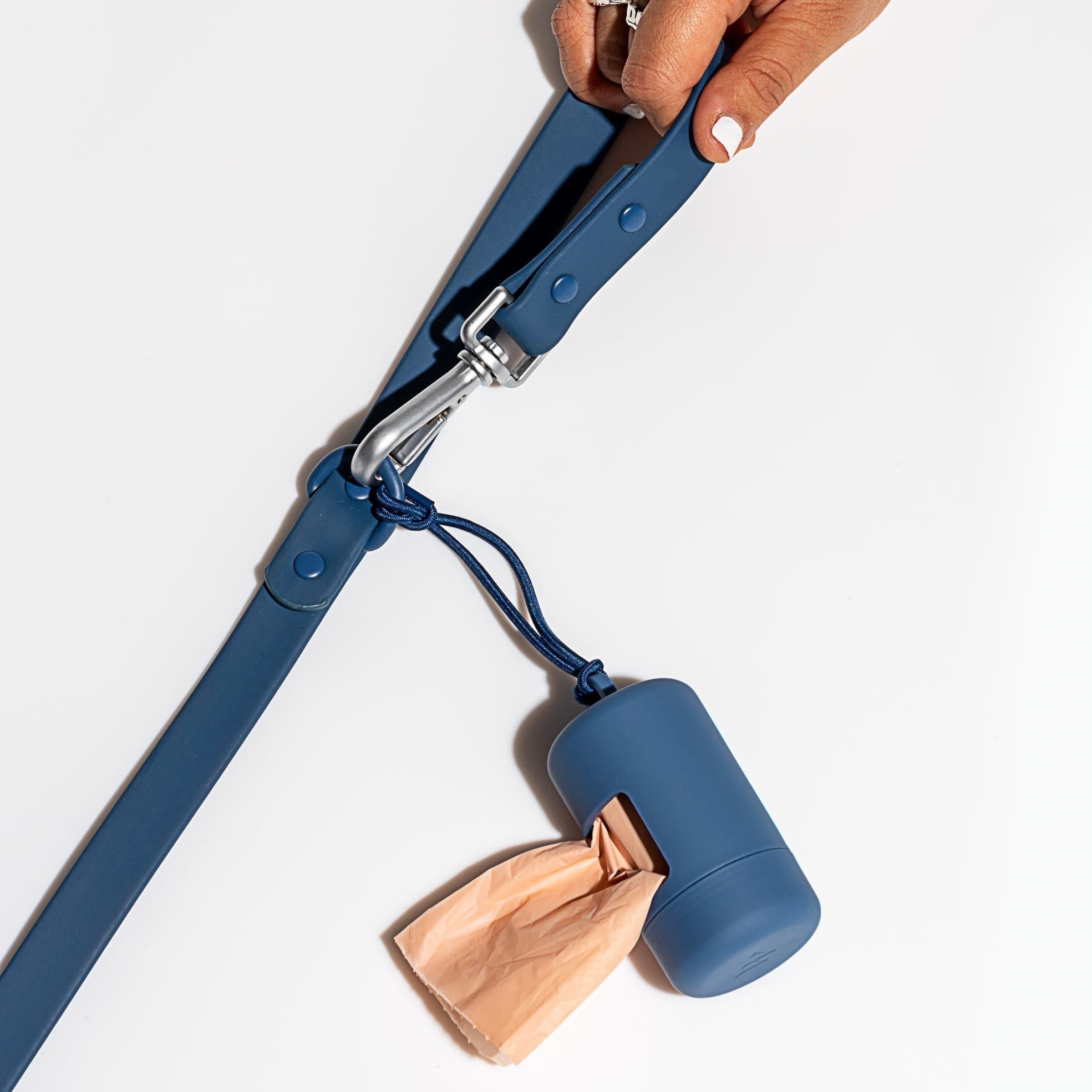
For the leash itself, the material matters more than most owners realise. A waterproof PVC-coated leash wipes clean after muddy walks, does not absorb odour, and lasts significantly longer than fabric alternatives — which makes it a better long-term choice for everyday use. Our MoonianPet Waterproof Dog Leash comes in two lengths — 1.2m for close control and 1.8m for everyday walking — and is available in 11 colors.
Not sure which leash length or setup is right for your dog? Our guide on collar vs harness covers which leash attachment point makes sense depending on your dog’s behaviour and build.
A Better Everyday Setup
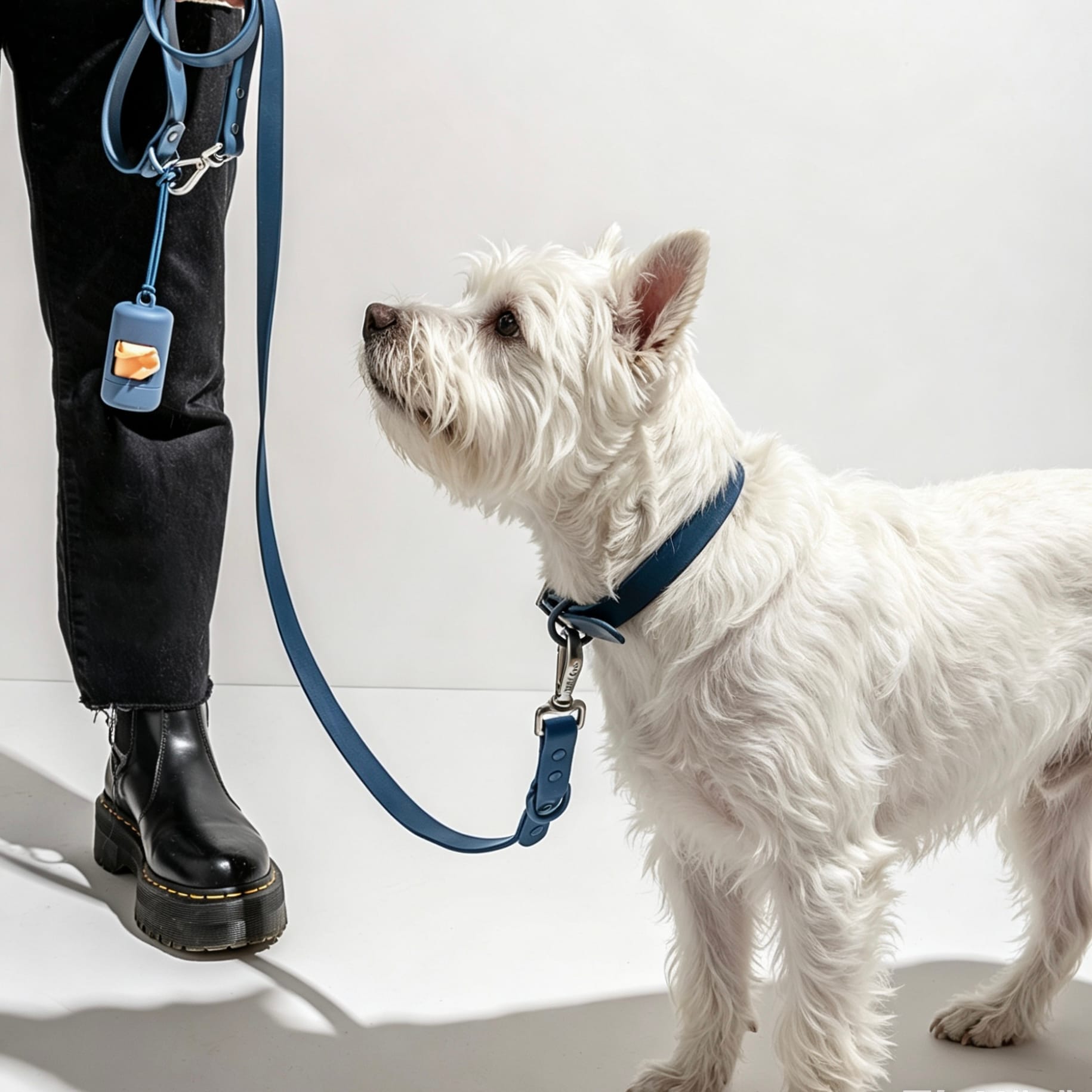
The MoonianPet Waterproof Dog Leash pairs with either our Waterproof Dog Collar or our No-Pull Dog Harness — both available in matching colors. The zinc-alloy hook clips to either a collar D-ring or a harness D-ring in the same motion, so switching between setups requires no new gear.
Available in 11 colors, two lengths, and sets with both collar and leash or harness and leash. If your dog’s main issue is pulling, the Harness & Leash Set gets you everything you need in one order. Not sure which size to order? Our dog harness size guide and dog collar size guide both have full measurement charts and take under two minutes to use.
Frequently Asked Questions
Is a slip lead cruel?
Not inherently — it depends entirely on how it is used. A slip lead used correctly, with immediate release when the dog responds, and positioned high behind the ears, is a standard professional handling tool. A slip lead used on a dog that pulls constantly, without ever releasing tension, applies sustained neck pressure that can cause real harm over time. The tool itself is neutral; the way it is used determines whether it is appropriate.
Can a dog escape a slip lead?
Yes. Dogs with narrow heads — Greyhounds, Whippets, Salukis — can back out of a slip lead by lowering their head. Dogs that panic and reverse suddenly may also slip through. The loop should be positioned high on the neck and checked to ensure it cannot slide forward over the skull. For dogs that tend to bolt or back up, a well-fitted harness is more escape-resistant than a slip lead.
Should I use a slip lead to stop my dog from pulling?
A slip lead is not a reliable solution to pulling for most owners. The mechanism only works if you release tension the instant your dog stops pulling — a skill that takes practice and consistency to execute correctly. Most dogs continue to pull on a slip lead because the owner maintains tension rather than releasing. A front-clip no-pull harness provides mechanical pull-redirection that works without requiring handler precision, which makes it a more practical choice for everyday walking.
What breeds should never use a slip lead?
Brachycephalic breeds (French Bulldogs, Pugs, Bulldogs), small breeds prone to tracheal collapse (Chihuahuas, Yorkshire Terriers, Toy Poodles), dogs with cervical spine or neck issues, and sighthounds that can easily back out of equipment (Greyhounds, Whippets) should not be walked on a slip lead. For all of these, a properly fitted harness is the appropriate alternative.
What is the difference between a slip lead and a martingale collar?
Both tighten when a dog pulls, but a martingale has a built-in limit — it can only tighten to a set maximum, which prevents full closure around the neck. A slip lead can theoretically tighten fully if the stop fails or is not positioned correctly. Martingale collars are often considered a safer everyday alternative to slip leads for dogs that are prone to backing out of standard flat collars, because the tightening range is controlled.
If your dog pulls on the leash, a no-pull harness guide covers what to look for and how the front clip works in practice. For a full comparison of leash attachment options, see our collar vs harness guide.
Wenyue
Wenyue is the founder of MoonianPet and writes about dog collars, harnesses, waterproof pet gear, and everyday dog care. Growing up with dogs inspired her lifelong interest in pet care and practical dog gear. Through MoonianPet, she researches dog collars, harnesses, waterproof materials, and everyday solutions that help active dogs stay comfortable during daily adventures.