
No leash is truly chew proof. Given enough time, motivation, and unsupervised access, a determined dog can work through almost any material. What varies between leashes is how long it takes, how much effort it requires, and whether the leash remains functional after a chewing incident rather than failing completely.
The practical question for owners of dogs that chew their leash is not which material is technically indestructible — none are — but which material makes chewing difficult enough that it stops being the dog’s default behaviour, and which material holds up long enough that the leash is still intact at the end of a walk.
This guide covers the materials that resist chewing most effectively, what each offers and where each falls short, the situations that produce leash chewing and how to address them, and what to look for when choosing a leash for a dog that chews.
Why Dogs Chew Their Leash
Understanding the trigger matters because the solution differs depending on what is driving the behaviour. Leash chewing in dogs falls into a handful of common patterns:
Frustration and arousal
The most common cause. The dog is overstimulated — by another dog, a cyclist, a squirrel — and cannot reach the trigger. The leash becomes the available outlet for the frustration. This is particularly common in young dogs and in reactive dogs at the start of a walk when arousal is highest. The chewing is not about the leash; it is about the emotional state the leash happens to be attached to.
Boredom during a stationary wait
A dog tied up outside a shop, waiting while the owner stops to talk, or paused at a long crossing — with nothing to do and the leash within reach, chewing is an easy self-entertainment option. This is less about emotional arousal and more about the absence of anything more interesting to do.
Attention-seeking
If picking up the leash previously caused the owner to react — pulling it back, scolding, engaging with the dog — the dog has learned that leash chewing produces a response. Negative attention is still attention, and for a dog that wants engagement, any reliable response is worth repeating.
Teething in puppies
Puppies between three and seven months chew everything — the leash is simply one of many available targets. Teething-driven leash chewing tends to reduce significantly once the adult teeth are through, provided the behaviour has not been reinforced in the meantime.
Materials That Resist Chewing Most Effectively
PVC-coated and rubberised webbing
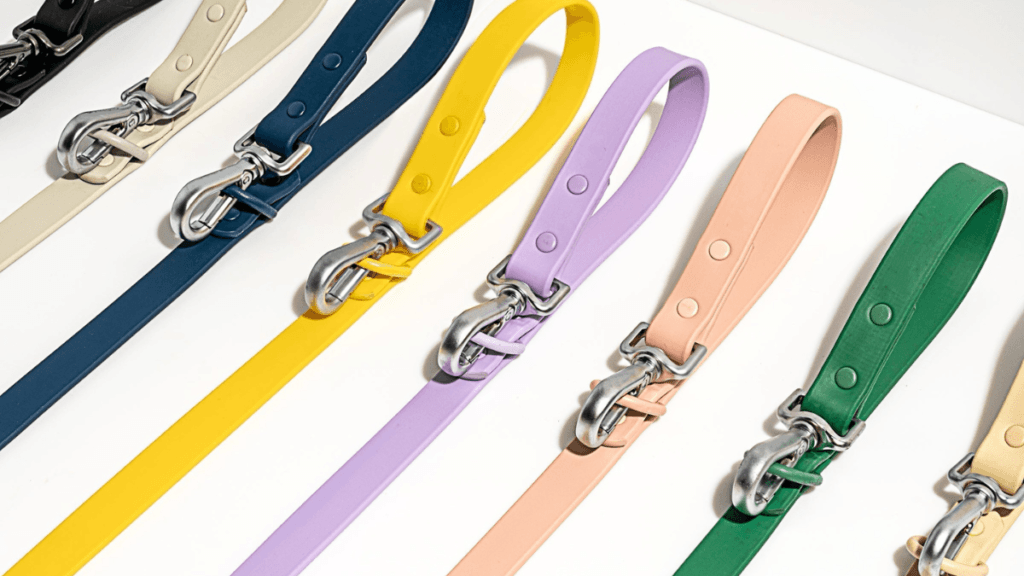
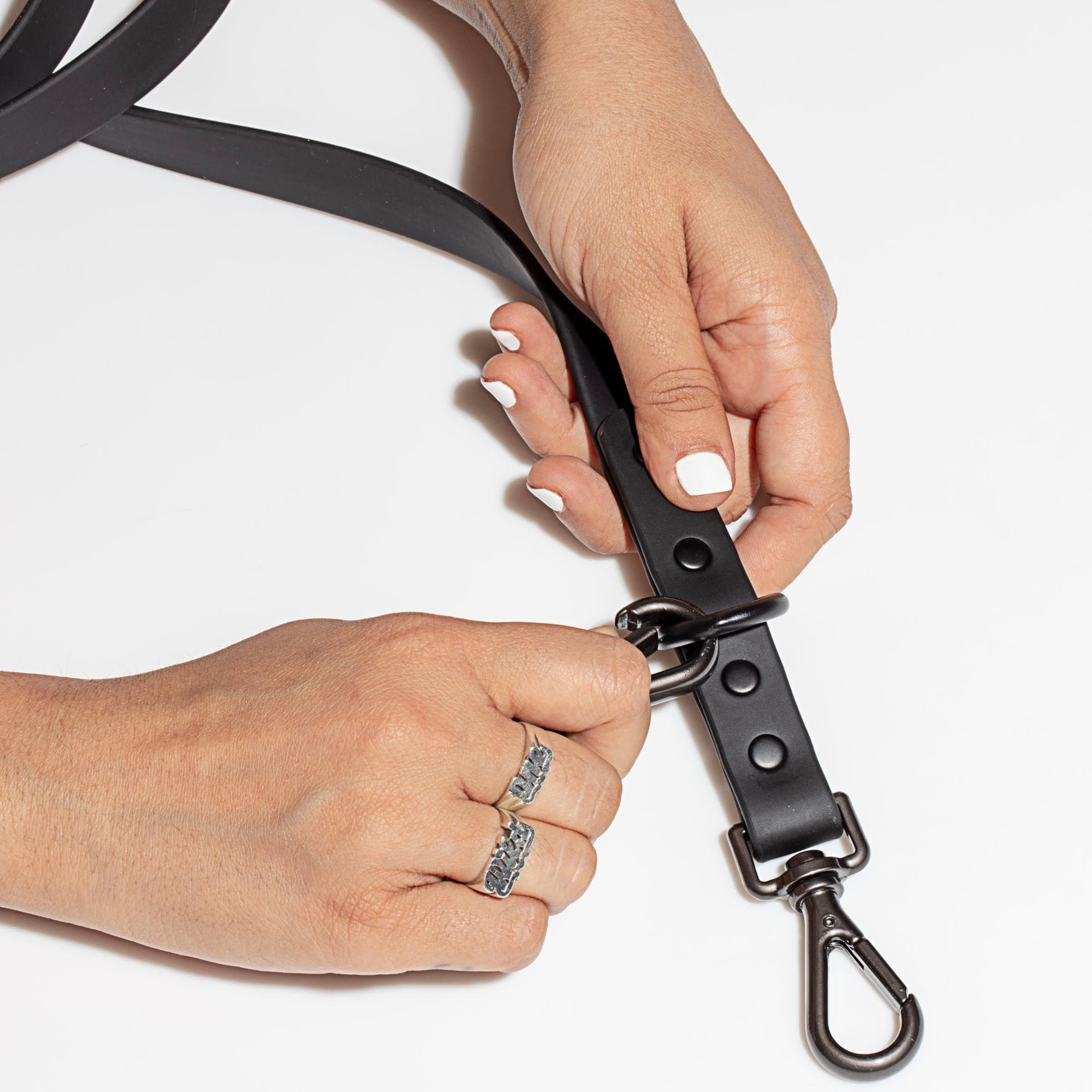
A PVC or rubber coating over the webbing core changes the chewing experience significantly. The slick, hard surface does not give way easily under tooth pressure the way soft fabric does, and the taste of the coating is generally unappealing to dogs. PVC-coated leashes — sometimes called BioThane-style or coated webbing — maintain their shape after a chewing attempt rather than fraying, and a surface bite leaves a mark rather than a structural failure. For dogs that chew opportunistically rather than with serious intent, a PVC-coated leash often stops the behaviour simply because the material is unpleasant to chew. It is also fully waterproof and easy to wipe clean — practical advantages beyond the chew resistance.
Chain leashes
A metal chain leash is the closest thing to a genuinely chew-resistant option. Steel chain cannot be chewed through — the dog’s teeth cannot get purchase on the metal links, and attempting to chew a chain is uncomfortable enough that most dogs abandon the effort quickly. The downsides are weight, noise, and comfort in the hand. Chain leashes are heavy relative to their length, they clank against hard surfaces, and the links are uncomfortable to hold for extended walks without a padded handle. Most chain leashes have a fabric or rubber handle section for exactly this reason. They are practical for dogs that chew through fabric leashes quickly and where the owner needs an immediate solution, but most owners find them awkward for daily use.
Rope leashes (thick diameter)
A thick braided rope leash — 12mm diameter or above — is harder to chew through than thin nylon webbing simply because there is more material to get through. The twisted or braided construction also means the dog needs to chew through multiple strands rather than a single flat piece of fabric. Rope leashes are not chew proof, but they slow the process significantly compared to thin nylon. They are also comfortable to hold and look good. The limitation is that once a dog has made progress on a rope leash, the structural integrity is compromised even if the leash appears intact — replace any rope leash that shows chew damage.
Standard nylon webbing
The weakest option against chewing. Nylon webbing frays quickly once a dog’s teeth get into the weave, and a motivated chewer can work through a standard nylon leash in a single walk. If your dog has managed to damage or sever a nylon leash through chewing, upgrading the material is a more immediate fix than attempting to train the behaviour in the short term.
What to Look for in a Leash for a Dog That Chews
Coating thickness and hardness
Not all PVC or rubber coatings are equal. A thin coating over a narrow webbing core offers little more resistance than the webbing itself once the surface layer is breached. Look for a leash where the coating is the dominant material — thick enough that it takes sustained effort to bite through rather than a single chomp. The leash should feel firm and slightly stiff rather than soft and flexible when new.
Hook and hardware quality
A chew-resistant leash body is undermined by a weak clip. Dogs that chew leashes often start at the area nearest the collar — which is close to the clip. A zinc alloy or stainless steel swivel clip resists bending and corrosion; a thin plated clip can fail structurally even without direct chewing if the dog applies enough torque. The clip is often the first thing to fail on a budget leash even when the body holds up.
Length appropriate to the walking style
A shorter leash gives the dog less slack to reach their mouth to the leash body. A standard 1.2m to 1.5m leash kept taut gives the dog fewer opportunities to turn and chew than a long loose leash does. This is not a material consideration but a practical one — leash management reduces access as much as material choice reduces motivation.
A comfortable handle that does not require a tight grip
Owners who walk dogs that chew often tense their grip, which makes long walks tiring. A padded or moulded handle reduces the fatigue from sustained grip tension. This is a comfort consideration for the owner rather than a chew-resistance feature, but it matters for how sustainable the walking routine is.
The MoonianPet Waterproof Dog Leash
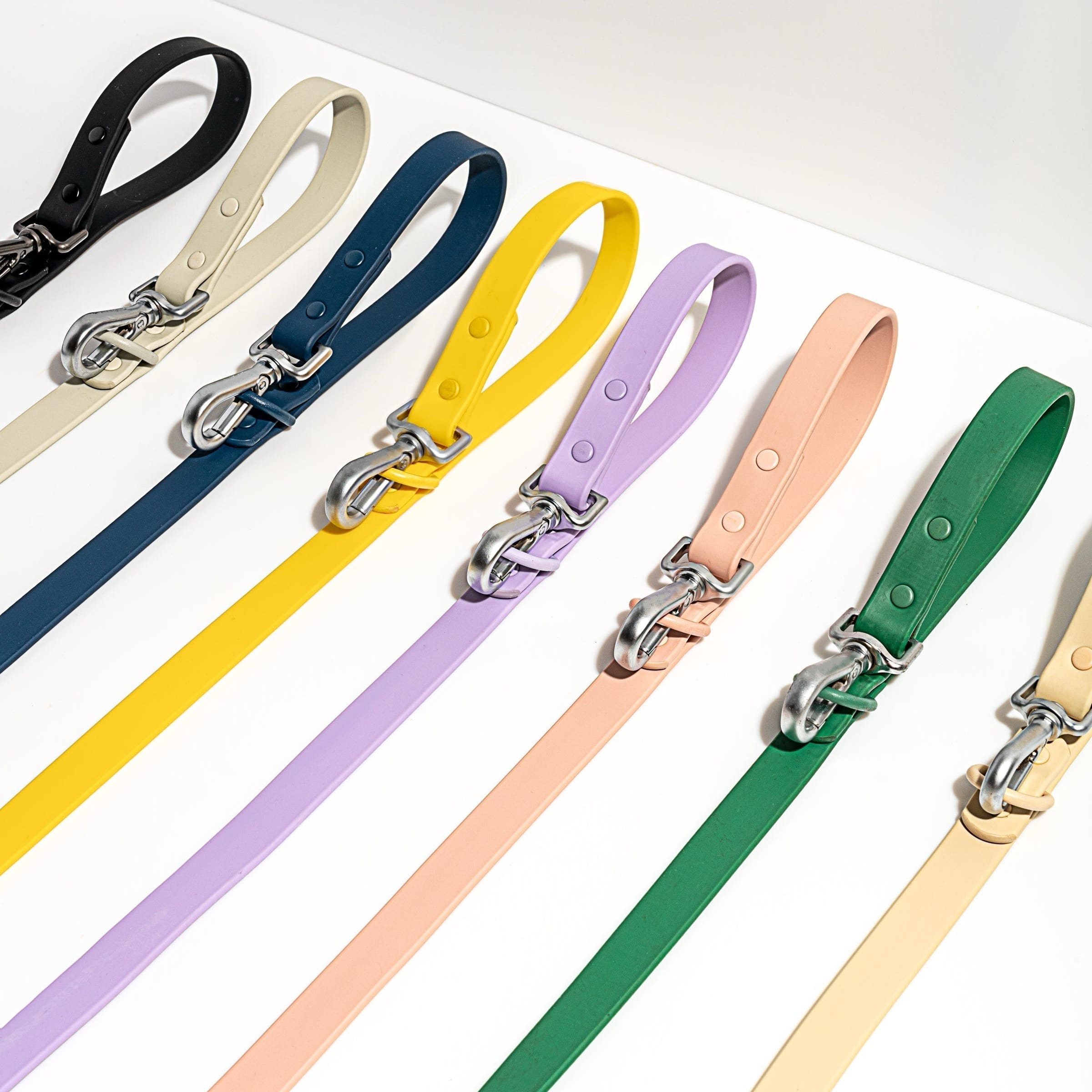
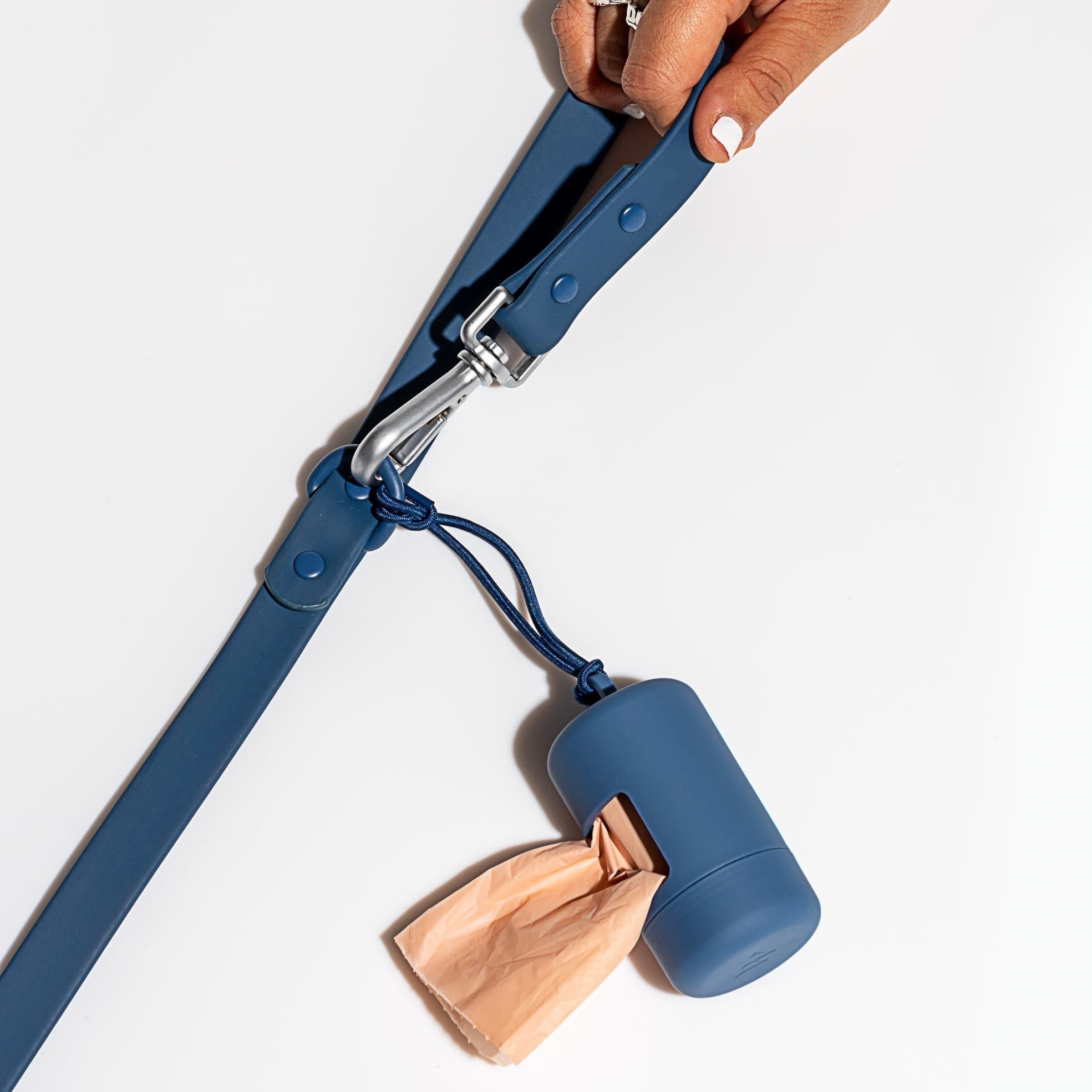
The MoonianPet Waterproof Dog Leash is made from PVC-coated webbing — the same coated construction used in BioThane-style leashes. The coating is thick enough that surface chewing leaves marks rather than structural damage, and the smooth finish is significantly less appealing to chew than soft fabric. It is fully waterproof, odour-proof, and wipes clean rather than absorbing dirt or saliva.
The hook is a 360-degree rotating zinc alloy clip — swivel design so the leash does not twist during walking, and the metal resists the corrosion that can weaken clips over time with repeated exposure to saliva and wet conditions. Available in 11 colours and two lengths.
For a matched set, the Waterproof Collar & Leash Set pairs the leash with the same PVC-coated collar in all 11 colours. For dogs that also pull, pairing the leash with the No-Pull Harness & Leash Set addresses both pulling and the chew-resistance requirement in one purchase.
Frequently Asked Questions
Is any leash truly chew proof?
No. Given enough time, motivation, and access, a determined dog can damage any leash material. What chew-resistant leashes offer is significantly more resistance than standard nylon — enough that casual or opportunistic chewing does not result in immediate failure, and enough that the unpleasant texture discourages many dogs from attempting it in the first place. A metal chain leash comes closest to genuinely chew proof, but even chain has failure points at the handle connection and clip.
Should I use a bitter spray on the leash?
Bitter sprays can help as a short-term deterrent, particularly for dogs whose chewing is opportunistic rather than driven by high arousal. Apply to the leash body before a walk and reapply as needed. The limitation is that the spray wears off, needs consistent reapplication, and does not address the underlying cause. Some dogs habituate to the taste over time and stop being deterred. Bitter spray works best as part of a broader management approach rather than as a standalone solution.
My dog only chews the leash near the clip — why?
The section nearest the collar is the easiest for the dog to reach — it requires only a slight turn of the head. This is where most leash chewing starts. It is also the section under most tension during walking, which means chew damage there is a structural risk even if the rest of the leash looks intact. Inspect the clip-end section of any leash regularly, and replace the leash if damage is found in this area regardless of how minor it looks.
Will a harness reduce leash chewing?
A front-clip harness changes where the leash connects — to the chest rather than near the neck — which makes the leash body harder for the dog to reach during a walk. This is a practical reduction in access rather than a solution to the behaviour, but for dogs that chew primarily because they can reach the leash easily, a front-clip attachment point makes a meaningful difference. It also redirects pulling, which is often part of the same arousal picture that drives leash chewing.
How do I stop my dog from chewing the leash during walks?
The most effective approach combines material upgrade, management, and behaviour work. Upgrade to a PVC-coated or coated webbing leash to reduce the payoff of chewing. Keep the leash short and relatively taut so the dog has less slack to reach. When chewing starts, stop walking immediately — no forward movement while the leash is in the mouth. Resume the moment the dog drops it. Consistent repetition teaches the dog that chewing ends the walk, while loose lead walking continues it. For frustration-driven chewing, reducing overall arousal before walks — a calm departure routine, avoiding high-trigger routes initially — addresses the root cause faster than any equipment change.
For more on leash types and what to look for in each, see our guide on hands free dog leashes. For dogs that pull alongside chewing, the no-pull harness guide covers front-clip options in detail.

Wenyue
Wenyue is the founder of MoonianPet and writes about dog collars, harnesses, waterproof pet gear, and everyday dog care. Growing up with dogs inspired her lifelong interest in pet care and practical dog gear. Through MoonianPet, she researches dog collars, harnesses, waterproof materials, and everyday solutions that help active dogs stay comfortable during daily adventures.