
A dog pawing at their collar in the first day or two after a fitting is normal and rarely worth worrying about. But when the scratching doesn’t stop — when it’s been a week, two weeks, or longer, and your dog is still working at their collar every chance they get — it’s no longer just adjustment behaviour. At that point, it’s worth treating as a signal rather than background noise.
Persistent collar scratching usually traces back to one of a small number of specific causes: a fit that’s slightly off, something physically caught in the mechanism, a material the skin doesn’t tolerate well, or an unrelated skin issue that happens to sit under the collar. Each has a different fix, and figuring out which one applies usually only takes a few minutes of direct inspection.
This guide walks through the most common causes of persistent collar scratching, how to check for each one, and when it’s worth a vet visit rather than a DIY fix.

Normal Adjustment vs a Real Problem
What normal looks like
Occasional scratching or head-shaking in the first few hours to a couple of days after a new collar is introduced is a typical response to an unfamiliar sensation, not a sign of a problem. Most dogs habituate and stop noticing the collar within this window.
What warrants a closer look
Scratching that’s frequent, intense, or ongoing well past the first few days — especially if it’s increasing rather than settling down — points to a specific, fixable cause. The same applies if scratching starts suddenly on a collar the dog has worn without issue for months, which usually signals a change in fit, a developing skin issue, or debris that’s recently become caught.
Common Causes and How to Check for Them
Incorrect fit
Too tight and the collar presses continuously on the skin and throat; too loose and it shifts and rubs with every head movement, which can irritate just as much as a tight fit. Check using the two-finger rule — two fingers should slide comfortably between the collar and the neck. Refit immediately if it fails this test in either direction, and recheck periodically for a growing puppy or a dog whose weight has changed.
Hair caught in the buckle or adjuster
Long or thick-coated dogs can get individual hairs caught and pulled in a buckle mechanism or slide adjuster, causing a sharp, localised discomfort that triggers repeated scratching at that specific spot. Part the coat around the buckle and adjuster and check closely — this is a quick fix once identified, usually just freeing the caught hair or repositioning the adjuster slightly.
Material allergy or sensitivity
Some dogs react to specific materials, dyes, or chemical treatments used in certain collars, showing redness, small bumps, or flaking specifically in the collar contact line. This is less common than a simple fit issue but does happen, particularly with lower-quality or heavily dyed nylon products. Switching to a smooth, inert coated material and monitoring whether the irritation clears is a reasonable first step.
Trapped moisture
An absorbent fabric collar that stays damp after rain, swimming, or general slobber creates a persistently moist environment against the skin, which can lead to irritation and even mild fungal or bacterial skin issues over time — often called “collar dermatitis” informally. A collar that dries quickly, or removing a wet collar until it’s fully dry, prevents this from developing.
An unrelated skin issue
Sometimes the collar isn’t the cause at all — fleas, a hot spot, allergies, or a skin infection that happens to be located near the neck can look like a collar problem when it’s actually a separate condition. If the fit checks out, no hair is caught, and the material has been fine for months, a vet check is worth ruling this out before assuming it’s collar-related.
A Material That Reduces the Most Common Causes
A number of the causes above trace back to material choice. Absorbent fabric holds onto moisture and can trigger irritation with prolonged damp contact; rough or poorly finished nylon edges can chafe over time; and buckle-and-slide mechanisms with lots of small moving parts are more prone to snagging hair.
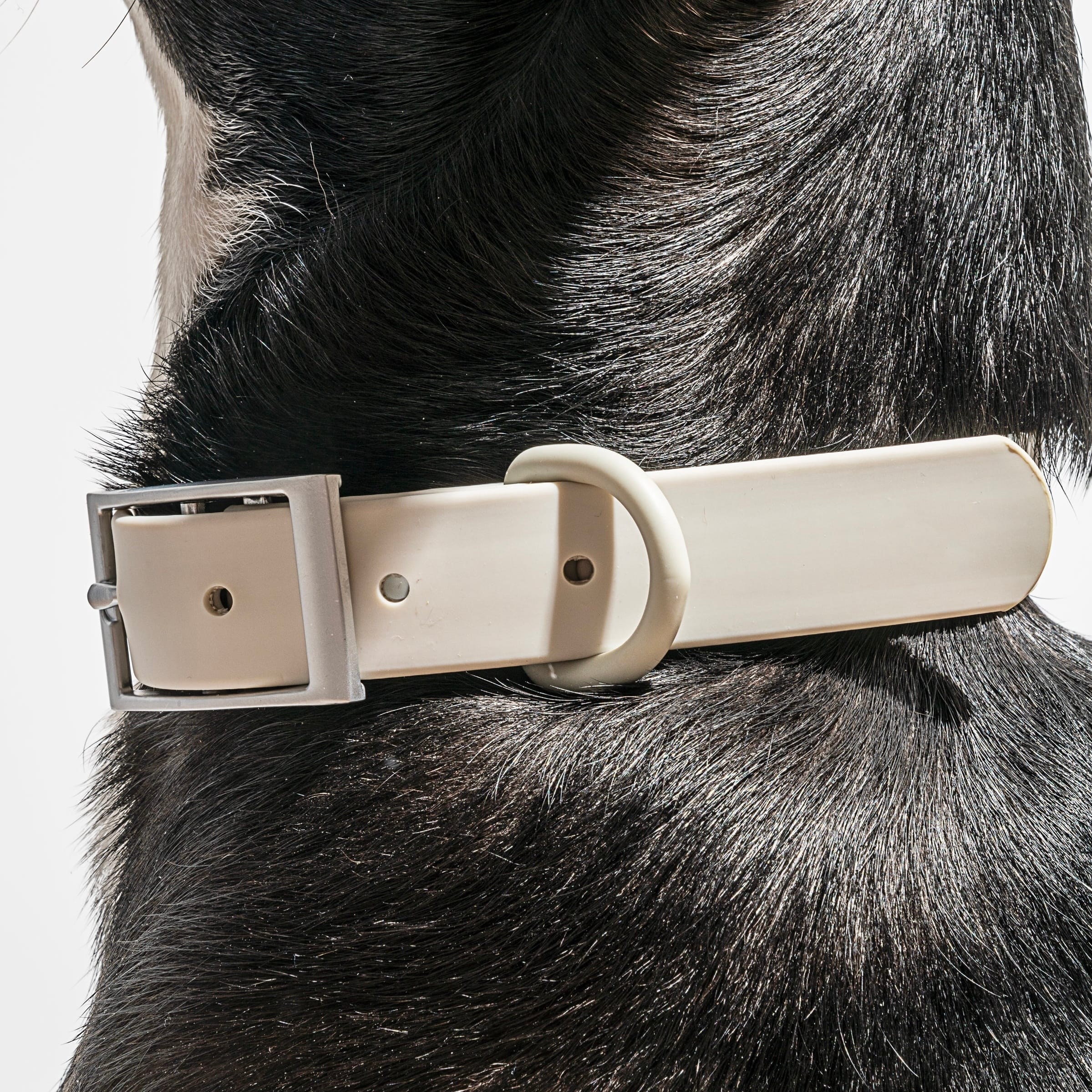
The MoonianPet Waterproof Dog Collar uses a smooth, PVC-coated webbing that doesn’t absorb water or hold onto moisture against the skin, and dries quickly if it does get wet. The simple buckle and slide-adjuster design has fewer points where hair typically gets caught compared to more complex hardware.
If your dog is currently dealing with irritation, confirm the fit with our dog collar size guide before switching materials, since an incorrect size will cause the same symptoms regardless of what the collar is made from.

Frequently Asked Questions
Why does my dog suddenly scratch at a collar they’ve worn fine for months?
A sudden change usually means something has shifted — weight gain or loss affecting the fit, hair recently caught in the hardware, a new skin irritation unrelated to the collar, or wear and degradation of the collar material itself. Check the fit first with the two-finger rule, then inspect the buckle area and the skin underneath directly.
Can a collar cause a rash or hair loss?
Yes — a collar that’s too tight creates continuous pressure that can cause hair loss and skin irritation at the contact line, and a material allergy can cause redness or a rash even at a correct fit. Both are signs to address directly: refit or replace the collar, and see a vet if the skin doesn’t improve within a few days of the change.
Is it normal for a puppy to scratch at their first collar?
Yes, this is one of the most common early reactions and usually settles within a few days as the puppy habituates to the sensation. If scratching persists well beyond a week or intensifies rather than easing off, check the fit and the skin underneath rather than assuming it will resolve on its own.
Should I remove my dog’s collar if they keep scratching at it?
If there’s visible irritation, redness, or a fit problem, it’s reasonable to remove the collar temporarily while you address the cause. But don’t leave a dog without ID permanently — fix the underlying issue (refit, clean the buckle, switch material) and get the collar back on as soon as it’s comfortable, since an unidentified dog is at real risk if they get loose in the meantime.
How do I know if it’s the collar or an unrelated skin problem?
If the fit checks out, no hair is caught, and the collar material hasn’t changed or gotten wet recently, but the scratching and irritation continue, it’s worth ruling out an unrelated cause — fleas, allergies, or a skin infection that happens to sit near the collar line. A quick vet check will confirm whether the collar itself is actually the source.
For the fitting basics that prevent most of these issues, see our how tight should a dog collar be guide. If you’re wondering whether collar discomfort is normal at all, our do dogs like wearing collars guide covers what’s typical adjustment versus a real problem.
Wenyue
Wenyue is the founder of MoonianPet and writes about dog collars, harnesses, waterproof pet gear, and everyday dog care. Growing up with dogs inspired her lifelong interest in pet care and practical dog gear. Through MoonianPet, she researches dog collars, harnesses, waterproof materials, and everyday solutions that help active dogs stay comfortable during daily adventures.