
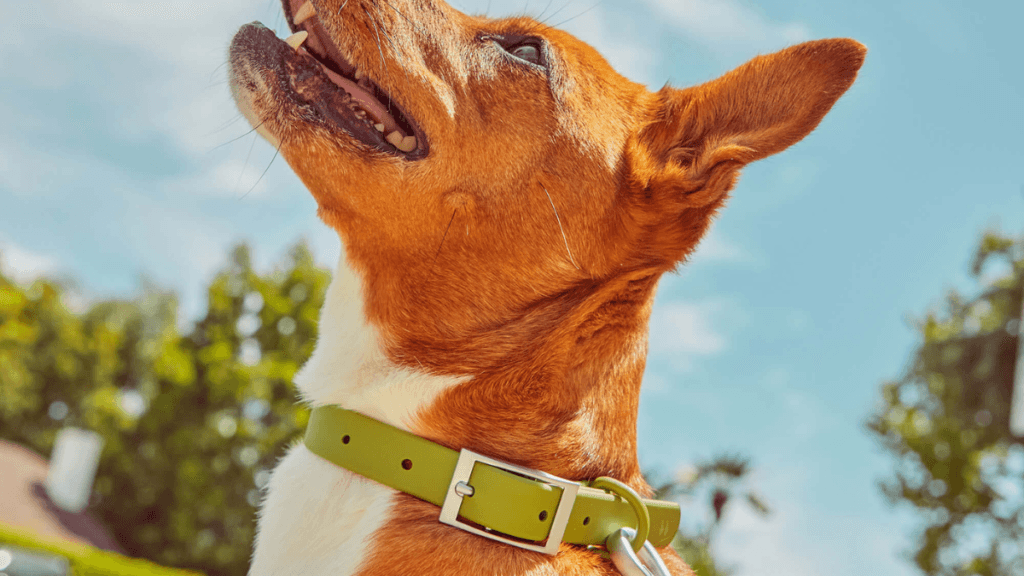
Most of us put a collar on our dog without thinking much about it. It holds the ID tag, it attaches to the leash — it’s just part of the equipment. But collars sit against your dog’s neck every day, often for hours at a time, and the small decisions around fit, material, and when to take it off have a real impact on your dog’s comfort and safety over time.
I didn’t think carefully about collar safety until I noticed a patch of thinned fur behind my dog’s ears — directly where the collar buckle had been sitting. It hadn’t caused any obvious discomfort, but it had been rubbing for long enough to leave a mark. A small adjustment fixed it, but it made me realise I’d been treating the collar as a set-and-forget item when it actually needed regular checking.
This guide covers the collar safety basics that most owners don’t think about until something goes wrong — correct fit, materials, when to take the collar off, and what to watch for during regular wear.

Getting the Fit Right — The Two-Finger Rule
Collar fit is the single most important safety factor, and the two-finger rule is the simplest way to check it. Slide two fingers flat — not vertical, flat — between the collar and your dog’s neck. Both fingers should fit with light resistance. If they slide through freely, the collar is too loose. If you can only fit one finger, it’s too tight.
Too loose and too tight carry different risks, and both are more common than they should be:
Too tight
A collar that’s too tight sits under constant pressure against the neck. Over weeks and months this causes skin irritation, fur loss at the contact line, and in serious cases can restrict breathing or cause neck injury — particularly in small breeds with delicate tracheas. Puppies are especially at risk because they grow quickly; a collar fitted correctly at eight weeks can become dangerously tight by twelve weeks without being re-checked. Any collar that leaves a visible indentation in the fur or skin when removed is too tight.
Too loose
A collar that’s too loose can slip over the dog’s head during a walk — which is a serious safety risk, particularly near roads or in any situation where the dog could bolt. Loose collars also catch on things more easily. A determined dog can also hook a paw into a loose collar during scratching, which can cause panic and injury if the paw becomes trapped. The two-finger rule should be checked weekly, not just when the collar is first fitted. For a detailed guide to measuring and sizing, see our dog collar size guide.
When to Take the Collar Off
Many owners leave their dog’s collar on around the clock. For some situations this is fine; for others it carries real risk that most people don’t think about until it’s too late.
During unsupervised play with other dogs
This is the collar safety risk that catches people most off guard. During rough play, one dog’s jaw or tooth can catch in another dog’s collar — and if the caught dog panics and pulls away, the collar can tighten rapidly around the neck. This is called collar entrapment, and it can happen within seconds. It’s particularly common with buckle collars that have loops or rings that another dog’s jaw can hook into. When dogs are playing off-leash together unsupervised, removing the collar is the safest option.
When crating or sleeping
Collar hardware — the buckle, the D-ring, the tag — can catch on crate bars, bedding loops, or even the collar itself if the dog scratches. An unsupervised dog with a caught collar can injure themselves trying to pull free. Removing the collar for crate time and sleep is standard practice for this reason. If you’re worried about identification, an ID tag on a harness or a microchip removes the need for the collar to stay on overnight.
After swimming or getting wet
Nylon and fabric collars that get wet and stay on the dog’s neck hold moisture against the skin — which causes irritation, odour, and eventually skin breakdown if it happens regularly. After any swimming or wet walk, a nylon collar should be removed and dried before going back on. A waterproof collar — PVC-coated or BioThane-style — doesn’t absorb moisture and can stay on through wet activities without the same risk. For a full look at waterproof collar options, see our best dog collar for swimming guide.

Collar Material and Skin Safety
The material a collar is made from affects how it behaves against the skin during daily wear — not just on walks, but through the full day if the collar stays on.
Nylon
The most common collar material. Nylon is durable and inexpensive but absorbs moisture — from swimming, rain, and even normal sweating — and holds it against the neck. Wet nylon against skin is more abrasive than dry nylon, and a collar that stays wet repeatedly causes irritation and odour over time. Nylon also frays at the edges with use, and frayed edges are more abrasive against the skin than new nylon. For dogs that are regularly active outdoors, a waterproof material performs significantly better for skin health. For a full material breakdown, see our guide to dog collar materials.
Leather
Leather is soft against the skin and generally well-tolerated by most dogs. The main issues are that leather requires maintenance to stay supple, becomes stiff and abrasive when dried out, and does not handle repeated wetting well — regular exposure to water causes cracking and degradation. For dogs that don’t swim and live in dry climates, leather is comfortable. For active or outdoor dogs, it’s a high-maintenance choice.
PVC-coated webbing (BioThane-style)
PVC-coated webbing doesn’t absorb moisture, doesn’t fray, and maintains its surface texture whether dry or soaked. It wipes clean rather than absorbing odour. For dogs that swim, walk in rain, or spend time in muddy conditions, this is the most skin-friendly choice for daily wear because the material behaves the same against the skin regardless of conditions. The MoonianPet Waterproof Dog Collar uses PVC-coated webbing for exactly this reason.
Hardware Safety: Buckles, D-Rings, and Tags
Check buckle integrity regularly
Plastic buckles degrade over time — UV exposure, repeated opening and closing, and the stress of pulling all weaken plastic eventually. A buckle that has developed any visible cracking, that clicks but feels loose when locked, or that doesn’t open smoothly should be replaced before it fails during a walk. Check the buckle when you do your weekly fit check — it takes five seconds and gives you early warning of any developing weakness.
Metal D-rings and rust
Standard steel D-rings rust with repeated exposure to water — and rust transfers to fur and skin, causing irritation and staining. If your dog swims or walks in wet conditions regularly, look for zinc alloy or rubber-coated D-rings, which don’t corrode. Check the D-ring on your dog’s current collar — if you see orange rust staining on the fur around the ring, the hardware needs replacing.
ID tags and noise
ID tags are legally required in most countries and are non-negotiable from a safety perspective. The practical issue is that multiple tags clinking together create constant noise that many dogs find stressful over time — particularly during sleep. A tag silencer (a rubber sleeve around the tags) or a tag that embeds directly into the collar eliminates the noise without removing the identification. Some owners use a separate tag collar for indoor wear and a leash-clip tag holder for walks.

Puppies and Growing Dogs: Re-Check More Often
Puppies grow fast — faster than most owners expect. A collar fitted correctly at eight weeks can be dangerously tight by ten or twelve weeks without any obvious external sign. The fur around the collar can hide the tightness until it has already been causing sustained pressure.
For puppies under six months, check the two-finger fit every few days rather than weekly. Buy an adjustable collar with enough range to accommodate several months of growth — this is more economical than buying multiple collar sizes in quick succession and means you’re not constantly chasing the right size. Most adjustable collars cover enough range to see a puppy through the fastest growth phase. Full sizing guidance in our dog collar measuring guide.
A Collar Built to Stay Safe Through Daily Wear
The MoonianPet Waterproof Dog Collar is made from PVC-coated webbing — waterproof, odour-proof, and easy to wipe clean rather than absorb and hold moisture. Rubber-coated, rust-proof D-ring hardware that doesn’t corrode with regular swimming or wet-weather use. Adjustable across five sizes, available in 11 colours.
For a matched everyday walking setup, the Waterproof Collar & Leash Set pairs the collar with a heavy-duty PVC-coated leash — the same waterproof construction throughout, in a matching colour.
Frequently Asked Questions
Is it safe to leave a collar on a dog all the time?
During supervised daily activity, yes — a correctly fitted collar is safe for regular wear. During unsupervised play with other dogs, crating, and sleeping, removing the collar is the safer choice. Collar entrapment during play and hardware catching on crate bars during sleep are the main risks of continuous wear. If identification is the concern, a microchip covers this regardless of whether the collar is on or off.
How do I know if my dog’s collar is too tight?
Apply the two-finger rule — slide two fingers flat under the collar. If both fingers fit with light resistance, the fit is correct. If you can only fit one finger, the collar is too tight. Additional signs of a too-tight collar include visible indentation in the fur when the collar is removed, hair loss or redness along the collar line, and any scratching or pawing at the collar area.
Can a dog collar cause neck problems?
A correctly fitted collar worn during walks, with leash force managed through a harness, poses minimal neck risk. The concern arises when dogs pull hard and all leash tension goes through a collar directly onto the trachea and neck — particularly in small breeds with delicate tracheas, or in dogs walked on a tight leash with significant pulling force. For dogs that pull, a front-clip harness takes the leash attachment off the neck entirely. See our collar vs harness guide for when each is appropriate.
How often should I replace my dog’s collar?
There’s no fixed schedule — it depends on material, use, and condition. Inspect the collar regularly for fraying, cracking, rust, buckle weakness, or any change in the way it sits. A collar that looks or feels significantly different from when it was new is worth replacing. Waterproof PVC-coated collars typically last significantly longer than nylon under regular wet-weather use because they don’t degrade from moisture exposure.
My dog scratches at their collar constantly — what does that mean?
Persistent collar scratching usually means the collar is too tight, is causing skin irritation from material or moisture, or the dog is reacting to something on the collar surface — a rough edge, a rusting D-ring, or a wet nylon texture. Check the fit first, then inspect the inside surface of the collar for any rough spots, rust, or texture change. If the fit and condition are fine and scratching continues, a vet check for skin sensitivity is worth doing.
For a full guide to measuring your dog for the right collar size, see our collar measuring guide. For help choosing between collar and harness for daily walking, see our collar vs harness comparison.
Wenyue
Wenyue is the founder of MoonianPet and writes about dog collars, harnesses, waterproof pet gear, and everyday dog care. Growing up with dogs inspired her lifelong interest in pet care and practical dog gear. Through MoonianPet, she researches dog collars, harnesses, waterproof materials, and everyday solutions that help active dogs stay comfortable during daily adventures.