
A dog running alongside a bike is one of the best ways to burn off real energy — far more than a walk can manage in the same amount of time. But it’s also one of the easier ways to end up on the ground, tangled, or dragged, if the leash setup isn’t right. The leash you use for a slow neighborhood walk is not automatically the right one for a moving bike.
The core problem with biking and a standard hand-held leash is control: a sudden lunge, a squirrel, another dog — anything that yanks the leash sideways can pull the handlebars with it. That’s how bike-and-dog combinations end up in the ditch. The fix isn’t a special “bike leash” gadget, necessarily, though those exist. It’s understanding what actually keeps the connection stable and predictable while you’re riding.
This guide covers what to look for in a leash setup for biking, the attachment methods that actually work, and the safety habits that matter more than the gear itself.
Why Handlebar-Clipped Leashes Are the Riskiest Option
The physics problem
Clipping a leash directly to the handlebars puts your dog’s full pulling force right on your steering. A sudden lunge doesn’t just tug your arm — it turns the front wheel, and at any real speed that’s enough to throw the bike off balance entirely. This is the single most common cause of bike-related injuries when riding with a dog, and it’s avoidable with a different attachment point.
What Actually Works for the Attachment Point
A dedicated bike attachment arm
Purpose-built spring-loaded bike leash attachments mount below the seat, near the rear axle, and hold the dog’s leash out to the side at a fixed distance. Because the mount is low and rear of the bike’s center of gravity, a pull doesn’t translate directly into steering the way a handlebar clip does, and the spring absorbs sudden jerks.
A hands-free waist leash, used carefully
Some experienced riders use a hip-mounted hands-free leash instead of a dedicated bike arm, which keeps the pull point centered on the body rather than the steering. This only works well with a calm, well-trained dog who reliably holds pace next to the bike — a dog prone to sudden direction changes is safer on a rear-mounted rigid arm.
What to avoid entirely
A retractable leash has no place on a bike — the thin cord line has poor stopping power against sudden force and can snap or cause severe rope burn if it runs across skin during a lunge. A standard hand-held leash clipped to the handlebars is the second thing to avoid, for the steering reasons above.

What the Leash Itself Should Have
A short, fixed length
A 3 to 4 foot leash keeps your dog close enough to react to before they build up dangerous momentum away from the bike. Longer leashes give more room for a dog to drift into traffic, other riders, or the front wheel before you can respond.
A secure, rated clip
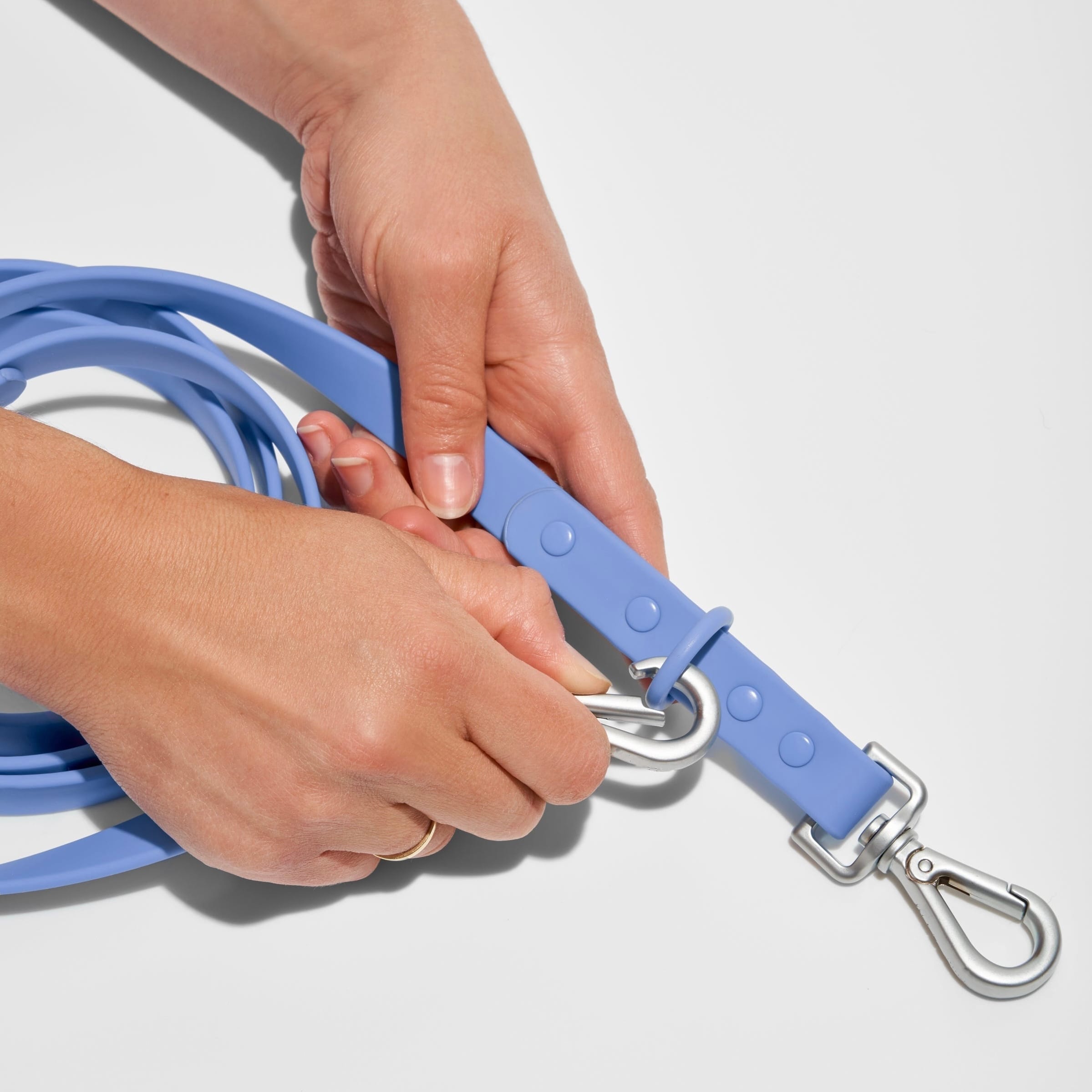
The hook connecting leash to collar or harness needs to hold up to sustained pulling at speed, not just casual walking tension. A weak or worn clip is one of the more common points of failure, and it’s worth checking before every ride rather than assuming it’s fine because it worked last time.
Material that handles sweat and weather
Biking sessions tend to be longer and more physically intense than a casual walk, which means more sweat on the handle and more exposure to whatever the trail throws up — mud, puddles, dust. A leash that absorbs and holds onto all of that gets unpleasant fast, and stays unpleasant since it takes time to dry out between rides.
A Leash That Handles the Sweat and Weather
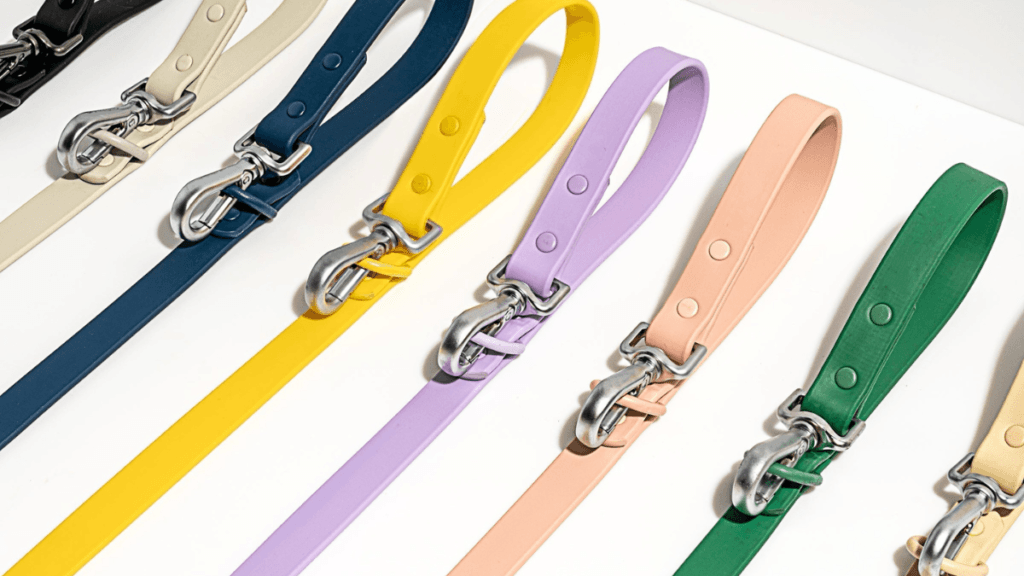
Whatever attachment method you use, the leash itself still matters. A PVC-coated webbing leash doesn’t absorb sweat, mud, or water the way a nylon or rope leash does, and it wipes clean after a muddy trail ride instead of needing a wash and a full day to dry.
The MoonianPet Waterproof Dog Leash holds up to the kind of sustained, active pulling that biking involves, with a secure metal hook and reinforced stitching at the stress points. It’s built for the exact conditions — sweat, water, dirt — that make regular leashes wear out fast.
If you’re setting up a hands-free system for biking specifically, our hands-free dog leash guide covers what to look for beyond just the bike-specific attachment.

Collar or Harness for Biking?
A harness is the safer choice for biking, not a collar. The forces involved in running alongside a moving bike are higher and more sustained than a normal walk, and a collar concentrates all of that pressure on the neck — a real risk for the throat and trachea if your dog lunges or hits the end of the leash unexpectedly. A well-fitted no-pull harness spreads that force across the chest instead, which is both safer and more comfortable for extended runs.
Frequently Asked Questions
Can I just clip a regular leash to my handlebars?
It’s not recommended. Any pull on a handlebar-clipped leash transfers directly into steering input, which can throw off your balance or turn the front wheel unexpectedly. A rear-mounted bike attachment or a carefully used hip-mounted hands-free leash keeps the pull point away from your steering.
What breeds are best suited to biking alongside?
Medium to large, athletic breeds with good stamina — like retrievers, shepherds, and working breeds — tend to handle sustained biking pace well. Brachycephalic breeds (pugs, bulldogs, and similar) and very small dogs generally shouldn’t be run alongside a bike at all, since the pace and duration can be genuinely dangerous for their breathing or their size.
How long should a bike ride with a dog be?
Start with short rides of 10 to 15 minutes and build up gradually while watching for excessive panting, lagging, or reluctance to continue — signs your dog needs a break or isn’t ready for the current distance. Hot pavement and warm weather shorten the safe duration considerably, so adjust for temperature, not just fitness.
Should I use a collar or harness when biking with my dog?
A harness is the safer option. Biking involves more sustained pulling force than walking, and that force is safer distributed across the chest with a harness than concentrated on the neck with a collar.
Are bike attachment arms worth buying, or is a regular leash fine?
If you plan to bike with your dog regularly, a dedicated spring-loaded attachment arm is worth the investment for the stability and injury prevention it offers over a handlebar-clipped leash. For occasional rides with a very calm, well-trained dog, a carefully managed hip-mounted hands-free leash can work, but it demands more attention from the rider.
For the harness-versus-collar decision in more depth, see our dog collar vs harness guide. If your dog pulls hard even on foot, our how to stop a dog from pulling guide is worth working through before you add a bike to the mix.

Wenyue
Wenyue is the founder of MoonianPet and writes about dog collars, harnesses, waterproof pet gear, and everyday dog care. Growing up with dogs inspired her lifelong interest in pet care and practical dog gear. Through MoonianPet, she researches dog collars, harnesses, waterproof materials, and everyday solutions that help active dogs stay comfortable during daily adventures.