
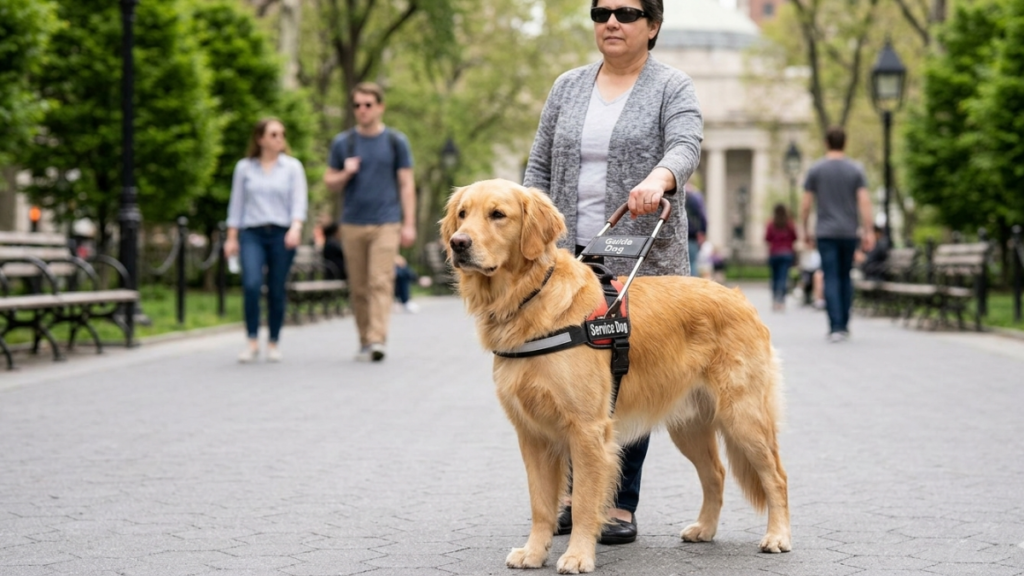
Search “service dog harness” and you’ll find two very different categories of product. The first is functional working equipment — harnesses designed to withstand daily use, carry identification, and in some cases support the dog’s handler physically. The second is a much simpler category: a standard harness or vest with an embroidered “Service Dog” patch sewn on. The difference between these two categories matters more than it might seem, and understanding it helps whether you’re outfitting a genuine assistance dog or simply trying to understand what you’re looking at when you encounter a working dog in public.
A true service dog harness is purpose-built around the dog’s specific task. A guide dog harness looks and functions completely differently from a mobility assistance harness, which looks nothing like the harness worn by a psychiatric service dog or a hearing alert dog. The “service dog harness” as a single product category is a marketing simplification — what actually exists is a range of working dog equipment, each shaped by the task the dog performs.
This guide covers what sets working dog harnesses apart from standard pet harnesses, the main harness types used by different categories of assistance dogs, what the law says about identification, and what to look for if you need a durable everyday harness for a working or task-trained dog.
What Actually Differentiates a Service Dog Harness
Task-specific design
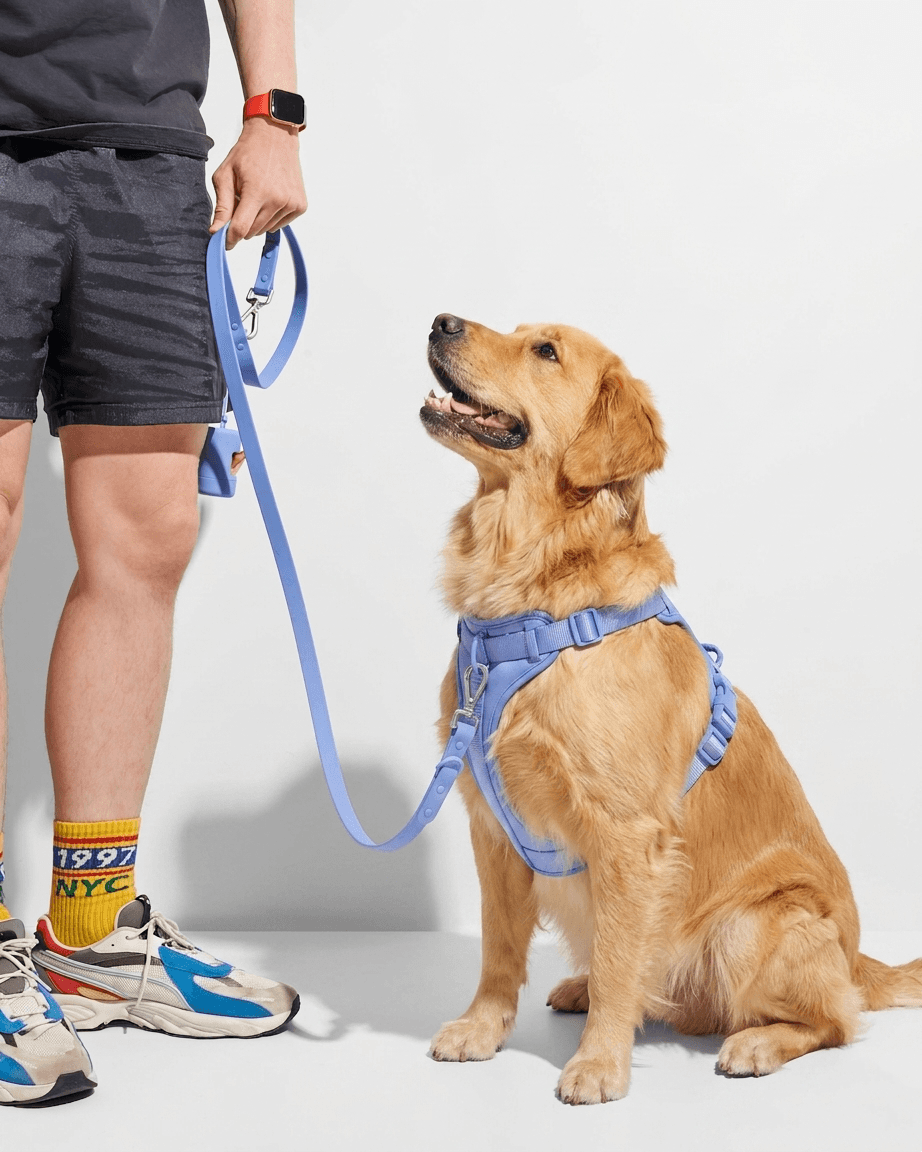
The most meaningful difference is that a genuine working harness is designed around what the dog actually does. A guide dog harness includes a rigid handle mounted above the dog’s back — the handler holds this handle rather than a leash, receiving directional information through it as the dog navigates. A mobility assistance harness built for a handler who needs physical support has a load-bearing structure across the dog’s back, sized and rated for the weight the dog will bear. A standard pet harness — even a high-quality one — is designed for leash attachment and walking control, not for transmitting directional information or bearing human weight.
Durability requirements
A service dog works full days, often seven days a week. The harness is worn for many more hours than a pet dog’s walking harness and is subjected to significantly more physical stress. Hardware on working harnesses — buckles, D-rings, stitching points — is typically rated to higher load tolerances than hardware on standard pet harnesses. Webbing is usually wider and thicker to distribute load across the dog’s body more effectively. The expected lifespan of a working harness is measured in years of continuous use rather than years of occasional walking.
Identification and signalling
Most working dog harnesses include some form of visible identification — patches, labels, or vest-style panels that communicate the dog’s working status to the public. This serves a practical function: it signals to bystanders that the dog is working and should not be petted, distracted, or approached without permission. Common text includes “Service Dog,” “Do Not Pet,” “Working Dog,” or task-specific labels like “Guide Dog” or “Medical Alert.” The identification is a communication tool for the public, not a legal credential — more on that below.
Fit for extended wear
A pet harness worn for a 45-minute walk and then removed causes minimal issues if the fit isn’t perfect. A working harness worn for eight or more hours needs to be fitted with much greater precision. Pressure points, rubbing at the armpits, or a chest panel that restricts shoulder movement cause discomfort and eventually skin damage on a dog wearing a harness all day. Working harnesses are typically fitted by professionals and adjusted at multiple points to achieve a precise, stable fit that doesn’t shift or rub over extended wear periods.
Main Types of Service Dog Harness by Task
Guide dog harness
The most visually distinctive working harness. The defining feature is a rigid U-shaped handle mounted vertically above the dog’s back — the handler grips this handle and receives directional cues through it as the dog navigates. The harness body is typically a fitted chest-and-girth design in leather or heavy webbing. The handle is the functional core: it transmits information about the dog’s movement, speed, and direction changes in real time. Guide dog harnesses are exclusively used by trained guide dogs for visually impaired handlers and are not interchangeable with standard harnesses.
Mobility assistance harness
Designed for handlers who need physical support for balance, stability, or partial weight-bearing. The harness has a reinforced top handle that the handler can grip for steadying, and the structure is built to bear load without distorting or shifting. Not all dogs are physically suited to mobility assistance work — the dog needs sufficient size, weight, and structural soundness to safely support a leaning or gripping handler. Labrador Retrievers, Golden Retrievers, and Standard Poodles are common mobility assistance breeds due to their size and temperament.
Psychiatric service dog harness
Psychiatric service dogs (PSDs) perform tasks such as deep pressure therapy, interrupting self-harm behaviours, providing grounding during dissociative episodes, and alerting to anxiety or PTSD triggers. Their harnesses don’t require task-specific hardware the way guide or mobility harnesses do — the functional requirements are a reliable fit, visible identification patches, and sufficient D-ring attachment points for a leash. Many PSD handlers use a standard no-pull harness with identification patches added. The key features are comfort for extended wear and visible working status signalling.
Medical alert dog harness
Medical alert dogs — trained to detect seizures, blood sugar changes, allergens, or other medical conditions — typically wear harnesses similar to those used by psychiatric service dogs: a well-fitted no-pull style with identification. Some medical alert dogs also carry pouches for medical supplies or emergency information, which requires the harness to have attachment points or compatible accessory pouches. The primary requirements are comfort, durability, and clear public identification.
What to Look for in a Harness for a Task-Trained Dog
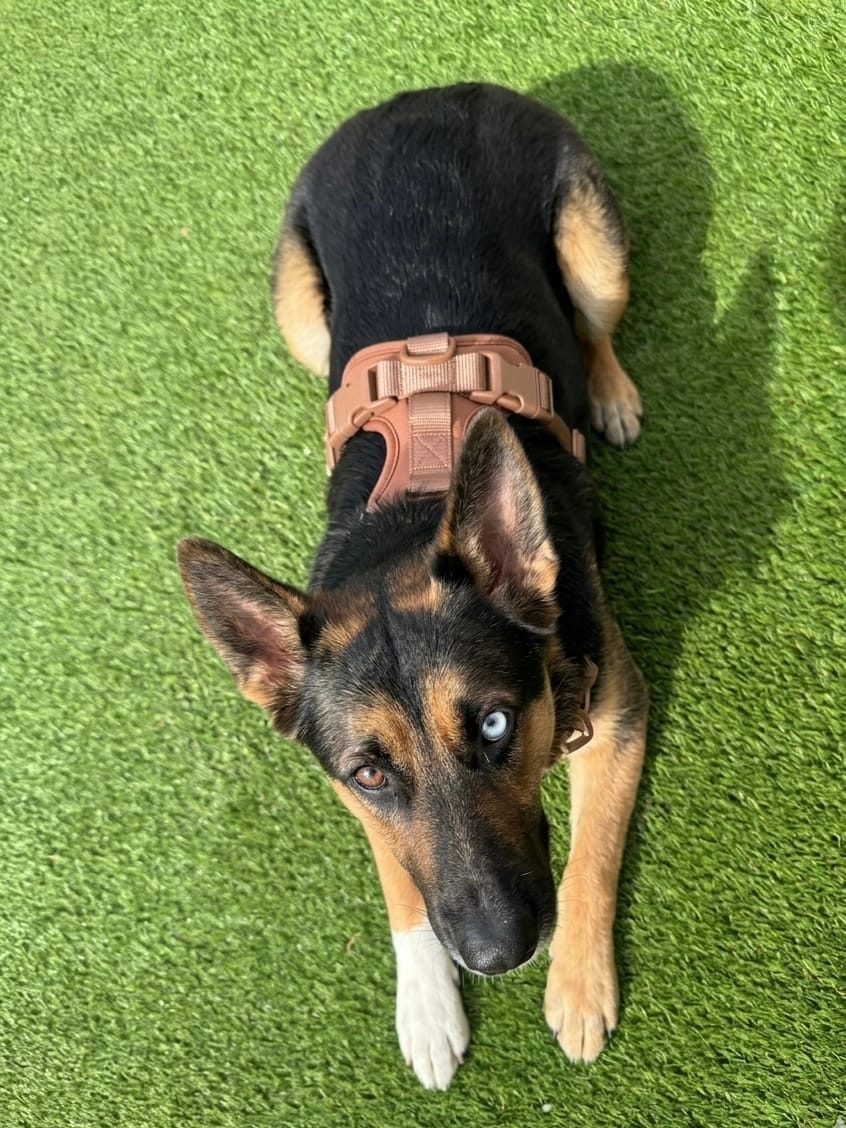
For owners of psychiatric service dogs, medical alert dogs, or task-trained dogs whose work doesn’t require specialised hardware (guide handles, load-bearing structures), a high-quality no-pull harness with the right features serves most practical needs.
Stable fit that doesn’t shift with extended wear
A harness worn for several hours needs to stay in position. Independent adjustment at the neck and chest — three adjustment points rather than one — allows the harness to be fitted precisely to the dog’s individual proportions. A precisely fitted harness shifts less during the day than one loosely adjusted. Check the fit after an hour of wear on the first day; a harness that rides up toward the neck or slides to one side needs re-fitting or resizing.
Soft material at extended wear contact points
The armpits and chest are the primary contact points during walking, and on a dog wearing a harness for most of the day, these areas are under sustained friction. Neoprene padding or a soft-lined chest panel significantly reduces the risk of skin irritation and coat damage at these points. A harness with raw webbing edges at the armpit area is fine for a 30-minute walk but problematic for all-day wear. Run your finger along the edges that will contact the dog’s skin — if they feel sharp or rough, that will translate to irritation over time.
Multiple D-ring attachment points
A back D-ring for standard leash attachment and a front D-ring for no-pull walking control gives the handler flexibility for different environments. In quiet, controlled settings the back clip provides the dog with a natural range of movement. In busier public environments — shops, transport, crowded spaces — the front clip gives the handler more immediate directional control. For task-trained dogs working in a variety of environments, having both options on one harness is more practical than carrying multiple harnesses.
Easy to put on and take off reliably
A working dog is put into and taken out of its harness multiple times a day. Buckles that require fine motor coordination to operate, or harnesses that require the dog to step through loops, can be a practical difficulty for handlers with mobility or dexterity limitations. A harness with clear, positive-click buckles that can be operated with one hand is more practical for daily working use. The buckle should close with a distinct click that confirms engagement — a buckle that could be accidentally left unclipped is a safety problem on a working dog in public.
The MoonianPet No-Pull Harness for Working Dogs
The MoonianPet No-Pull Dog Harness is built for dogs that are worn daily. The neoprene body is soft against the skin at extended wear contact points, the three-point adjustment system allows precise fitting across the neck and chest independently, and both front and back D-rings are included for leash attachment in different environments.
The reinforced ABS safety buckles close with a positive click and cannot be accidentally opened — relevant for any dog working in public where an unexpected release would be a safety issue. The harness is available in XS through XL to fit everything from small psychiatric service dogs to large mobility assistance breeds, across 11 colours. For sizing, use our dog harness size guide with your dog’s chest girth measurement — working dogs benefit particularly from precise sizing rather than approximate fits.
Note that the MoonianPet harness is a standard no-pull harness suited to psychiatric service dogs, medical alert dogs, and task-trained dogs whose work doesn’t require a guide handle or load-bearing structure. It is not a guide dog harness or a mobility assistance harness — those require purpose-built specialised equipment provided through accredited assistance dog organisations.

Frequently Asked Questions
Does a service dog legally have to wear a harness or vest?
No. Under the ADA in the United States, service dogs are not required to wear any identifying vest, harness, or tag. Businesses cannot require documentation or visible identification as a condition of access. Many handlers choose to use a service dog vest or harness with identification patches as a practical tool to reduce public interference with the dog — but it is a choice, not a legal requirement. The same applies in the UK under the Equality Act 2010 and in most other jurisdictions with service animal access rights.
Can any dog wear a service dog harness or vest?
Any dog can physically wear a harness or vest with “Service Dog” embroidery — there is no legal restriction on purchasing these items. However, representing a pet as a service dog to gain access to restricted areas is fraudulent in most US states and in many other jurisdictions. The legal definition of a service dog under the ADA is a dog that has been individually trained to perform a specific task directly related to a person’s disability. A well-behaved pet in a service dog vest is not a service dog.
What size harness does a service dog need?
Service dogs vary widely in size — from small medical alert dogs to large mobility assistance dogs. The correct harness size depends entirely on the individual dog’s measurements, not the breed or the type of service work. Measure the chest girth at the widest point behind the front legs and match it to the brand’s specific size chart. For a working dog worn all day, precision matters more than for a pet dog walking 45 minutes — use our dog harness size guide and size down if between sizes rather than up.
Is a no-pull harness appropriate for a service dog?
For most task-trained dogs that don’t require a guide handle or load-bearing structure, a well-fitted no-pull harness is entirely appropriate. Psychiatric service dogs, medical alert dogs, hearing dogs, and allergy alert dogs all typically use standard no-pull harnesses. The front D-ring can be useful in high-stimulation public environments, and the back D-ring provides a natural walking attachment in quieter settings. The key requirements are durability, precise fit, and comfort for extended daily wear — which a quality no-pull harness provides. See our full dog collar vs harness guide for more on why harnesses are generally preferred for working dogs.
How often should a service dog’s harness be replaced?
A working harness worn daily should be inspected regularly — check the stitching at stress points (handle attachment, D-ring stitching, buckle loops) and the condition of the webbing for fraying or stiffening. Hardware should be tested for smooth operation. Most quality harnesses last 1–3 years of full-time working use before showing wear that warrants replacement. A harness that has developed any stitching failure at a load-bearing point should be replaced immediately rather than repaired. For context on what constitutes normal wear versus concerning damage, see our guide on when to replace dog gear.
For more on harness types and how to choose between them, see our types of dog harnesses guide. For front clip versus back clip comparison, see our front clip vs back clip dog harness guide.

Wenyue
Wenyue is the founder of MoonianPet and writes about dog collars, harnesses, waterproof pet gear, and everyday dog care. Growing up with dogs inspired her lifelong interest in pet care and practical dog gear. Through MoonianPet, she researches dog collars, harnesses, waterproof materials, and everyday solutions that help active dogs stay comfortable during daily adventures.