
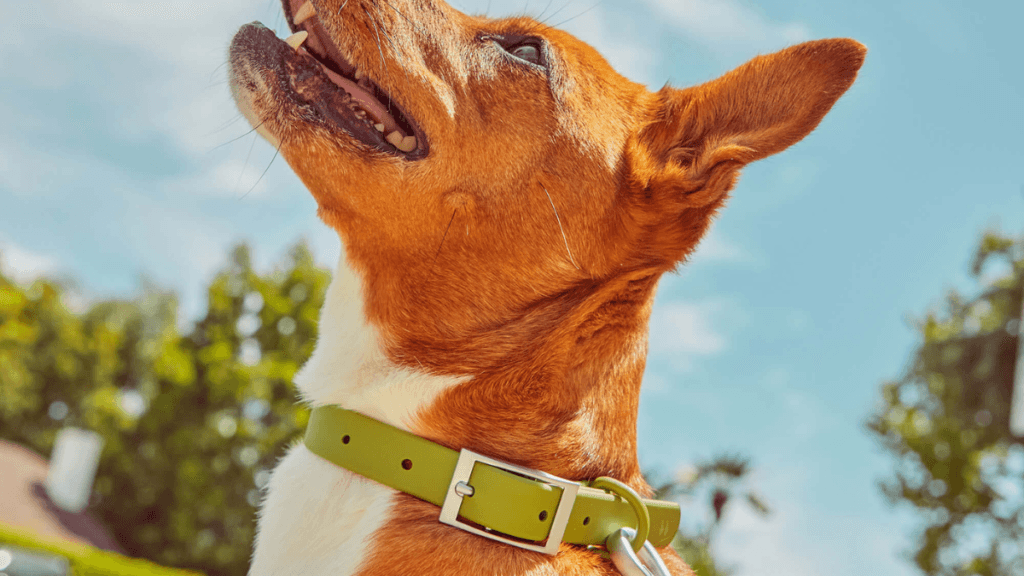
Leather has been the go-to premium dog collar material for over a century. BioThane-style coated webbing has been quietly replacing it for the last decade. If you’re trying to decide between the two, you’re asking the right question — because the differences go much deeper than price or appearance.
Both materials feel premium. Both look the part. But in real-world conditions — rain, mud, swimming, daily wear — they behave very differently. This guide breaks down exactly how BioThane and leather compare across every factor that actually matters, so you can make the right call for your dog.
What Is BioThane and Why Is Everyone Talking About It?
BioThane is a brand name for a specific type of coated webbing — a strong polyester or nylon core bonded with a smooth PVC or TPU outer coating. The brand was originally developed for horse tack and marine applications, where materials need to handle constant water exposure without degrading.
Dog owners discovered BioThane gear through working dog and hunting dog communities, where durability under harsh outdoor conditions is non-negotiable. From there it crossed into the mainstream pet market, and the appeal is obvious: it looks and feels like quality leather, but handles water, mud, and bacteria completely differently.
Today, “BioThane-style” or “coated webbing” collars refer to any collar using this same sealed construction — a strong inner core with a smooth, non-porous outer coating. The MoonianPet Waterproof Dog Collar is built from premium coated webbing using this exact principle. For a full overview of how coated webbing fits into the wider collar material landscape, our guide on what dog collars are made of covers every material in detail.
Appearance and Feel: Closer Than You Would Think
This is where the comparison gets interesting. Most people expect BioThane to feel synthetic — like plastic or rubber — and leather to feel unmistakably premium. In practice, a quality coated webbing collar is smooth, slightly flexible, and sits flat against the neck in a way that is genuinely difficult to distinguish from good leather at a glance.
Leather has its own distinct quality — the density, the weight, the way it softens and develops character with wear. Long-term leather enthusiasts notice the difference. But for most dog owners, the visual and tactile difference between quality coated webbing and quality leather is minimal.
Where they diverge visually is over time. Leather develops a patina — it darkens, scuffs, and shows its history. Some owners love this; others see it as deterioration. Coated webbing stays consistent — the colour you choose on day one is the colour you will have years later, without fading, cracking, or surface changes. For more on how collar colour holds up over time, see our dog collar colour guide.

Water Resistance: The Biggest Difference
This is where BioThane and leather genuinely part ways — and for most dogs, it is the most important factor.
Leather is porous. Water penetrates the surface, soaks into the material, and begins breaking down the structure from the inside. A leather collar that gets wet regularly — through rain, swimming, or simply wet grass — will stiffen, crack, and eventually fail significantly faster than one kept dry. Regular conditioning with leather oil helps slow this process, but it cannot stop it. Leather and sustained water exposure are fundamentally incompatible.
BioThane-style coated webbing is completely waterproof. The sealed PVC surface has no pores — water sits on the outside rather than being absorbed. When your dog jumps in a lake or gets caught in the rain, the collar gets wet on the surface and dries in minutes. There is no internal saturation, no structural degradation, no long-term water damage.
For dogs that swim regularly, live in wet climates, or simply spend a lot of time outdoors, this difference alone makes the choice straightforward. For more on how swimming affects different collar materials, see our post on dog collar smell after swimming.

Odour Resistance: Why Leather Collars Smell
Both leather and nylon collars develop persistent odour over time — and for the same reason. Both materials are porous, which means they absorb sweat, skin oils, bacteria, and organic matter from daily wear. Once that bacteria is established inside the material, no amount of surface cleaning fully removes it.
Leather has its own distinct smell when new — many owners find it pleasant. But over months of wear, particularly in wet conditions, that smell changes. Wet leather has a characteristic musty, organic odour, and repeated soaking accelerates the process of bacterial colonisation inside the material.
Coated webbing does not absorb anything. Bacteria have no surface to anchor to, no moisture inside the material to sustain them. The collar that smelled fine on day one smells exactly the same after a year of daily wear. Wipe it down with a damp cloth and it is clean — genuinely clean, not just surface-clean.
If your dog’s current collar has developed a persistent odour that washing does not fully fix, this is why — and switching to coated webbing is the permanent solution. Our post on why dog collars smell covers the full science behind this.
Durability: Which One Actually Lasts Longer?
In dry conditions with minimal water exposure, a well-made leather collar can last years. The material is dense and structurally strong when kept dry. But “dry conditions” is a significant qualifier — most dogs do not live in them.
Leather degrades primarily through moisture. Each wet-dry cycle causes the leather to expand and contract, gradually breaking down the fibre structure. Adjustment holes weaken first. Edges crack. Hardware attachment points become vulnerable. A leather collar used by an active outdoor dog typically lasts 1-2 years before showing significant wear; the same collar owned by an indoor dog might last much longer.
Coated webbing does not degrade through moisture because moisture cannot penetrate it. The polyester or nylon core retains its structural strength indefinitely under normal use, and the PVC coating resists UV, abrasion, and surface wear. The fit and feel of a coated webbing collar on day one is the fit and feel years later — it does not stretch, fray, or crack.
For active dogs that wear their collar every day in all weather, coated webbing consistently outlasts leather.

Maintenance: The Real Cost of Leather
Leather requires ongoing maintenance that coated webbing simply does not. To keep a leather collar in good condition, you need to:
Leather maintenance requirements
Condition with leather oil every 1-3 months to prevent cracking. Clean with specialist leather cleaner, not water. Dry slowly away from direct heat if it gets wet. Store away from prolonged sunlight. Inspect regularly for cracking around hardware attachment points.
Coated webbing maintenance requirements
Wipe with a damp cloth when dirty. That is it. For a deeper clean after muddy walks, mild soap and water. No conditioning, no specialist products, no drying protocols. For a full step-by-step cleaning guide, see our post on how to clean a dog collar.

BioThane vs Leather: Full Comparison
| Factor | BioThane / Coated Webbing | Leather |
|---|---|---|
| Waterproof | Yes 100% | No, degrades with water |
| Odour-proof | Yes, non-porous | No, absorbs bacteria |
| Easy to clean | Yes, wipe clean | No, specialist care needed |
| Durability (active dogs) | Yes, years of daily use | Depends on conditions |
| Good for swimmers | Yes | No |
| Maintenance required | Almost none | Regular conditioning needed |
| Colour consistency | Stays vivid | Darkens and fades over time |
| Vegan and cruelty-free | Yes | No |
| Classic patina aesthetic | No | Yes |
| Skin-friendly | Yes, smooth and non-abrasive | Yes, when conditioned |
When to Choose BioThane and When Leather Still Makes Sense
Choose BioThane / coated webbing if:
Your dog swims or gets wet regularly. You live in a rainy or humid climate. Your dog has sensitive skin or recurring collar irritation. You want something that lasts years with minimal care. You prefer vegan or cruelty-free products. You want consistent colour that does not fade or change.
Leather might still suit you if:
Your dog lives primarily indoors and rarely gets wet. You are in a dry climate with minimal rain. You love the traditional aesthetic and do not mind regular conditioning. The developing patina and character of aged leather appeals to you.
The MoonianPet Waterproof Dog Collar
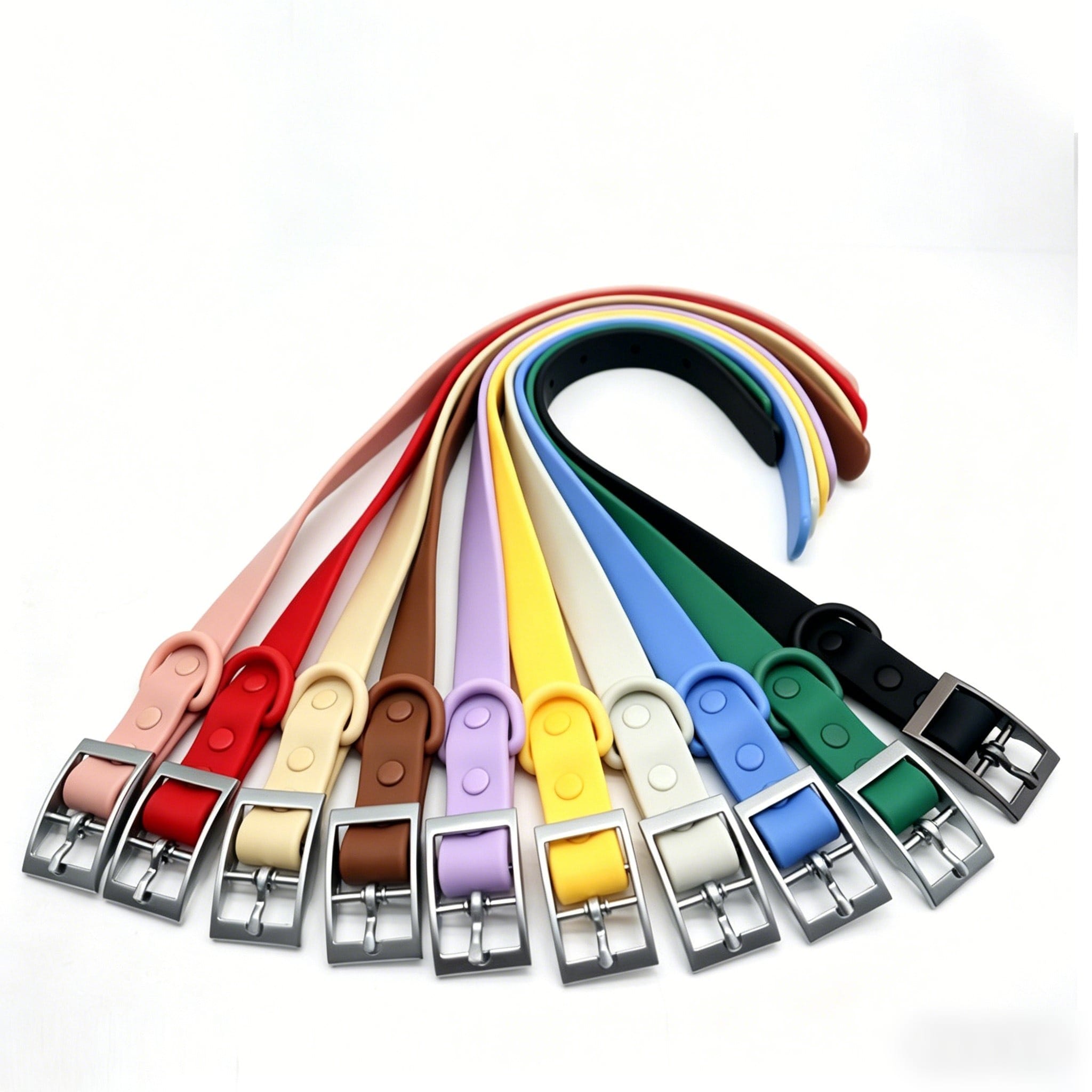
The MoonianPet collar is built from premium BioThane-style coated webbing — smooth leather feel, 100% waterproof, odour-proof, and available in 11 colours and 5 sizes from XS to XL. Zinc alloy hardware that will not corrode. A fit that stays consistent for years. Pair it with the MoonianPet Waterproof Leash for a fully waterproof setup. If your dog also pulls on walks, the MoonianPet No-Pull Harness pairs well with the collar.
Not sure which colour suits your dog? Our dog collar colour guide covers all 11 options with breed-specific recommendations. And if you are unsure about sizing, our sizing guide walks you through measuring in under a minute.
Frequently Asked Questions
Is BioThane better than leather for dog collars?
For most dogs in most conditions, yes. BioThane-style coated webbing is waterproof, odour-proof, and requires almost no maintenance — advantages that leather simply cannot match. Leather has the edge only for dogs with very dry, indoor lifestyles where its aesthetic qualities can be enjoyed without the water-related downsides.
Does BioThane feel like leather?
Quality coated webbing has a smooth, slightly flexible feel that closely resembles premium leather. Most people who handle a good coated webbing collar for the first time are surprised by how closely it mimics leather’s texture and appearance.
How long does a BioThane dog collar last compared to leather?
Under active outdoor use, a BioThane-style collar consistently outlasts leather — particularly for dogs that swim or get wet regularly. Leather degrades with moisture exposure; coated webbing does not. A quality coated webbing collar should last several years of daily use with minimal maintenance.
Is BioThane safe for dogs with sensitive skin?
Yes. The smooth, non-porous surface of coated webbing does not cause the friction damage or bacterial build-up that can irritate sensitive skin. Our post on whether nylon is safe for dogs explains why smooth surfaces are significantly better for skin health than woven fabrics.
Can I use a BioThane collar for swimming?
Yes — and it is the ideal material for dogs that swim. The sealed surface repels water entirely; the collar dries in minutes and never develops the odour that nylon and leather collars develop from repeated water exposure. Leather should not be used for swimming dogs, as repeated submersion significantly accelerates its degradation. For more on this topic, see our guide on the best dog collar for swimming.
Want to understand how BioThane compares to nylon as well? Our full dog collar material guide covers all three materials side by side. Or explore the full range of MoonianPet waterproof collars in 11 colours and 5 sizes.
About the Author
Wenyue
Wenyue is the founder of MoonianPet and writes about dog collars, harnesses, waterproof pet gear, and everyday dog care.
Growing up with dogs inspired her lifelong interest in pet care and practical dog gear. Through MoonianPet, she researches dog collars, harnesses, waterproof materials, and everyday solutions that help active dogs stay comfortable during daily adventures.