
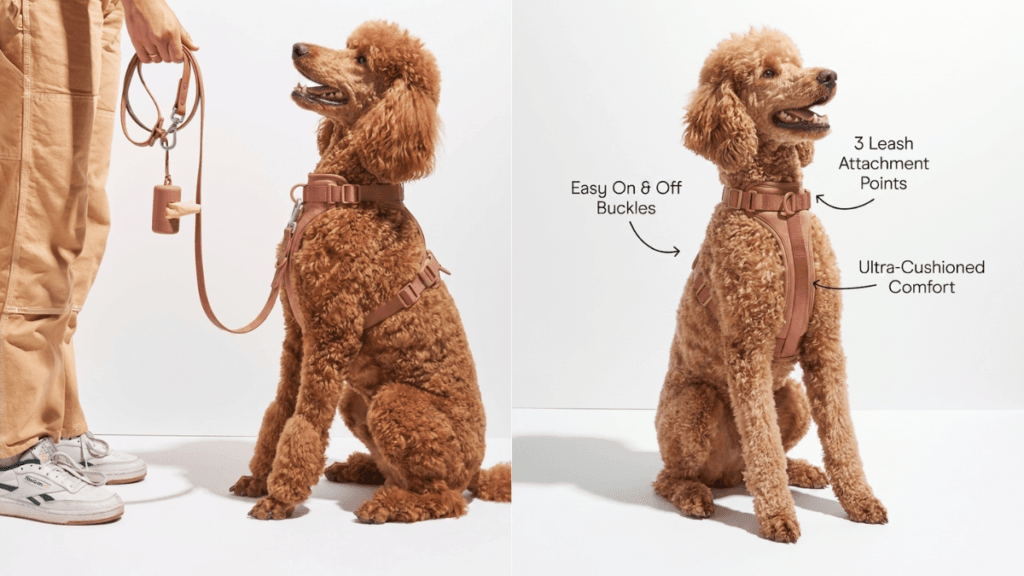
Poodles have one of the most distinctive coats in the dog world — dense, curly, and continuously growing rather than seasonally shedding. It’s what makes them low-allergen and endlessly stylish. It’s also what makes harness choice more consequential than it is for most breeds, because a harness strap sitting against a curly Poodle coat for an hour a day will mat that coat at every contact point if you’re not managing it actively.
The other thing worth knowing about Poodles is that they come in three genuinely different sizes — Toy, Miniature, and Standard — with body proportions and activity levels that vary as much as the sizes themselves. A Standard Poodle is an athletic, energetic large dog that can easily pull; a Toy Poodle is a small dog whose pulling is more of an inconvenience than a physical challenge. The harness considerations are similar in some ways but different enough in others that it’s worth thinking through which version applies to your dog.
This guide covers coat care around harness use, fitting a Poodle’s deep and often narrow chest correctly, and managing pulling across all three size varieties.
The Coat Matting Problem — and How to Prevent It
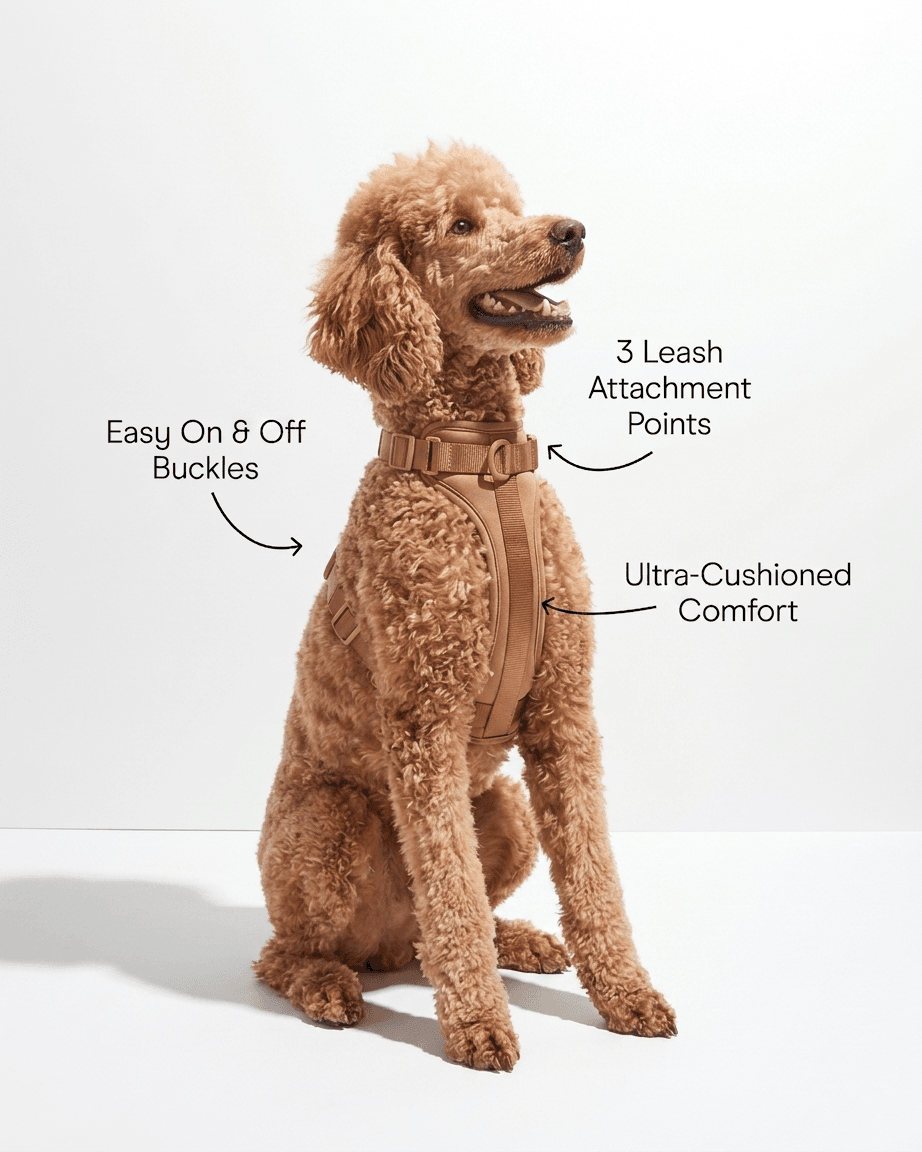
A Poodle’s curly coat is beautiful but unforgiving. Unlike a straight coat where a strap can sit against the fur without entangling it, a curly coat catches and traps anything that presses against it — including harness straps. After a one-hour walk, the fur under each strap contact point has been rubbed repeatedly in one direction, which starts the matting process. Leave this unaddressed daily and the mats tighten progressively until they’re pulling at the skin.
The good news is that daily brushing at harness contact points, done each time the harness comes off, prevents the problem almost entirely. A wide-tooth comb or slicker brush through the chest, the sides of the ribcage, and especially the armpits takes under two minutes and keeps the coat clear before mats have a chance to form.
Armpit area is the highest risk
The strap running through the armpit area rubs with every single stride during a walk — far more friction than the straps sitting across the chest or back. This is where matting develops fastest on a Poodle and where the comb needs to go first when the harness comes off. If your Poodle has ever had persistent armpit mats, daily attention here is what prevents it recurring.
Smooth harness surface reduces friction
A harness material with a smooth, low-friction surface — like neoprene — creates less mechanical engagement with curly fur than a textured or woven surface. Nylon webbing has a slightly rougher texture that catches at the curl more than a smooth neoprene surface does. For a Poodle that’s in a harness daily, material surface texture is a practical consideration alongside coat management.
Remove the harness after walks, not hours later
A harness left on for several hours after a walk continues to press against and tangle the coat even without the movement of walking. Remove it promptly after each walk and brush the contact areas — this is the simplest way to prevent matting from becoming a regular problem. For more on extended harness wear, see our guide to wearing a harness all day.
Fitting a Poodle’s Chest: Deep, Narrow, and Variable by Size
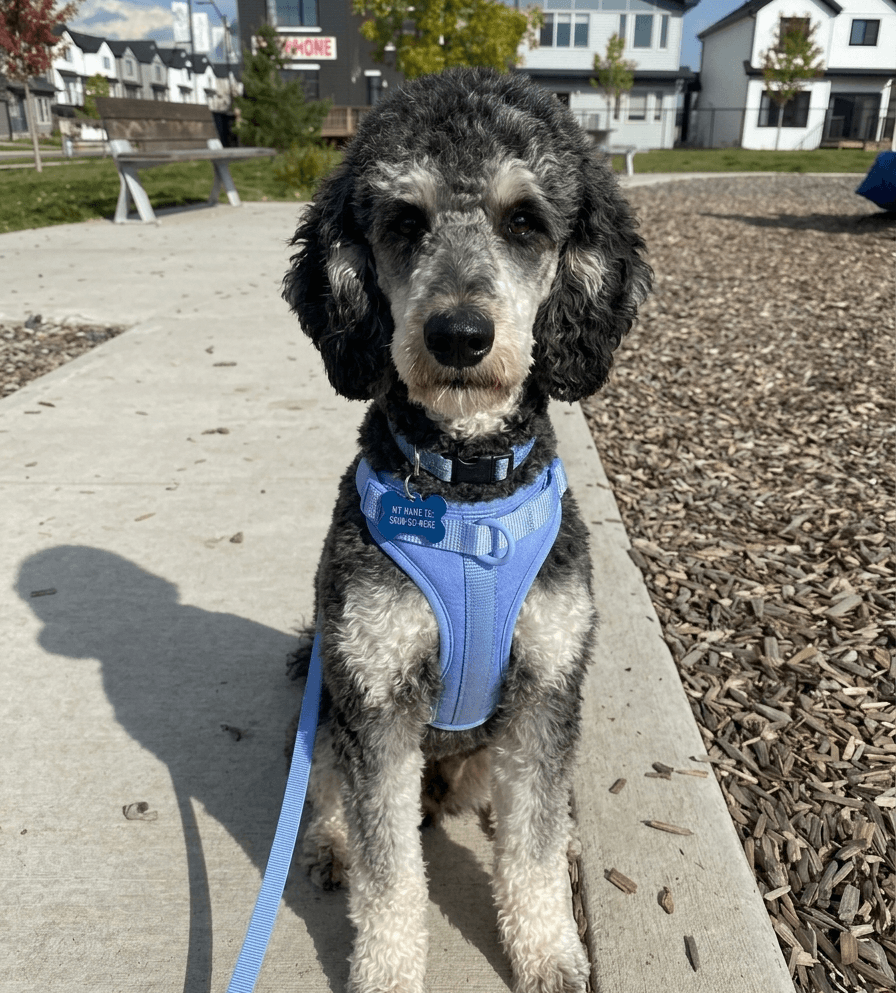
Poodles — particularly Standard and Miniature — tend to have a deep, somewhat narrow chest relative to their height. This is a different shape from the wide, barrel chest of a Labrador or French Bulldog, and a harness designed for a rounder chest shape can sit awkwardly on a Poodle’s more oval ribcage, with the chest strap either too wide or riding up.
The three size varieties span an enormous range — Toy Poodles can have a chest girth of 10–14 inches, Miniature Poodles around 14–18 inches, and Standard Poodles 20–28 inches or more. This means you’re sizing from XS at the small end to L or XL at the large end, and a Standard Poodle needs the same hardware quality considerations as any other large active breed.
Measure to skin level through the coat
A Poodle’s curly coat adds apparent girth that compresses significantly under a harness strap. A measurement taken at the surface of the coat will produce a harness that’s too large — the strap will feel snug initially and then loosen as the fur compresses during wear. Press the tape measure gently through the coat to skin level when measuring chest and neck girth.
Re-check fit after grooming
A Poodle groomed to a shorter clip has significantly less coat volume than the same dog with several months of growth. A harness that fitted correctly before a groom can be noticeably loose afterward — the reduced coat volume means less compression, which means the straps are relatively looser at skin level. Re-check the two-finger rule after every groom and adjust all three straps as needed.
Three-point adjustment is essential
Independent neck, chest, and belly adjustment lets you fine-tune fit on a Poodle’s proportions — which often need the neck strap tighter relative to the chest than a standard sizing assumption would suggest. Full sizing guidance in our dog harness size guide.
Pulling Control Across Three Very Different Sizes
Standard Poodle
Standard Poodles are athletic, energetic large dogs — originally bred for water retrieving and still carrying that working drive. A Standard Poodle that pulls generates real force, and hardware quality matters as much as it does for any other large breed. Zinc alloy D-rings, metal sliders, and a reinforced buckle are non-negotiable for a Standard Poodle used daily. A front-clip harness is genuinely useful for managing an enthusiastic Standard on walks.
Miniature Poodle
Miniature Poodles are active and alert — more energetic than many small breeds and often with a curious, quick-reacting temperament. They can pull with surprising commitment for their size, and a front-clip harness helps manage this without collar pressure on the trachea. Hardware quality is still worth paying attention to — a Miniature Poodle that’s reactive can put meaningful sudden load through a front D-ring.
Toy Poodle
A Toy Poodle’s pulling is more of an inconvenience than a physical challenge — they’re small enough that most adults can hold them comfortably. The more important harness considerations for a Toy Poodle are comfort, weight, and coat management: the harness should be lightweight enough not to feel burdensome on a very small body, and coat matting at strap contact points needs the same attention as on a Standard regardless of size.
Smooth Against Curls, Precise on Every Strap
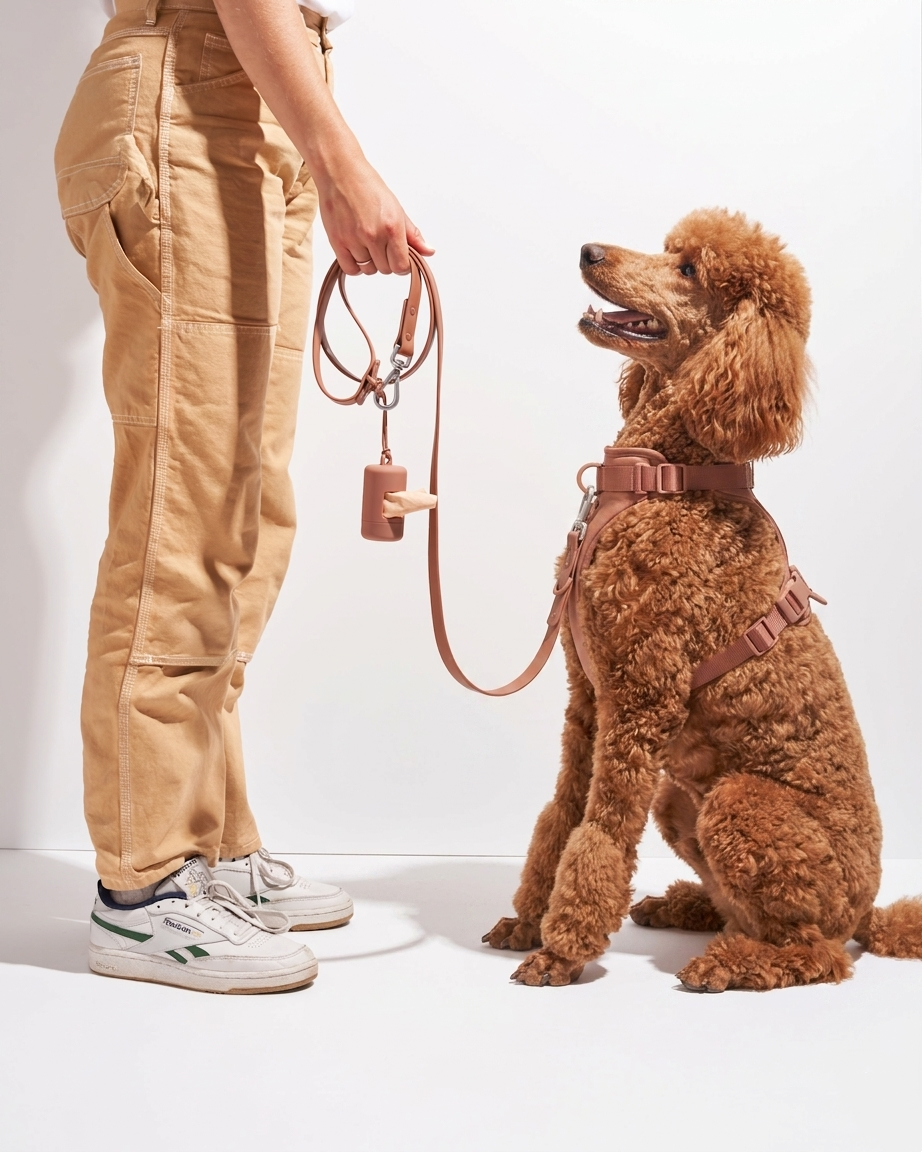
The MoonianPet No-Pull Dog Harness uses lightweight neoprene with a smooth surface that creates less friction against curly fur than textured nylon webbing — reducing the mechanical engagement that starts coat matting at strap contact points. Three-point independent adjustment covers the fit variation between a Toy Poodle’s proportions and a Standard’s, and zinc alloy hardware holds up to whatever energy level your Poodle brings to the walk. Available in five sizes from XS to XL and 11 colours.
For a matched setup, the Harness & Leash Set pairs the harness with a PVC-coated waterproof leash — odour-proof and easy to wipe clean after muddy walks.
Frequently Asked Questions
Does wearing a harness cause matting on a Poodle?
It can, if the harness is left on for extended periods without brushing the contact areas afterward. The curly coat catches and tangles around strap contact points — especially under the armpits — with daily use. Removing the harness after each walk and running a comb through every contact area takes under two minutes and prevents matting almost entirely. A smooth-surface harness material also reduces mechanical friction against the curl compared to textured nylon.
What size harness does a Poodle need?
It varies enormously by variety — Toy Poodles typically fit XS, Miniature Poodles fit XS to S, and Standard Poodles fit M to L or even XL for larger males. Always measure chest girth at skin level (pressing through the curly coat) and neck girth at the base of the neck. Full chart in our dog harness size guide.
My Poodle’s harness fits differently after grooming — why?
After a groom that reduces coat length, there’s less fur to compress under the straps — which means what felt snug before the groom is now relatively looser at skin level. Re-check the two-finger rule on all three straps after every groom and tighten as needed. The reverse applies as the coat grows back out — you may need to loosen straps gradually as coat volume increases between grooms.
Do Standard Poodles need a no-pull harness?
Many benefit from one, especially younger Standard Poodles with a lot of energy and curiosity. Standard Poodles were bred as working retrievers and carry that athletic drive — an enthusiastic Standard that pulls can generate enough force to make walks uncomfortable. A front-clip harness manages this effectively while keeping all leash force off the neck.
What’s the best harness material for a Poodle’s curly coat?
A smooth-surface material like neoprene creates less mechanical friction against curly fur than textured nylon webbing. The curl is more likely to catch on a rough or woven surface than to slide across a smooth one — which means less tangling at contact points during a walk. Combined with daily brushing of contact areas, a smooth harness surface significantly reduces the matting risk that curly-coated breeds face with regular harness wear.
For step-by-step harness fitting guidance, see our no-pull harness fitting guide. For more on long-coat breeds and harness wear, our guide to continuous harness wear covers coat matting and skin care in detail.
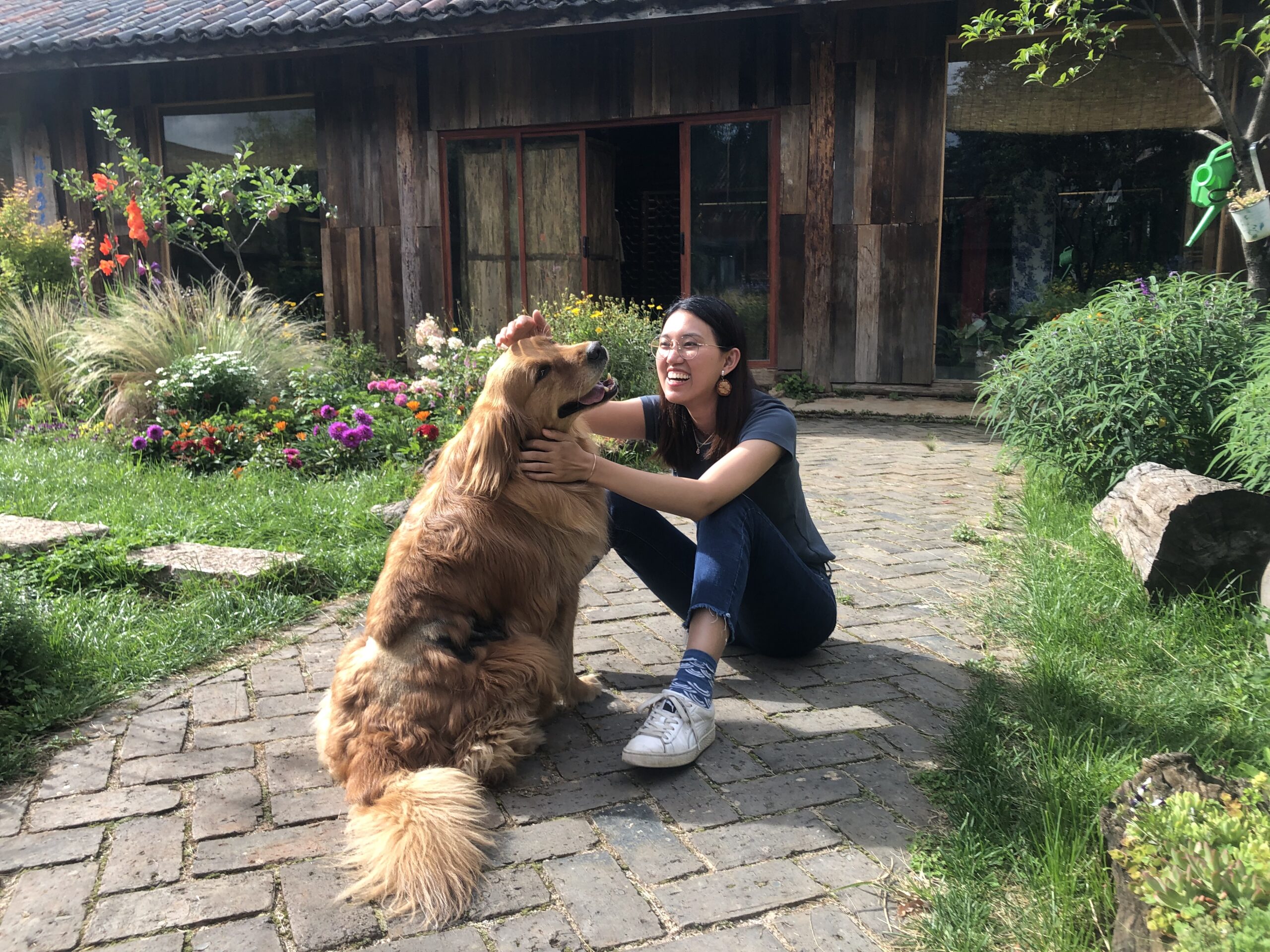
Wenyue
Wenyue is the founder of MoonianPet and writes about dog collars, harnesses, waterproof pet gear, and everyday dog care. Growing up with dogs inspired her lifelong interest in pet care and practical dog gear. Through MoonianPet, she researches dog collars, harnesses, waterproof materials, and everyday solutions that help active dogs stay comfortable during daily adventures.