
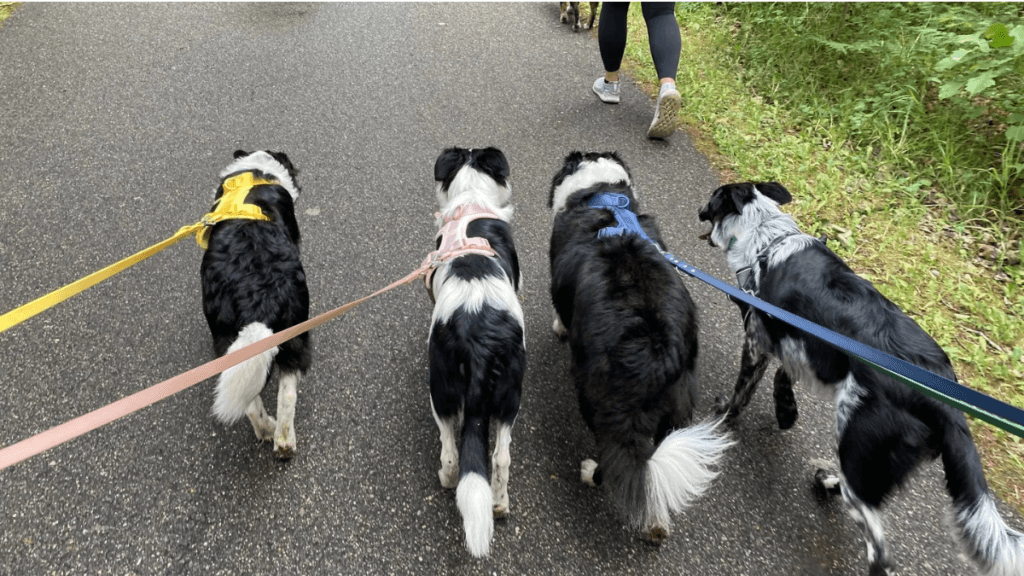
There is no single answer to how long you should walk your dog — which is frustrating, because most owners want a number they can work with. The reality is that a Border Collie and a Basset Hound have almost nothing in common when it comes to exercise needs, and a healthy three-year-old dog and a twelve-year-old dog with arthritis are not the same animal on a walk either.
What we can do is give you a framework that accounts for breed group, age, and individual health — and then tell you what to actually watch for on your dog, because the most reliable guide to whether your dog is getting enough (or too much) is how they behave before, during, and after the walk.
Here is how to think about it.

The General Baseline: What Most Adult Dogs Need
For a healthy adult dog of average energy, the baseline is around 30 minutes to two hours of walking per day, split across two sessions. That is a wide range — and the right number for your dog sits somewhere within it based on breed, age, and individual temperament.
The two-session structure matters as much as the total time. A single ninety-minute walk is harder on joints than two forty-five-minute walks, and many dogs — especially older dogs and brachycephalic breeds — regulate their body temperature better with shorter, more frequent outings than one long one. If your schedule only allows one walk per day, that works, but two is better for most dogs.
These are walking minimums, not total activity targets. Mental stimulation, play sessions, and free running in a secure area all count towards your dog’s overall enrichment needs — a dog that gets thirty minutes of intentional sniff-walk exploration is often better satisfied than one that does an hour of brisk pavement walking at your pace.
Walking Needs by Breed Group
Breed group is the most reliable predictor of exercise needs, because breeds were developed for specific work that shaped their energy levels and endurance over generations. A breed built to run all day has genuinely different requirements from one built to sit in a lap.
High energy: 90 minutes to 2+ hours daily
Working breeds, herding breeds, and sporting dogs fall into this category — Border Collies, German Shepherds, Huskies, Vizslas, Weimaraners, Dalmatians, and most retrievers. These dogs were bred to work all day and their exercise needs reflect that. Walking alone often is not enough; they typically need a combination of walking, running, fetch, or structured activity to be genuinely settled at home. An under-exercised dog in this group is almost always a dog with behavioural problems — destructiveness, excessive barking, anxiety — that are frequently misdiagnosed as personality issues.
Moderate energy: 60–90 minutes daily
Most medium-sized companion and terrier breeds sit here — Beagles, Cocker Spaniels, Staffordshire Bull Terriers, Schnauzers, Shiba Inus, Whippets, and many mixed breeds. Two walks a day of thirty to forty-five minutes each covers most of their needs. These dogs are adaptable — they can manage a shorter walk day without significant behavioural fallout, which makes them more compatible with variable schedules than the high-energy group.
Lower energy: 30–60 minutes daily
Brachycephalic breeds (French Bulldogs, Bulldogs, Pugs, Shih Tzus), giant breeds (Great Danes, Mastiffs, Saint Bernards), and many small companion breeds (Maltese, Chihuahuas, Cavalier King Charles Spaniels) need less walking than their size or enthusiasm might suggest. Brachycephalic breeds are limited by their airways and overheat faster than standard-muzzle dogs. Giant breeds are limited by joint load — their size means the same distance is more physically demanding than it appears. These dogs benefit from shorter, more frequent outings in moderate temperatures rather than one long walk.
Sighthounds: a special case
Greyhounds, Whippets, and Salukis confuse a lot of owners because they appear athletic but are actually classic couch dogs between bursts of activity. A Greyhound is content with two thirty-minute walks a day and spends the rest of the time flat out on a sofa. They need occasional opportunities to run fast in a secure area, but they do not need or want sustained long-distance walking. Whippets are slightly more energetic but follow a similar pattern.
How Age Changes the Equation
Breed sets the baseline, but age adjusts it significantly at both ends of the life spectrum.
Puppies: less than you think
The five-minutes-per-month-of-age guideline applies until growth plates close — typically around 12 months for small breeds and up to 18–24 months for large and giant breeds. A four-month-old puppy needs about twenty minutes of walking per session, not an hour. Over-walking a puppy during the growth phase is linked to joint problems later in life, particularly in breeds already predisposed to hip and elbow dysplasia. The energy a puppy seems to have is misleading — they can push past their physical limit because they are excited, and you need to set the limit for them.
Adult dogs: full exercise allowance
From around 18 months (small breeds) or 24 months (large breeds) until roughly seven years, most dogs can handle their full breed-appropriate exercise load. This is the window where consistent daily exercise has the most benefit for long-term health — dogs that are regularly exercised as adults have better joint health, healthier weight, and lower rates of anxiety-related behaviour into old age.
Senior dogs: shorter, more frequent, with attention to recovery
Senior status starts around seven years for large breeds and nine to ten years for smaller breeds. Exercise remains important — regular walking maintains muscle mass that protects joints, and the mental stimulation of getting outside has genuine wellbeing benefits for older dogs. The adjustment is in intensity and duration: shorter walks more frequently, softer surfaces where possible, and careful monitoring of recovery time. A senior dog that is stiff the morning after a long walk is telling you the walk was too much. Shorter and more frequent is almost always the right direction as dogs age.
| Life Stage | Walk Duration (per session) | Sessions Per Day | Key Consideration |
|---|---|---|---|
| Puppy (3–6 months) | 15–30 min | 2 | Growth plates — do not push past tired signals |
| Adolescent (6–18 months) | 30–45 min | 2 | Energy spikes — structure and consistency matter most |
| Adult (18 months–7 years) | 30–60 min+ | 2–3 | Full breed-appropriate load — adjust by individual |
| Senior (7+ years) | 20–40 min | 2–3 | Monitor recovery — shorter and more frequent |
Signs Your Dog Is Getting Too Little Exercise
Most of these are behavioural rather than physical, which is why they are often attributed to personality rather than unmet exercise needs:
Destructive behaviour at home
Chewing furniture, digging, shredding — these are overwhelmingly signs of unspent energy and insufficient mental stimulation, not character flaws. A dog that gets adequate daily exercise is significantly less likely to redecorate your home while you are out.
Excessive pulling on walks
A dog that explodes out the door and pulls frantically for the entire walk is often a dog that has been cooped up and is burning off accumulated energy. Increasing walk frequency — even with shorter individual walks — often reduces pulling significantly without any specific leash training, because the dog is no longer treating every walk as their only release valve.
Restlessness and attention-seeking
Barking at nothing, nudging you repeatedly, pacing, inability to settle — these can be anxiety symptoms, but they are also classic signs of a dog that has too much energy and nowhere to put it.
Weight gain
The most straightforward physical sign. Dogs gain weight for the same reasons people do — caloric intake exceeds energy expenditure. If your dog’s ribs are becoming harder to feel under their coat, they need either more exercise, less food, or both.
Signs Your Dog Is Getting Too Much Exercise
Over-exercising is less common than under-exercising, but it is a real risk — particularly for puppies, brachycephalic breeds, and older dogs with joint issues:
Lying down and refusing to continue mid-walk
A dog that simply stops and lies down mid-walk, particularly on a route they usually complete without issue, is telling you they are done. Do not push them to continue. Let them rest, then walk home at their pace.
Stiffness the morning after
A dog that is slow to get up or visibly stiff the morning after a long walk exceeded their physical limit. This is an important signal in older dogs and in large breeds prone to joint issues — consistent over-exercise accelerates joint wear rather than improving fitness.
Excessive panting in cool conditions
Some panting is normal during and after exercise. Panting that continues for more than fifteen to twenty minutes after a walk ends in mild weather, or heavy panting during a walk that was not particularly strenuous, signals physical overexertion. For brachycephalic breeds, any heavy panting during a walk warrants slowing down or stopping — their thermoregulation is genuinely impaired compared to standard-muzzle dogs.
The Gear That Makes Daily Walks Easier
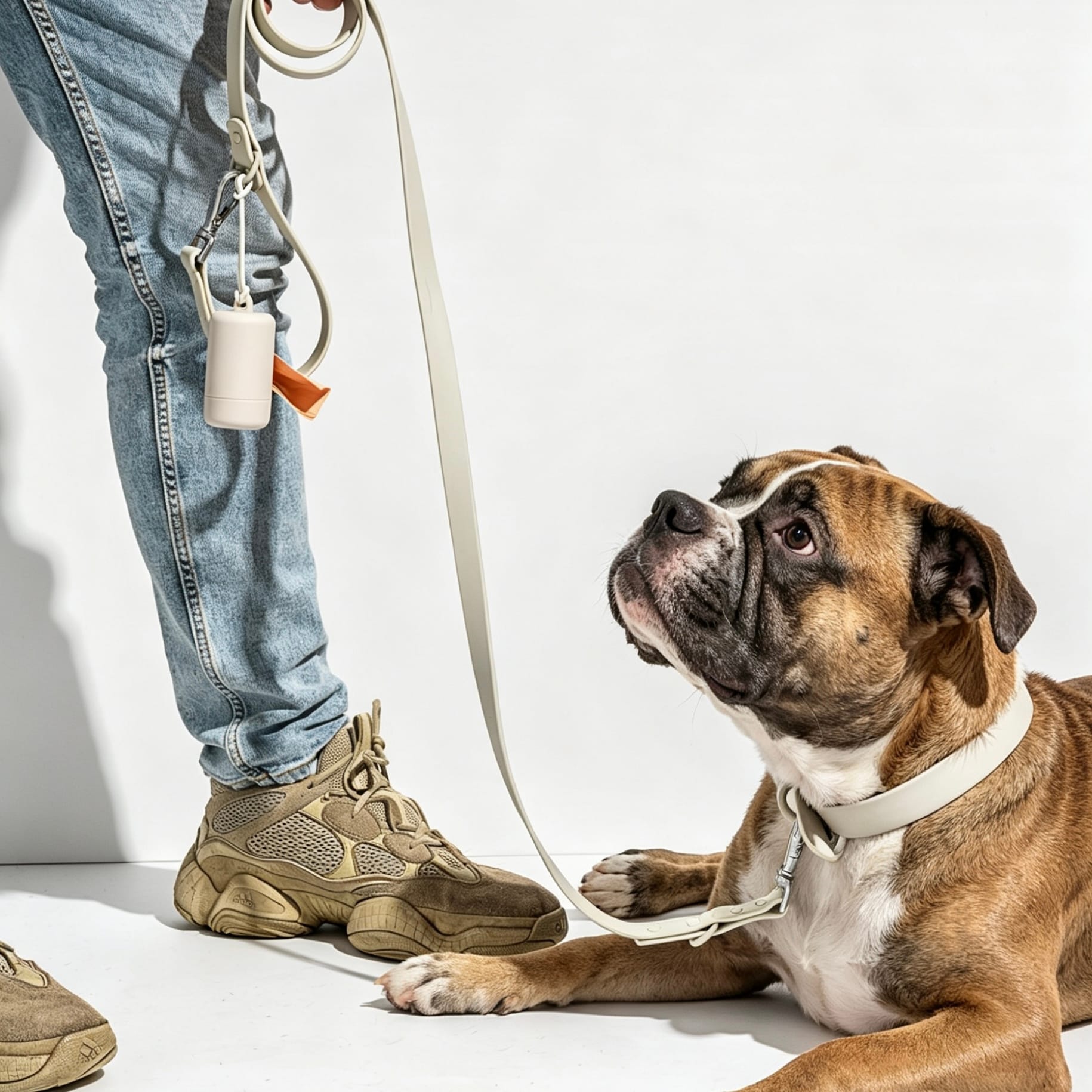
Whatever your dog’s exercise needs, a comfortable, well-fitted walking setup makes it easier to build the consistency that actually matters. The MoonianPet No-Pull Dog Harness is available in XS through XL, covering everything from Chihuahuas to large retrievers, with neoprene padding that keeps extended walks comfortable and dual D-rings for front or back-clip attachment depending on whether you are working on leash manners or just out for a long walk.
Pair it with the MoonianPet Waterproof Leash in 1.8m for everyday walking — the PVC coating wipes clean after muddy walks and does not absorb odour over time, which makes a real difference if you are walking twice a day every day. Or start with the Waterproof Collar and Collar & Leash Set for a dog that already walks calmly on lead.
Not sure which size? Our dog harness size guide and dog collar size guide both have full measurement charts.
Frequently Asked Questions
Is one walk a day enough for a dog?
For most dogs, one walk a day is below what they need — not in terms of the number of walks, but in terms of total time outside. If one walk is all that is possible, make it a long one with genuine sniff time built in rather than a brisk march, and add indoor play or mental stimulation to compensate. Two shorter walks is generally better than one long walk for joint health and for giving dogs a mid-day toilet opportunity, but one good walk is meaningfully better than nothing.
Can I walk my dog too much?
Yes — particularly for puppies, brachycephalic breeds, older dogs with arthritis, and giant breeds with joint predispositions. The signs to watch for are stiffness after walks, reluctance to go out, lying down mid-walk, or excessive panting. For healthy adult dogs of energetic breeds, it is very difficult to over-walk through normal daily exercise — the concern is more relevant for structured endurance training than daily walking.
How long should I walk my French Bulldog?
Twenty to thirty minutes per session, twice a day, in mild temperatures. French Bulldogs have significantly compromised airways compared to standard-muzzle dogs, which limits how efficiently they can cool themselves during exercise. In warm weather, shorten walks further and shift them to early morning or evening. Watch for heavy panting, slowing down, or reluctance to continue — these are reliable signals that a Frenchie has hit their limit for the session.
My dog seems tired after a twenty-minute walk. Is something wrong?
Not necessarily — some dogs are simply lower-energy, and a dog that is content after a short walk and settles well at home may just be telling you that twenty minutes is their sweet spot. If the tiredness is new and represents a change from their normal level of energy, it is worth a vet check, as sudden exercise intolerance can signal underlying health issues. A dog that has always been content with short walks and shows no other symptoms is probably just built that way.
Does sniffing count as exercise?
Mentally, yes — and the mental component of walks matters more than most owners realise. A dog allowed to sniff freely on a thirty-minute walk returns home more settled and satisfied than one marched for the same time at your pace without opportunity to investigate. Sniffing does not replace physical exercise for high-energy breeds, but for the average dog, a walk that is genuinely sniff-rich is more restorative than the same distance covered quickly.
If your dog pulls on walks regardless of length, see our guide on how to stop a dog from pulling on the leash. For puppies just starting out, our puppy’s first walk guide covers timing, length, and gear for those early weeks.
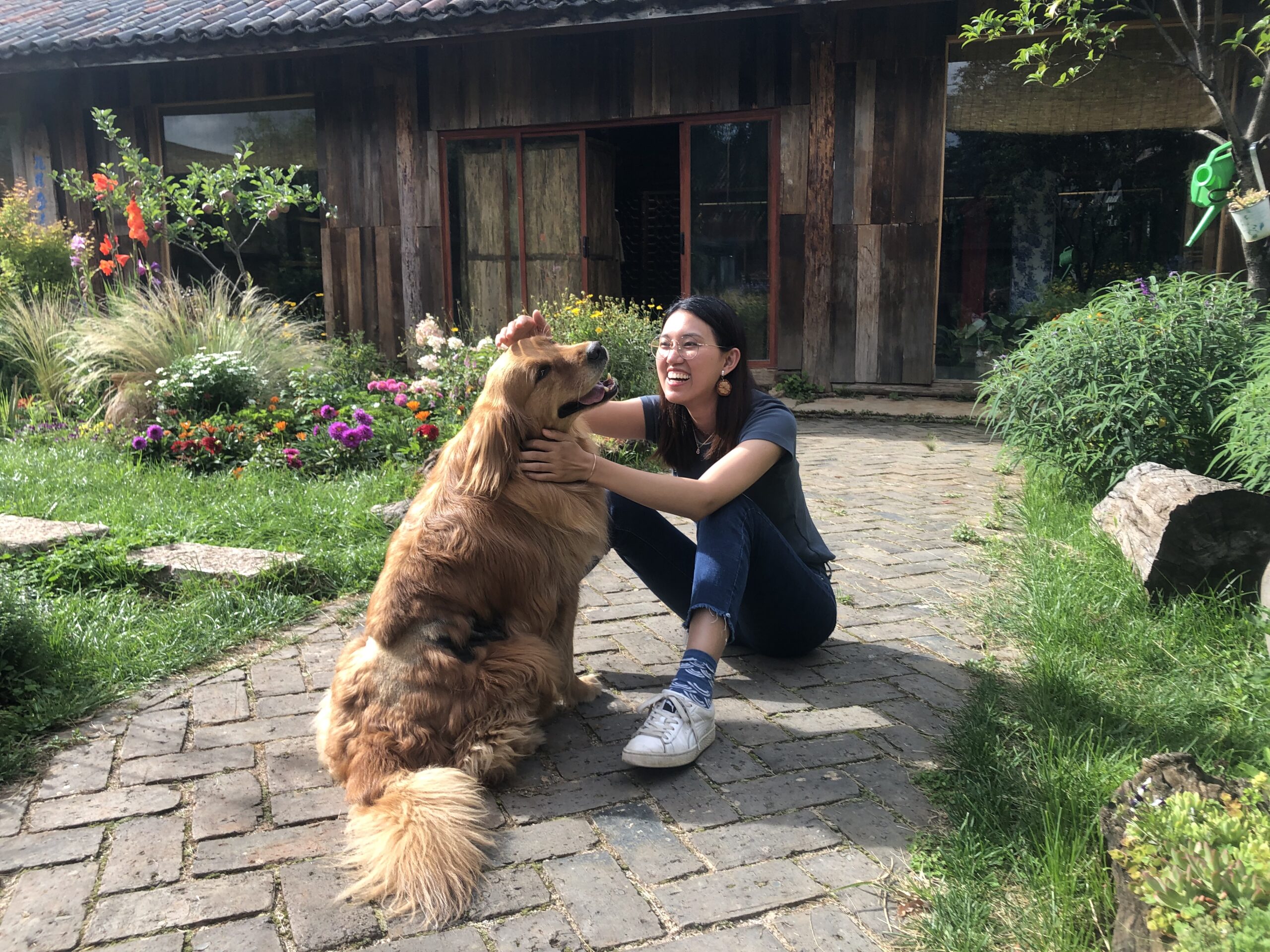
Wenyue
Wenyue is the founder of MoonianPet and writes about dog collars, harnesses, waterproof pet gear, and everyday dog care. Growing up with dogs inspired her lifelong interest in pet care and practical dog gear. Through MoonianPet, she researches dog collars, harnesses, waterproof materials, and everyday solutions that help active dogs stay comfortable during daily adventures.