
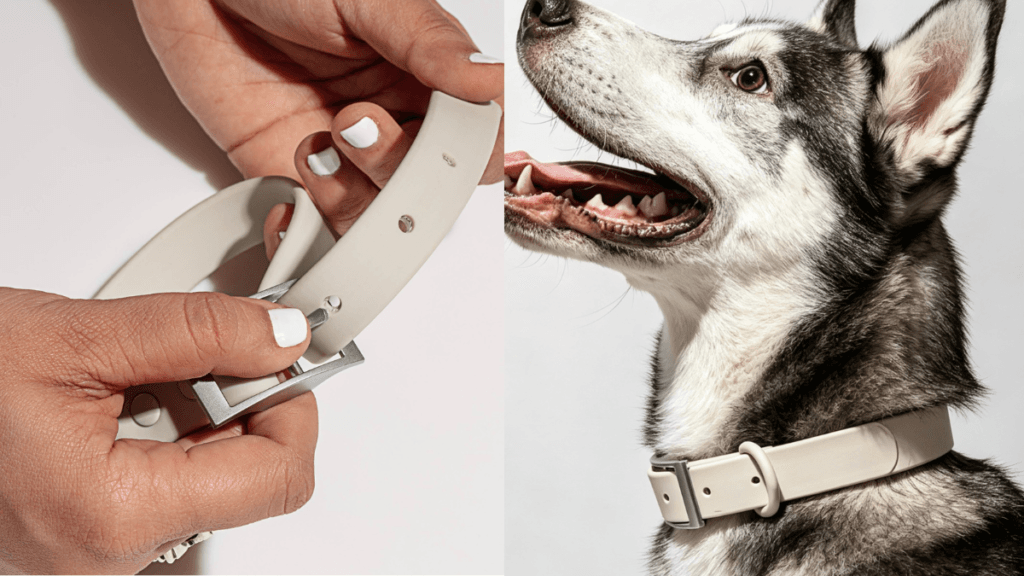
Putting a dog collar on sounds straightforward — loop it around the neck, fasten the buckle, done. But a collar that is even slightly too tight is uncomfortable over a full day of wear, and one that is too loose creates a real escape risk the moment your dog pulls back suddenly or spooks at something on a walk. Getting the fit right the first time takes about two minutes and makes a genuine difference.
This guide covers how to put a collar on correctly, how to check the fit, what to watch for as your dog grows or changes weight, and the specific situations where collar fit matters most.

How to Put On a Dog Collar: Step by Step
Most adjustable dog collars follow the same basic process. These steps work for buckle collars, side-release collars, and martingale-style adjustable collars.
Step 1: Loosen the collar before you start
Open the buckle fully and loosen the adjustment slider so the collar is at its widest setting. A loose collar slips over your dog’s head easily and without fuss — a tight one requires pulling and creates exactly the kind of negative experience around collar time that makes future collar sessions harder. Take ten seconds to loosen it first.
Step 2: Position the collar on the neck
Slip the collar over your dog’s head and position it on the neck — not at the base of the skull and not down at the shoulders, but in the middle of the neck where it sits naturally when the dog is standing. The D-ring where the leash attaches should sit underneath the chin or at the side of the neck, not riding up towards the ears.
Step 3: Fasten the buckle
Click the buckle closed while holding the collar in position. For side-release buckles, squeeze the two tabs together and press until you hear a click. For traditional tongue buckles, thread the pin through the hole and fold the strap back. Do not tighten yet — just get it fastened first.
Step 4: Adjust to fit and apply the two-finger rule
Slide the adjustment to snug the collar against the neck. Then check the fit: slide two fingers — index and middle, held flat — underneath the collar. They should fit snugly but not be squeezed. If you can fit three fingers easily, the collar is too loose. If you cannot fit two fingers at all, it is too tight. This is the standard two-finger rule, and it works reliably across all dog sizes and collar widths.
Step 5: Check with the dog standing and moving
Do the two-finger check with your dog standing, not sitting. A seated dog has a slightly different neck profile — the collar that felt right when they were sitting may be loose enough to slip when they stand and move. Walk them a few steps, let them shake their head, and re-check. The collar should stay in the middle of the neck without riding up or sliding down.

Signs the Collar Is Too Tight
A too-tight collar is not always obvious, especially on dogs with thick coats where the collar is partially hidden. Watch for these signs:
You cannot fit two fingers underneath
This is the clearest physical test. If you have to force your fingers under or can only fit one, the collar is too tight. Loosen it one notch and re-check.
Hair loss or skin redness under the collar
Check the neck skin under the collar weekly, especially on dogs with fine coats. Redness, irritation, or patches of thinning hair directly under the collar are signs of sustained pressure. Loosen the collar and let the area recover before tightening again.
Coughing or gagging during walks
A collar that is pressing on the trachea can cause intermittent coughing, particularly when the leash puts any tension on it. If your dog coughs on walks but not at other times, check collar tightness first before assuming a respiratory issue.
Reluctance to have the collar put on
Dogs that consistently pull away from having their collar put on may be associating the process with discomfort. It could be that the collar is too tight once on, that the buckle is being done up too roughly, or that a previous too-tight collar has left a negative association. Check fit first, then work on making the collar-on process positive if the fit is correct.
Signs the Collar Is Too Loose
A too-loose collar is a different kind of problem — less about comfort, more about safety:
The collar rotates freely around the neck
A correctly fitted collar should stay relatively in place when the dog moves normally. If it spins freely or slides to one side consistently, it is too loose. The D-ring ending up under the chin when you attached it to the side is a common sign of this.
The dog can get a paw through it
Dogs scratch at their collars occasionally, and a loose collar allows a front paw to get caught underneath — which can cause panic and injury if the dog cannot free themselves. If your dog can hook a paw under the collar while scratching, it needs tightening.
The collar slips over the head when pulled back
Test this before the first walk: hold the D-ring and apply gentle but firm backward pressure, as if a dog were backing away from something that frightened them. If the collar slips over the skull with that pressure, it is too loose for safe use on a leash. This is the escape test — and it is worth doing every time you adjust a collar after washing or for a new dog.
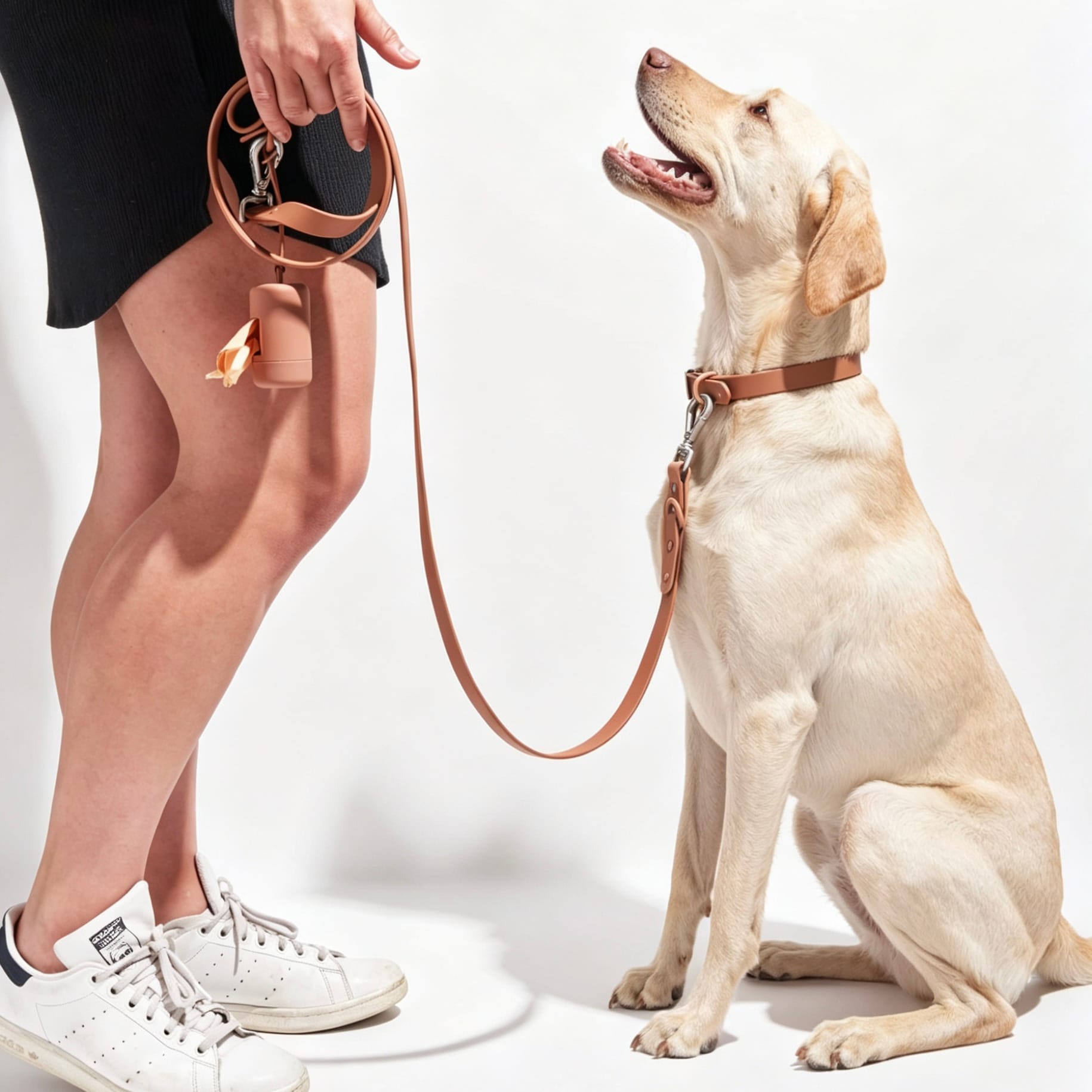
When to Re-Check the Fit
Collar fit is not a one-time check. These are the moments when it is most likely to have changed:
After washing the collar
Fabric and nylon collars can shrink slightly after washing in warm water, which means a collar that fit correctly before washing may be tighter afterwards. PVC-coated collars do not shrink, but it is still worth checking fit after washing as a habit — and a good time to check the buckle and D-ring for any wear.
Every two weeks for puppies
A puppy’s neck can grow noticeably in two weeks during peak growth phases. Set a reminder — literally put it in your calendar — to check collar fit every two weeks until your dog reaches adult size. A collar that fit correctly and felt snug can become genuinely tight in under a month on a fast-growing puppy.
After significant weight change
Dogs that gain or lose weight over a few weeks will have a corresponding change in neck circumference. If your vet mentions a weight change at a check-up, re-check collar fit the same day. Both weight gain (tighter collar) and weight loss (looser collar) affect the fit in ways that are easy to miss until you specifically look for them.
When switching between seasonal coats
Double-coated breeds like Huskies, Golden Retrievers, and German Shepherds have noticeably different neck profiles in full winter coat versus summer coat. A collar fitted in summer may need to be loosened slightly for winter, and vice versa.
Collar vs Harness: Which Should the Leash Attach To?
A collar is the right place for your dog’s ID tags. Whether it is also the right place to attach the leash depends on how your dog walks.
For dogs that walk calmly on a loose leash, attaching to the collar is perfectly safe and practical. For dogs that pull — even occasionally — the leash should clip to a harness rather than the collar, because collar pressure during pulling is concentrated on the trachea regardless of how well the collar fits at rest. A correctly fitted collar can still cause tracheal strain when a dog lunges hard against it.
The practical setup most owners land on is a collar for ID tags plus a harness for leash attachment on walks. Our collar vs harness guide covers when to use each in detail, and our dog collar size guide has full measurement charts if you are sizing a new collar.
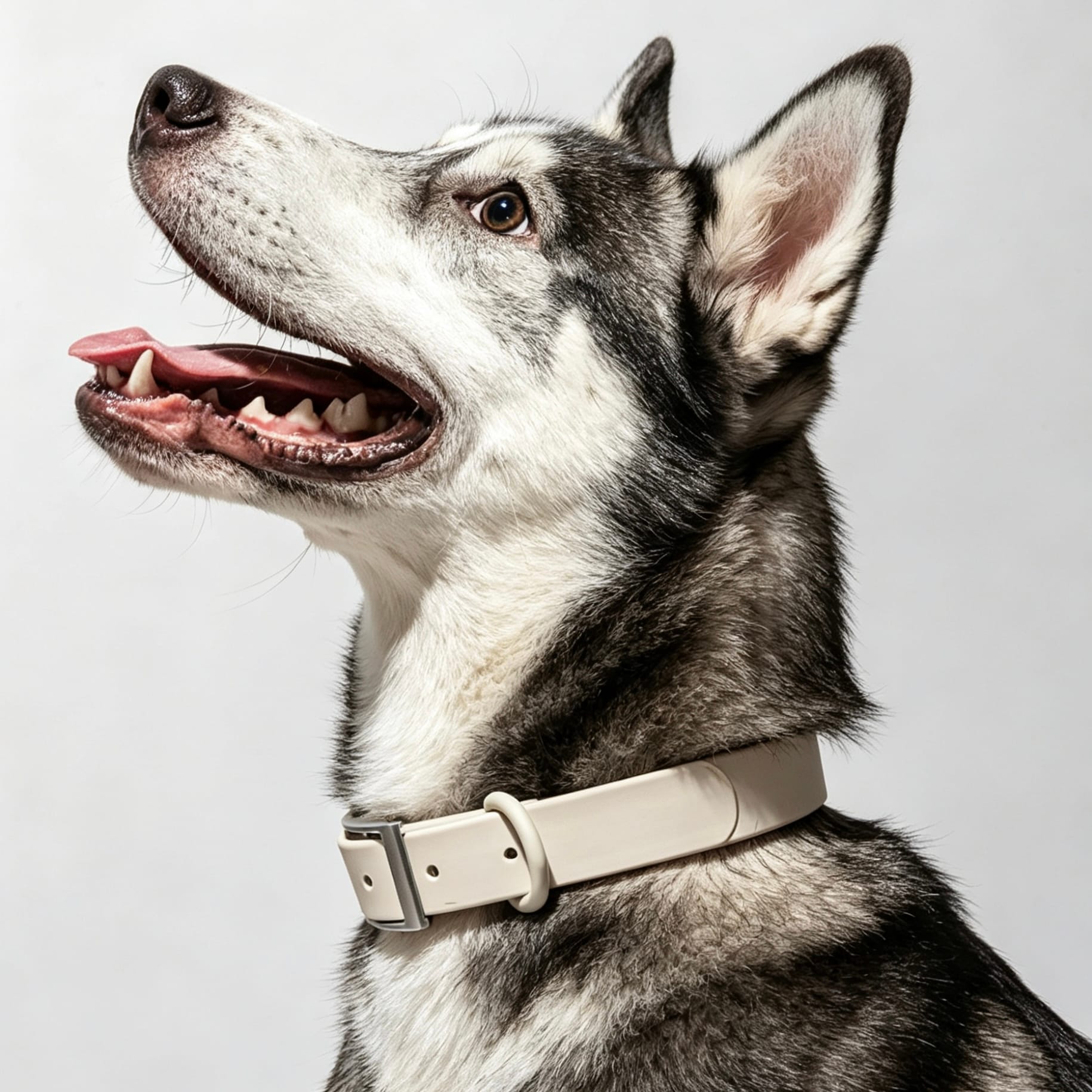
The Collar Built to Stay Fitted
The MoonianPet Waterproof Dog Collar is PVC-coated webbing with a side-release buckle and smooth adjustment slider — which means it does not shrink after washing, keeps its shape after daily use, and the buckle clicks securely without the spring-weakness issues that cheaper side-release buckles develop over time. Available in 11 colors and 5 sizes, XS through XL.
If you need a matching leash, the Collar & Leash Set pairs both in the same color at a better price than buying separately. Not sure which size to order? The dog collar size guide has measurement instructions and a full size chart — measuring takes under two minutes and means you get the fit right on the first order.
Frequently Asked Questions
How tight should a dog collar be?
The two-finger rule is the standard: you should be able to slide two fingers — index and middle, held flat — underneath the collar with the dog standing, and they should fit snugly but not be squeezed. If you can fit three fingers easily, it is too loose. If you cannot fit two fingers, it is too tight. This applies to dogs of all sizes, though the fingers of a large-handed adult may need to be adjusted slightly for very small breeds — use your judgement and check that the collar cannot be pulled over the head.
Should my dog wear a collar all the time?
Most owners leave a collar on during waking hours for ID purposes, and remove it overnight to let the neck skin breathe and prevent fur matting under the collar. The exception is dogs that sleep in crates — a collar can catch on crate bars and cause injury, so collar-off overnight is particularly important for crated dogs. Some owners opt for a lightweight breakaway collar for overnight wear, which releases under pressure if it catches on something.
My dog keeps slipping out of their collar on walks. What am I doing wrong?
Collar slipping usually happens for one of two reasons: the collar is too loose, or the dog has an unusually narrow head relative to their neck — common in sighthounds like Greyhounds and Whippets. For the first problem, tighten until you pass the escape test (firm backward pressure without the collar sliding over the skull). For the second, a martingale collar — which tightens to a limited degree when pulled — is a better solution than a flat collar for sighthound-shaped heads. Attaching the leash to a harness rather than the collar is also a reliable escape-prevention option for any dog prone to backing out.
How do I get my dog to stop fighting the collar?
Collar resistance usually comes from one of three things: the collar has been too tight and the experience has become associated with discomfort; the process of putting it on is rushed and stressful; or the dog has learned that the collar predicts something unpleasant like a bath. The fix is the same in all cases — slow down, use treats at every step of the process, and make collar-on predict something good (a walk, a meal, playtime). Most dogs become indifferent to the collar within a week of consistent positive association, and enthusiastic about it within two.
How do I measure my dog for a collar?
Use a soft tape measure and wrap it around the middle of your dog’s neck — not at the base of the skull, not at the shoulders, but where the collar will actually sit. Note the measurement in centimetres or inches, then add 2-3cm (about an inch) to allow for the two-finger rule. Compare to the collar’s size chart. Full instructions and a size chart are in our dog collar size guide.
If you are deciding whether a collar or harness is the right leash attachment for your dog, our collar vs harness guide covers both in detail. For dogs that pull on the leash regardless of collar fit, a no-pull harness addresses the root cause more effectively than any collar adjustment.
Wenyue
Wenyue is the founder of MoonianPet and writes about dog collars, harnesses, waterproof pet gear, and everyday dog care. Growing up with dogs inspired her lifelong interest in pet care and practical dog gear. Through MoonianPet, she researches dog collars, harnesses, waterproof materials, and everyday solutions that help active dogs stay comfortable during daily adventures.