
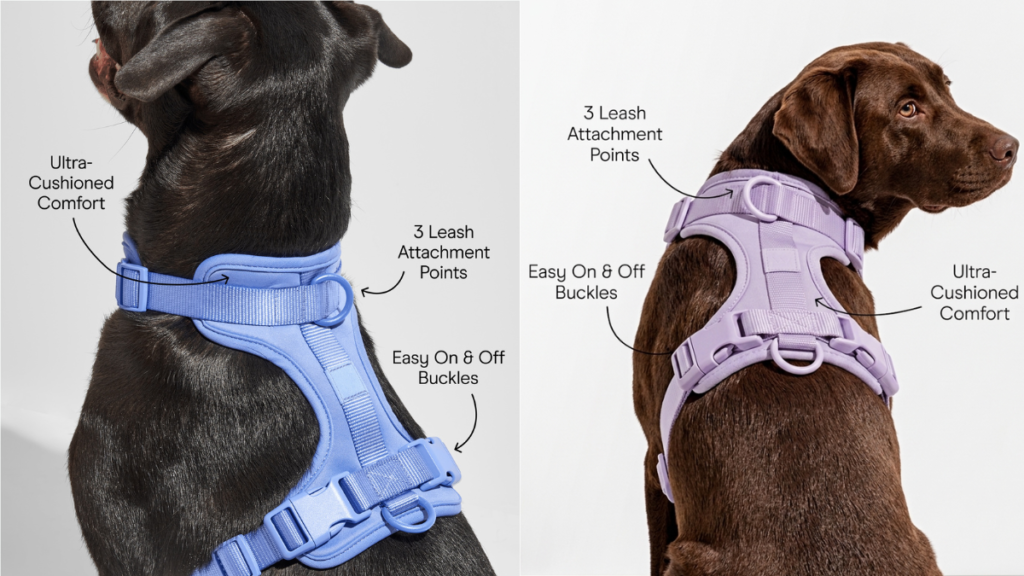
Most dog harnesses are made from nylon webbing — the same material used in seat belts and backpack straps. It is durable, inexpensive, and easy to manufacture. It is also stiff, can chafe against skin and fur, and absorbs water readily, which means it stays wet long after a swim or a rainy walk.
Neoprene is a different material entirely. Originally developed for wetsuits, neoprene is a closed-cell synthetic rubber that is soft, flexible, water-resistant, and quick-drying. In a harness, it changes the contact experience significantly — both for the dog wearing it and for the owner handling it.
This guide covers what neoprene actually is, how it performs differently from nylon and mesh in a harness, the dogs that benefit most from it, what to check when choosing one, and where the material has limitations.
What Neoprene Actually Is
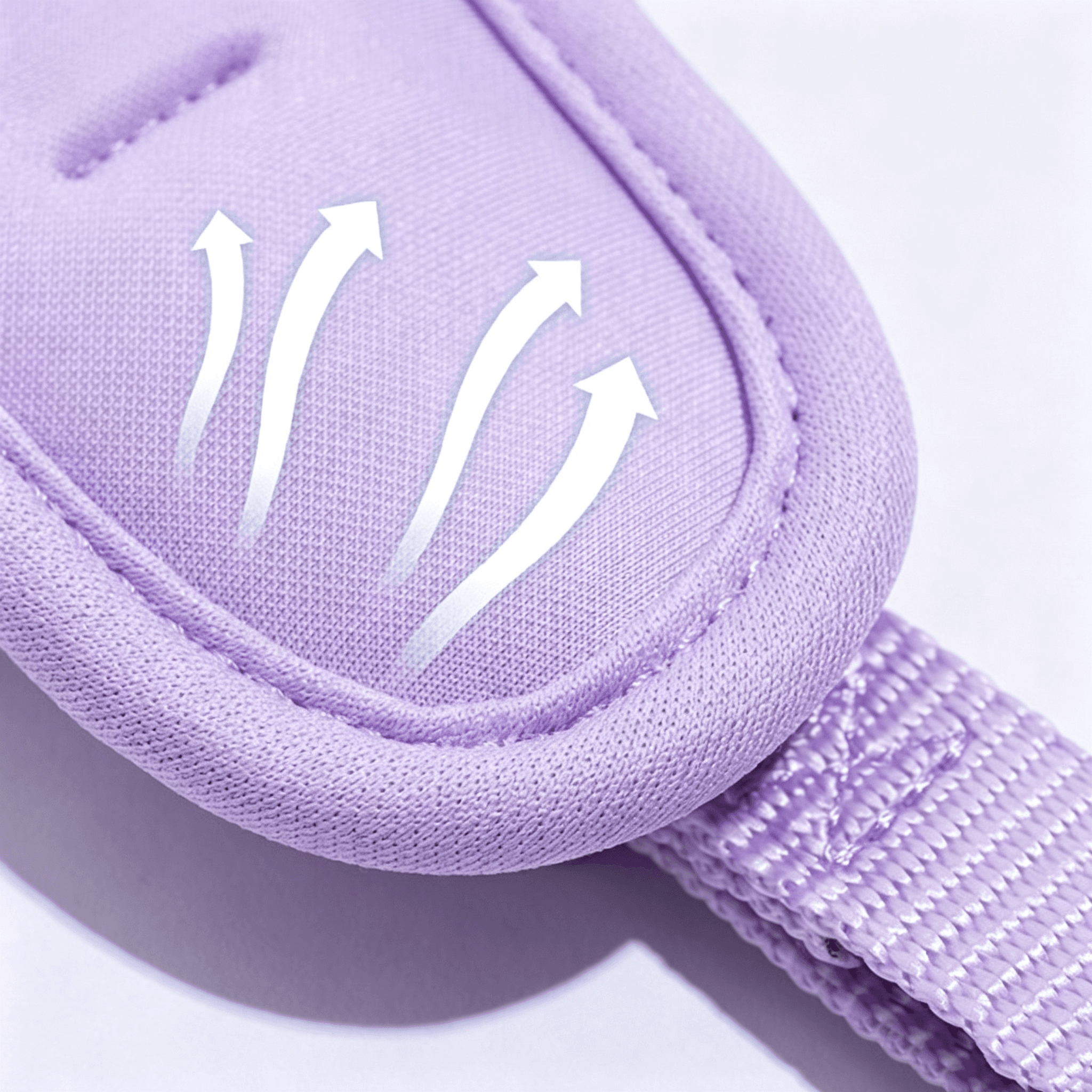
Neoprene is a synthetic rubber — polychloroprene — manufactured in a foam structure with closed cells. Each cell is sealed, which means water cannot penetrate the material the way it can with open-cell foams or woven fabrics. This gives neoprene its characteristic properties: water resistance, buoyancy, and insulation. It is the material used in wetsuits, knee supports, laptop sleeves, and dive equipment.
In dog harnesses, neoprene is most commonly used as a padding layer — the part that sits against the dog’s skin and coat — while the structural webbing, buckles, and D-rings are made from conventional materials. The neoprene provides the contact surface; the webbing and hardware provide the structure and strength.
Some harnesses use neoprene as the primary body material rather than just a lining — the chest panel and back panel are cut from neoprene sheet rather than built from woven webbing. These feel softer and more flexible than webbing-based harnesses, but the structural webbing is still present for load-bearing attachment points.
How Neoprene Performs Differently from Nylon and Mesh
Against the skin and coat
Nylon webbing has a firm, slightly rough texture that can rub against skin and fur during repeated movement — particularly in the armpit area where the harness passes under the front legs. Over a long walk, this friction can cause hot spots and coat damage on short-coated or fine-coated dogs. Neoprene has a smooth, soft surface that moves with the body rather than against it. The difference is most noticeable on dogs with sensitive skin or thin coats.
Water handling
Nylon absorbs water — it becomes heavy when wet and takes time to dry, which means a harness used on a rainy walk or after a swim stays cold and damp against the dog’s coat for the rest of the outing. Neoprene does not absorb water into the material. The surface gets wet, but water beads off rather than soaking in, and the harness returns to its dry weight quickly. For dogs that swim regularly or walk in wet conditions, this is a significant practical difference.
Versus mesh
Mesh harnesses are designed for airflow — the open weave allows ventilation but provides no water resistance and minimal padding. They work well in hot, dry conditions for dogs that are comfortable in their harness. Neoprene offers more padding and water resistance at the cost of some airflow. In practice, neoprene in a well-designed harness is not stifling — the material is thin and the harness does not cover enough body surface area to cause meaningful heat retention in most conditions — but in extreme heat, mesh has the ventilation advantage.
Weight and flexibility
Neoprene is lightweight relative to its thickness — thinner than padded nylon constructions that achieve similar softness through a sewn-in foam layer. It is also inherently flexible, conforming to the dog’s body shape rather than holding a rigid form. A neoprene-padded harness typically feels more natural on the dog’s body than an equivalent nylon-padded harness, particularly during movement.
Dogs That Benefit Most from a Neoprene Harness
Dogs with sensitive or easily irritated skin
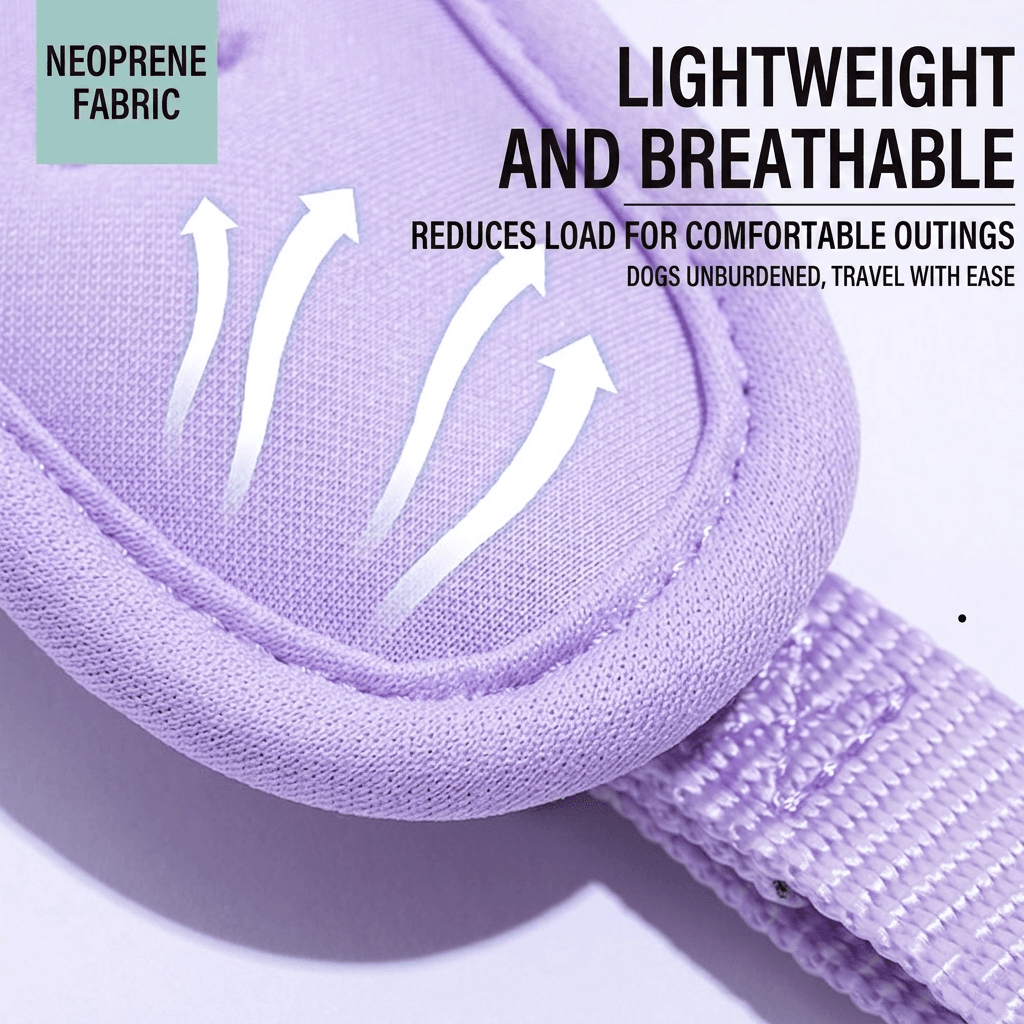
Short-coated breeds — Boxers, Vizslas, Weimaraners, Greyhounds, Dalmatians — have little coat between the harness and their skin. On a long walk, nylon edges can cause visible redness and hair loss in the contact areas, particularly under the arms. Neoprene’s smooth surface eliminates this friction almost entirely. If your dog comes back from a walk with rubbed patches under the front legs, a neoprene-padded harness is the most direct fix.
Dogs that swim or walk in wet conditions regularly
Labradors, Spaniels, Portuguese Water Dogs, and any dog that goes in the water regularly benefits from a harness that does not hold onto that water for the rest of the walk. A wet neoprene harness sheds water quickly and returns to its original weight; a wet nylon harness stays heavy and cold, which is uncomfortable for the dog and adds weight during activity.
Dogs that wear their harness for long periods
Working dogs, dogs used in canicross or hiking, dogs that spend extended time outdoors — any dog that wears their harness for hours rather than minutes benefits from a contact material that does not create cumulative friction. Neoprene’s properties become more relevant the longer the harness is worn.
Dogs that have had harness-related rubbing with nylon harnesses
If a dog has a history of rubbing or discomfort with previous harnesses, neoprene is the most common material upgrade that resolves the issue. The material itself is the variable that changes. Fit still matters — even neoprene will rub if the harness is sized incorrectly — but the starting point for contact comfort is significantly better.
What to Look for When Choosing a Neoprene Harness
Neoprene coverage at the contact points
The two areas where a harness creates the most friction are the chest panel and the underbelly strap — the parts that wrap under the front legs. These are the areas that need neoprene coverage most. A harness that has neoprene on the back panel only, where little friction occurs, is prioritising the visible surface over the functional one. Check that the underarm sections and chest contact area are padded with neoprene.
Stitching quality where neoprene meets webbing
Neoprene is cut and stitched to webbing at the edges of the padding panels. This join is a stress point — if the stitching is light or poorly reinforced, the neoprene can peel away from the webbing over time with repeated use and washing. Look for double or bar-tacked stitching at the neoprene-to-webbing edges. A loose or peeling neoprene edge quickly becomes a chafing surface that performs worse than plain webbing.
Structural webbing and hardware independent of the neoprene
Neoprene provides comfort but not structural strength. The D-rings, buckles, and load-bearing straps should be made from webbing and metal hardware that are sewn and reinforced independently of the neoprene. If the harness looks like it relies on the neoprene panels to hold its shape under load, that is a construction concern — neoprene stretches, and a harness that stretches under leash tension loses fit and control.
Adjustability across chest and girth
Neoprene is less forgiving of size errors than rigid webbing, because it conforms to the body — which means a harness that is slightly too large will gap and shift, while one that is too small will restrict movement. Good adjustability at multiple points — ideally chest width and girth independently — gives you the ability to dial in a precise fit. Use the harness size guide and measure before ordering rather than estimating by breed or weight alone.
Where Neoprene Has Limitations
Neoprene is not the right material for every situation. In sustained high heat — hot summer days, exercise in warm climates — neoprene’s lower breathability compared to open mesh becomes a relevant factor for dogs that run hot. A mesh harness or a lightweight webbing-only design will allow more airflow in these conditions.
Neoprene also requires more care in washing than nylon. Most neoprene harnesses should be hand-washed or machine-washed on a gentle cycle in cold water, and air-dried rather than tumble-dried — heat can degrade the neoprene cell structure over time. A nylon harness tolerates a wider range of washing conditions.
Finally, neoprene ages differently from nylon. With heavy use and repeated washing, neoprene can develop surface cracking or lose some of its flexibility. A well-made neoprene harness with reinforced stitching will last several years with proper care; a cheaply made one with thin neoprene and light stitching may show wear within months.
The MoonianPet No-Pull Dog Harness
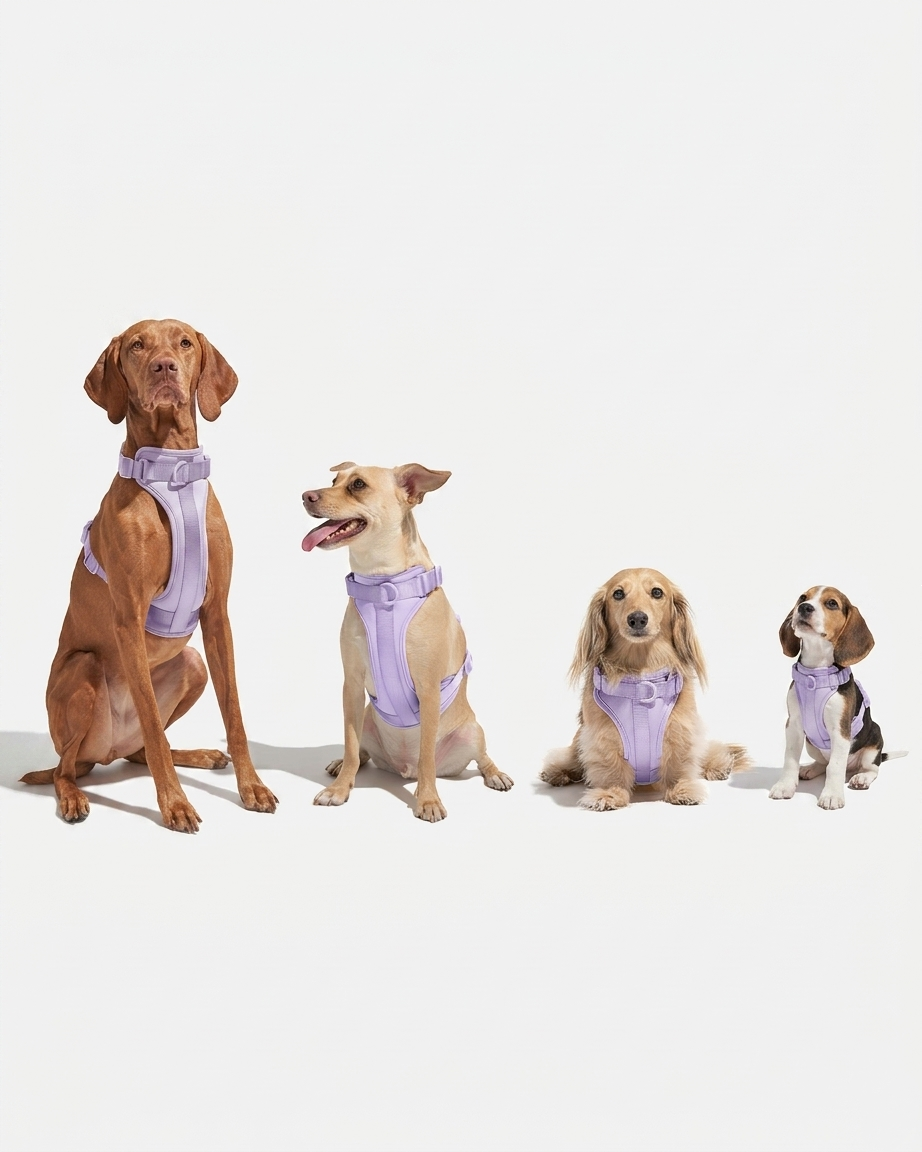
The MoonianPet No-Pull Dog Harness uses neoprene as the primary body and padding material — the chest panel, back panel, and underarm sections are all neoprene, with structural webbing and reinforced hardware sewn independently for load-bearing. The neoprene is double-stitched at all contact edges to prevent peeling.
It includes a front D-ring for no-pull walking, a back D-ring for standard walking, and a reinforced top handle for close control. Five sizes from XS to XL, available in 11 colours. For dogs that pull and need both the no-pull function and the comfort advantage of neoprene, the Harness & Leash Set pairs the harness with a matching waterproof leash.
Not sure which size? The dog harness size guide covers chest and neck measurement with a full size chart.
Frequently Asked Questions
Is neoprene waterproof or just water-resistant?
Neoprene is water-resistant rather than fully waterproof in the technical sense — it repels water and does not absorb it, but a neoprene harness submerged for a prolonged period will eventually allow some surface moisture through at the stitched seams. For practical purposes — rain, puddles, swimming — a neoprene harness performs waterproof. It does not hold water the way nylon does, and it dries significantly faster after full submersion.
How do I clean a neoprene dog harness?
Hand-wash in cool water with a mild detergent, or machine-wash on a gentle cycle in a laundry bag at 30°C or below. Rinse thoroughly and air-dry flat or hanging — do not tumble-dry or leave in direct sunlight for extended periods, as heat degrades neoprene over time. For routine maintenance between washes, wipe down with a damp cloth after muddy walks. Neoprene does not hold odour the way nylon does, so frequent full washing is usually not necessary.
Is neoprene too hot for dogs in summer?
For most dogs in most conditions, no. A harness covers a relatively small proportion of the dog’s body surface, and neoprene at typical harness thickness does not create meaningful insulation over a short to medium walk. In extreme heat or for dogs that run very hot — brachycephalic breeds, heavily coated breeds in summer — a mesh harness with maximum airflow is the more cautious choice. For temperate conditions and dogs without respiratory concerns, neoprene is fine year-round.
Will a neoprene harness prevent chafing under my dog’s arms?
In most cases, yes — provided the harness fits correctly. Chafing under the arms is caused by friction from a material moving against the skin repeatedly. Neoprene’s smooth surface dramatically reduces this friction compared to nylon webbing. However, a neoprene harness that is too large will shift and rub even though the material is softer. Correct sizing is the prerequisite; neoprene then provides the material advantage on top of that.
Does neoprene stretch over time?
Neoprene has some natural elasticity, but a quality harness is constructed so that the structural webbing — not the neoprene — bears the load. The webbing does not stretch, so harness fit should remain consistent over time regardless of the neoprene’s flexibility. If a harness becomes noticeably looser over several months of use, the issue is likely the adjustment points rather than the neoprene itself. Check the tri-glide buckles and adjustment straps periodically to ensure they are holding their set position.
For guidance on sizing a harness correctly before ordering, see the dog harness size guide. For a full comparison of harness features and how to choose between front-clip and back-clip designs, see dog harness with handle.
Wenyue
Wenyue is the founder of MoonianPet and writes about dog collars, harnesses, waterproof pet gear, and everyday dog care. Growing up with dogs inspired her lifelong interest in pet care and practical dog gear. Through MoonianPet, she researches dog collars, harnesses, waterproof materials, and everyday solutions that help active dogs stay comfortable during daily adventures.