
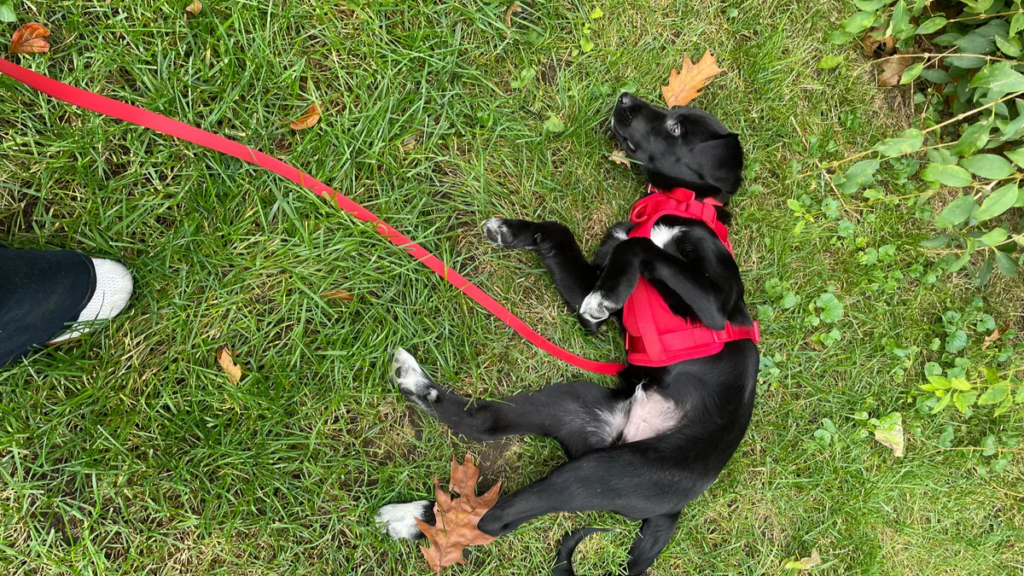
A puppy’s first harness is rarely its last. Between eight weeks and a year old, most dogs go through several distinct growth phases — some breeds double or triple their body weight in a matter of months — which makes fitting a harness a moving target in a way it isn’t for a fully grown dog. A harness that fits perfectly at ten weeks may be uncomfortably tight by fourteen weeks, and one bought with growth room in mind may be dangerously loose at first.
Puppies also bring behavioural differences that matter for harness choice: they wiggle, twist, and squirm far more than an adult dog during fitting, they haven’t yet learned loose-leash walking, and their joints and growth plates are still developing, which makes even mild pulling pressure something worth minimising early on.
This guide covers when puppies can start wearing a harness, how to size and refit one through the growth period, and what design features actually matter for a young, still-developing dog.
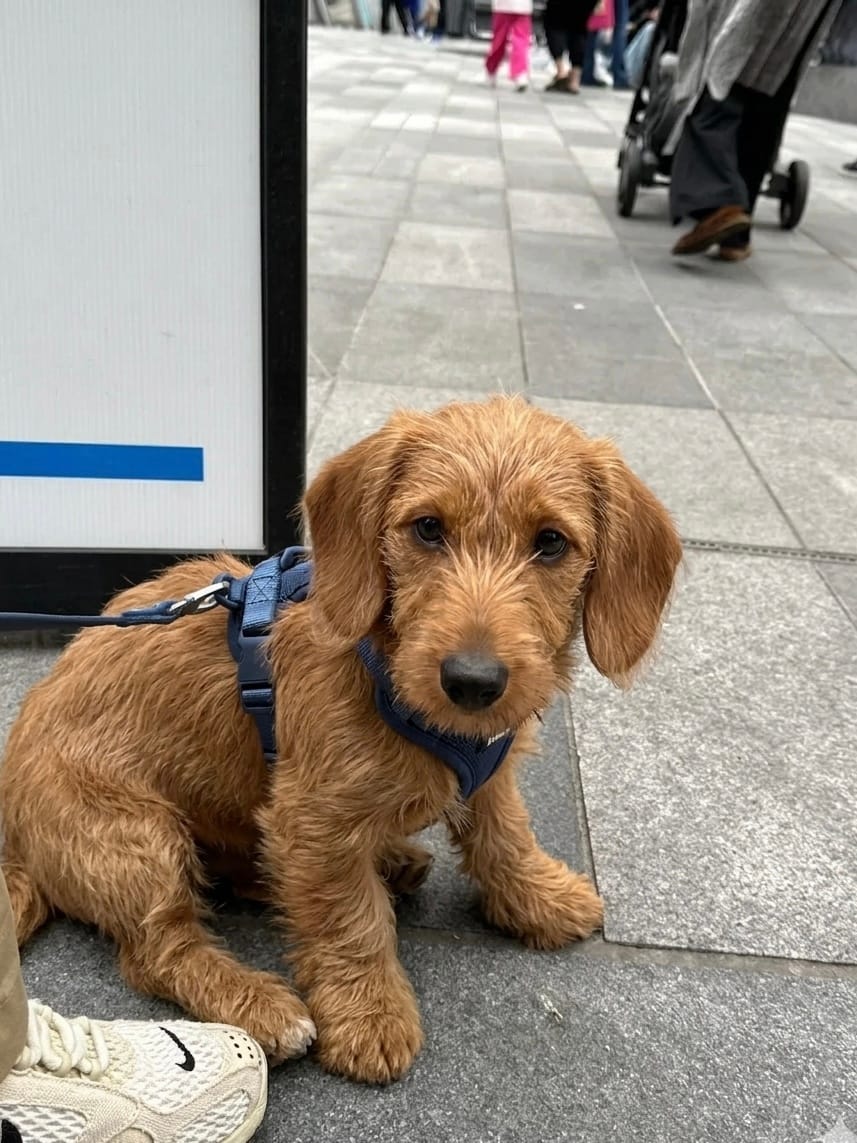
When Can a Puppy Start Wearing a Harness?
As soon as vaccinations allow supervised outings
Most puppies can begin harness and leash introduction indoors or in a secure yard from around 8 weeks, and start supervised walks in public areas once their vet confirms it’s safe based on the vaccination schedule — typically between 10 and 16 weeks depending on the individual vet’s guidance. Introducing the harness early, even before outdoor walks begin, gives the puppy time to get comfortable wearing it before leash pressure is added.
Why harness before collar for leash walking
A young puppy hasn’t yet learned to walk without pulling, and their neck and trachea are still developing. A harness distributes any leash pressure across the chest and shoulders rather than concentrating it on the throat, making it the safer choice for early leash training regardless of breed size. A lightweight flat collar is still useful for ID tags, but the leash itself should attach to the harness.
Short, positive first sessions
The first few times a puppy wears a harness, keep sessions short and pair putting it on with a treat or a moment of play. Puppies that have a negative early association with the harness — because it was forced on or felt uncomfortable — can develop a lasting resistance to wearing it. A harness that’s easy and quick to put on makes this early training period smoother for both puppy and owner.
What to Look for in a Puppy Harness
A wide adjustment range at both neck and chest
Because puppies grow quickly and unevenly, a harness with a narrow, fixed sizing range will be outgrown within weeks. Independent adjustment straps at both the neck and chest allow the same harness to be tightened as needed and give more runway before a full size-up is required — though most owners will still need to move up a size or two before their puppy reaches adult size.
Lightweight construction
A puppy’s frame is smaller and less muscled than an adult dog’s, so a heavy harness with thick padding and bulky hardware feels disproportionately weighty on a young dog. Lightweight webbing and compact hardware keep the harness from feeling restrictive or affecting the puppy’s natural gait during this developmental period.
Easy to put on quickly
Puppies wiggle far more than adult dogs during fitting, which makes a harness with a simple, one- or two-step fastening process considerably easier to manage than one with several buckles to align while a puppy squirms. A quick, straightforward harness reduces frustration for the owner and keeps the early wearing experience positive for the puppy.
No pressure on the neck or throat
The harness should distribute leash pressure across the chest and shoulders, not the neck, since a puppy’s trachea and cervical structures are still developing. A low, chest-forward pressure point protects the puppy’s airway during the leash-training period when pulling and lunging are most common.
Soft, non-chafing material at contact points
Puppy skin and coat are more sensitive than an adult dog’s, and rough or stiff strap edges can cause chafing at the armpit and chest during the early weeks of wear before the puppy’s coat has fully developed. A smooth, soft-finished material at the contact points reduces this risk, particularly for short-coated puppy breeds.
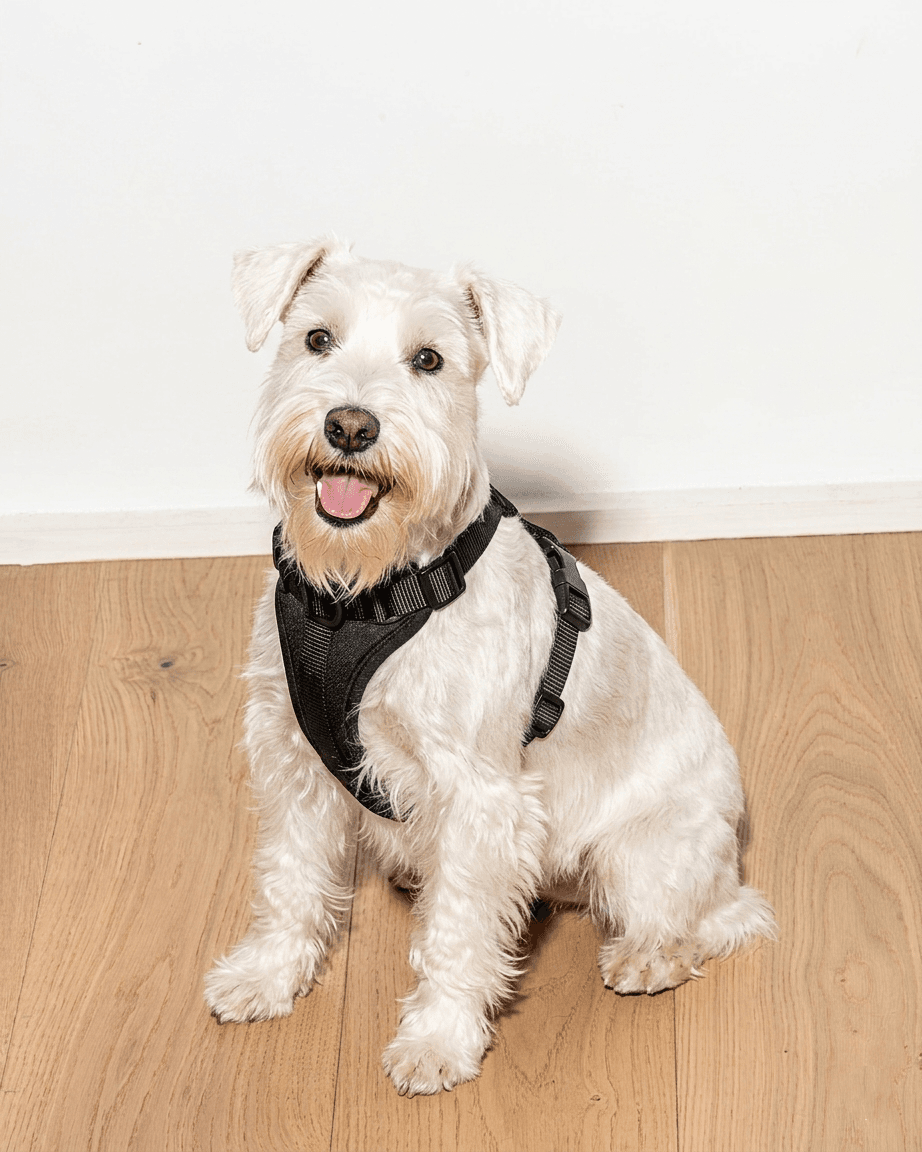
The MoonianPet No-Pull Harness for Growing Puppies
The MoonianPet No-Pull Dog Harness is available from XS, fitting small and young puppies, with three-point independent adjustment at both neck and chest to accommodate growth between fittings. The breathable neoprene body is lightweight and soft against sensitive puppy skin, and the low chest-forward design keeps leash pressure off the neck during early training.
Positive-click ABS safety buckles make it quick to put on even with a wiggling puppy, and the harness pairs with the matching Harness & Leash Set for a complete leash-training setup.
Measure your puppy’s current chest girth using our dog harness size guide, and plan to remeasure every couple of weeks through the growth period.

Frequently Asked Questions
At what age can a puppy wear a harness?
Most puppies can start getting used to wearing a harness indoors from around 8 weeks old, before they’re fully vaccinated for outdoor walks. This gives them time to become comfortable with the feel of it before leash pressure and outdoor distractions are introduced. Check with your vet on the right timeline for supervised outdoor walks based on your puppy’s vaccination schedule.
How often should I resize my puppy’s harness?
Check the fit every 1–2 weeks during the first six months, and more frequently during noticeable growth spurts. A good rule of thumb is to test with two fingers under each strap — if it’s snug with just one finger, it’s time to loosen the adjustment or move up a size before the next walk.
Should a puppy wear a harness or a collar?
For leash walking, a harness is the safer choice since it distributes pressure across the chest and shoulders rather than the neck, protecting the puppy’s still-developing trachea during a period when pulling is common. A lightweight flat collar is still useful for holding an ID tag, but leash attachment should go to the harness, not the collar.
My puppy won’t stop biting or pulling at the harness — what do I do?
This is common in the first few sessions and usually settles with short, positive exposure — putting the harness on for a minute or two paired with a treat, then removing it, and gradually extending the time worn. Avoid forcing a struggling puppy into a harness for a full walk right away, as this can build a negative association that makes future fittings harder.
Do I need to buy a new harness every time my puppy grows?
Not every growth spurt requires a new harness — a model with a wide adjustment range at both neck and chest can absorb a fair amount of growth before a full size-up is needed. That said, most owners will still need to move up one or two sizes between the puppy stage and adult size, so it’s worth checking the fit regularly rather than assuming the first harness will last the whole first year.
For step-by-step fitting instructions, see our how to measure your dog for a harness guide. If you’re also sizing a collar for ID purposes, our puppy collar size guide covers the same growth considerations.

Wenyue
Wenyue is the founder of MoonianPet and writes about dog collars, harnesses, waterproof pet gear, and everyday dog care. Growing up with dogs inspired her lifelong interest in pet care and practical dog gear. Through MoonianPet, she researches dog collars, harnesses, waterproof materials, and everyday solutions that help active dogs stay comfortable during daily adventures.