
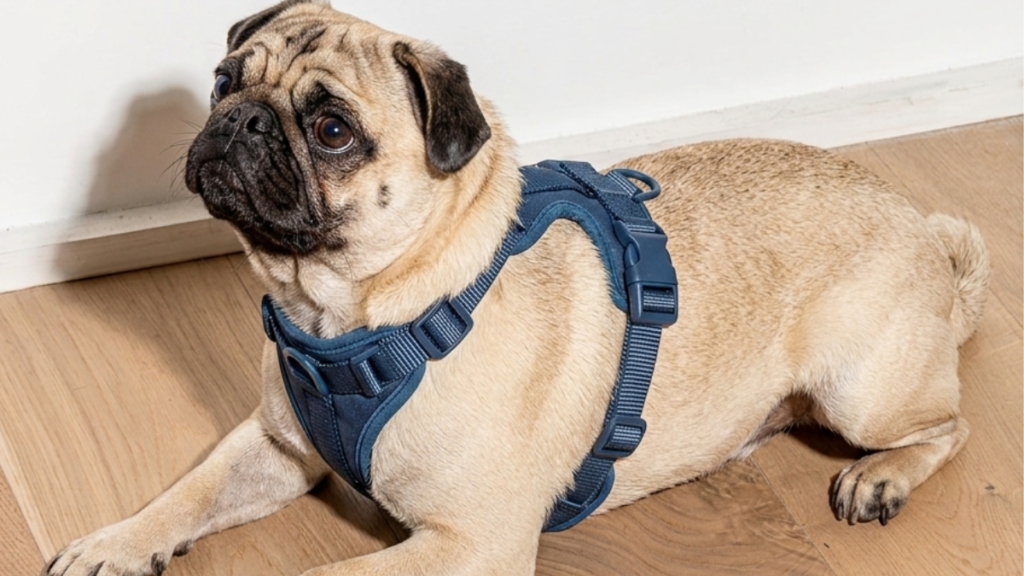
A harness gets dirtier than most dog owners expect. It sits directly against the coat through every walk, absorbs sweat and body oils at the contact points, picks up mud, grass, and puddle water outdoors, and — for many dogs — ends up smelling noticeably worse than the collar ever does. Unlike a collar, which touches a relatively small area of neck, a harness contacts the chest, shoulders, and armpits, giving odour-causing bacteria a much larger surface to build up on.
How you should wash it, though, depends heavily on what it’s made from. Nylon webbing, foam padding, and coated materials like neoprene or PVC-coated webbing all respond differently to water, soap, and machine washing — and using the wrong method on the wrong material can shorten a harness’s life or damage its hardware.
This guide breaks down how to clean a harness properly by material type, how often it actually needs a full wash, and what to avoid regardless of what your harness is made from.
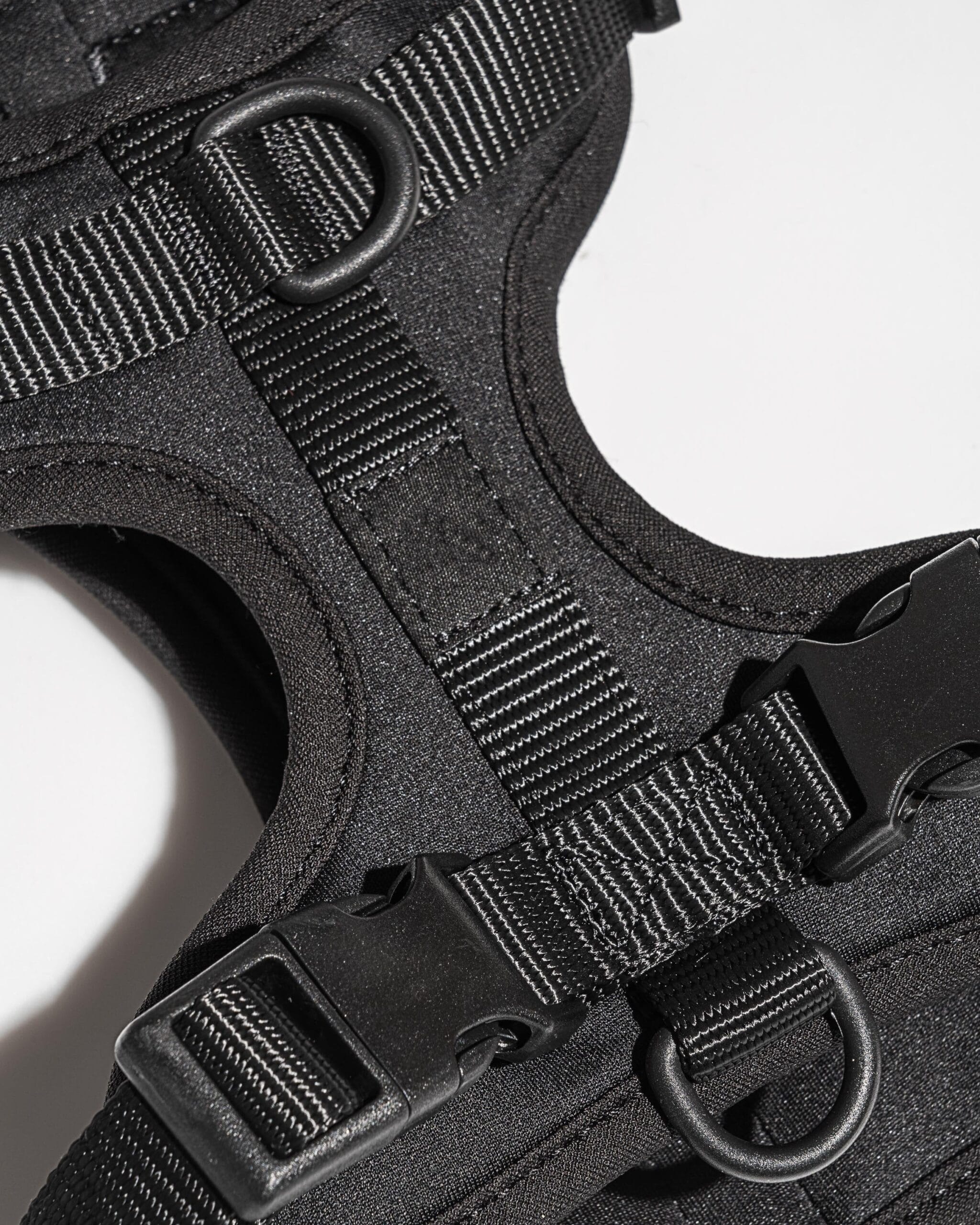
How Often Does a Harness Actually Need Washing?
Quick wipe-downs after every muddy or wet walk
A harness that’s picked up mud, puddle water, or visible dirt should be wiped down as soon as possible after the walk, rather than left to dry with debris worked into the material. For smooth, coated materials, this takes seconds with a damp cloth. For textured nylon webbing, a quick wipe still helps even though it won’t remove everything embedded in the fibres.
A full wash every 2–4 weeks for regular use
Even with regular wipe-downs, sweat, body oils, and skin cells build up at the contact points over several weeks of daily wear. A full wash every two to four weeks — more often in hot weather or for dogs that swim or get muddy frequently — removes this buildup before it starts causing persistent odour. A harness that starts smelling noticeably between full washes is due for one sooner.
Washing a Coated or Neoprene Harness
Wipe clean for daily maintenance
Coated webbing and neoprene both have a smooth, non-absorbent surface, which means most everyday dirt wipes off with a damp cloth and a small amount of mild soap in seconds — no soaking or machine washing required for routine cleaning. This is one of the main practical advantages of these materials over uncoated nylon.
Hand wash for a deeper clean
For a more thorough clean every few weeks, hand wash in lukewarm water with a small amount of mild soap, scrubbing gently at the armpit and chest contact points where oil buildup concentrates. Rinse thoroughly to remove all soap residue, since leftover soap can irritate skin at the contact points on the next wear.
Air dry fully before the next wear
Coated and neoprene materials dry considerably faster than absorbent nylon since they don’t soak up water in the first place — most harnesses of this type are ready to wear again within an hour or two of air drying at room temperature. Avoid direct heat sources like radiators or tumble dryers, which can degrade coating materials and adhesives over repeated exposure.
Washing a Nylon or Padded Harness
Check the care label for machine washability
Some nylon harnesses without metal hardware are machine washable on a gentle cycle inside a mesh laundry bag to protect both the harness and the machine. If the harness has metal buckles, D-rings, or foam padding, hand washing is generally safer, since machine agitation can bend hardware or break down foam over repeated cycles.
Hand washing padded harnesses
Soak in lukewarm water with mild soap for 10–15 minutes to loosen embedded dirt from the webbing fibres, then scrub gently with a soft brush focusing on the padded and contact areas. Padding takes noticeably longer to dry than the webbing itself, so plan for at least a full day of air drying, and check the padding’s centre for lingering dampness before the harness goes back into use.
Watch for lingering odour after washing
Absorbent nylon and foam padding hold onto odour-causing bacteria deep in the material, which a surface wash doesn’t always fully remove. If a nylon or padded harness still smells after a standard wash, a longer soak with an enzymatic pet-safe cleaner — rather than more scrubbing — usually resolves it, since enzymatic cleaners break down the organic matter causing the smell rather than just masking it.
Why Neoprene Makes Washing Easier
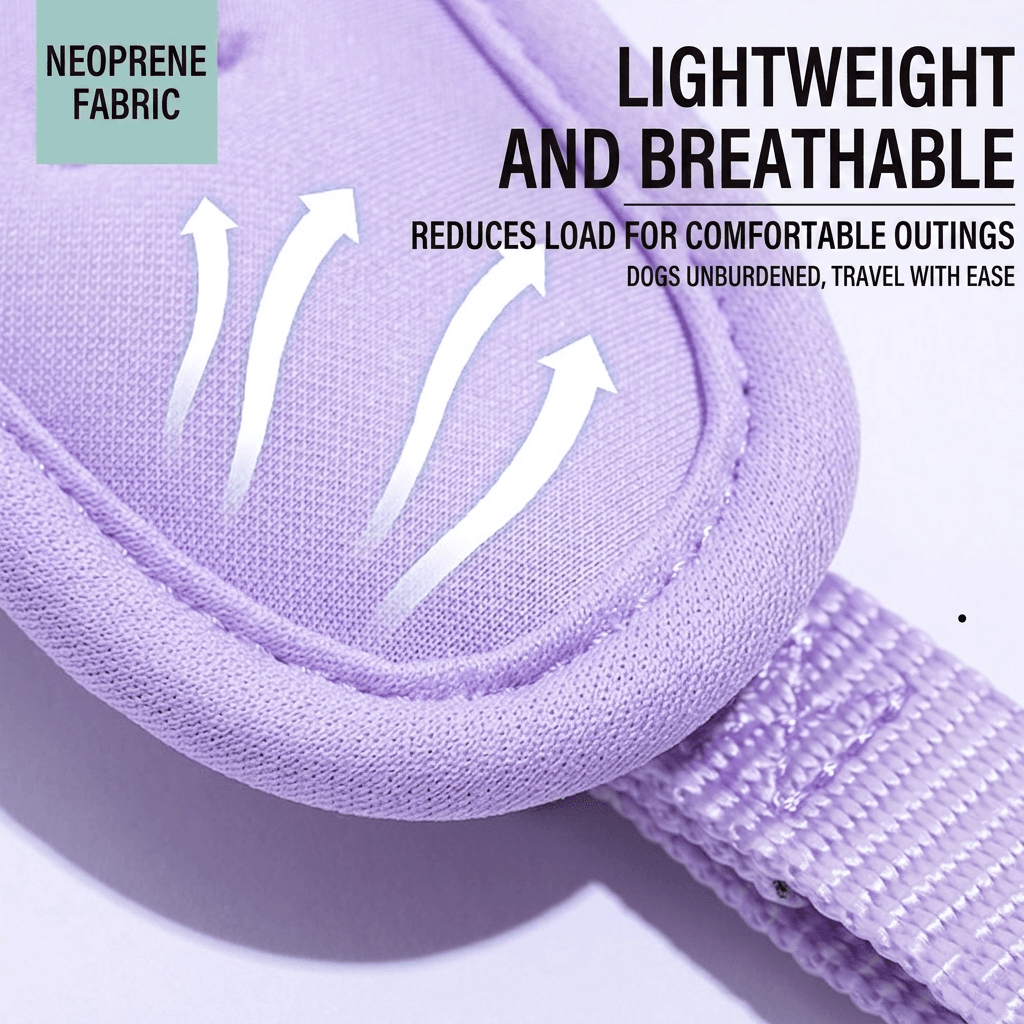
The MoonianPet No-Pull Dog Harness uses breathable neoprene, which — unlike absorbent nylon padding — doesn’t soak up sweat, oils, or odour into its structure. Most day-to-day dirt wipes off with a damp cloth in seconds, and a full hand wash is rarely more than a quick rinse and air dry, with no lingering damp padding to worry about.
ABS safety buckles and hardware are built to withstand regular washing without corroding, and the harness dries fully within an hour or two at room temperature — a meaningful difference for anyone washing a harness every few weeks.
Frequently Asked Questions
Can I put a dog harness in the washing machine?
It depends on the material and hardware. Nylon harnesses without heavy metal hardware are often machine washable on a gentle cycle inside a mesh bag, but check the manufacturer’s care instructions first. Harnesses with metal buckles, foam padding, or coated materials like neoprene are generally safer to hand wash, since machine agitation can damage hardware or break down padding over repeated cycles.
Why does my dog’s harness smell even after washing?
Absorbent materials like nylon webbing and foam padding hold onto odour-causing bacteria deep in the fibres, which a quick surface wash doesn’t always remove. An enzymatic pet-safe cleaner, used with a longer soak, breaks down the organic matter causing the smell rather than just masking it on the surface. Switching to a non-absorbent coated or neoprene material also prevents this buildup from happening in the first place.
How long does it take a harness to dry?
Smooth, non-absorbent materials like neoprene or coated webbing typically dry within one to two hours at room temperature. Padded nylon harnesses take considerably longer — often a full day — since the foam core holds moisture well after the outer fabric feels dry to the touch. Always check the padding’s centre for lingering dampness before putting the harness back into use.
Is it safe to use regular laundry detergent on a dog harness?
A small amount of mild, unscented soap is generally safe, but strong laundry detergents, fabric softeners, and scented products can leave residue that irritates a dog’s skin at the contact points. Rinse thoroughly regardless of what soap is used, and avoid bleach or harsh solvents entirely, since they can weaken webbing fibres and damage coatings.
How do I clean the hardware on a dog harness?
Metal and ABS plastic hardware can be wiped with a damp cloth and mild soap, then dried thoroughly to prevent corrosion on metal parts. Avoid submerging hardware with moving parts, like buckles, for extended soaking periods, since trapped moisture can lead to stiffness or rust over time in lower-quality metal components.
For the collar side of the same routine, see our how to clean a dog collar guide. If odour is a recurring issue rather than a one-off, our neoprene dog harness guide covers why material choice makes a lasting difference.

Wenyue
Wenyue is the founder of MoonianPet and writes about dog collars, harnesses, waterproof pet gear, and everyday dog care. Growing up with dogs inspired her lifelong interest in pet care and practical dog gear. Through MoonianPet, she researches dog collars, harnesses, waterproof materials, and everyday solutions that help active dogs stay comfortable during daily adventures.