
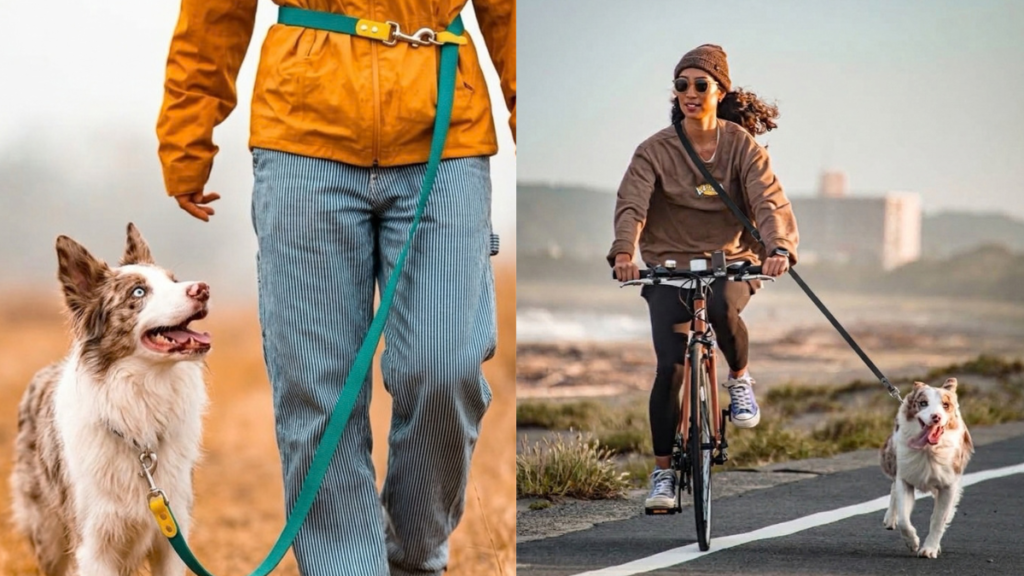
Walking your dog should be a relaxing break in your day, but for many owners, it feels like a wrestling match. You are juggling a phone, a coffee cup, a poop bag, and a leash that keeps wrapping around your wrist. If your dog pulls, the sudden tension can leave your shoulder aching for the rest of the day.
A cross body dog leash changes the mechanics of the walk entirely. By distributing the pulling force across your torso rather than concentrating it in your hand and wrist, a hands-free leash allows you to walk, run, or hike with your dog while keeping your hands completely free.
This guide explains why a cross body leash is the ultimate upgrade for active dog owners, what features make a safe and comfortable hands-free leash, and why the material matters just as much as the design.
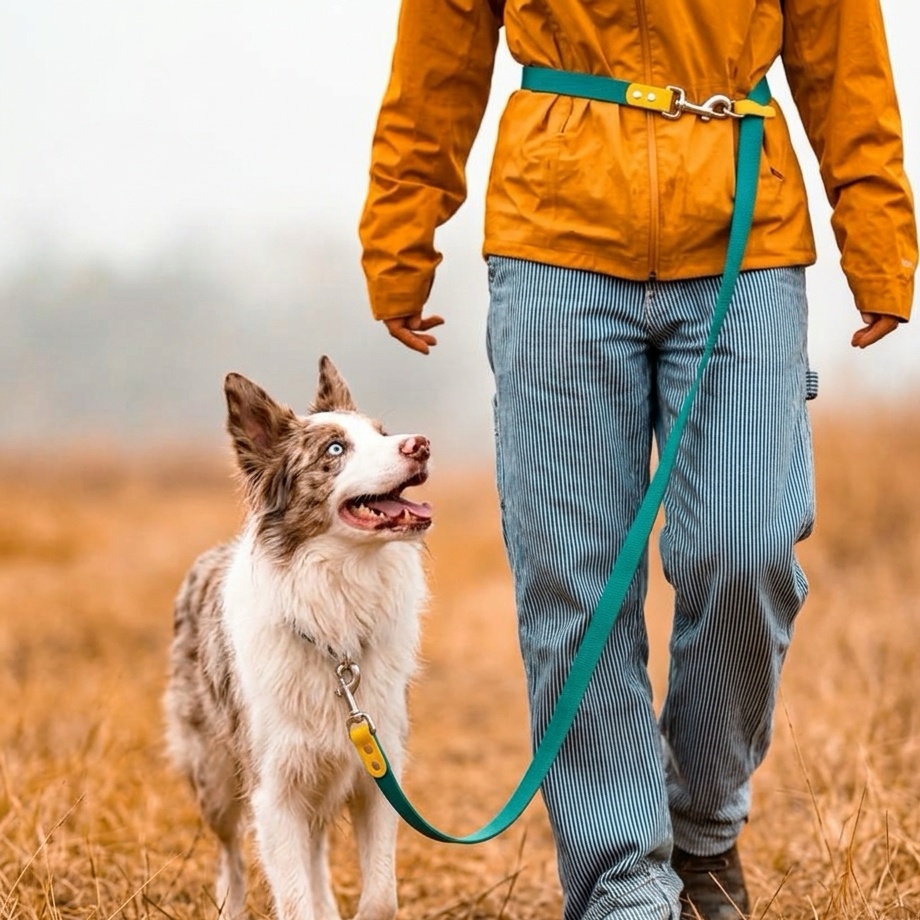
What is a Cross Body Dog Leash?
A cross body dog leash is designed to be worn over your shoulder and across your chest, much like a messenger bag or a seatbelt. The leash attaches to your dog’s collar or harness at one end, loops around your torso, and secures at your side.
Torso-Leading Force Distribution
When a dog pulls on a standard handheld leash, the force goes directly to your wrist, elbow, and shoulder joint. A cross body leash moves the anchor point to your core and hips — the strongest muscle groups in your body. A sudden lunge from a 50lb dog feels entirely different when absorbed by your torso rather than your shoulder.
True Hands-Free Mobility
Because the leash is secured to your body, you do not have to actively hold it. You can push a stroller, hold a coffee cup, use your phone to track your run, or pick up after your dog without ever losing control of the lead.
Built-In Shock Absorption
The best hands-free leashes include an elastic bungee section. This acts as a shock absorber, softening the impact of a sudden pull for both you and your dog. It protects your spine and prevents neck injuries for your dog if they tend to bolt after squirrels. For more on handling pullers safely, see our guide to stopping leash pulling.
Why a Dual Handle Leash Matters for Control
One concern owners have with hands-free leashes is: “What if I need to grab my dog quickly?” Whether you are approaching a busy intersection or passing another aggressive dog, sometimes you need immediate, close control. This is why a dual handle design is essential.
The Primary Hands-Free Loop
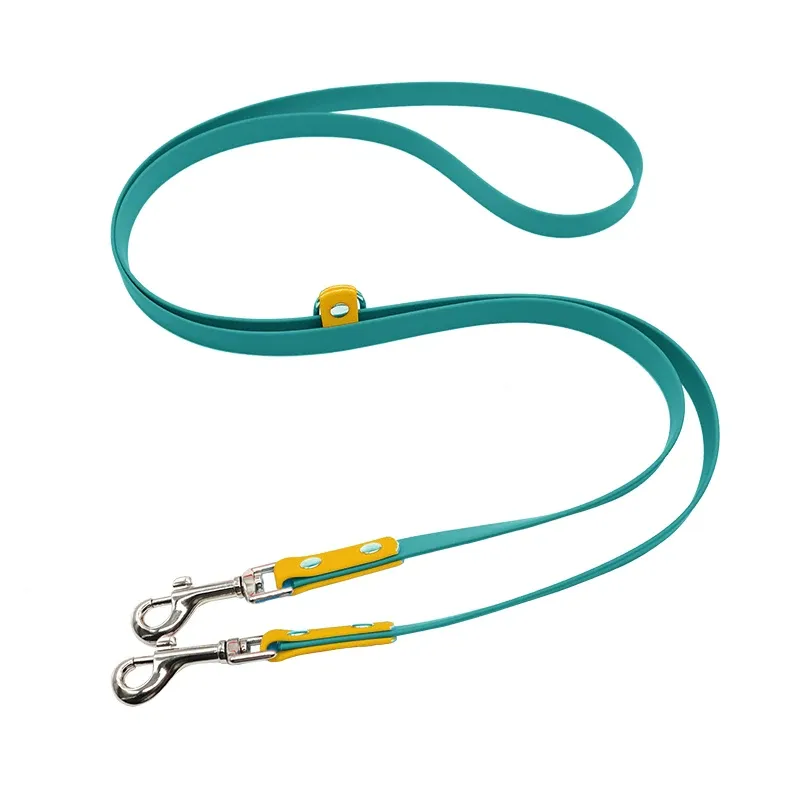
The main body of the leash goes over your shoulder. This is for open trails, parks, and walking down quiet streets where your dog has room to roam at the end of the lead (typically 6 to 7 feet).
The Traffic Control Handle
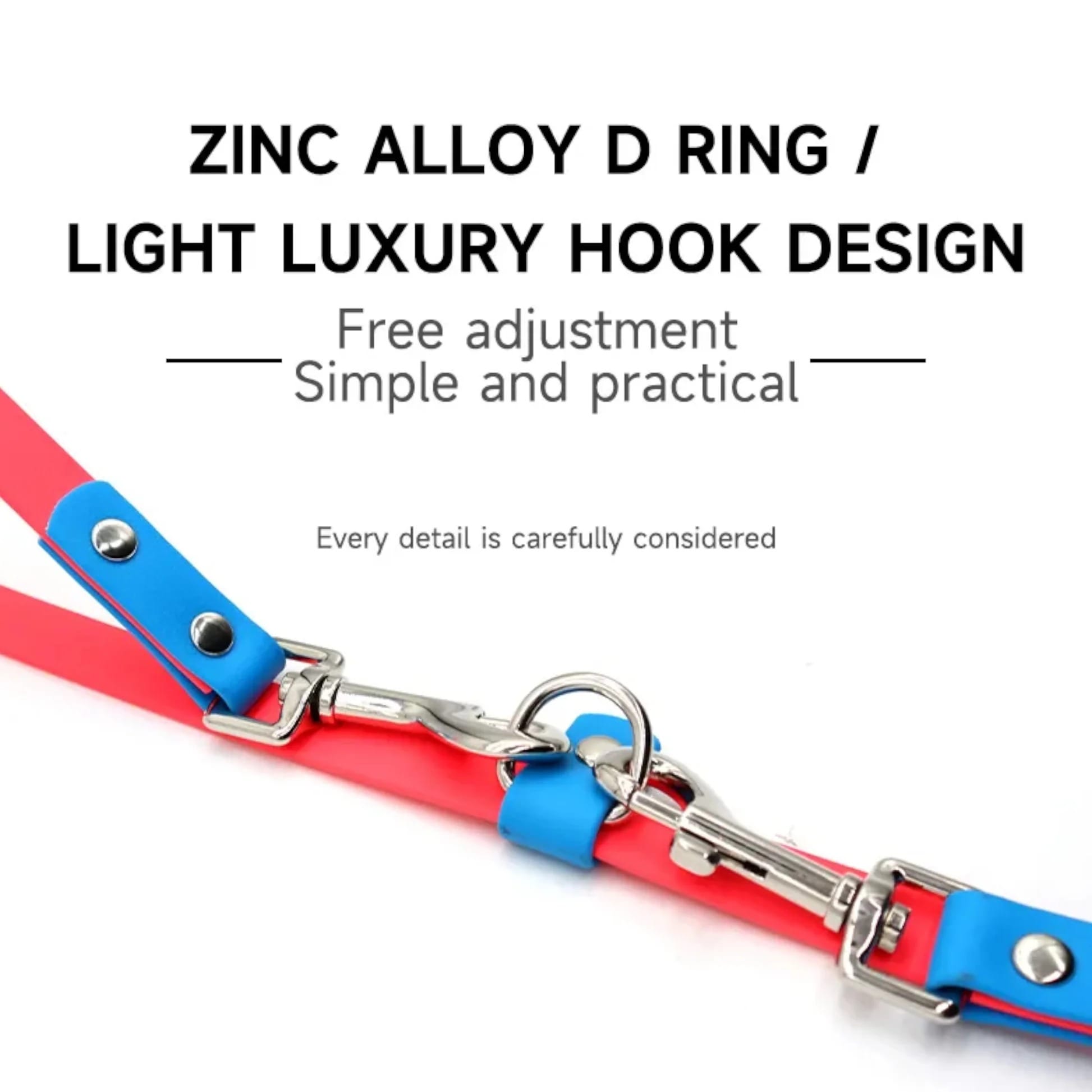
A secondary handle is placed near the clip that attaches to your dog. When you need your dog right by your side, you simply grab this traffic handle, instantly converting the hands-free leash into a standard short leash. This gives you the best of both worlds. Learn more about this feature in our traffic handle guide.
The Problem with Standard Nylon Hands-Free Leashes
Most cross body leashes on the market are made from nylon webbing. While nylon is cheap and strong, it has a major flaw when wrapped around your body: it absorbs sweat and dirt.
Sweat Absorption and Odour
If you run or hike with your dog, you will sweat. Nylon webbing absorbs that sweat and holds it against your clothing and skin. Within a few weeks, a nylon hands-free leash will develop a permanent, sour smell that transfers to your running gear. To avoid this, an odour-free material is essential.
Friction and Chafing
Raw nylon webbing moving across your shoulder and chest while you run can cause severe chafing and friction burns. The material needs to be smooth and non-porous to glide comfortably over clothing. For more on the benefits of upgraded materials, see our comparison of dog leash materials.
The Best Waterproof Hands-Free Leash for Active Dogs
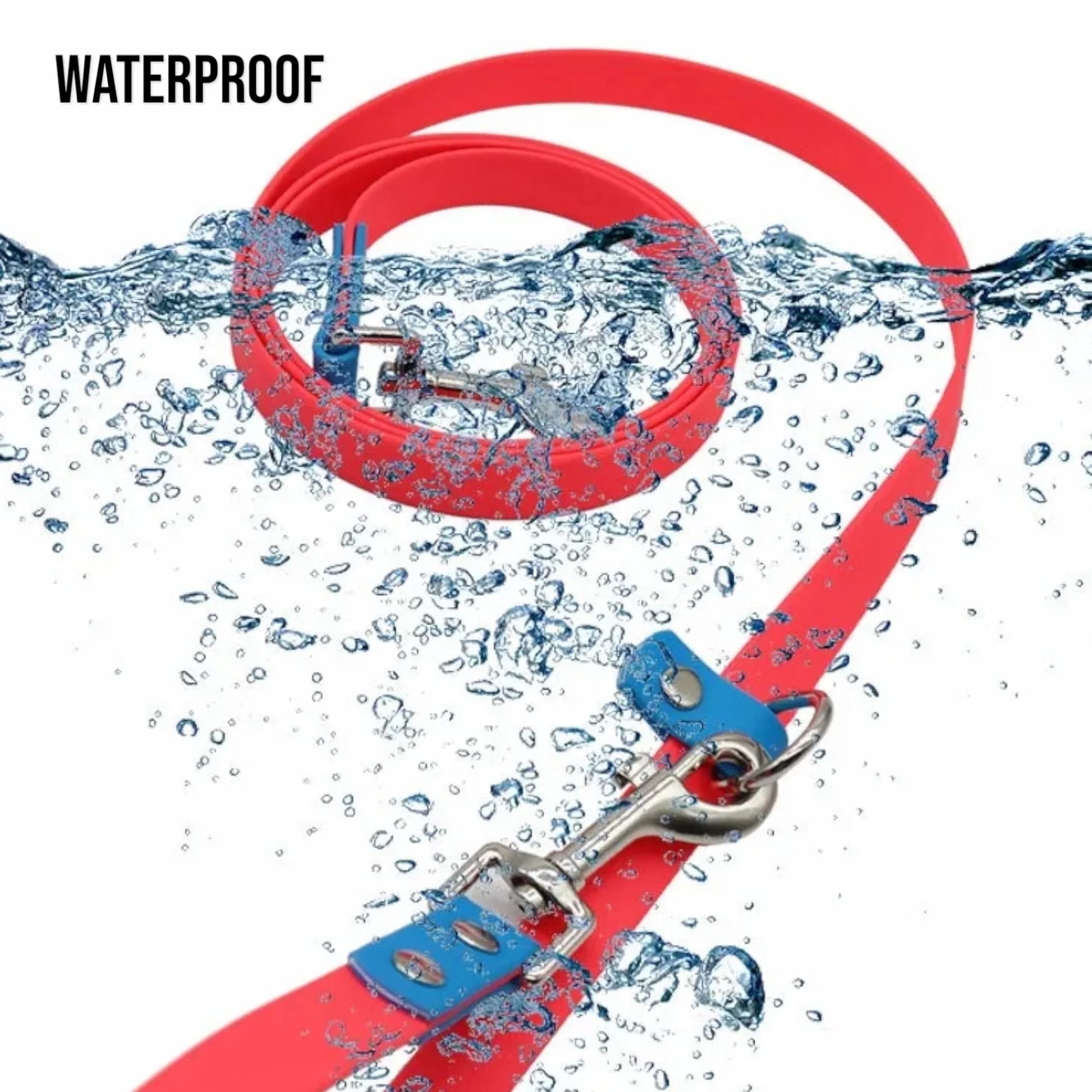
To solve the problems of sweat, odour, and friction, MoonianPet has developed the Hands-Free Two-Tone Waterproof Dog Leash. Built with our signature PVC-coated webbing, it delivers the flexibility of a traditional leash but with the hygiene of a completely waterproof surface.
The cross body strap features an adjustable fit for any body type, along with a built-in shock-absorbing bungee section to protect your shoulders from sudden pulls. The dual handle design gives you a standard hands-free loop for the trail and a secondary traffic handle for busy streets. Because it is 100% waterproof, sweat, rain, and mud wipe off instantly — it will never smell, fray, or cause chafing on your runs.
Pair it with our No-Pull Dog Harness for the ultimate, tangle-free walking setup that protects both your dog’s neck and your shoulders.
Frequently Asked Questions
Is a hands-free leash good for a dog that pulls?
Yes, but only if it has a shock-absorbing bungee section and a dual handle design. The bungee softens the impact of the pull on your body, while the traffic handle allows you to grab the leash and regain close control when needed. However, for severe pullers, we highly recommend pairing the hands-free leash with a front-clip no-pull harness.
Can you run with a hands-free dog leash?
Absolutely. Hands-free leashes were originally designed for runners who wanted to run with their dogs without holding a lead. The cross-body design keeps your arms free for a natural running stride, and the bungee absorbs the shock of any sudden direction changes. A waterproof PVC material is best for running, as it will not absorb sweat.
How do you clean a waterproof cross body leash?
Unlike nylon leashes that hold onto sweat and mud, a waterproof PVC leash is incredibly easy to clean. Simply wipe it down with a damp cloth, or run it under a tap after a muddy run. It will be completely dry and odour-free within seconds. See our cleaning guide for more care tips.
What size hands-free leash do I need?
The cross-body strap should fit comfortably over your shoulder without being too tight. Most hands-free leashes come with an adjustable waist/shoulder loop to accommodate different body types. The standard leash length is around 6 to 7 feet (210cm) to give your dog enough room to run without getting under your feet.
Looking for more walking gear? Check out our best waterproof dog leashes or learn how to choose the right dog leash for your daily walks.
Wenyue
Wenyue is the founder of MoonianPet and writes about dog collars, harnesses, waterproof pet gear, and everyday dog care. Growing up with dogs inspired her lifelong interest in pet care and practical dog gear. Through MoonianPet, she researches dog collars, harnesses, waterproof materials, and everyday solutions that help active dogs stay comfortable during daily adventures.