
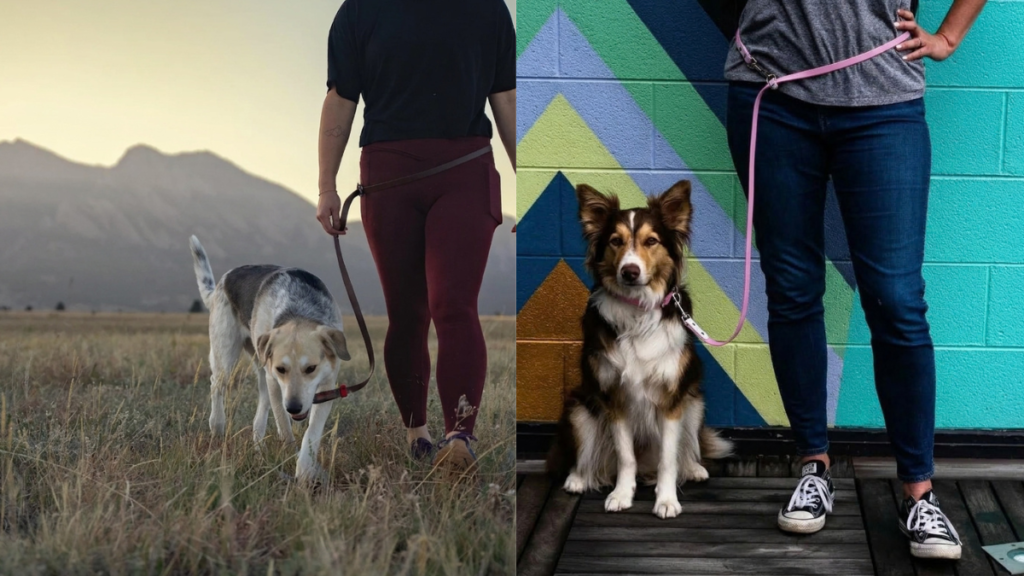
Running with your dog is one of the best ways to bond, burn off excess energy, and stay fit together. But trying to run while holding a standard 4-foot nylon leash is an exercise in frustration. Your arm is yanked with every stride, your balance is thrown off, and before you finish the first mile, your hand is cramped and sweaty.
If you want to run safely and comfortably with your dog, you need a dedicated hands free leash for running. By moving the anchor point from your hand to your core, a cross body or waist-worn leash completely changes the biomechanics of running with a dog.
This guide explains why a hands-free leash is essential for runners, what features you need to look for to prevent injuries, and why the material of the leash matters just as much as the design.
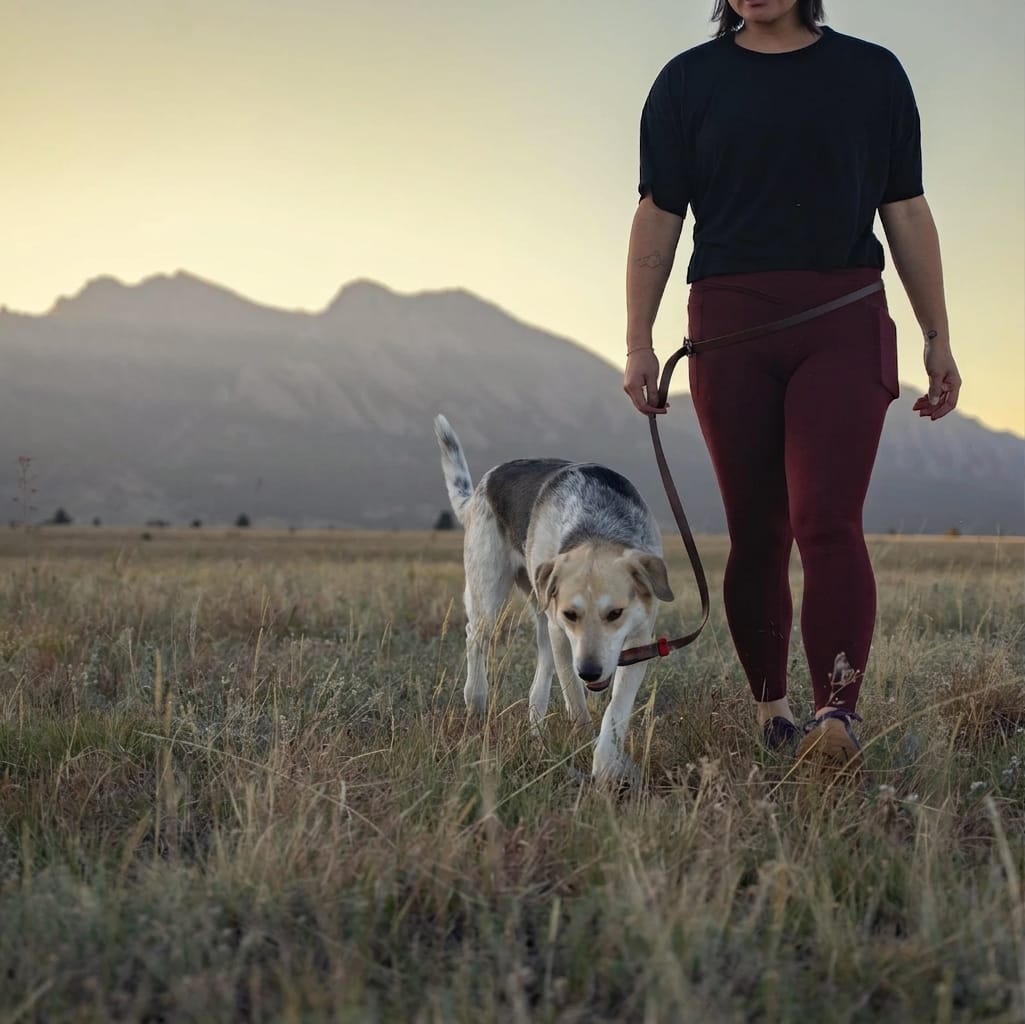
Why Runners Need a Hands-Free Leash
Running is all about rhythm and momentum. When you hold a dog leash, you are constantly fighting your dog’s movement, which breaks your running form and tires you out faster. A hands-free leash solves three specific running problems:
Natural Arm Swing
Proper running form requires your arms to swing naturally to counterbalance your legs. Holding a leash forces one arm into a fixed, tense position, leading to shoulder pain and inefficient strides. A hands-free leash leaves both arms completely free to maintain perfect form.
Core Balance and Shock Absorption
When a dog suddenly lunges on a handheld leash, the jerk goes straight to your wrist and rotator cuff. A cross body leash anchors the pulling force to your torso and hips — your body’s strongest muscle groups. Paired with an internal bungee shock absorber, a sudden lunge becomes a gentle, controlled stretch rather than a joint-wrecking yank.
Clear Traffic Control
Runners encounter cyclists, traffic, and other dogs constantly. A dual handle hands-free leash gives you a standard hands-free loop for open trails, plus a secondary traffic handle near the dog’s collar. Grab it instantly to pull your dog close without breaking your stride. See our guide on the traffic handle dog leash for more.
The Problem with Nylon Running Leashes
Most hands-free leashes on the market are made from nylon webbing. While nylon is cheap, it is a terrible material for runners for two major reasons:
Sweat Absorption and Stink
When you run, you sweat. Nylon webbing acts like a sponge, soaking up sweat and holding it against your clothing. Within a few weeks, a nylon running leash develops a permanent, sour smell that transfers to your running gear. To avoid this, you need an odour-free material.
Friction and Chafing
Raw nylon webbing moving across your shoulder and chest while you run can cause severe chafing and friction burns. The material needs to be smooth and non-porous to glide comfortably over clothing. For more on the benefits of upgraded materials, see our comparison of dog leash materials.
The Best Waterproof Hands-Free Leash for Runners
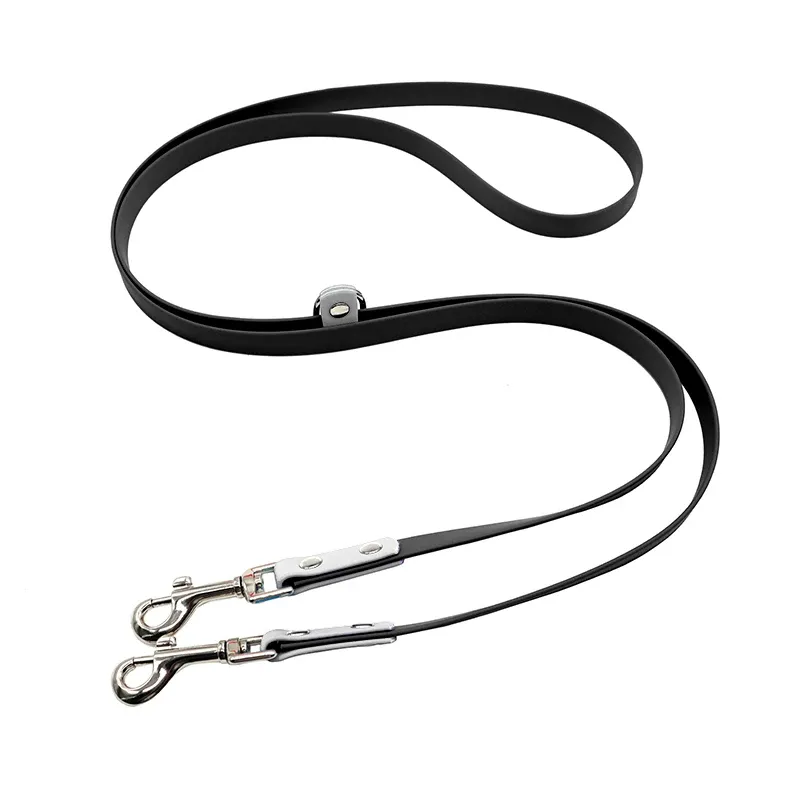
To solve the problems of sweat, odour, and friction, MoonianPet has developed the Hands-Free Two-Tone Waterproof Dog Leash. Built with our signature PVC-coated webbing, it delivers the flexibility of a traditional leash but with the hygiene of a completely waterproof surface.
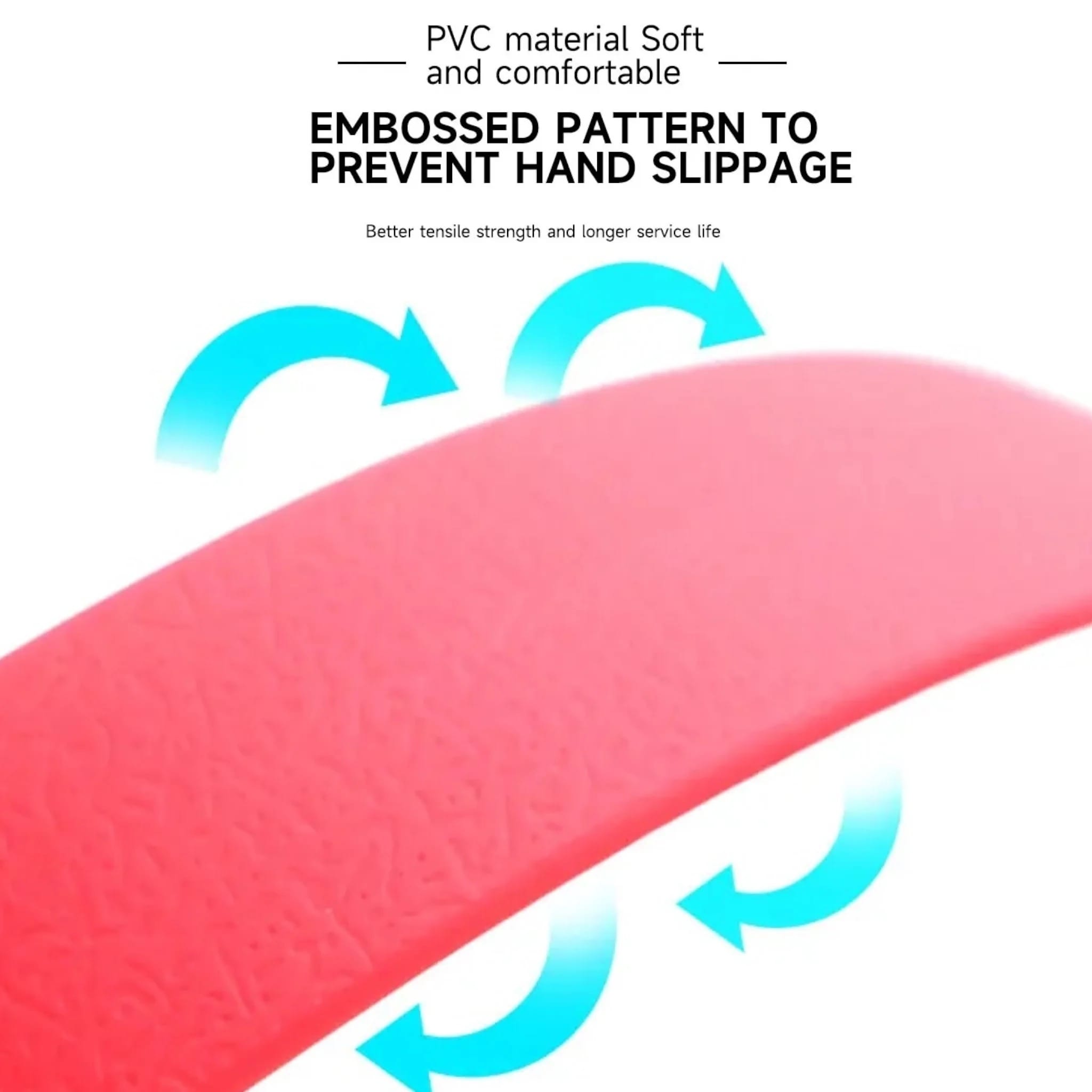
The cross body strap features an adjustable fit for any body type, along with a built-in shock-absorbing bungee section to protect your shoulders from sudden pulls. The dual handle design gives you a standard hands-free loop for the trail and a secondary traffic handle for busy streets. Because the PVC material features an anti-slip embossed grip, it stays firmly planted on your shoulder even when you are sweating heavily. Rain, mud, and sweat wipe off instantly — it will never smell, fray, or cause chafing on your runs.
Pair it with our No-Pull Dog Harness for the ultimate, tangle-free running setup that protects both your dog’s neck and your shoulders.
Frequently Asked Questions
Is a hands-free leash safe for running?
Yes, hands-free leashes were originally designed for runners. They allow you to maintain a natural arm swing and running form. However, for safety, ensure your leash has a shock-absorbing bungee section to prevent sudden jerks, and a dual handle design so you can quickly grab your dog near traffic. For dogs that pull hard, always pair it with a no-pull harness.
How do I run with a dog that pulls?
Running with a dog that pulls requires a combination of the right gear and training. Use a hands-free cross body leash with a bungee to absorb the pulling shock, and attach it to a front-clip no-pull harness. If your dog pulls too hard, stop running immediately and resume only when the pulling stops. See our full guide on how to stop dog from pulling on leash.
What length should a hands-free running leash be?
The ideal length for a hands-free running leash is between 6 to 7 feet (around 2.1 meters) when fully extended. This gives your dog enough room to run comfortably beside or slightly ahead of you without getting under your feet. A leash that is too long can become a tripping hazard during runs.
Can I wash a waterproof running leash in the washing machine?
You do not need to. Waterproof PVC leashes are incredibly easy to clean. Because they are non-porous, sweat, mud, and rain do not soak in. Simply wipe it down with a damp cloth after your run, and it will be completely dry and odour-free within seconds.
Looking for more walking and running gear? Check out our best waterproof dog leashes or learn how to choose the right dog leash for your daily adventures.

Wenyue
Wenyue is the founder of MoonianPet and writes about dog collars, harnesses, waterproof pet gear, and everyday dog care. Growing up with dogs inspired her lifelong interest in pet care and practical dog gear. Through MoonianPet, she researches dog collars, harnesses, waterproof materials, and everyday solutions that help active dogs stay comfortable during daily adventures.