
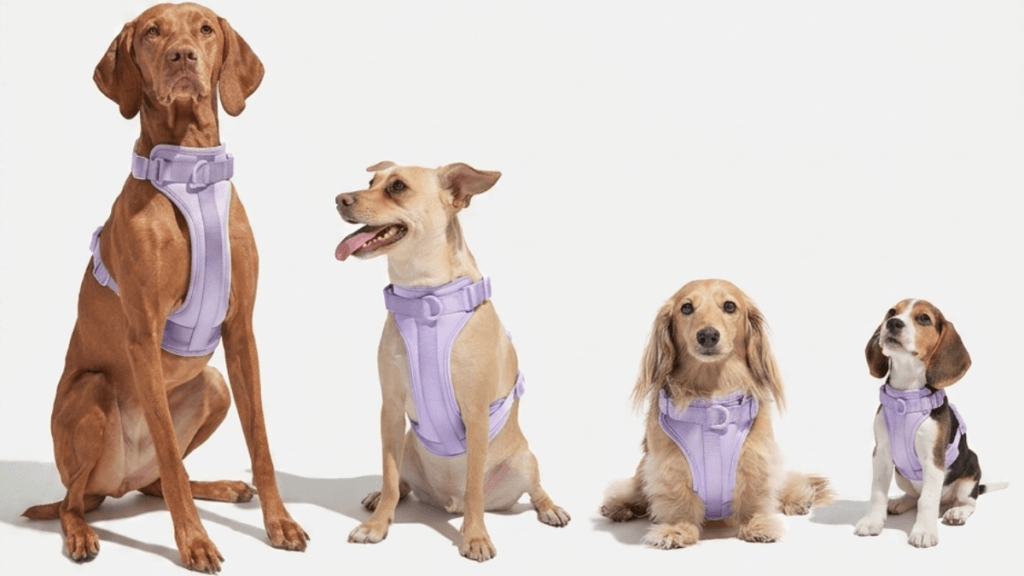
A no-pull harness is one of the most useful pieces of equipment you can own as a dog owner — but only if it actually fits, stays in position during a walk, and is built well enough to handle your dog’s size and pulling force. The problem is that the no-pull harness category is crowded with products that look similar and perform very differently.
Some harnesses work well for small, light pullers but fall apart on larger dogs. Some have the right clip position but slide out of place within the first five minutes. Some are well-made but so complicated to put on that owners stop using them after a week. The harness that gets used every day is the one that matters.
This guide covers the best no-pull dog harnesses by dog size and type — what makes each one a strong choice, which dogs each suits best, and the features that separate genuinely good options from the rest.
What Makes a No-Pull Harness Worth Buying
Before getting into specific picks, these are the features that separate no-pull harnesses that actually work from those that look good in a product listing but underperform on a real walk:
A front D-ring that stays centered on the sternum
The no-pull mechanism only works when the front D-ring sits flat against the dog’s sternum — not rotated onto the shoulder joint. A chest strap that migrates sideways during a walk loses the redirecting effect and can restrict natural stride. Look for a chest strap that is anchored at both ends by the belly strap and neck loop, preventing independent rotation.
Three adjustment points
Neck, chest, and belly adjustment independent of each other. Dogs within the same size category vary in neck circumference, chest depth, and rib cage width. A harness that adjusts at all three points can fit most dogs in its size range. One or two adjustment points mean some dogs in the size range will never get a snug fit — the harness will rotate, slide, or sit at the wrong angle.
Neoprene padding on chest and underarm straps
The chest strap and the straps that pass under the front legs are the highest-pressure contact points on a walk. Neoprene padding prevents chafing, does not compress flat after a few weeks of use, and does not retain moisture. Thin mesh padding or bare nylon is adequate for occasional walks; neoprene is what holds up for daily use over months.
Metal hardware for medium and large dogs
Zinc alloy D-rings and tri-glide adjustment sliders, not plastic. For dogs over roughly 30 pounds that pull consistently, plastic hardware flexes and loosens under repeated load. Once the D-ring rotates out of its correct position under a hard lunge, the no-pull mechanism is compromised. Metal hardware maintains its shape and function through years of daily use.
Quick-release buckle and simple daily use
A walking harness gets put on and taken off every day. If it takes more than thirty seconds, owners start leaving it on between walks — which creates skin irritation and fit drift. A single quick-release buckle that snaps on with a clear click is the standard. Avoid any harness that requires threading both front legs through loops simultaneously.
Best Overall: MoonianPet No-Pull Dog Harness
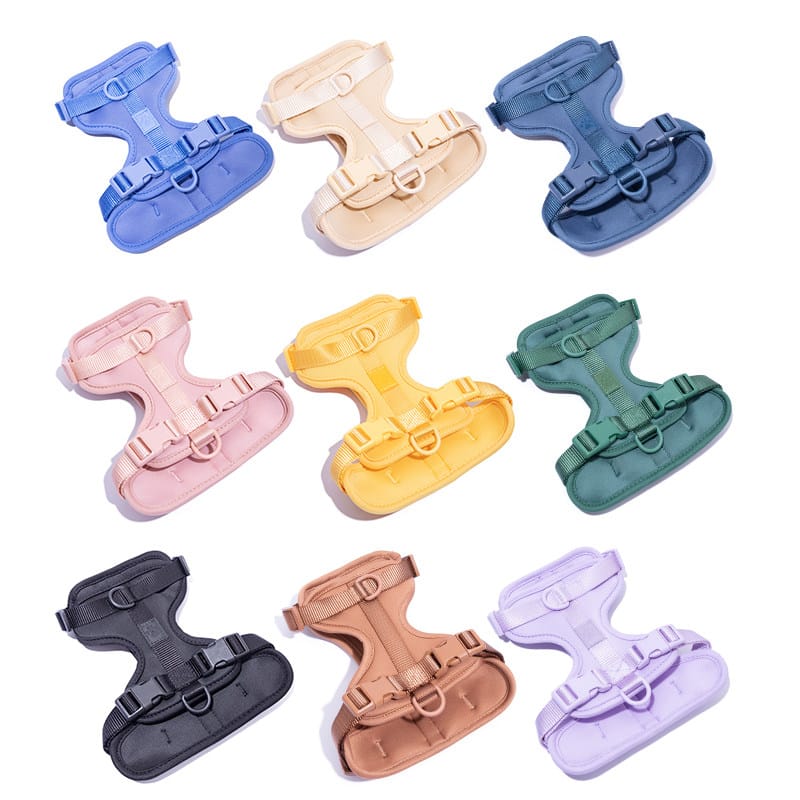
The MoonianPet No-Pull Dog Harness covers every feature on the list above and does so without requiring a separate double-ended leash or any special setup. Neoprene padding on the chest panel and underarm straps, zinc alloy hardware throughout, a three-point tri-glide adjustment system, and dual front and back D-rings on a single harness. The quick-release safety buckle snaps on in seconds.
Available in five sizes from XS to XL and 11 colors, it covers the full range from Chihuahuas to large mixed breeds. Because the adjustment range within each size is wide — thanks to the three independent adjustment points — it fits a much broader range of body shapes than single-adjustment harnesses in the same size category.
The neoprene material is also inherently moisture-resistant, which means it does not absorb odour the way nylon-webbing harnesses do. For dogs that walk daily in varied weather, this is a meaningful practical difference over the lifetime of the harness.
Best for Large Dogs and Strong Pullers
For large and extra-large breeds — Huskies, German Shepherds, Labradors, Rottweilers, large mixed breeds — hardware quality is the most critical factor. The forces involved when a 70-pound dog lunges forward at full effort are significant, and plastic buckles and D-rings are simply not adequate for sustained daily use.
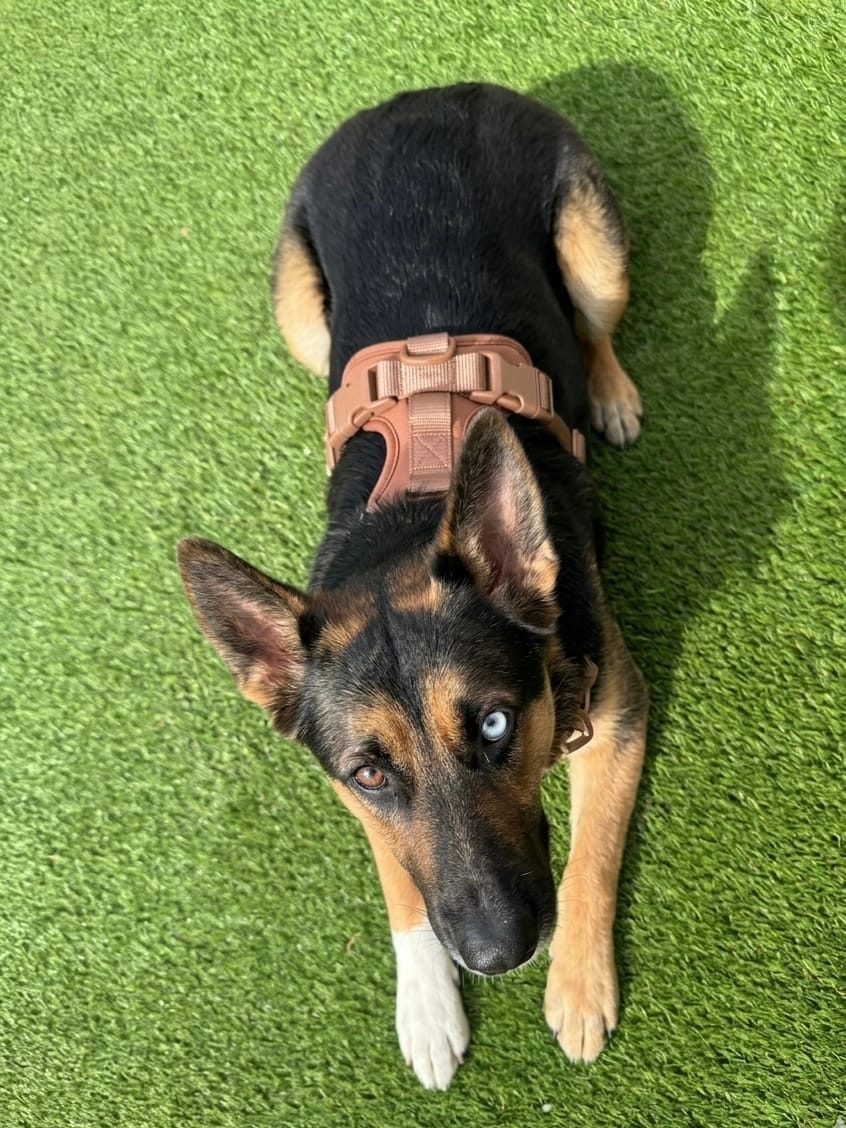
MoonianPet No-Pull Harness (L / XL)
The zinc alloy hardware and wide neoprene chest panel are the key features for large dogs. The chest D-ring stays centered under load because the panel is wide enough to anchor both the neck and belly connections without rotating. For XL dogs that have historically pulled harnesses out of position, the three-point adjustment means there are more points of contact holding the harness in place. See our dedicated guide on no-pull harnesses for large dogs for detailed size and breed advice.
2 Hounds Design Freedom Harness (Large)
The Freedom Harness is a reasonable option for large dogs when used with a double-ended leash and both clips engaged. The martingale loop provides extra stability under pulling force. The limitation is plastic hardware — for dogs over 60–70 pounds that pull on every walk, the buckles and sliders show wear faster than metal alternatives. A strong choice for medium-large dogs used with the correct leash setup; less suitable for very large or very strong pullers. Full review in our Freedom Harness review.
Best for Small Dogs and Toy Breeds
For small and toy breeds — Chihuahuas, Yorkshire Terriers, Toy Poodles, Dachshunds, Shih Tzus — the priority shifts from hardware strength to weight and fit precision. A heavy harness on a three-kilogram dog is immediately uncomfortable. A harness with an imprecise fit on a narrow-chested small breed will rotate and chafe within minutes.
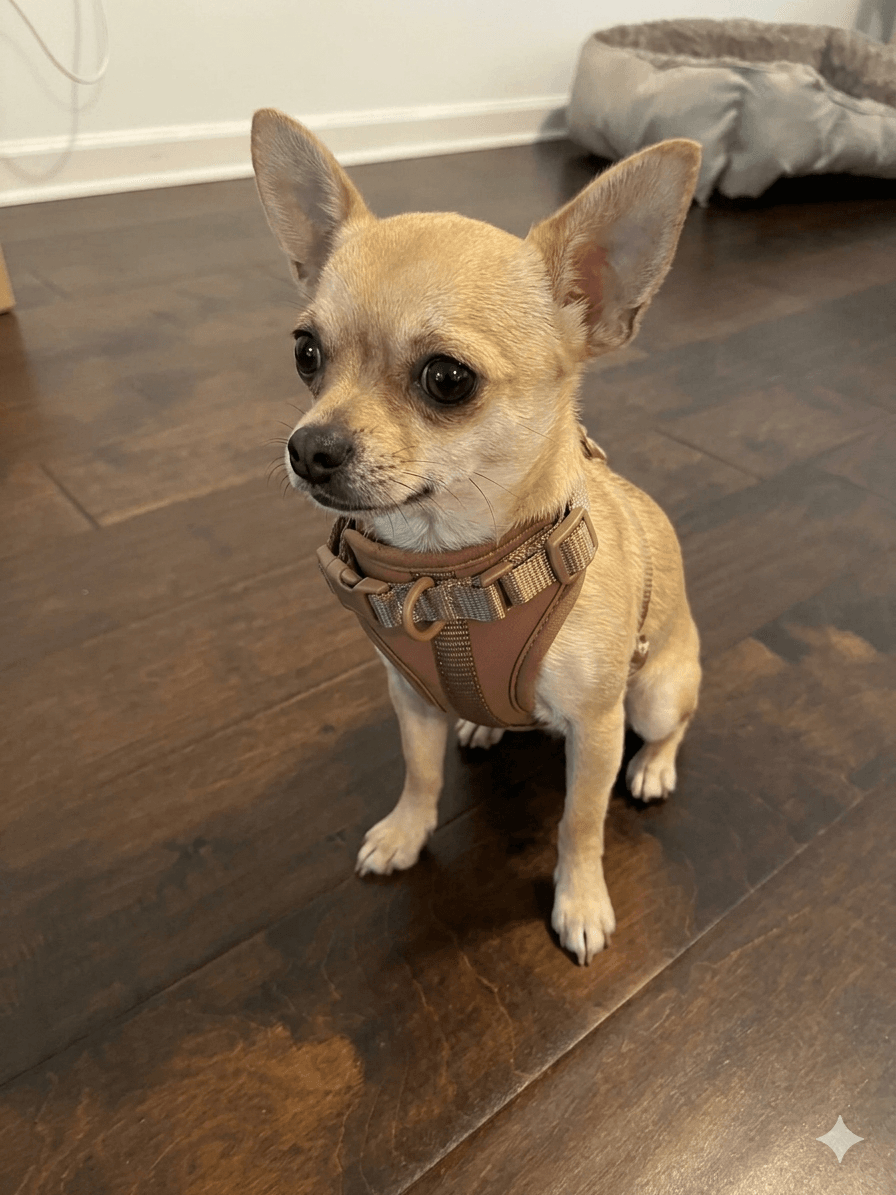
MoonianPet No-Pull Harness (XS / S)
The XS size starts at chest girths suited to dogs from around 3kg, with the neoprene material keeping the harness lightweight even at small sizes. Small breeds prone to tracheal issues — Chihuahuas, Toy Poodles, Pomeranians — benefit particularly from the front D-ring option, which eliminates the neck pressure that occurs even with a well-fitted collar on a dog that pulls slightly. For breed-specific small dog advice, see our guide on harnesses for small dogs.
PetSafe Easy Walk (Small)
The Easy Walk is simple to use on small dogs and the plastic hardware is adequate at this size range where pulling forces are lower. The chest strap migration issue — where the strap slides onto the shoulder joint — is less pronounced on small breeds with narrower chests, making it a more suitable option here than on medium and large dogs. It is affordable and widely available, making it a reasonable entry-level option for small-breed owners new to no-pull harnesses.
Best for Moderate Pullers and Everyday Walking
Most dogs fall into this category — they pull when excited or distracted but are not consistently lunging at full force on every walk. For these dogs, the no-pull mechanism matters somewhat but fit, comfort, and daily usability matter more. A harness that is slightly imperfect on a 30-pound moderate puller is fine; the same harness on a 70-pound hard puller is a problem.
MoonianPet No-Pull Harness (S / M / L)
For moderate pullers in the 10–40 pound range, the dual-clip design gives the flexibility to start walks with the front clip and switch to the back clip as the walk settles down. The quick-release buckle makes this a genuinely usable daily harness rather than one that stays on between walks out of convenience. The neoprene construction handles frequent use without degrading.
Ruffwear Front Range
The Ruffwear Front Range is a well-constructed option for moderate pullers who spend time outdoors in varied terrain. It has foam padding, an aluminium ventral D-ring, and four adjustment points. It is significantly more expensive than most alternatives, which is more justified for serious hiking than for daily neighbourhood walks. For urban everyday use, the price premium over a neoprene alternative is harder to justify.
Features to Avoid When Buying a No-Pull Harness
Back-clip only
A harness with only a back clip is not a no-pull harness — it is a standard walking harness. For dogs that pull, a back clip actually gives them more forward leverage, not less. Verify that any harness marketed as no-pull has a front D-ring on the chest, not just a back D-ring.
Tightening designs that use pressure as aversion
Some harnesses marketed as no-pull work by tightening under the front legs when the dog pulls — creating discomfort as a deterrent. This is different from the front-clip redirecting mechanism, and it is a form of aversive training that can cause anxiety and learned helplessness over time. If a product description mentions tightening, constricting, or pressure-based correction, look elsewhere.
Step-in designs for consistent pullers
Step-in harnesses — where the dog steps into loops around each leg — typically only have a back clip and limited adjustment. They are fine for small, calm dogs but are not suitable for dogs that pull consistently. The loop design also tends to rotate under pulling force more than an overhead-slip design, further reducing effectiveness.
The No-Pull Harness We Recommend for Daily Use
The MoonianPet No-Pull Dog Harness covers every feature that matters for daily walking — dual front and back D-rings, neoprene padding on all contact points, zinc alloy hardware, three-point adjustment, and a quick-release buckle. XS to XL, 11 colors, and built to handle everyday use in all weather.
Pair it with the Harness & Leash Set for a matched waterproof setup, or add the MoonianPet Waterproof Leash separately if you already have a collar you want to keep.
Frequently Asked Questions
Do no-pull harnesses actually work?
Yes — when correctly fitted and used with the front D-ring. The front-clip mechanism redirects pulling momentum sideways rather than allowing it to go straight forward, which interrupts the pulling pattern without discomfort. No-pull harnesses work best as a management tool used alongside reward-based training. A harness alone will reduce pulling during walks, but combining it with training produces lasting improvement in leash manners.
Can a no-pull harness hurt my dog?
A well-fitted no-pull harness does not hurt dogs. The risk comes from a harness that fits incorrectly — specifically a chest strap that sits on the shoulder joint instead of the sternum, which can restrict natural stride over time. Neoprene padding and three-point adjustment significantly reduce the risk of pressure points and chafing. Avoid any design that works by tightening under the armpits when the dog pulls, as this uses discomfort rather than redirection.
Should I use the front clip or back clip on a no-pull harness?
Use the front clip when your dog is pulling or in high-distraction environments. Use the back clip on calmer walks or once leash manners have improved through training. Most owners start with front-clip on every walk and gradually incorporate back-clip as their dog’s behaviour improves. For the full breakdown, see our front clip vs back clip guide.
How do I measure my dog for a no-pull harness?
Measure chest girth — the widest point of the ribcage, just behind the front legs — with a soft tape measure while your dog is standing. This is the primary sizing measurement. Neck girth is a secondary check. Full instructions and the complete size chart are in our dog harness size guide.
How do I put on a no-pull harness correctly?
Slip the neck loop over your dog’s head, bring the belly strap underneath and clip the quick-release buckle on the dog’s side, then check the two-finger rule on every strap — you should be able to slide two fingers under each strap but not three. Confirm the front D-ring is sitting flat and centered on the sternum before clipping the leash. Full step-by-step instructions in our guide on how to put on a no-pull dog harness.
Looking at specific no-pull options in more detail? See our Freedom Harness vs Easy Walk comparison and our full Freedom Harness review. Or if your dog is a particularly strong puller, our guide for large dogs covers hardware requirements and sizing by breed.