
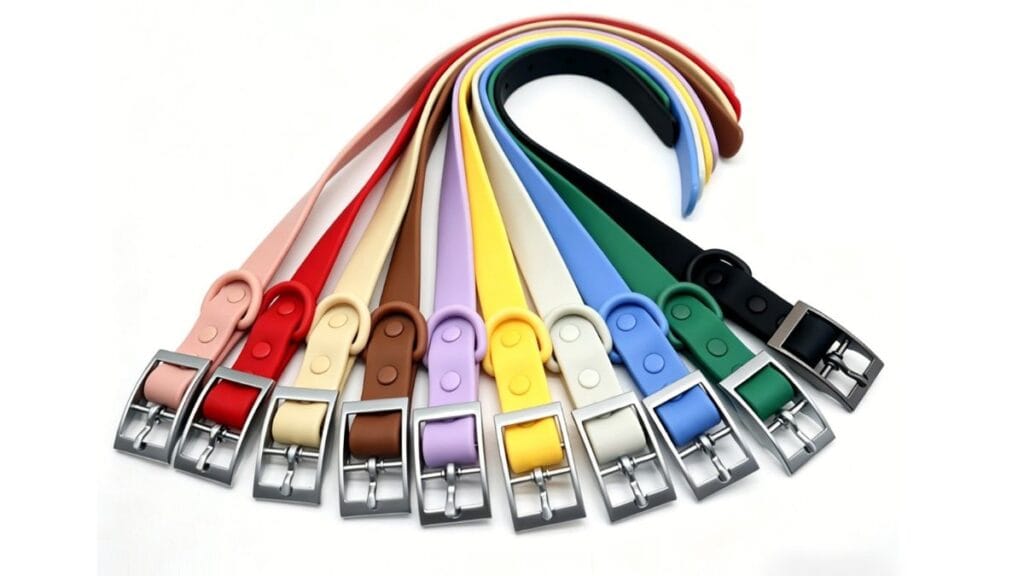
For most dog owners, choosing a collar color is a matter of fashion—what matches the dog’s coat, or what the owner simply likes best. But in the broader dog walking community, collar and leash colors have quietly adopted a standardized meaning.
Borrowing from the universal traffic light system (red, yellow, green), many trainers, rescues, and responsible owners use collar colors to signal a dog’s temperament, training status, or need for space. Understanding dog collar color meaning helps you read the signals of dogs you meet on the street—and decide what message your own dog’s collar is sending.
This guide breaks down the most common dog collar color codes and what they signal.

Red: “Stop, Give Me Space”
In the dog collar color code, red is the universal signal for caution. It means “keep your distance.” A dog wearing red might be reactive to other dogs or strangers, recovering from an injury, or simply a rescue that needs extra space to feel safe.
If you see a dog with a red collar or leash on the trail, do not approach without explicitly asking the owner first. Red is also a high-visibility color, making it an excellent choice for hiking during hunting season, though its behavioral meaning takes precedence in urban settings.

Yellow: “Caution, Nervous or Unpredictable”
Yellow means proceed with caution. Dogs wearing yellow are often nervous, anxious, or undergoing training. They might be perfectly fine with adults but fearful of loud noises or sudden movements.
The Yellow Dog Project famously uses yellow ribbons on leashes to signal dogs who need space. If you encounter a dog with a yellow collar, keep your own dog on a short leash and avoid direct eye contact or fast approaches. Yellow is a polite request for a calm, slow interaction.

Green: “Friendly, Go Ahead!”
Green is the green light. A dog wearing a green collar is generally friendly, sociable, and safe to approach (with the owner’s permission, of course). Green signals a dog that is confident, well-socialized, and comfortable around other dogs and people.
Puppies or dogs that are extremely outgoing and love making new friends often wear green. While you should still ask before petting, green is the most welcoming color on the dog collar spectrum.
Other Functional Colors
Blue: Service or Training
Blue often denotes a working dog, such as a service dog, therapy dog, or one in active training. Blue collars usually signal that the dog is focused on a task and should not be distracted by petting or play.
White: Deaf or Blind
White collars are sometimes used for dogs with sensory impairments, particularly deafness or blindness. It warns others that the dog might not hear them approaching or see their hand signals.
Orange: “No Dogs, Please”
While less common than the traffic light colors, orange can sometimes indicate a dog that does not get along well with other dogs but is perfectly fine with humans.
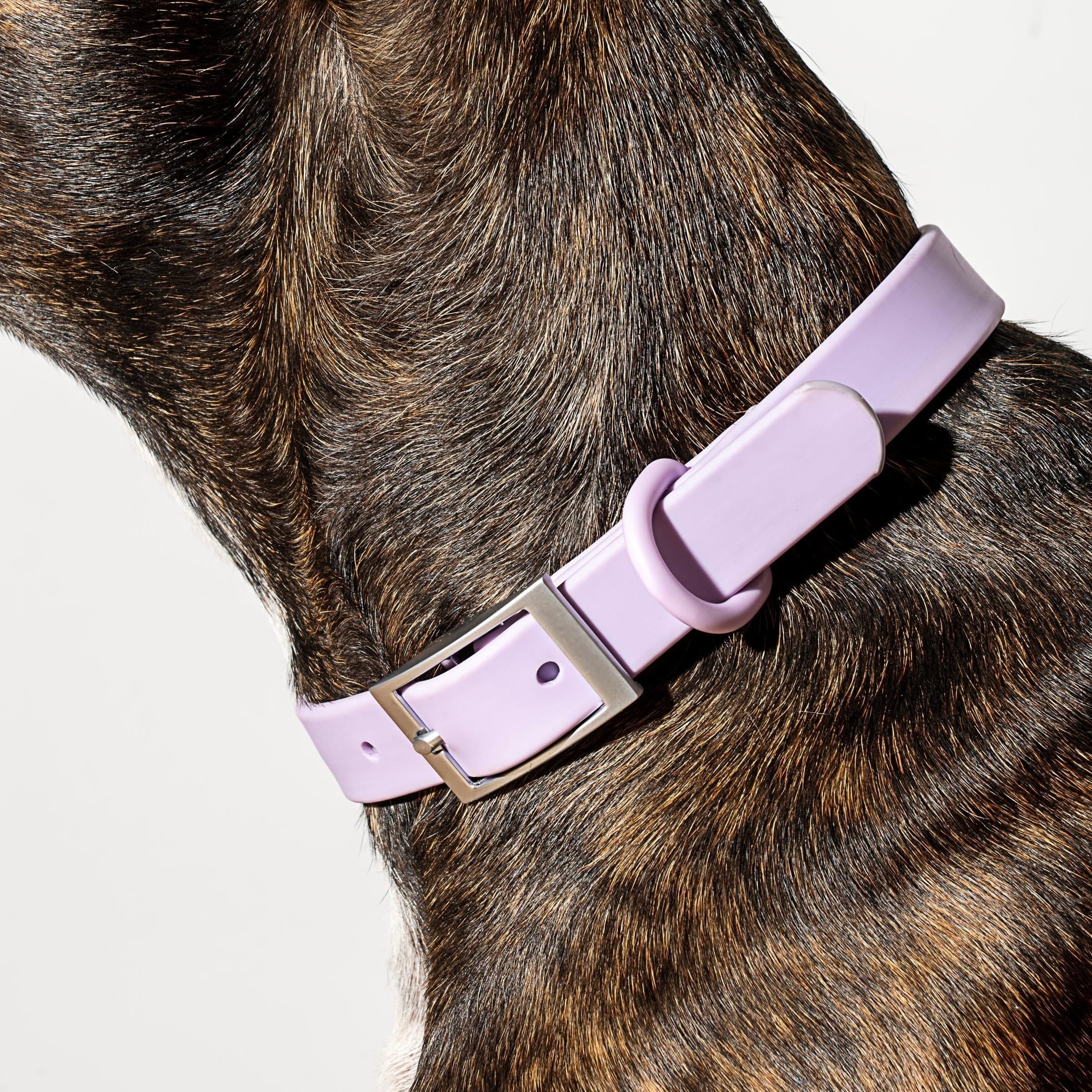
Choose Your Signal: 11 Colors That Don’t Fade
Whether you want to signal “give me space” with a vibrant red, show off a friendly green, or just pick a color that matches your dog’s coat, the MoonianPet Waterproof Dog Collar comes in 11 distinct colors.
Because our collars are made from PVC-coated webbing, the color is sealed into the material. It will not fade, bleed, or wash out over time—meaning your dog’s safety signal stays bright and clear for years, even after daily mud, rain, and swimming.
Want to coordinate the message from collar to leash? The Waterproof Collar & Leash Set guarantees a perfect color match so your dog’s signal is consistent from neck to leash.
Frequently Asked Questions
What does a red dog collar mean?
A red dog collar typically signals that the dog needs space. It is often used for reactive dogs, dogs recovering from surgery, or rescue dogs that are nervous around strangers. If you see a dog with a red collar, do not approach without asking the owner first.
What does a yellow dog collar mean?
Yellow means caution. A dog wearing a yellow collar might be nervous, anxious, or easily startled. It is a polite signal to other owners to keep their dogs on a short leash and approach calmly.
Is there a standard color code for dog collars?
There is no legal standard, but the dog community widely accepts the traffic light system: red for stop/space, yellow for caution, and green for friendly. However, you should always ask the owner before petting any unfamiliar dog.
Does my dog need a specific color collar?
If your dog is nervous or reactive, using a red or yellow collar can be a great way to silently communicate that to other owners. If your dog is perfectly friendly, green is a welcoming signal. Otherwise, choose whatever color you love! See our dog collar colour guide for aesthetic matching advice.
Want to match your collar color to your dog’s coat? See our complete dog collar colour guide. Or, if you need to measure your dog for a new collar, check our collar sizing guide.

Wenyue
Wenyue is the founder of MoonianPet and writes about dog collars, harnesses, waterproof pet gear, and everyday dog care. Growing up with dogs inspired her lifelong interest in pet care and practical dog gear. Through MoonianPet, she researches dog collars, harnesses, waterproof materials, and everyday solutions that help active dogs stay comfortable during daily adventures.