
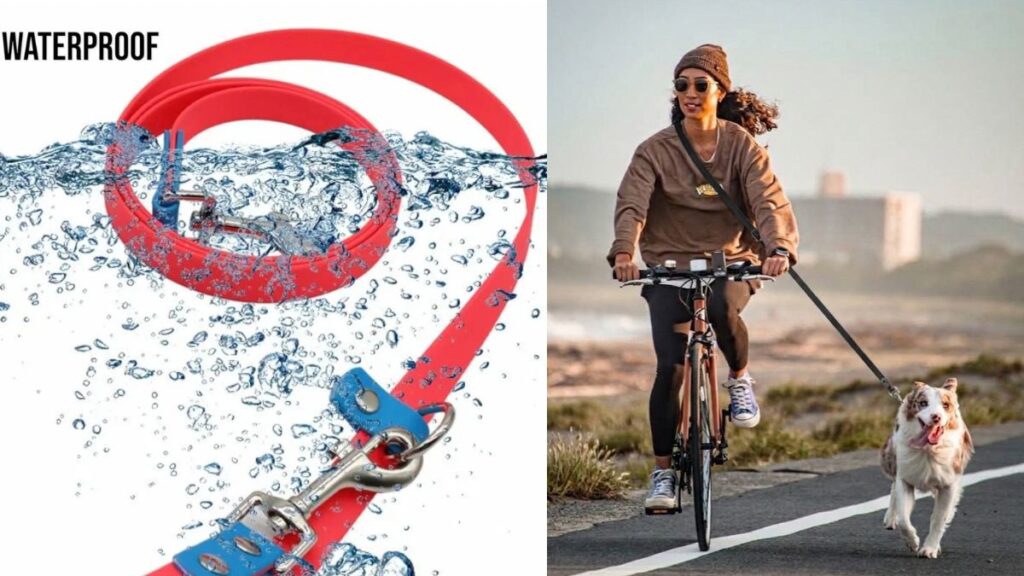
Hiking with your dog is one of the best ways to burn off energy in high-exercise breeds. A two-hour trail walk tires a working dog more effectively than four hours of neighborhood walking — the varied terrain, the mental stimulation of new scents, and the physical challenge of uneven ground all contribute. But trails are not neighborhoods. A trail means creek crossings, mud pits, underbrush, and the kind of terrain that destroys standard nylon gear in a single outing. The right dog hiking gear is not about convenience — it is about safety. A muddy leash that slips out of your hand, a collar that holds bacteria from stagnant water, a harness that chafes after three hours of repetitive stride motion — these are problems that do not appear on a 20-minute walk but define the hiking experience.
I learned this on a trail in the New Forest with my Golden Retriever. We crossed a shallow creek about 40 minutes into the hike, and by the time we got back to the car, my nylon leash had absorbed creek water, mud, and whatever bacteria lived in both. It smelled for a week despite two machine washes. The collar was worse — the fabric padding had soaked through and the smell never came out. I replaced both with PVC-coated waterproof gear the next week, and the difference was immediate: after the same hike, both wiped clean with a damp cloth and smelled like nothing.
This guide covers the complete dog hiking gear checklist — what you need, why you need it, and why waterproof is not a luxury feature on the trail but a basic requirement.

Why Standard Walking Gear Fails on Trails
The gear that works perfectly for daily neighborhood walks fails on trails in three specific ways:
Nylon absorbs water, mud, and bacteria — permanently
Nylon webbing is porous. On a trail, it absorbs creek water, mud, and the bacteria that live in both. Once absorbed, the smell does not come out — machine washing removes the surface dirt but not the bacteria embedded in the fibres. After three or four hikes, a nylon leash smells like a wet dog regardless of how many times you wash it. A PVC-coated webbing leash is non-porous: nothing soaks in, nothing is absorbed, and the entire leash wipes clean with a damp cloth. For a piece of gear that will be in your hand for two hours on a muddy trail, this is the difference between gear that lasts and gear that needs replacing after a season.
Fabric collars hold moisture against the skin
A fabric or padded collar that gets wet on a hike stays wet for the entire hike. The moisture sits against the dog’s neck, causing skin irritation, hot spots, and in warm conditions, bacterial growth. A PVC-coated collar does not absorb water — it dries in seconds, and the non-porous surface does not allow bacteria to build up. For a dog that will be wearing the collar for the duration of a hike and the drive home, this matters more than it sounds.
Mesh-padded harnesses compress and chafe over long distances
A harness with thin mesh padding feels fine on a 30-minute walk. On a three-hour hike with varied terrain, the mesh compresses under the repetitive stride motion and the padding that was adequate at the start is gone by the second hour. The straps then sit directly against the skin, causing chafing at the armpits and chest. Neoprene padding — the material used in wetsuits — does not compress the way mesh does, maintains its cushioning over hours of use, and is non-porous so it does not hold sweat or water against the skin.
The Core Dog Hiking Gear Checklist
You do not need much gear for a hike — but every piece on this list needs to be trail-appropriate. Here is what to bring and what to look for in each item:
1. Waterproof collar with ID tags
The collar holds your dog’s identification — it is the last line of defence if your dog gets separated from you on the trail. A waterproof PVC-coated collar will not absorb trail water, will not hold bacteria, and will not smell after the hike. It also will not weaken the way fabric collars do when repeatedly soaked and dried. The MoonianPet Waterproof Collar is available in 11 colours and 5 sizes, with the look and feel of leather but 100% waterproof and odour-proof.
2. Waterproof hands-free leash
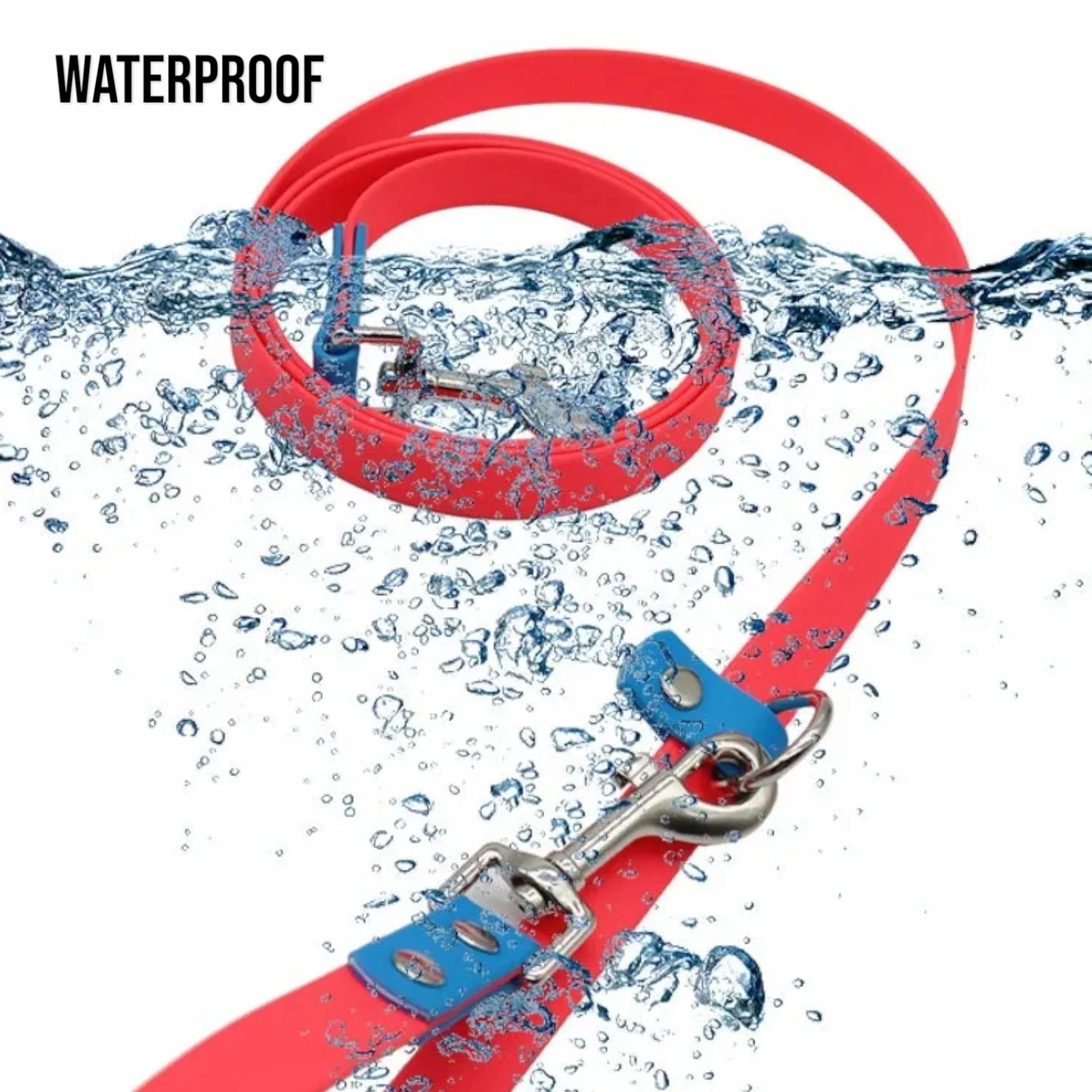
A hands-free leash is the single biggest upgrade you can make to your hiking setup. Worn crossbody, it keeps both hands free for scrambling over rocks, opening gates, using trekking poles, or steadying yourself on uneven ground. The MoonianPet Hands-Free Waterproof Leash is PVC-coated (mud and creek water wipe off), has an anti-slip embossed grip (stays on your shoulder through sweat and technical fabric), and 8 configuration options including crossbody, waist-worn, and short-traffic mode for narrow trail sections. For a full breakdown of crossbody leash use, see our cross body dog leash guide.
3. No-pull harness with neoprene padding
Never hike a dog on a collar alone. Trails mean wildlife, other dogs, and sudden distractions — a dog that surges after a deer on a collar gets tracheal damage, while the same surge on a harness is absorbed across the chest. The MoonianPet No-Pull Harness has neoprene padding that maintains cushioning over hours of hiking, a front D-ring for pulling redirection on narrow trails, and three-point adjustment so the harness stays centred on the body through varied terrain. For fit instructions, see our harness tightening guide.
4. Supplementary trail items (not sold by MoonianPet)
A collapsible water bowl (dogs need water every 20–30 minutes on trail, depending on temperature), a tick remover tool (check immediately after the hike, not when you get home), paw balm for rough terrain, and a basic first aid kit. These are not optional — but they are not items we make, so we will not pretend to advise on them beyond saying: bring them.
Dog Hiking Gear Quick Reference
What to bring, why it matters on the trail, and what material to choose.
| Gear | Why It Matters on the Trail | Best Material |
|---|---|---|
| Collar | Holds ID tags, does not absorb creek water or hold bacteria | PVC-coated webbing |
| Leash | Hands-free for scrambling, waterproof for creek crossings | PVC + anti-slip grip |
| Harness | Cushions over hours of hiking, redirects pulling on narrow trails | Neoprene padding |
| Water bowl | Hydration every 20–30 minutes on trail, especially in heat | Collapsible silicone |
The Trail Leash: Why Hands-Free Wins on Hikes
On a neighborhood walk, a handheld leash is fine — the terrain is flat, the path is predictable, and you have a free hand when you need one. On a trail, a handheld leash becomes a liability. Here is why hands-free is the correct choice for hiking:
Both hands free for terrain management
Trails mean rocks, roots, stiles, gates, and creek crossings. Each of these requires at least one hand — sometimes both. With a handheld leash, you are choosing between controlling your dog and steadying yourself. With a crossbody hands-free leash, both hands are available for balance, scrambling, and obstacle navigation while the dog remains securely attached to your torso. The fixed length of a crossbody leash also means the dog cannot get far enough away to create slack that wraps around trail obstacles.
Short-traffic mode for narrow trail sections
Most trails have narrow sections where you need the dog close — passing other hikers, navigating cliff edges, or walking through livestock. A multi-way hands-free leash with D-ring adjustment lets you shorten the leash to traffic length without unclipping or changing configuration. The MoonianPet hands-free leash offers 8 distinct configurations through its D-ring system, including a short-traffic mode that keeps the dog at your side for narrow sections and a crossbody mode that gives the dog full roaming length on open trail.
Anti-slip grip matters more on trails
On a neighborhood walk, a leash that slides off your shoulder is an annoyance. On a trail, where you are sweating, wearing technical fabric, and moving at varied speeds, a leash without an anti-slip grip will not stay on your shoulder — you will spend the entire hike shrugging it back into place. The embossed anti-slip texture on the MoonianPet hands-free leash is specifically designed to grip against technical fabric and sweaty skin, which is a feature you do not appreciate until you hike without it.
Harness Selection for Trail Conditions
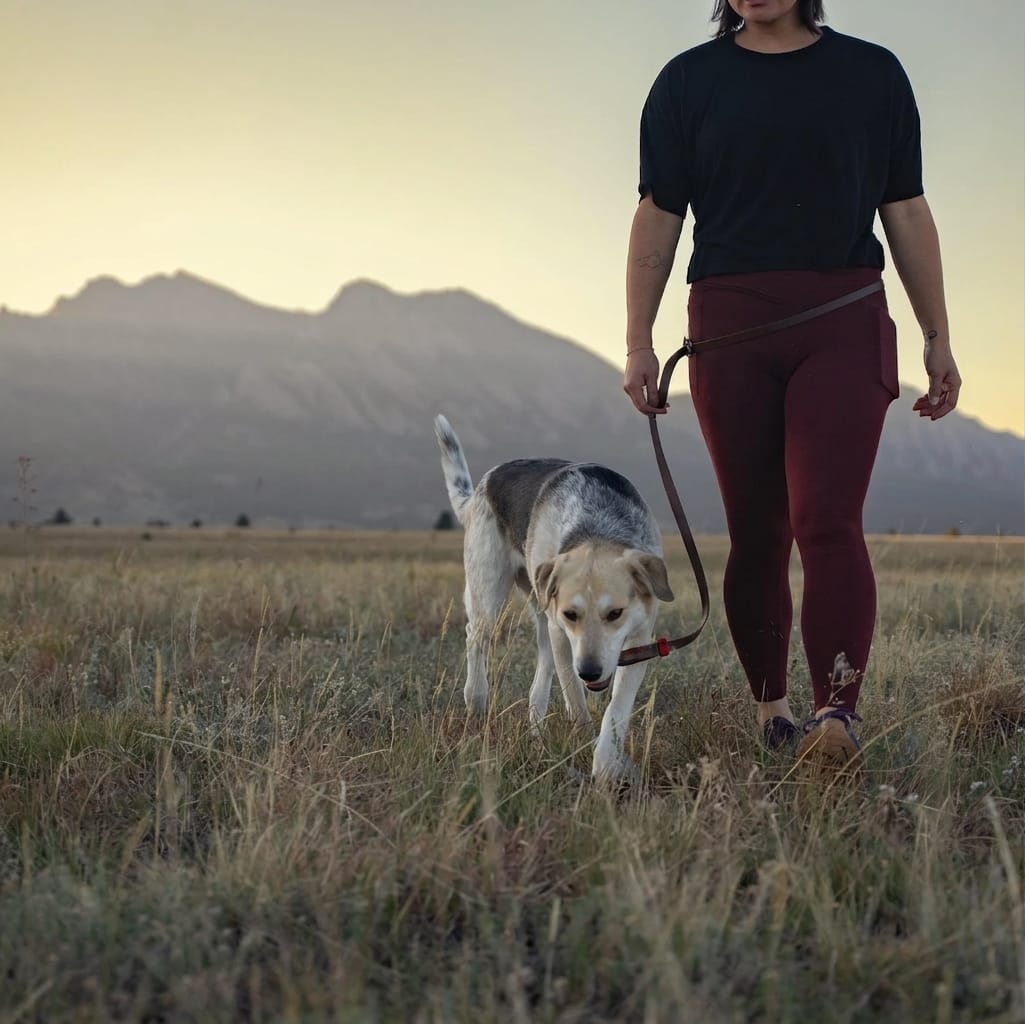
A trail harness needs to do three things that a walking harness does not: maintain cushioning over hours, handle sudden directional changes without rotating, and prevent escape when the dog is distracted by wildlife. Here is what matters:
Neoprene padding for sustained comfort
On a three-hour hike, the dog’s stride repeats thousands of times. Any padding that compresses under repetitive motion — mesh, thin foam — is gone by the second hour, and the straps sit directly on skin. Neoprene is the material used in wetsuits: it maintains its cushioning indefinitely, does not compress under repeated strain, and is non-porous so sweat and water do not soak through to the skin. For a trail harness, neoprene is not a premium feature — it is the difference between a dog that finishes the hike comfortably and one that develops raw patches at the armpits.
Three-point adjustment prevents rotation on varied terrain
On a flat walk, a harness stays in position easily. On a trail — uphill, downhill, sidehill, scrambling — the harness is subject to directional forces that a flat walk never produces. A harness with only one or two adjustment points will rotate under these forces, concentrating pressure on one side and creating the asymmetrical chafing that trail dog owners know. Three-point independent adjustment at the neck, chest, and belly keeps the harness centred on the body regardless of terrain. For the full fitting process, see our harness tightening guide.
Escape prevention when wildlife appears
Trails mean wildlife — deer, rabbits, squirrels, and livestock. A dog that surges after wildlife on a loose harness can back out of it in seconds. The neck strap is the primary escape-prevention strap: it must sit above the shoulder joint and be tight enough that the dog cannot lower its head past it. On a trail, where the distraction level is higher than any neighborhood walk, checking this strap before you set off is not optional. For the full escape-prevention fitting protocol, see our no-pull harness fitting guide.

Post-Hike Gear Care: The PVC Advantage
The biggest difference between waterproof gear and standard gear is not on the trail — it is after. Here is what post-hike care looks like with each material:
PVC-coated gear: wipe and dry in 30 seconds
After a muddy hike, PVC-coated collars, leashes, and harnesses wipe clean with a damp cloth. The non-porous surface means nothing has soaked in — no mud, no bacteria, no creek water, no sweat. Wipe, air dry, and the gear is ready for the next hike. No machine washing, no drying time, no odour. This is the single most-appreciated feature once you switch — not the performance on the trail, but the lack of maintenance after it.
Nylon and fabric gear: machine wash, dry, and hope
After the same hike, nylon gear needs to go in the washing machine. The mud, bacteria, and creek water have soaked into the fibres — and even after a hot wash, the smell often remains. The gear then needs to air dry (nylon webbing takes hours to dry fully), and after three or four hikes, the smell is permanent. Fabric collars with padding are worse — the padding never fully dries between hikes, creating a breeding ground for bacteria that transfer to the dog’s skin. This is why most trail dog owners who switch to waterproof gear never go back.

Trail Safety Beyond the Gear
The right gear is the foundation — but there are safety practices that no harness or leash can replace:
Tick check immediately after the hike
Ticks are the most common trail hazard for dogs. Check your dog immediately after the hike — not when you get home. Focus on the ears, neck, armpits, and between the toes. A tick that is removed within 2 hours of attachment is unlikely to transmit disease; one that stays for 24 hours almost certainly will. PVC collars and leashes do not hold ticks the way fabric gear does — ticks crawl off smooth PVC surfaces but embed in nylon webbing, where they can transfer to the dog or to you when you handle the gear later.
Carry water — do not rely on streams
Trail streams and creeks may look clean, but they carry parasites and bacteria that cause gastrointestinal illness in dogs. Carry enough water for both you and your dog — roughly 100ml per kilogram of body weight per hour of hiking, depending on temperature. A collapsible silicone bowl weighs nothing and clips to the leash D-ring. If your dog drinks from a stream, it is not the end of the world, but if they drink from every stream on every hike, you will eventually have a vet bill.
Check paw pads after every hike
Trail terrain is rougher than any pavement. After every hike, check each paw pad for cuts, abrasions, or embedded debris (small stones, thorns). A dog that has only walked on pavement will have soft pads that need several trail hikes to toughen. Start with short trails on soft surfaces (grass, dirt) and gradually introduce rougher terrain. If you notice your dog licking a paw repeatedly after a hike, check it immediately — a small thorn embedded in a pad can cause an infection within hours.
The Complete Trail Setup
The complete MoonianPet hiking setup is three pieces: the Waterproof PVC Collar for identification that does not absorb trail water, the Hands-Free Two-Tone Waterproof Leash for crossbody hands-free hiking that wipes clean after mud, and the No-Pull Harness with neoprene padding for sustained comfort over hours of varied terrain. All three are 100% waterproof, odour-proof, and designed for the conditions that destroy standard gear.
For a matched setup, the Collar & Leash Set pairs the waterproof collar and leash in matching colours, and the Harness & Leash Set pairs the harness with a waterproof leash. For more on why a harness is the correct trail leash attachment rather than a collar, see our collar vs harness guide.
Frequently Asked Questions
What gear do I need to hike with my dog?
You need three core pieces: a waterproof PVC-coated collar for ID, a waterproof hands-free crossbody leash for terrain management, and a no-pull harness with neoprene padding for sustained comfort. Beyond that, carry a collapsible water bowl, a tick remover, and a basic first aid kit. The three core pieces are where material quality directly affects safety on the trail — waterproof PVC and neoprene are the materials that hold up to trail conditions.
Why is a waterproof leash better for hiking?
A waterproof PVC-coated leash does not absorb creek water, mud, or bacteria — so it does not hold odour after the hike and wipes clean with a damp cloth. A standard nylon leash absorbs everything it touches on a trail, holds the smell permanently after 3–4 hikes, and weakens when repeatedly soaked and dried. For a leash that will be in your hand (or on your shoulder) for two to three hours on a muddy trail, waterproof material is not a luxury — it is the difference between gear that lasts and gear that needs replacing every season.
Should I use a hands-free leash for hiking?
Yes. A hands-free crossbody leash keeps both hands free for scrambling over rocks, opening gates, using trekking poles, and steadying yourself on uneven ground. On a trail, a handheld leash forces you to choose between controlling your dog and using your hands for balance — and most hiking injuries happen when the leash is in the hand you need to catch yourself with. Look for one with an anti-slip shoulder grip, because a smooth leash will slide off your shoulder as you sweat on technical fabric.
Can I hike with my dog on a collar?
No. Trails mean wildlife, other dogs, and sudden distractions. A dog that surges after a deer on a collar gets tracheal damage from the concussion force at the end of the leash. The same surge on a harness is absorbed across the chest and shoulders with no injury risk. A collar should be worn for ID tags only — the leash attaches to the harness. For the full comparison, see our collar vs harness guide.
How do I clean dog gear after a muddy hike?
If your gear is PVC-coated (waterproof), you wipe it clean with a damp cloth and let it air dry — the process takes about 30 seconds and the gear is ready for the next hike. If your gear is nylon or fabric, it needs to go in the washing machine, air dry for several hours, and may still hold odour after washing. The post-hike care difference is the single most-appreciated reason trail dog owners switch to waterproof gear.
What should I check on my dog after a hike?
Three things: ticks, paw pads, and ears. Check for ticks immediately after the hike — focus on ears, neck, armpits, and between toes. Check each paw pad for cuts, abrasions, or embedded debris like thorns or small stones. Check ears for burrs or seeds, particularly if you hiked through long grass. A dog that licks a paw repeatedly after a hike almost certainly has something embedded in the pad — check it immediately rather than waiting for it to resolve.
Looking for more trail and adventure advice? Our cross body dog leash guide covers all the configurations of a hands-free leash for hiking and running. Or if you need to check your harness fit before hitting the trail, see our harness tightening guide for the two-finger rule and escape-prevention checks.
Wenyue
Wenyue is the founder of MoonianPet and writes about dog collars, harnesses, waterproof pet gear, and everyday dog care. Growing up with dogs inspired her lifelong interest in pet care and practical dog gear. Through MoonianPet, she researches dog collars, harnesses, waterproof materials, and everyday solutions that help active dogs stay comfortable during daily adventures.