
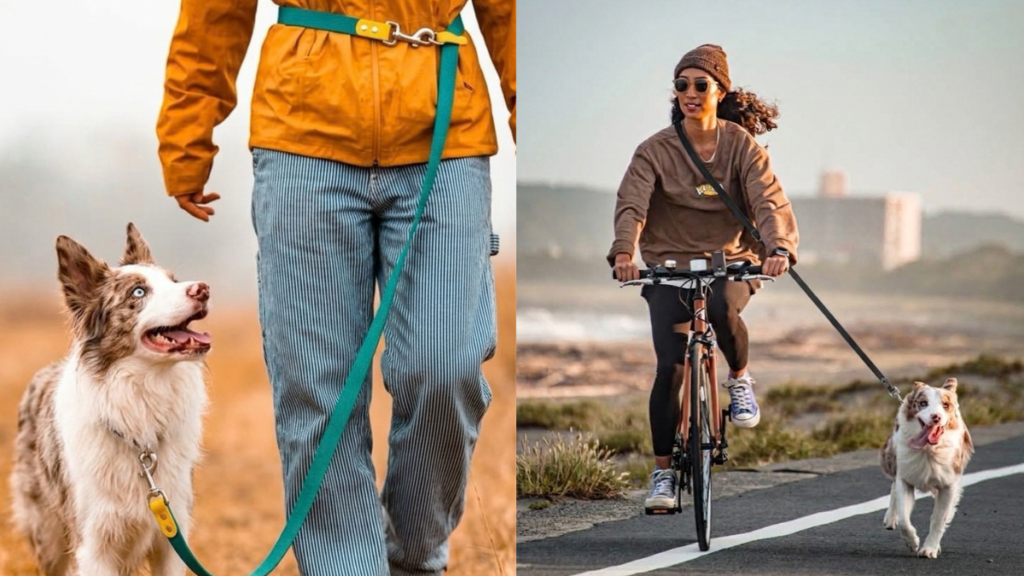
Running with your dog is one of the most efficient ways to exercise a high-energy breed — you both get a workout, the dog gets the intensity they need, and the whole thing takes half the time of a long walk. But the gear that works for walking does not work for running. A standard handheld leash at running speed is a wrist injury waiting to happen, and a collar-only setup at pace puts concussion force on a dog’s trachea with every stride. The right dog running gear solves both problems — and the core piece is a hands-free leash that keeps your arms free and your dog connected without either of you fighting the equipment.
I learned this the hard way. When I first started running with my Golden Retriever, I used a standard 6-foot leash wrapped around my hand. Within two weeks, my wrist ached from the constant pulling correction, and the leash had caught my fingers hard enough to bruise them twice when she darted at a squirrel. The moment I switched to a crossbody hands-free leash, the wrist pain disappeared — the pulling force transferred to my core instead of my hand, and my arms were free to maintain a natural running stride. The dog did not change her behaviour. The gear did.
This guide covers what you actually need to run safely with your dog — the three core pieces of running gear, how to use a hands-free leash correctly, how to start a running routine with a dog that pulls, and the safety rules that most owners learn too late.

Why Standard Leashes Fail for Running
A standard handheld leash is designed for walking — not running. At running speed, the same leash that feels fine at 5km/h becomes a problem at 10km/h. Here is why:
Wrist and arm strain from pulling corrections
At a walk, a pull correction is a minor tug. At a run, the same pull transmits significantly more force through the leash to your wrist — because the dog’s momentum is higher and your own momentum means you cannot absorb the pull as easily. Over a 30-minute run, dozens of micro-corrections accumulate into wrist soreness, forearm fatigue, and eventually the altered arm swing that runners call “leash arm.” A hands-free crossbody leash eliminates this entirely by distributing the force across your torso, leaving your arms free to move naturally.
Tangle and trip hazard at speed
A 6-foot handheld leash at running speed has enough slack to wrap around your legs, the dog’s legs, or trail obstacles. The slack changes with every stride — too much when the dog surges forward, too little when you both slow — and managing that slack while running is a cognitive load you do not want. A hands-free leash worn crossbody maintains a fixed length between you and the dog, with no slack to manage. The 360° swivel hook prevents the leash from twisting as the dog moves side to side on the trail.
No free hands for balance, obstacles, or falls
Running on trails means uneven terrain, roots, rocks, and the occasional stumble. With a handheld leash, one hand is always occupied — and it is usually the hand you need to catch yourself with. A hands-free leash frees both hands for balance, for holding a water bottle, for adjusting your music, and for catching yourself if you trip. This is not a convenience feature — it is a safety one. Most running-with-dog injuries come from falls where the leash was in the recovery hand.
What Makes a Hands-Free Leash Work for Running
Not every hands-free leash is suitable for running. The features that matter at running speed are different from what matters at walking speed. Here is what to look for:
Crossbody wear — not just waist
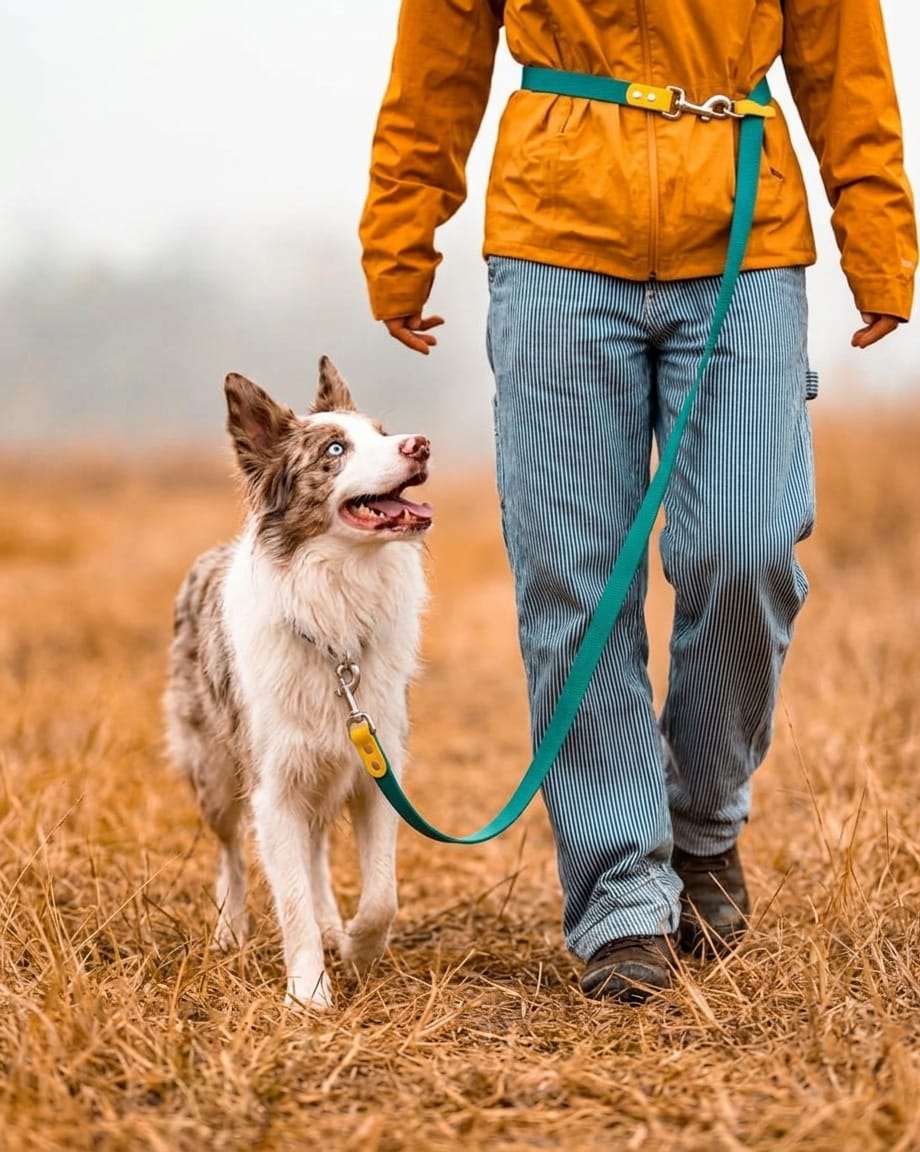
Waist-worn leashes work for walking, but crossbody (over one shoulder, across the chest) is more stable for running. The crossbody position anchors the leash across your torso, distributing pulling force through your core rather than your hips. A waist-only attachment can rotate at running speed when the dog pulls sideways, pulling your trousers or shorts down — crossbody eliminates this. The MoonianPet hands-free leash can be worn crossbody, around the waist, or handheld — adjustable through its D-ring system for 8 different configurations.
Anti-slip shoulder grip
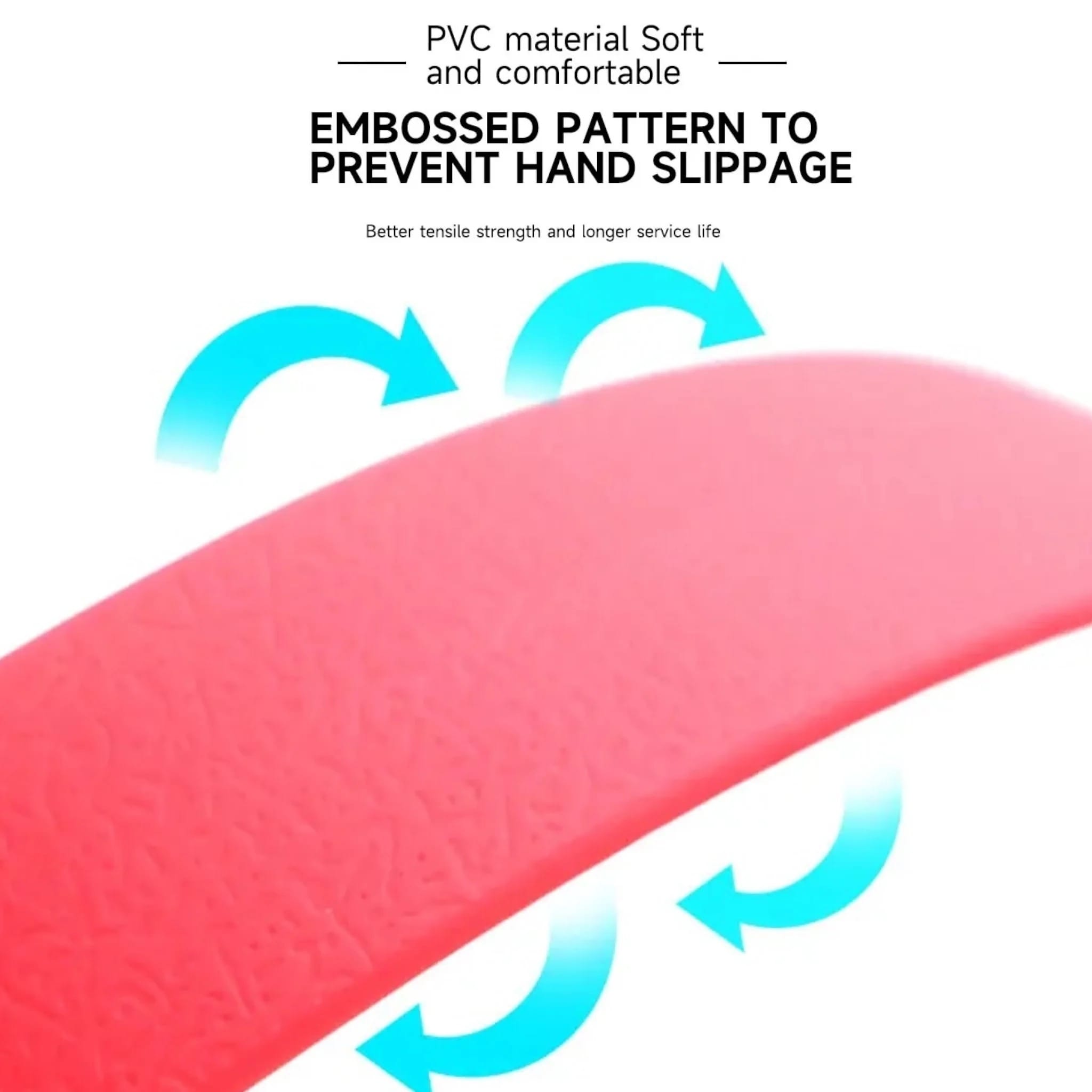
Running produces sweat. A smooth PVC or nylon leash worn over a technical fabric shirt will slide off your shoulder with every stride — this is the most common complaint with cheap hands-free leashes. An embossed anti-slip texture on the shoulder section keeps the leash in place against fabric and skin, even as you sweat. This is not a luxury feature for runners — without it, you spend the entire run shrugging the leash back onto your shoulder.
Waterproof, sweat-proof material
Standard nylon leashes absorb sweat, rain, and mud — and they hold the smell permanently after a few weeks of running. A PVC-coated webbing leash is 100% waterproof and non-porous: sweat, rain, and mud wipe off with a damp cloth and never soak into the material. For a leash you will be using against your body in all weather, this is the difference between a leash that smells fine after a year and one that smells like a gym bag after a month. For more on waterproof leash benefits, see our cross body dog leash guide.
360° swivel hook and heavy-duty D-rings
When you run, your dog moves side to side on the trail — dodging obstacles, sniffing, crossing in front of you. A fixed-position hook twists the leash with every cross, creating a kinked rope that eventually snaps or jams. A 360° swivel hook lets the leash rotate freely as the dog moves, keeping the line straight and tangle-free. The D-rings that allow the multi-way configuration need to be zinc alloy — not plastic — because the force at running speed exceeds what plastic hardware can sustain over repeated use.
The Core Dog Running Gear Checklist
You do not need much gear to run with a dog — but the three pieces below are non-negotiable. Everything else on the checklist is important but secondary.
1. Hands-free crossbody leash
This is the single most important piece of dog running gear. A hands-free leash with a crossbody option, anti-slip shoulder grip, waterproof PVC webbing, and a 360° swivel hook covers every running scenario — trail, road, rain, and heat. The MoonianPet Hands-Free Two-Tone Waterproof Leash ticks all four boxes in 4 color combinations and 2 widths (16mm for small dogs, 20mm for medium/large dogs).
2. No-pull harness (never a collar)
Never run a dog on a collar. At running speed, every pull correction puts concussion force on the trachea that does not happen at walking speed — and repeated tracheal impact causes coughing, throat damage, and long-term respiratory issues. A no-pull harness with neoprene padding distributes pressure across the chest and shoulders, and the front D-ring gives you a redirection mechanism if the dog surges. The MoonianPet No-Pull Harness has both front and back D-rings, three-point adjustment for a secure fit at speed, and neoprene padding that prevents chafing during repetitive stride motion. For more on fit, see our harness tightening guide.
3. Waterproof collar with ID
Even with a harness, your dog should wear a collar with ID tags at all times — including on runs. A waterproof PVC collar will not absorb sweat or rain, will not smell after a week of running, and will not weaken the way fabric collars do when repeatedly soaked. The MoonianPet Waterproof Collar in 11 colors is designed for exactly this — daily wear in all conditions without maintenance.
4. Supplementary items (not sold by MoonianPet)
A collapsible water bowl, reflective gear for low-light runs, and paw balm for hot pavement are all worth carrying. These are not items we sell, but they are part of a complete running setup. The leash, harness, and collar are the three pieces where equipment quality directly affects safety — the rest is comfort and convenience.
Dog Running Gear Quick Reference
What you need, why you need it, and what to look for.
| Gear | Why It Matters for Running | Key Feature |
|---|---|---|
| Hands-free leash | Eliminates wrist strain, frees arms for balance, prevents tangles at speed | Crossbody + anti-slip grip |
| No-pull harness | Protects trachea from concussion force, distributes pressure across chest | Neoprene padding + front clip |
| Waterproof collar | Holds ID tags, does not absorb sweat or weaken when wet | PVC-coated webbing |
| Collapsible bowl | Hydration on runs over 20 minutes, especially in heat | Lightweight, clips to leash |
How to Start Running with Your Dog
Most dogs are not ready to run on day one — even high-energy breeds. The fitness, the leash discipline at speed, and the communication between runner and dog all need to build gradually. Here is the progression that works:
Week 1–2: Walk with the hands-free leash
Before your first run, walk with the crossbody leash for one to two weeks. Your dog needs to get used to the fixed distance and the feel of the leash at your side rather than in your hand. This is also when you teach the directional cues — “left,” “right,” “slow” — that you will need at running speed. If the dog cannot walk politely on a hands-free leash, they cannot run on one.
Week 3: Run in 1-minute intervals
Start with 1 minute of running, 2 minutes of walking, repeated 5 times. This teaches the dog that running is a temporary state — not a permanent release of all energy — and gives you a chance to check their position, leash tension, and stride. Most dogs get excited on the first run and pull hard for the first 30 seconds, then settle into a rhythm. If your dog cannot settle into a rhythm within the first minute, go back to walking for another week.
Week 4+: Build distance gradually
Once your dog runs in a steady rhythm with no pulling on the crossbody leash, increase the running intervals — 2 minutes on, 1 minute off, then 5 minutes on, then continuous running. Never increase total running distance by more than 10% per week. Dogs do not show fatigue the way humans do — they will run themselves into injury rather than stop. The 10% rule protects them from their own enthusiasm. For pullers, the front D-ring on the harness is your friend — see our harness fitting guide for correct front-clip use.
Safety Rules for Running with Dogs
Most running injuries in dogs are preventable. The rules below are the ones that catch owners off guard:
Check pavement temperature before you run
Place the back of your hand on the pavement for 5 seconds. If you cannot hold it there comfortably, it is too hot for your dog’s paws. Pavement reaches 52°C when the air temperature is only 29°C — and at that temperature, paw pad burns occur within 60 seconds. Run in the early morning during summer, or stick to grass and dirt trails. This is the most common cause of running injuries in dogs, and it is entirely preventable.
Age and breed restrictions matter
Puppies should not run sustained distances until their growth plates close — typically 12–18 months depending on breed. Running before growth plates close causes permanent joint damage. Brachycephalic breeds (Pugs, French Bulldogs, Bulldogs) should not run in heat at all — their airway structure cannot cool them fast enough. Herding and sporting breeds (Australian Shepherds, Border Collies, Viszlas, Weimaraners) are built for running and are the best running partners. When in doubt, ask your vet whether your dog’s breed and age are suited to running.
Watch for the lag — not the pull
Dogs do not stop running when they are tired — they slow down. If your dog, who normally runs ahead or beside you, starts lagging behind, that is the signal to stop or walk. Do not wait for your dog to sit down or refuse to move — by that point they are already overheated. A lag of even 2 metres behind your normal position is the cue to take a walk break. This is particularly important in the first few weeks when you are still learning your dog’s running capacity.
Check paws after every run
After every run, check your dog’s paw pads for cuts, abrasions, or tenderness. Running on rough surfaces wears pads differently from walking, and a dog that has only walked on soft ground will develop sore pads on their first few trail runs. This is normal and resolves as the pads toughen — but a cut or split pad needs immediate rest. For dogs new to running, start on soft surfaces (grass, dirt) and gradually introduce harder surfaces over weeks.
The Running Setup That Works
The MoonianPet Hands-Free Two-Tone Waterproof Leash is designed for exactly the use case described in this guide. The crossbody configuration keeps your arms free and distributes pulling force through your core. The embossed anti-slip grip holds the leash on your shoulder through sweat and technical fabric. The waterproof PVC webbing does not absorb sweat, rain, or mud — wipe it clean after every run and it will not hold odour. The 360° swivel hook and zinc alloy D-rings handle pulling force at speed without jamming or bending. Available in 4 two-tone colour combinations and 2 widths for small dogs, medium dogs, large dogs, and cats.
Pair it with the MoonianPet No-Pull Harness for the complete running setup — neoprene padding prevents stride chafing, the front D-ring manages pulling corrections without tracheal pressure, and three-point adjustment keeps the harness centred on the body at speed. For the dog’s ID collar, the Waterproof PVC Collar in the matching colour completes the set. For more on why a harness is the correct leash attachment for running rather than a collar, see our collar vs harness guide.
Frequently Asked Questions
What gear do I need to run with my dog?
You need three things: a hands-free crossbody leash, a no-pull harness with neoprene padding, and a waterproof collar with ID tags. The hands-free leash prevents wrist strain and keeps your arms free for balance. The harness protects your dog’s trachea from concussion force at running speed. The collar holds identification in case you separate on the trail. Everything else — water bowls, reflective gear, paw balm — is supplementary.
Is a hands-free leash good for running?
A hands-free leash is the best leash setup for running. Crossbody wear distributes pulling force across your torso instead of your wrist, eliminating the wrist and forearm strain that handheld leashes cause at running speed. Both arms are free for natural running form and for catching yourself if you stumble. Look for one with an anti-slip shoulder grip — without it, the leash slides off your shoulder with every stride as you sweat.
Can I run with my dog on a collar?
No. Running a dog on a collar puts repeated concussion force on the trachea with every pull correction and stride — this causes coughing, throat damage, and long-term respiratory issues. Always run with a harness that distributes pressure across the chest and shoulders. The collar should be worn only for ID tags, not for leash attachment. For the full comparison, see our collar vs harness guide.
How far should I run with my dog?
Start with 1-minute running intervals and increase total distance by no more than 10% per week. Most healthy adult dogs of running breeds can build up to 3–5km of continuous running over 4–6 weeks. Puppies should not run sustained distances until 12–18 months (growth plates must close first). Brachycephalic breeds (Pugs, French Bulldogs) should not run in heat at all. Watch for lagging behind — that is the sign your dog is tired, even if they have not stopped.
How do I stop my dog from pulling when running?
Two things: use a front-clip no-pull harness, and build distance gradually. The front D-ring on the harness redirects the dog sideways when they pull, which is more effective at running speed than at walking speed because the dog’s own momentum does the redirecting. Most dogs pull for the first 30 seconds of a run out of excitement, then settle into a rhythm. If your dog cannot settle into a rhythm within the first minute, go back to walking with the hands-free leash for another week before attempting running again. For harness fitting, see our harness tightening guide.
What temperature is too hot to run with my dog?
Test the pavement with the back of your hand for 5 seconds — if you cannot hold it comfortably, it is too hot for your dog’s paws. As a general rule, do not run with your dog when the air temperature exceeds 20°C, particularly in direct sun. Pavement reaches 52°C when the air is only 29°C, and paw pad burns occur within 60 seconds at that temperature. Run in the early morning during summer, or stick to grass and dirt trails.
Looking for more advice on walking and running gear? Our cross body dog leash guide covers all the configurations of a hands-free leash. Or if you need to sort out harness fit before you start running, see our harness tightening guide for the two-finger rule and three critical check points.
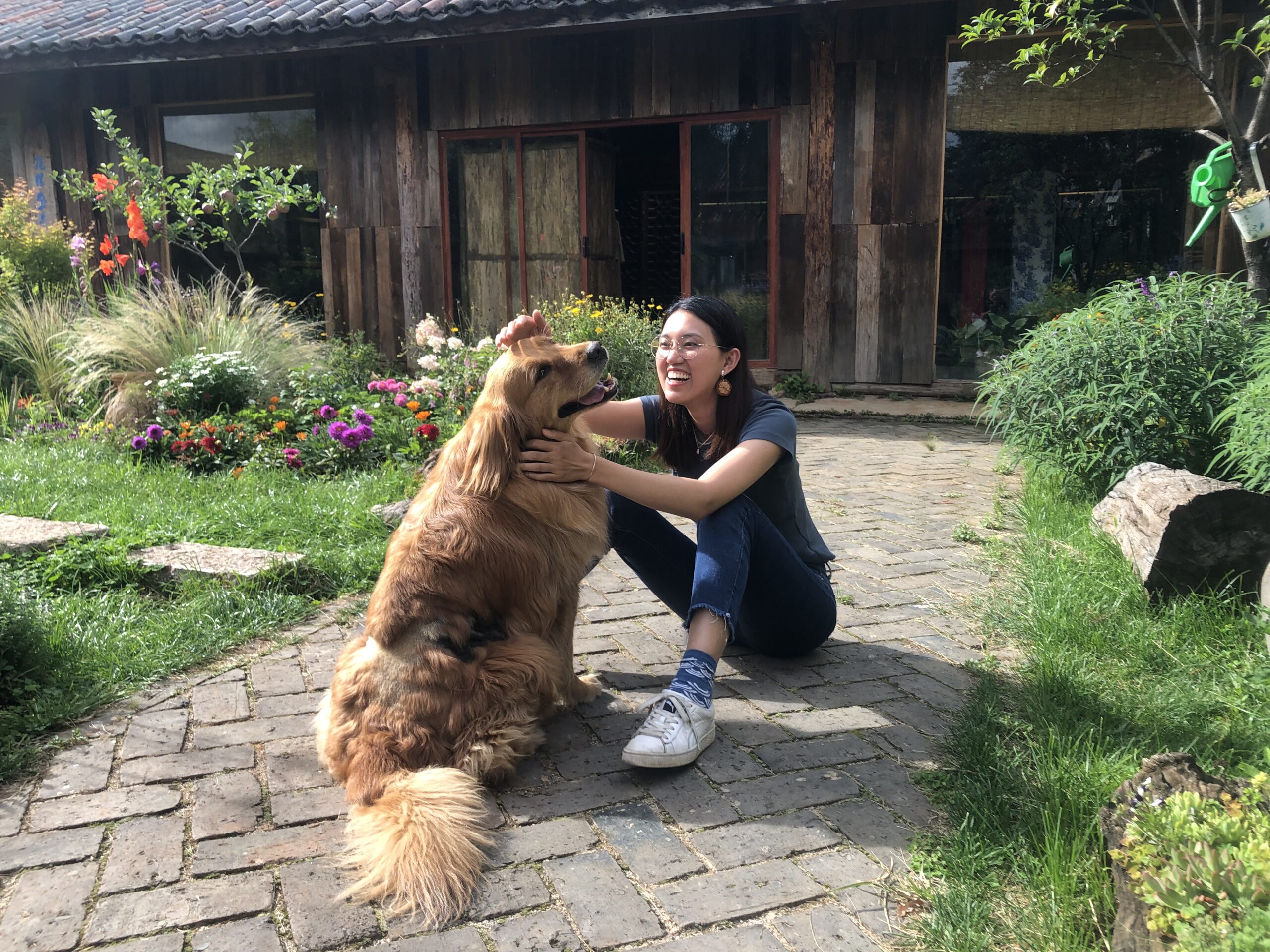
Wenyue
Wenyue is the founder of MoonianPet and writes about dog collars, harnesses, waterproof pet gear, and everyday dog care. Growing up with dogs inspired her lifelong interest in pet care and practical dog gear. Through MoonianPet, she researches dog collars, harnesses, waterproof materials, and everyday solutions that help active dogs stay comfortable during daily adventures.