
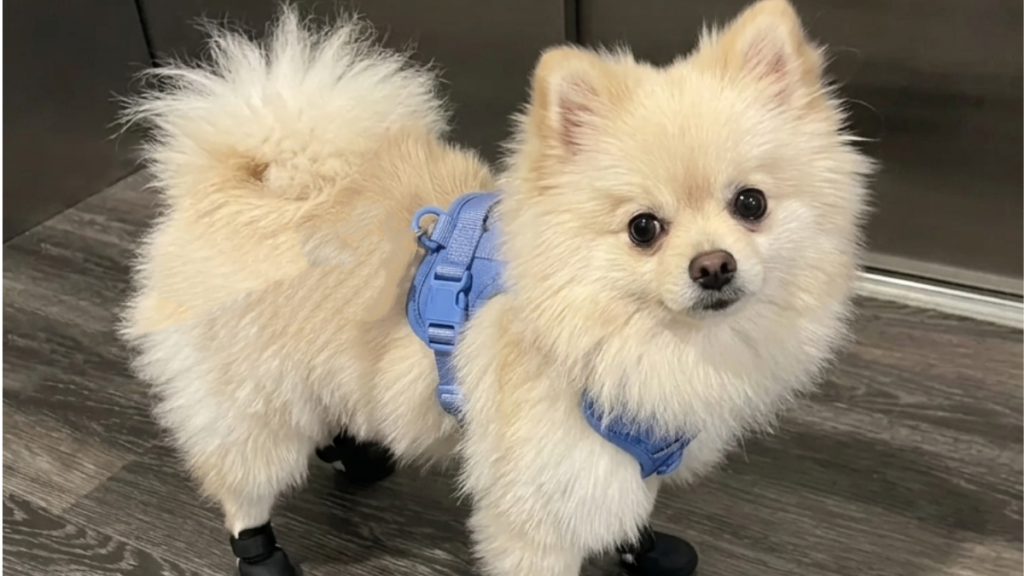
Pomeranians look larger than they are. The thick double coat — a dense undercoat topped by a long, standoff outer coat — adds considerable visual bulk to a dog that typically weighs between 1.5 and 3.5kg. This creates a specific fitting challenge: a harness that looks correctly proportioned on a Pomeranian from a distance may be sized for the appearance of the dog rather than the actual body underneath the coat.
The coat also creates its own set of practical concerns. Harness straps that press against the undercoat flatten and mat the fur at contact points over time. The armpit area — where the straps pass under the front legs — is particularly prone to matting because the friction of walking combines with the pressure of the strap. For a breed where coat condition is a significant part of the dog’s appearance, harness selection and fit have consequences beyond just comfort.
And like other toy breeds, Pomeranians have a well-documented predisposition to tracheal collapse — making collar walking inadvisable for this breed regardless of age or current health status. This guide covers how to measure a Pomeranian correctly beneath the coat, what to look for in a harness, and how to avoid the coat damage that poorly designed or fitted harnesses cause.
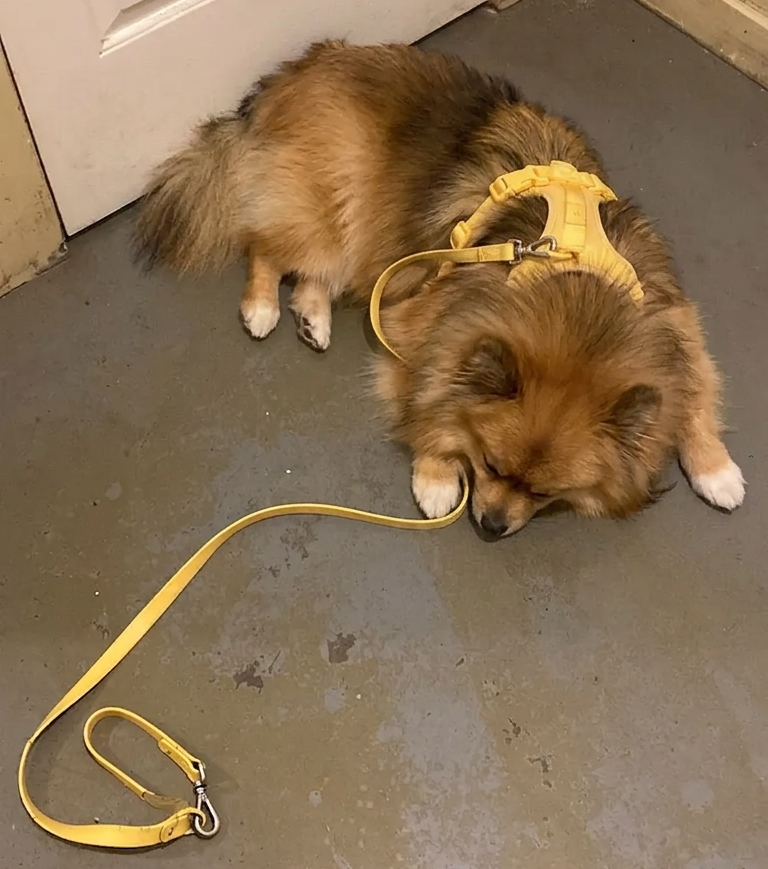
Why Pomeranians Need a Harness Rather Than a Collar
Tracheal collapse risk
Pomeranians are among the toy breeds most commonly affected by tracheal collapse — a progressive condition where the cartilage rings of the trachea weaken and the airway narrows. The characteristic honking cough is often the first sign owners notice. While genetics determines predisposition, collar pressure from walking and pulling is a recognised aggravating factor. Most veterinary guidance recommends harness walking for Pomeranians regardless of whether the dog has been diagnosed with any airway issue — it’s a precautionary measure that costs nothing and removes a known risk factor. For a full explanation of the condition and how harness choice affects it, see our dog harness for tracheal collapse guide.
The Pomeranian’s collar fit problem
Pomeranians have a particularly thick neck ruff — the dense coat around the neck and chest is one of the breed’s most distinctive features. This coat makes it difficult to fit a collar correctly; the collar sits on top of the coat rather than against the skin, which means it appears fitted but shifts easily and can tighten unpredictably when the dog pulls or the coat compresses differently during movement. A harness fits to the body beneath the coat rather than on top of it, providing a more stable and predictable attachment point.
Pomeranian temperament on walks
Pomeranians are bold, alert, and reactive — they have a terrier-like confidence that leads them to challenge much larger dogs and react sharply to environmental stimuli. Despite weighing under 3.5kg, a Pomeranian will pull and lunge with genuine conviction. On a collar, each of those lunges creates a sharp pressure spike on the trachea. A harness absorbs the same force across the chest and shoulders, with the throat entirely unloaded.
How to Measure a Pomeranian for a Harness
The key point with Pomeranians is to measure the body beneath the coat, not around the outside of the fluffed coat. A tape measure laid on top of a Pomeranian’s coat will overestimate the body dimensions significantly — and a harness sized to the coat rather than the body will be too large and shift during walking.
Chest girth — measure under the coat
Part the coat at the widest point of the chest — directly behind the front legs — and lay the tape against the skin rather than over the surface of the fur. Hold the tape snug but not tight. For most adult Pomeranians, chest girth measured at skin level falls between 28 and 38cm. This is the primary measurement that determines harness size. If you measure over the coat, you may add 3–5cm to the actual body measurement — which translates to a harness that is one size too large.
Neck girth
Part the neck ruff and measure at skin level at the base of the neck, where the harness neck opening will sit. For most adult Pomeranians, neck girth at skin level is between 18 and 26cm. Again, measuring over the coat will give a larger number than the actual body dimension. The neck opening of the harness needs to fit the body, not the coat — a neck strap that fits the coat but not the body underneath will shift and gap when the coat parts during movement.
Checking fit after putting the harness on
Once fitted, part the coat around the strap edges and check the fit at skin level — two fingers should slide under the chest strap comfortably. The neck opening should sit low at the base of the neck, positioned clear of the trachea. Walk the dog for five minutes and then recheck — a harness that fits correctly at rest on a Pomeranian will sometimes shift once the dog is moving and the coat redistributes. If the harness has moved noticeably after five minutes of walking, it needs tightening.
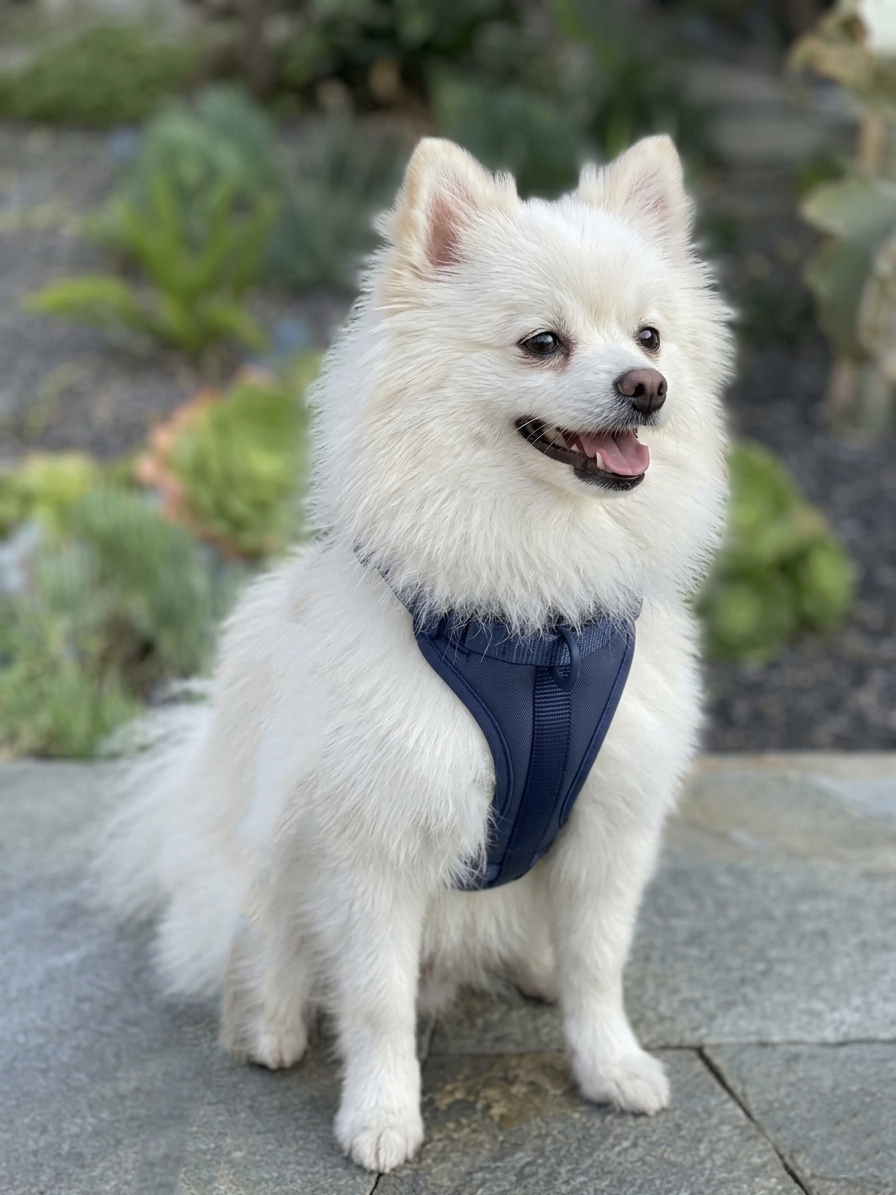
What to Look for in a Pomeranian Harness
Smooth contact surfaces that don’t mat the coat
This is the most Pomeranian-specific requirement. Harness straps with textured surfaces, rough webbing edges, or abrasive padding grab the coat and cause matting at the contact points over time — particularly in the armpit area where movement creates continuous friction. A harness with smooth, flat contact surfaces — neoprene padding or a smooth-finished webbing — slides against the coat rather than gripping it. After several weeks of daily use, inspect the coat at the armpit and chest contact points; if you’re seeing knots or thinning at those spots, the harness surface is causing coat damage.
Lightweight overall construction
A harness for a 2kg dog should feel negligible in the hand. Heavy hardware, thick foam padding, and wide webbing add weight that is irrelevant on a medium dog but significant on a Pomeranian. Beyond the dog’s comfort, a heavy harness tends to shift during walking — and a shifting harness creates more coat friction than a correctly fitted, lightweight one that stays in position. Look for narrow webbing in the 10–15mm range, small-format hardware, and a body made from a lightweight material like neoprene rather than thick padded nylon.
Low neck opening away from the trachea
Given the tracheal collapse risk in this breed, the neck opening of the harness must sit at the base of the neck — not high toward the larynx. When the harness is fitted correctly and the dog looks straight ahead, there should be a clear gap between the neck strap and the front of the throat. A neck strap that presses against the front of the throat when the leash is taut places pressure in exactly the area a collar would — defeating the purpose of switching to a harness.
Independent three-point adjustment
Pomeranians vary considerably in build — some have deep, broad chests relative to their weight; others are more finely built. Independent adjustment at the neck and both sides of the chest allows the harness to be fitted precisely to the individual dog’s proportions rather than to an average. Given the importance of measuring under the coat and the variation this creates, a harness with fine adjustment capability is more reliably fittable than one with limited adjustment range.
Front D-ring for reactive walking
Pomeranians are reactive and confident beyond their size — they tend to pull and lunge at stimuli with more enthusiasm than a toy breed’s small frame might suggest. A front D-ring on the chest panel redirects the dog back toward the handler when it lunges, reducing both the frequency and intensity of pulling episodes. For a breed with tracheal vulnerability, reducing the physical effort of each walk also reduces the respiratory load — which matters particularly in hot weather or for older dogs.
What to Avoid in a Pomeranian Harness
Velcro closures
Velcro and Pomeranian coats are incompatible. Velcro catches the long outer coat on contact and creates immediate tangling. Some harnesses designed for small dogs include Velcro adjustment panels or closures — avoid these entirely for any long or double-coated breed. Buckle closures are always the better choice for Pomeranians.
Harnesses sized to the coat rather than the body
A harness that fits the outside of a Pomeranian’s coat will be one or two sizes too large for the actual body. It will shift constantly during walking, the back D-ring will slide sideways, and the chest panel will migrate upward toward the shoulders. This is the most common Pomeranian harness problem and it is entirely preventable by measuring at skin level and sizing accordingly.
Decorative harnesses with non-adjustable sizing
The Pomeranian harness market is heavily targeted with novelty and fashion harnesses — many of which come in fixed sizes or have very limited adjustment range. At the body dimensions of a Pomeranian, a fixed-size harness that doesn’t precisely match the dog’s measurements will either be too loose or too tight with no way to correct it. Adjustability is not optional at this size.
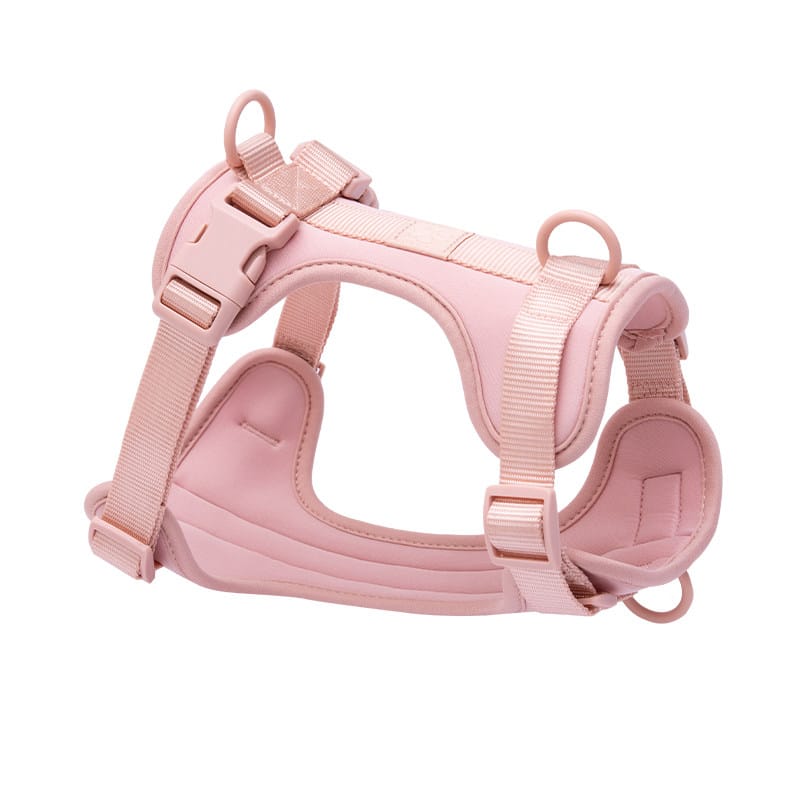
The MoonianPet No-Pull Harness for Pomeranians
The MoonianPet No-Pull Dog Harness in XS fits a chest girth of 30–40cm measured at skin level — covering most standard adult Pomeranians. The neoprene body has a smooth surface that slides against the coat rather than grabbing it, reducing the friction-driven matting that textured webbing causes in the armpit and chest areas over time.
Three-point independent adjustment at the neck and chest allows precise fitting to the actual body dimensions beneath the coat. The neck opening positions low at the base of the neck, away from the trachea. Both front and back D-rings are included — the front clip for reactive or pulling dogs, the back clip for settled walkers. Available in 11 colours including lilac, pink, sky blue, and purple — popular choices for Pomeranian owners — and pairs with the matching Harness & Leash Set for a complete coordinated setup.
Measure chest girth at skin level with the coat parted, then use our dog harness size guide to confirm the right size before ordering. If your Pomeranian falls between XS and S, size down — a snug fit stays in position and causes less coat friction than a slightly loose one.
Frequently Asked Questions
What size harness does a Pomeranian need?
Most adult Pomeranians need an XS harness, but the correct size depends on the actual chest girth measured at skin level with the coat parted — not over the surface of the coat. For most Pomeranians, chest girth at skin level falls between 28 and 38cm. Always match this measurement to the brand’s specific size chart rather than assuming XS is correct — some XS harnesses start at 32cm and will be too large for a fine-boned Pomeranian with a 28cm chest. Our dog harness size guide has the full chart.
Will a harness damage my Pomeranian’s coat?
A poorly fitted harness or one with rough, textured contact surfaces will cause matting and coat thinning at the armpit and chest contact points over time. A harness with smooth surfaces — neoprene or smooth-finished webbing — that is correctly sized and stays in position during walking causes significantly less coat friction. Inspect the coat at the contact points after the first few weeks of regular use; if you’re seeing knots developing at the armpit or chest strap areas, either the harness surface is too rough or the harness is shifting during walking. Rotating between two harnesses reduces repetitive friction at identical contact points.
Can my Pomeranian wear a collar instead of a harness?
A flat collar is appropriate for carrying ID tags and is fine for a Pomeranian to wear throughout the day without a leash attached. The concern is specifically about attaching a leash to a collar for walking — given the tracheal collapse predisposition common in this breed, collar pressure during walks and pulling is inadvisable. The standard approach is a collar for ID and a harness for all walking. See our small dog collar guide for what to look for in a lightweight ID collar for toy breeds.
How do I stop the harness from matting my Pomeranian’s coat?
Three things help most: choose a harness with smooth, non-textured contact surfaces; ensure the harness fits snugly enough that it doesn’t shift during walking (a shifting harness creates more friction than a static one); and brush out the contact areas — particularly the armpits — after each walk before any knots have time to tighten. For Pomeranians in full show coat, some owners apply a small amount of coat conditioner or detangling spray to the armpit area before fitting the harness, which reduces friction significantly. Rotating between two harnesses also reduces the repetitive compression at identical contact points.
Should I use the front or back clip on my Pomeranian’s harness?
For a Pomeranian that pulls or reacts strongly to stimuli, the front clip is more effective — it redirects the dog toward you when it lunges, reducing the intensity of each pulling episode. This matters for tracheal health as well, since sustained pulling involves exertion that can trigger coughing in predisposed dogs. For a calm Pomeranian that already walks on a loose lead, the back clip gives comfortable freedom of movement without the leash crossing the dog’s body. Many owners use the front clip in stimulating environments and the back clip for quieter walks once the dog has settled. Both options being available on the same harness is more practical than owning two separate harnesses for different situations.
For more detail on tracheal collapse and why it affects harness choice for toy breeds, see our dog harness for tracheal collapse guide. For Chihuahua harness sizing at similar dimensions, see our Chihuahua harness guide.
Wenyue
Wenyue is the founder of MoonianPet and writes about dog collars, harnesses, waterproof pet gear, and everyday dog care. Growing up with dogs inspired her lifelong interest in pet care and practical dog gear. Through MoonianPet, she researches dog collars, harnesses, waterproof materials, and everyday solutions that help active dogs stay comfortable during daily adventures.