
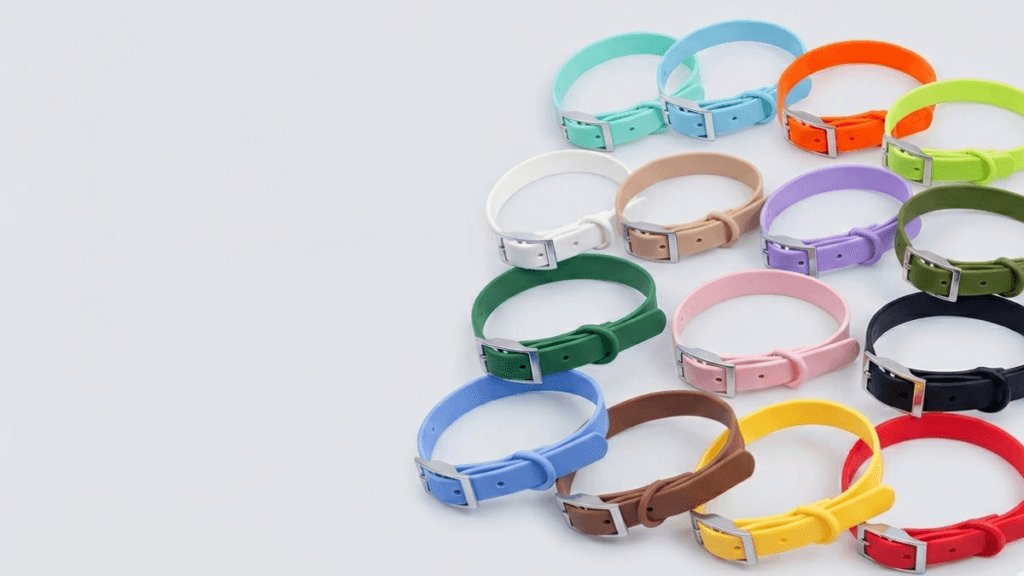
Most dog collars come in widths between 15mm and 25mm, and that range covers the majority of dogs without any issues. A standard width works fine for a dog that walks calmly on a loose lead — when there’s no tension on the collar, width barely matters. But for dogs that pull, lunge, or wear a collar for extended periods, width becomes a meaningful variable. A wider collar distributes any pressure across a larger surface area of the neck, reducing the force-per-square-centimetre on the underlying tissue. The narrower the collar, the more pressure concentrates on a smaller area — which is why a thin slip lead creates a much sharper sensation than a flat collar of the same tension.
Wider collars — 25mm and above — are specifically useful for large and giant breeds, dogs with broad necks relative to their head circumference, sighthounds and similar breeds that need a wider profile for safety, and working dogs that wear a collar throughout the day. They’re also a common choice for owners who want a collar that lies flat and visible against a thick coat, rather than disappearing into the fur.
This guide covers when a wide collar is genuinely useful, how to choose the right width for your dog, what materials work best at wider widths, and what to watch for in terms of fit.

When a Wide Collar Makes a Real Difference
Large and giant breeds
A 20mm collar on a German Shepherd or Rottweiler is functional but narrow relative to the dog’s neck mass. Large breeds have proportionally wider neck musculature, and a wider collar sits more stably on a broad neck — it’s less likely to twist sideways, ride up, or shift position during walking. Most collars marketed specifically for large breeds start at 25mm and go up to 38mm or 50mm for very large or giant breeds. A collar that’s proportionally wide relative to the neck also looks more visually balanced, which matters to many owners of large dogs.
Dogs that pull on the lead
For any dog that pulls consistently — whether from training gaps, reactivity, or breed drives — collar width affects how the pull pressure is distributed across the neck. A 13mm collar under sustained forward tension creates a concentrated pressure line on the throat. A 25mm collar spreads that same tension across significantly more surface area, reducing the per-unit pressure on the underlying tissue. This doesn’t make collar walking an acceptable choice for dogs with significant tracheal or neck concerns — a harness is the correct solution for those dogs — but for otherwise healthy dogs that still pull occasionally, a wider collar is more comfortable than a narrow one under the same conditions.
Dogs with thick coats
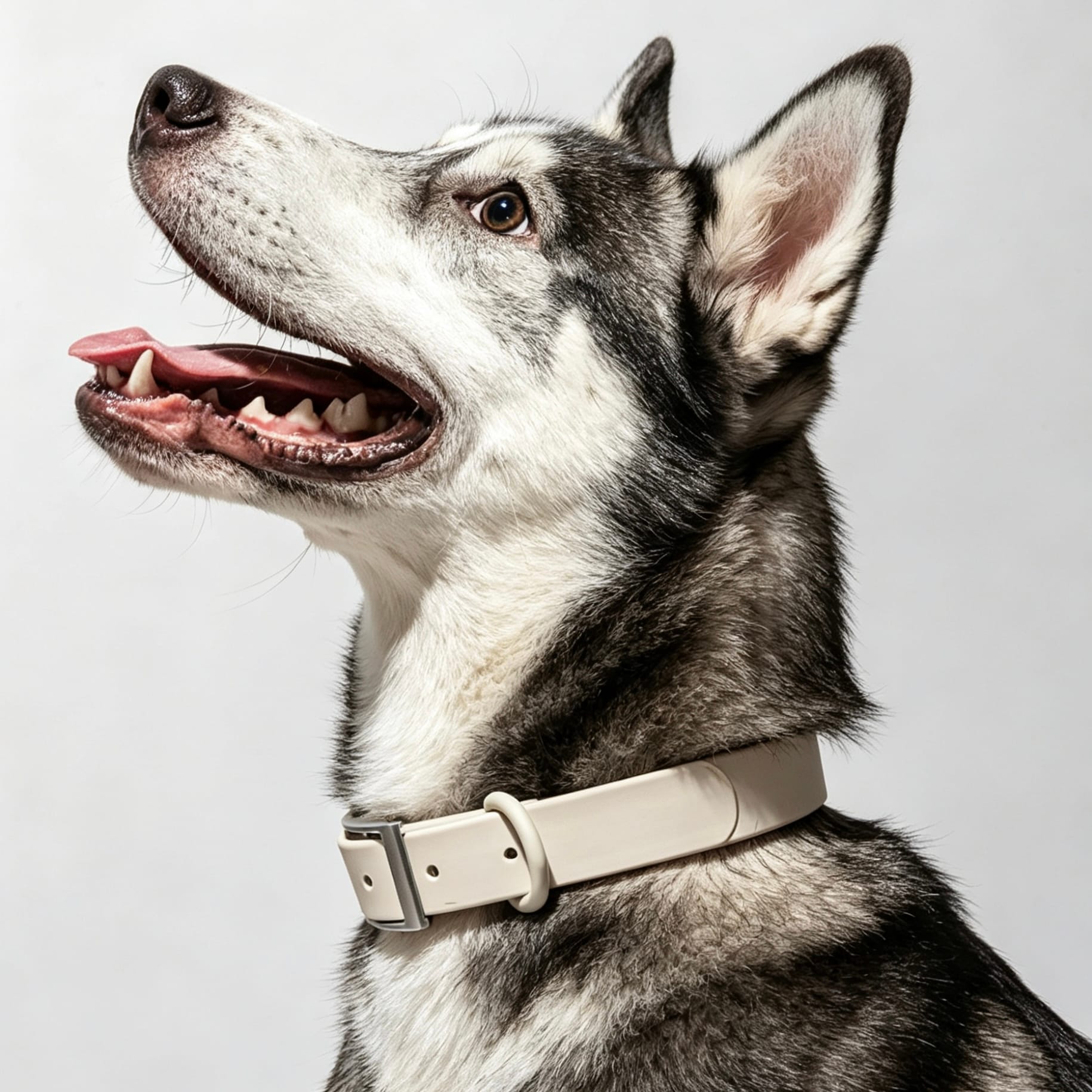
A narrow collar on a thick-coated breed — Bernese Mountain Dog, Newfoundland, Siberian Husky — tends to disappear into the coat and become invisible and difficult to check for fit. A wider collar lies flat on top of the coat with more visible surface area, making it easier to spot at a glance and easier to check for correct fit without parting the fur extensively. It also provides a more stable foundation — a narrow collar embedded in thick fur sits on the coat rather than the skin, and its effective position can shift unpredictably when the coat moves.
Dogs that wear a collar all day
A collar worn 24 hours a day — for identification or security purposes — is in sustained contact with the neck for far longer than a walking collar used only outdoors. Over extended wear, a narrow collar can compress the coat and skin at the contact points, leaving a visible mark or flattening the fur. A wider collar distributes its resting weight across more surface area, reducing the localised compression effect. This is a relatively minor concern for most dogs in standard flat collars, but it becomes more relevant for dogs that never have their collar removed.
What Width Should You Choose?
Collar width should be proportional to the dog’s neck circumference and body size. A useful general guide:
10–15mm — toy and small breeds
Chihuahuas, Pomeranians, Yorkshire Terriers, and other toy breeds. A narrow collar is proportionally appropriate and avoids the visual and physical bulk of a wider collar on a small neck. For most small breeds, a harness is preferred over a collar for walking anyway — the collar serves primarily for ID tag purposes.
20–25mm — medium breeds
Beagles, Spaniels, Border Collies, Whippets, and similar. The standard collar width for most medium-sized dogs. Provides stable flat-lying fit on a medium neck without unnecessary bulk. The 20mm width is the most commonly available size across most collar ranges.
25mm — large breeds
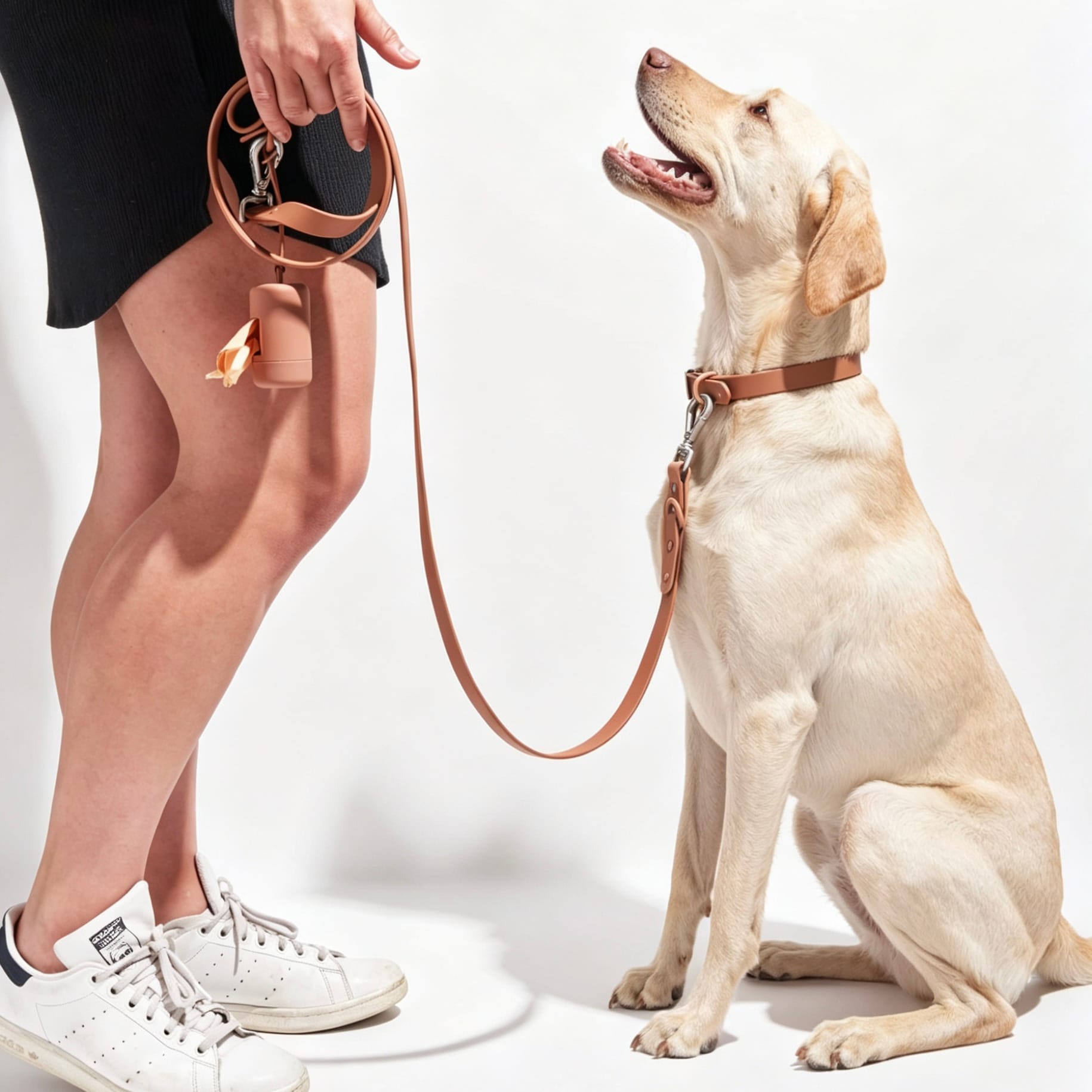
German Shepherds, Labradors, Golden Retrievers, Boxers, and similar. A 25mm collar sits visibly and stably on a broad neck without twisting or shifting, and looks proportionally correct on a large dog. For most large breeds with neck circumferences of 37–60cm, 25mm is the practical upper end for a flat collar — wide enough to distribute pressure and lie flat, without excessive bulk. Hardware — buckles and D-rings — should be scaled to match the collar width at this size.
Material Matters More at Wider Widths
Nylon webbing
Standard nylon webbing at wider widths is lightweight and inexpensive. It absorbs water and holds odour over time, which is more noticeable at wider widths because more material is in contact with the neck and collar area. A wide nylon collar on a dog that swims or walks in wet conditions will stay damp between uses and develop a persistent smell. It also softens and frays at the edges with extended use, which is more visible on a wide collar than a narrow one.
Leather
Leather at wide widths has a strong traditional association with large breed working and show collars. A wide leather collar looks substantial and develops character with use. The downsides are familiar: it stiffens when wet, takes time to dry, and requires periodic conditioning to prevent cracking. For large dogs that are regularly wet — swimmers, outdoor dogs in wet climates — leather requires noticeably more maintenance than coated webbing alternatives.
PVC-coated webbing (BioThane-style)
Coated webbing at wider widths combines the flexibility and lightweight quality of webbing with a waterproof, easy-clean outer surface. It doesn’t absorb water or hold odour, wipes clean after muddy walks, and maintains its appearance and feel regardless of repeated wetting and drying. At 25mm, it has the look and hand-feel of leather without the maintenance requirements. For large breeds that are active in varied weather conditions, coated webbing is the lowest-maintenance wide collar material available.
The MoonianPet Waterproof Dog Collar
The MoonianPet Waterproof Dog Collar comes in five sizes with width scaling to match each size: XS (13mm, neck 19–25cm), S and M (19mm, neck 21–39cm), and L and XL (25mm, neck 37–60cm). This means small dogs get a proportionally narrow collar that doesn’t overpower their neck, while medium and large dogs get the wider collar that sits stably and distributes pressure correctly for their size. The PVC-coated webbing surface is 100% waterproof and odour-resistant — wipes clean after muddy walks and dries in seconds.
Hardware scales with the collar: the L and XL zinc alloy buckle and D-ring are sized for the 25mm collar width, not undersized stock hardware that looks out of place on a large breed. Available in 11 colours, and pairs with the matching waterproof collar and leash set for a coordinated setup. Use our dog collar size guide with your dog’s neck measurement to confirm the right size before ordering.
The width-per-size design is something I pay attention to specifically — a 13mm collar on a Chihuahua and a 25mm collar on a Labrador are both the “right” width for their respective neck sizes. The jump from 19mm (S/M) to 25mm (L/XL) makes a visible difference in how stably the collar sits on a large dog’s neck, and that stability matters both for everyday wear and for fit checks.
Frequently Asked Questions
What width collar should a German Shepherd wear?
Most German Shepherds suit a 25mm collar — it’s wide enough to lie flat and stably on the neck without being overly bulky, and proportionally appropriate for a large breed. The neck circumference of most adult German Shepherds falls between 45 and 60cm, placing them in the L or XL size range. Use our dog collar size guide to match your dog’s neck measurement to the correct size. For German Shepherds that pull consistently, a no-pull harness used for walks alongside a collar for ID is a more effective setup than relying on collar width alone.
Is a wide collar better for dogs that pull?
A wider collar distributes pulling pressure across more surface area of the neck, which reduces the force-per-unit-area on the underlying tissue compared to a narrow collar under the same tension. In that sense, yes — a wider collar is more comfortable for a dog that pulls than a narrow one. However, this doesn’t mean a wide collar solves the pulling problem or makes collar walking fully appropriate for heavy pullers. For dogs that pull consistently, a no-pull harness that transfers leash force to the chest and shoulders is a more effective and comfortable solution than choosing a wider collar.
Can a collar be too wide for a dog?
Yes. A collar that is too wide for the dog’s neck length — the distance from the base of the skull to the top of the shoulder — will press against both structures simultaneously, restricting neck movement and causing discomfort. At 25mm this is rarely a problem for large breeds, but it can become noticeable on small or short-necked dogs where the collar spans most of the neck length. The collar should sit flat around the neck without its upper edge pressing against the back of the skull or its lower edge pressing against the shoulder when the dog holds its head in a natural position.
How do I know if my dog’s collar fits correctly?
The two-finger rule: you should be able to slide two fingers under the collar comfortably, but no more than that. Too tight and you’ll have difficulty getting two fingers underneath; too loose and you can pull the collar over the dog’s head. For large breeds, the two-finger test is done with two adult fingers laid flat — not inserted at an angle. Check fit regularly, as dogs can gain or lose weight and collar fit changes accordingly. For a full guide to collar fit across sizes, see our dog collar too tight or too loose guide.
Should I use a wide collar or a harness for my large dog?
The choice depends on the dog’s walking behaviour. For a large dog that already walks calmly on a loose lead with no pulling, a collar is a perfectly appropriate leash attachment point — and a wider collar suits a large breed’s proportions. For a large dog that pulls, a no-pull harness is a more effective and comfortable solution than choosing a wider collar. Many large dog owners use both: a collar worn at all times for ID tags, and a harness used for walks where leash attachment is needed. See our dog collar vs harness guide for a full comparison of when each is the better choice.
For guidance on choosing the right collar size for your dog, see our dog collar size guide. For waterproof collar and leash sets in a range of widths and colours, see our matching collar and leash set guide.
Wenyue
Wenyue is the founder of MoonianPet and writes about dog collars, harnesses, waterproof pet gear, and everyday dog care. Growing up with dogs inspired her lifelong interest in pet care and practical dog gear. Through MoonianPet, she researches dog collars, harnesses, waterproof materials, and everyday solutions that help active dogs stay comfortable during daily adventures.