
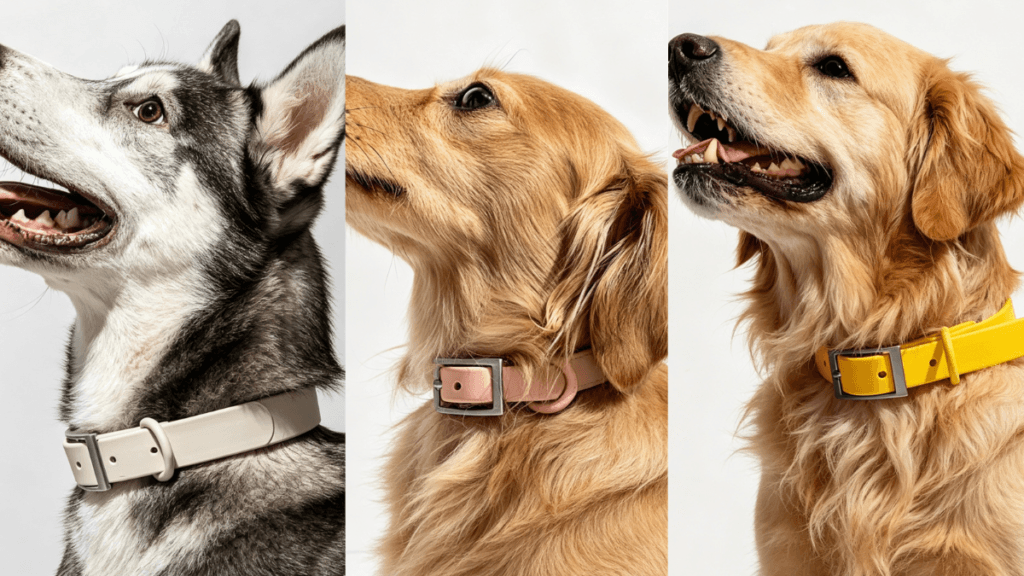
A collar that is too tight restricts breathing and causes skin irritation. A collar that is too loose slips over the dog’s head — which can happen at the worst possible moment, on a busy road or near other dogs. Getting the fit right sits between two failure modes, and the two-finger rule is the standard that makes it repeatable.
The rule is simple in principle: you should be able to slide two fingers comfortably underneath the collar, but not three. In practice, there are nuances — what “comfortably” means varies with the dog’s coat thickness, the collar material, and the breed’s neck shape. A Greyhound and a Rottweiler wearing the same neck measurement require different fit considerations.
This guide explains the two-finger rule properly, covers what too tight and too loose actually look like, and goes through the fit adjustments needed for specific coat types, breeds, and life stages.

The Two-Finger Rule Explained
The two-finger rule works as follows: with your dog standing in a natural position, slide two fingers — index and middle — flat underneath the collar at the back of the neck. You should feel light resistance against both fingers. The fingers should slide through without forcing, but should not move freely with room to spare.
The key word is flat. Fingers angled sideways or stacked on top of each other change the measurement. Two fingers placed flat side by side represent approximately 2–2.5cm of space — enough to allow normal breathing and movement without the collar sitting loose enough to slip forward over the skull.
Check the fit with your dog standing, not sitting. A dog sitting has a compressed chest and a slightly shortened neck, which makes the collar feel tighter than it will during a walk. A fit that feels correct when sitting can be marginally too tight when the dog moves normally.
What Too Tight Looks Like
A collar that is too tight is not always obvious from the outside, particularly on dogs with thick coats. These are the signs to look for:
You cannot fit two flat fingers underneath
The primary indicator. If sliding two flat fingers under the collar requires force or is not possible, the collar is too tight. This applies regardless of how the collar looks from the outside or how comfortable the dog appears — some dogs tolerate a too-tight collar without obvious distress, which means the problem goes unnoticed until skin irritation develops.
Fur matting or skin irritation under the collar
Check the skin under the collar regularly, particularly on dogs with longer or denser coats where the collar is not visible from the outside. Redness, hair loss in a band around the neck, or skin that looks rubbed or irritated indicates the collar is either too tight or has been left on for extended periods without being removed and checked.
Coughing or gagging on the leash
If a dog coughs or gags when the leash goes taut, the collar is either too tight against the trachea or the dog is pulling against a collar that should be replaced by a harness. A collar that fits correctly should not cause any respiratory response when leash pressure is applied — if it does, both the fit and the leash attachment point need to be reconsidered. See our collar vs harness guide for when a harness is the safer option.
The collar leaves a visible indentation after removal
After taking off the collar, check the fur and skin at the neck. A correctly fitting collar leaves no mark. An indentation in the fur or skin that takes more than a few seconds to disappear indicates the collar was sitting too tightly against the neck.
What Too Loose Looks Like
Three or more fingers fit easily
If three fingers slide under the collar with room to spare, the collar is too loose. A loose collar shifts position during a walk and can work its way forward toward the skull. In a sudden backward movement — a dog pulling back from something frightening — a loose collar can slip over the head entirely.
The collar rotates freely around the neck
A correctly fitted collar stays in position with the D-ring sitting on the underside or side of the neck. If the collar spins freely so the D-ring moves to any position on its own, the collar is too loose. ID tags hanging from a freely rotating collar can also end up under the dog’s chin during walks, which is uncomfortable and makes them harder to read.
The collar sits low on the neck rather than at the base
A loose collar slides down the neck rather than sitting at the natural collar position — the base of the neck, just above the shoulders. A collar sitting mid-neck or lower has shifted from its correct position, which both reduces control and increases the chance of slipping off entirely. Tighten the collar until it sits naturally at the base of the neck without being pulled there.

Fit Adjustments by Breed and Coat Type
The two-finger rule is the same for every dog, but applying it correctly varies with coat thickness, neck shape, and breed:
Thick double-coat breeds — Huskies, Golden Retrievers, Chow Chows
On dogs with thick coats, the two fingers should go through to skin contact — not just through the fur. A collar that passes the two-finger test when fingers are in the fur but cannot reach the skin is sitting against fur alone, not the neck. When the coat compresses during movement or gets wet, the effective fit will be much tighter than the dry-fur measurement suggests. Always push fingers down to skin level when checking fit on thick-coated breeds.
Sighthound breeds — Greyhounds, Whippets, Salukis
Sighthounds have narrow heads and wide necks — a standard flat collar that fits their neck circumference can slip forward over the skull when the dog pulls backward. Many sighthound owners use a martingale collar specifically for this reason. If using a flat collar on a sighthound, fit it slightly snugger than the standard two-finger rule — closer to one and a half fingers — to prevent forward slippage without restricting breathing.
Brachycephalic breeds — French Bulldogs, Pugs, Boston Terriers
Brachycephalic breeds already have compromised airways due to their flat facial structure. Any collar that sits against the trachea during a walk — even a correctly fitted one — can contribute to respiratory strain during exercise. For these breeds, a harness is generally preferable for leash attachment, with the collar worn only for ID tag purposes. If using a collar for walking, fit it at the absolute minimum of the two-finger rule and switch to a harness for any walk longer than a few minutes.
Puppies and growing dogs
Puppies grow quickly, and a collar that fits correctly in week one can be dangerously tight by week four during the first six months of life. Check the fit every one to two weeks for puppies under six months, and every month until growth stabilises. A collar that was loose enough to be adjusted one hole tighter is now fine — a collar that was correct and now has no room to loosen is overdue for replacement with the next size up.
How to Measure Correctly Before Buying
Getting the right collar size before it arrives prevents the most common fit issues. Measure neck circumference with a soft tape measure at the natural collar position — the base of the neck, just above where it meets the shoulders. Keep one finger of slack in the tape as you measure to account for the two-finger allowance.
The resulting measurement should fall within the collar’s adjustment range, not at the very end of it. A collar adjusted to its tightest setting has no room to tighten further if the fit loosens over time; a collar at its loosest setting cannot be let out if the dog grows. Aim for a measurement that lands in the middle third of the adjustment range.
For full measuring instructions including a step-by-step guide and size chart, see our how to measure your dog for a collar guide and the complete dog collar size chart.
How Collar Material Affects Fit Over Time
The fit you set on the day of purchase does not necessarily stay the same over months of use. Different materials change differently:
Nylon — stretches and softens
Nylon webbing stretches slightly with use and softens when repeatedly wet. A collar that fit correctly when new may need to be tightened by one adjustment hole after several months of regular use — particularly for dogs that swim. Re-check the fit monthly and adjust as needed.
Leather — can stiffen or stretch depending on maintenance
Leather that is regularly conditioned stays supple and maintains its shape. Neglected leather stiffens, which can make a correctly adjusted collar feel tighter than when new. Wet leather stretches slightly and then stiffens as it dries, which can create fit inconsistency for dogs that get wet regularly.
PVC-coated webbing — dimensionally stable
PVC-coated webbing does not stretch, soften, or stiffen with use. The fit set on day one remains accurate indefinitely because the material does not change with water exposure or wear. This means fewer fit re-checks are needed over time — though it is still worth verifying the fit every few months and after any significant change in the dog’s weight. For a full comparison of how materials behave over time, see our collar material guide.
A Collar That Holds Its Fit
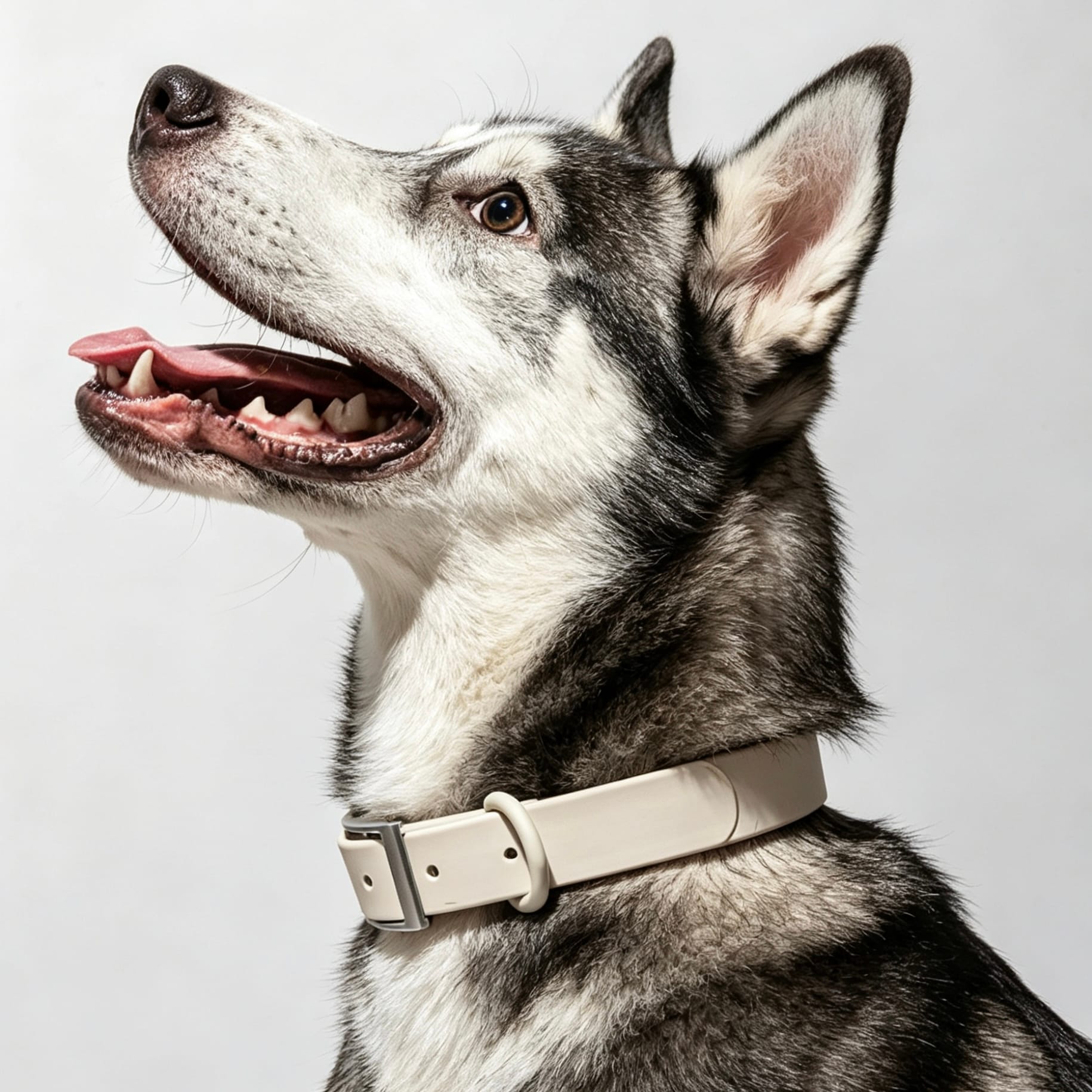
The MoonianPet Waterproof Dog Collar is made from PVC-coated webbing — dimensionally stable in wet and dry conditions, so the fit you set stays accurate without re-adjustment. The tri-glide adjustment buckle holds the set position firmly and does not loosen with use. Available in XS to XL across 11 colors, with each size covering a wide adjustment range so the collar fits correctly in the middle of its range rather than at the extremities.
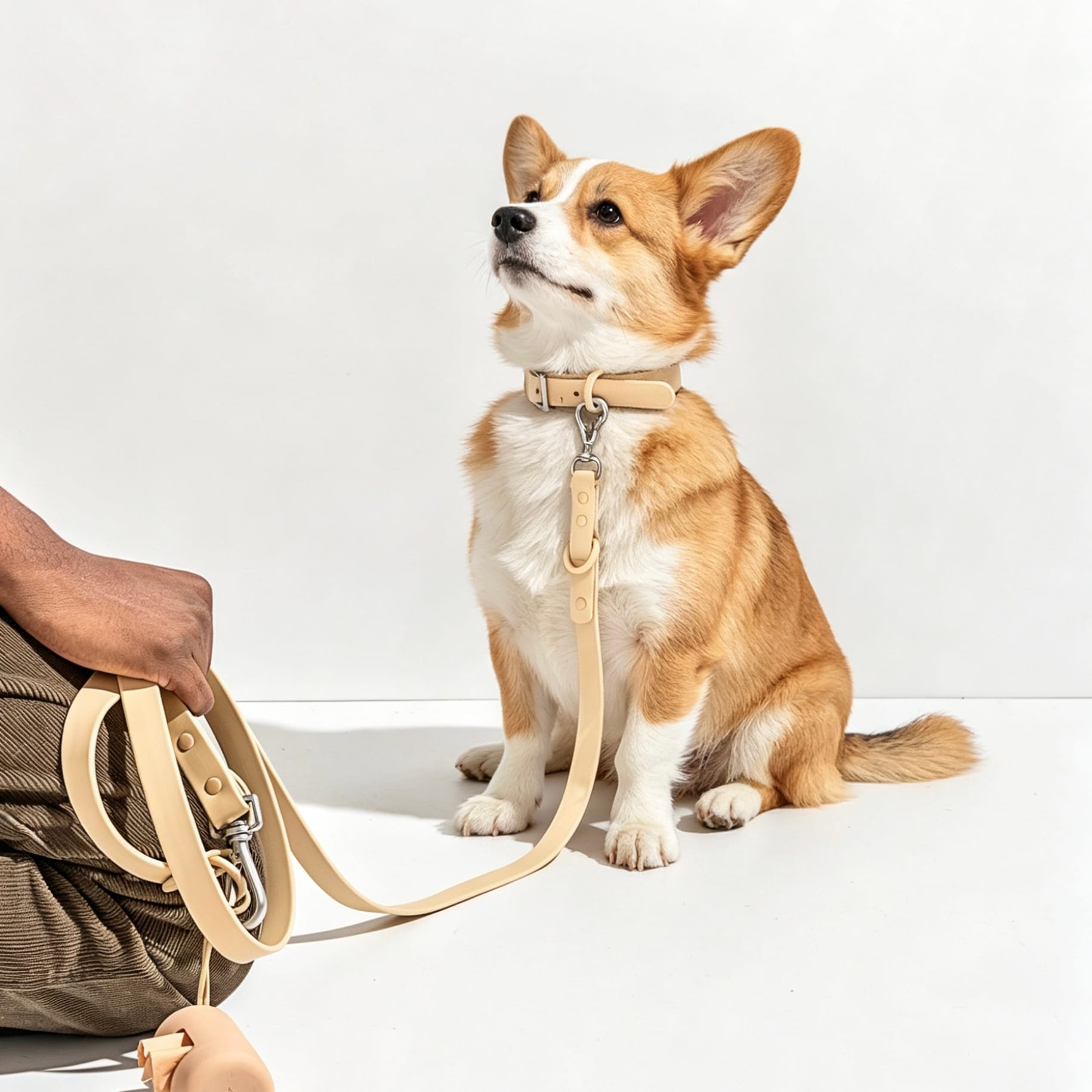
For a matched waterproof leash, the Collar & Leash Set pairs the collar with a PVC-coated leash in the same color — odour-proof, easy to wipe clean, and built to the same dimensional stability as the collar.
Frequently Asked Questions
How tight should a dog collar be?
The collar should be tight enough that two flat fingers slide underneath with light resistance, but loose enough that those two fingers move through without forcing. One finger means it is too tight; three fingers with room to spare means it is too loose. Always check with your dog standing, not sitting, and push fingers through to skin contact on thick-coated breeds.
Can a dog collar be too loose?
Yes — a loose collar is a safety risk. A collar that a dog can back out of will come off at the worst possible moment. It also shifts position during walks, moves the D-ring away from its correct position, and makes it harder to attach a leash securely. A collar that rotates freely around the neck or sits lower than the base of the neck is too loose and needs to be tightened or replaced with a smaller size.
How often should I check my dog’s collar fit?
Every one to two weeks for puppies under six months — they grow fast enough that a collar can go from correct to too tight within a few weeks. Monthly for adult dogs at a stable weight. After any significant weight change — gain or loss — re-check immediately. Also check after each bath or swim, as wet fur compresses differently and some collar materials change slightly when wet.
Should my dog wear their collar all the time?
Most owners leave a collar on at all times for ID tag purposes — which is reasonable. If the collar is left on continuously, check the skin under it every week for any signs of irritation or fur matting. Some owners remove the collar at night to give the neck skin a rest, particularly on dogs with sensitive skin or short coats where collar contact is more direct.
What size collar does my dog need?
Measure neck circumference with a soft tape measure at the base of the neck, with one finger of slack. Match the measurement to the collar’s adjustment range — aim for a measurement that falls in the middle of the range, not at the extremes. Full instructions and a size chart are in our collar measuring guide.
Need to measure your dog for a new collar? Our collar measuring guide covers every step. Or if you are also considering a harness for walks, see our collar vs harness guide for when each is the better choice.
About the Author
Wenyue
Wenyue is the founder of MoonianPet and writes about dog collars, harnesses, waterproof pet gear, and everyday dog care.
Growing up with dogs inspired her lifelong interest in pet care and practical dog gear. Through MoonianPet, she researches dog collars, harnesses, waterproof materials, and everyday solutions that help active dogs stay comfortable during daily adventures.