
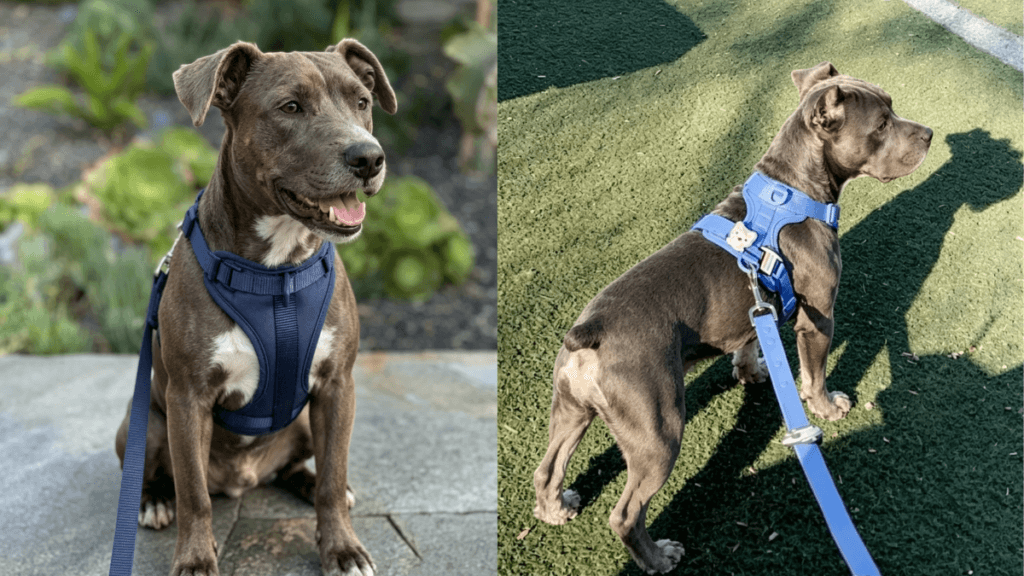
Finding the best no-pull dog harness for a Pitbull is harder than it sounds. Pitbulls are strong, enthusiastic, and often determined pullers. They also have a specific body shape — wide chest, thick muscular neck, and a compact, powerful build — that makes harness fitting genuinely challenging. A harness that works on a Labrador of similar weight will often sit wrong on a Pitbull, rotating out of position or failing to stay centered under the pulling force these dogs generate.
The stakes are higher with a large, strong dog. A harness that slips, rotates, or has hardware that fails under load is not just inconvenient — it is a safety issue on a dog that can generate significant forward force. The front D-ring migrating off-center means the no-pull mechanism stops working at exactly the moment it is most needed.
This guide covers what makes a no-pull harness hold on a Pitbull specifically, how to fit correctly around the breed’s distinctive proportions, and what hardware specifications to look for before buying.
Why Pitbulls Need a Different Standard of Hardware
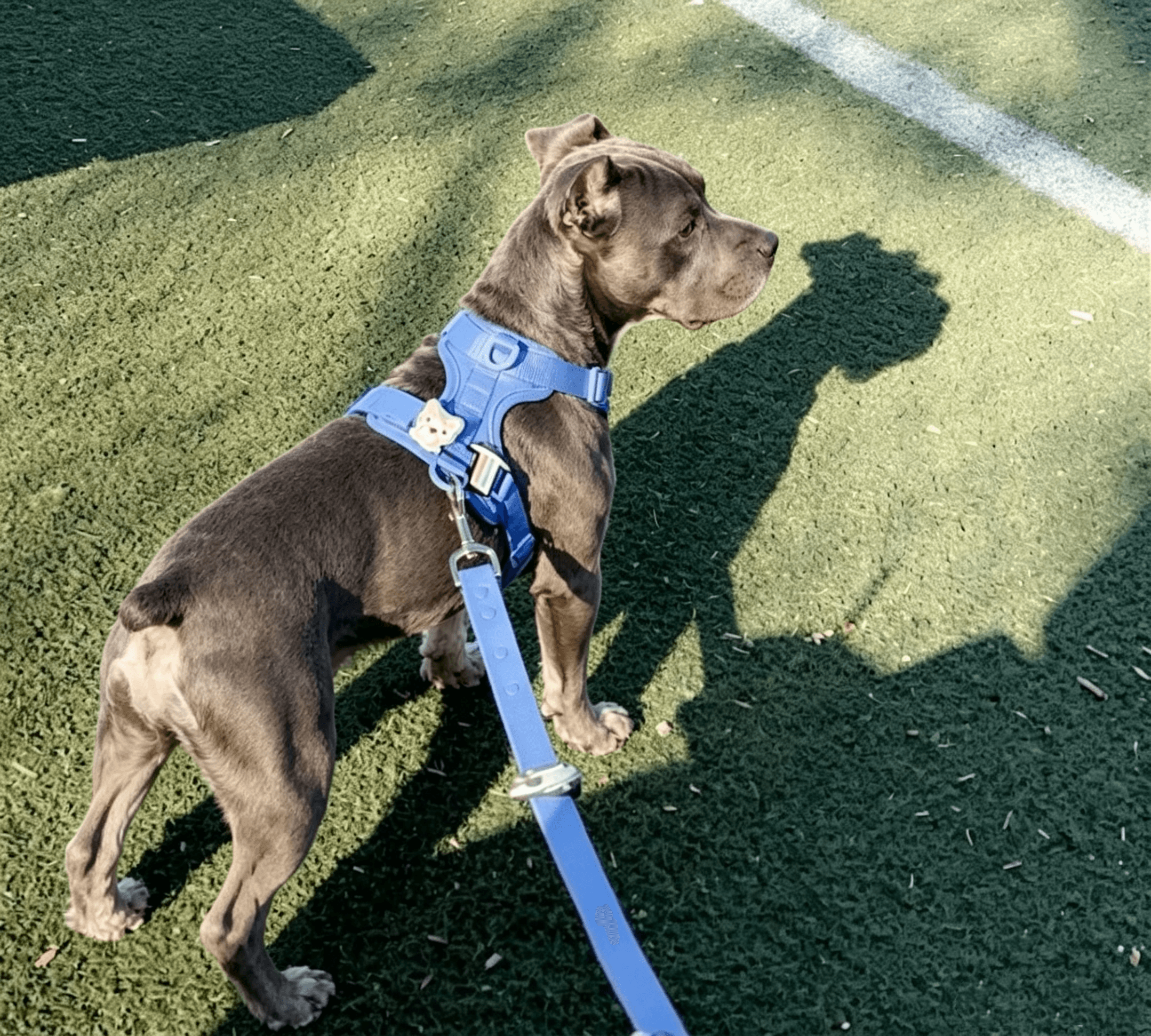
Pitbulls are not just large dogs — they are unusually strong for their size. An American Pit Bull Terrier or American Staffordshire Terrier at 25–35kg generates pulling force that exceeds many dogs twice their weight. The muscle density and drive these breeds possess means their harness hardware is under a level of sustained stress that most standard harnesses are not designed for.
The practical consequence: plastic D-rings deform, adjustment sliders loosen, and lightweight buckles pop open faster on a Pitbull than on a calmer dog of the same size. For a breed where the leash is a genuine safety tether as much as a training tool, hardware failure is not an acceptable risk. Metal hardware throughout — zinc alloy D-rings, metal tri-glide sliders, and a reinforced quick-release buckle — is the non-negotiable starting point.
The Pitbull Fit Challenge
Pitbull-type breeds have a body shape that consistently causes fitting problems with standard harnesses:
Wide, deep chest with prominent sternum
Pitbulls have a wider chest relative to their body length than most breeds of equivalent weight. A harness sized by chest girth for a Pitbull may have a back panel that is too short or a belly strap that sits further forward than intended. The prominent sternum also means the chest panel needs to be wide enough to sit flat across the sternum — a narrow chest strap will dig in rather than distribute pressure.
Thick, muscular neck
Pitbulls have a notably thick neck relative to chest girth. Where French Bulldogs have an extremely wide chest and narrow neck, Pitbulls often have measurements at both ends of the range — a wide chest and a wide neck simultaneously. This can cause problems with harnesses where the neck loop adjustment range does not extend wide enough to fit comfortably over a Pitbull’s neck, particularly on male dogs.
Compact, muscular build that generates rotation
When a Pitbull pulls and then the front D-ring redirects them sideways, the force generated by a twisting, muscular dog is significant. A harness with a chest panel that is not firmly anchored by both the neck and belly straps will rotate under this force, bringing the D-ring off-center. Three-point adjustment creates more anchor points and significantly reduces rotation compared to single or dual-point adjustment.
What to Look For in a No-Pull Harness for Pitbulls
Zinc alloy hardware throughout — not plastic
The front D-ring, back D-ring, adjustment sliders, and quick-release buckle all need to be metal. Zinc alloy is the standard for strength and corrosion resistance. On a Pitbull that pulls consistently, each component is under repeated stress — the D-ring takes the redirecting load on every lunge, the sliders take tension on every walk, and the buckle opens and closes daily. Plastic degrades under this use pattern within months; zinc alloy maintains its function for years.
Wide neoprene chest panel
A wide padded chest panel distributes the redirecting force across the sternum rather than concentrating it on a narrow strap. For a Pitbull’s prominent chest, neoprene padding is the right material — soft enough to sit comfortably against the sternum, resilient enough not to compress flat under daily use, and non-porous so it does not develop odour from the moisture active dogs generate during walks.
Three-point adjustment with wide neck range
Independent neck, chest, and belly adjustment is essential for Pitbull proportions. Specifically look for a neck loop that adjusts wide enough to fit a muscular Pitbull neck comfortably — some harnesses have a neck adjustment range that tops out too low for thick-necked breeds. The MoonianPet L size neck adjusts from 16.5–20.5 inches, which accommodates most Pitbulls comfortably.
Dual front and back D-rings
The front clip is the active pulling control mechanism — use it on every walk until pulling reduces consistently. The back clip gives flexibility for calmer situations and for running or exercise where the turning force of the front clip is disruptive to natural movement. A harness with both options is more versatile over the lifetime of the equipment. For the full breakdown on when to use each, see our front clip vs back clip guide.
Sizing a Harness for a Pitbull
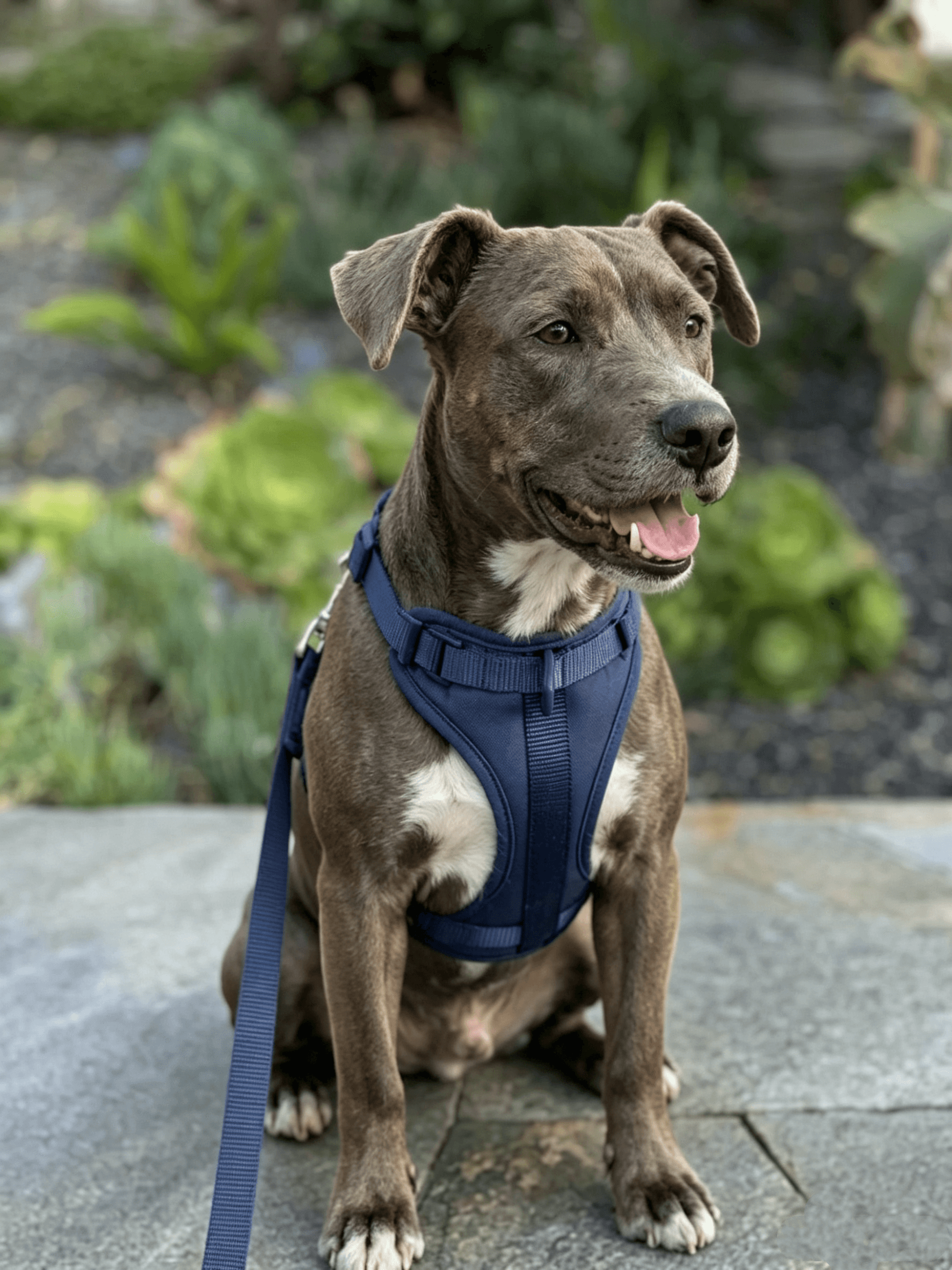
Pitbull-type breeds vary considerably in size — from American Staffordshire Terriers at 25–30kg to larger American Pit Bull Terriers and XL Bullies. Always measure rather than size by weight or breed assumption.
Measure chest girth first
Wrap a soft tape measure around the widest point of the chest, just behind the front legs, with your dog standing. This is the primary sizing measurement. Most American Pit Bull Terriers and Staffies measure 28–36 inches chest girth, placing them in size L on the MoonianPet harness. Larger XL Bully-type dogs may measure into XL.
Check neck girth against the adjustment range
Pitbulls often have a neck girth that is wide relative to their chest measurement. Verify that the neck measurement falls within the neck loop adjustment range of the size you have chosen. A Pitbull with a 19-inch neck and a 30-inch chest needs a harness where the L size neck loop adjusts to at least 19 inches — check the specifications rather than assuming.
When between sizes, go up
If measurements put your dog at the upper end of L or the lower end of XL, choose XL. The wider adjustment range gives more room to fine-tune the fit, and having the neck loop able to tighten adequately is more important than having the chest strap at the middle of its range. Full size chart in our dog harness size guide.
Using the Front Clip Effectively on a Strong Puller
The front clip works by redirecting pulling momentum sideways — but on a very strong dog, the technique of how you hold and use the leash matters alongside the harness design.
Keep the leash short enough to engage the mechanism
A front clip only redirects pulling when the leash goes taut. On a long loose leash, a Pitbull can build significant momentum before the leash engages — at which point the redirecting force is much harder to manage. Keep the leash short enough that it goes taut before the dog has built speed, which means the redirection is gentle rather than abrupt.
Combine with reward-based training
The front clip harness is a management tool that makes walks safer and more manageable while training is ongoing. Pitbulls are highly food-motivated and respond well to reward-based leash training — stopping and rewarding loose leash walking produces faster results when combined with consistent front clip use than either approach alone.
Check the D-ring position during the walk
After the first few minutes of walking, check that the front D-ring is still sitting flat and centered on the chest. On a strong dog, any looseness in the fit allows the harness to rotate under pulling force. If the D-ring has migrated sideways, stop and re-center it, then tighten whichever strap — neck or belly — is allowing the rotation. Full fitting instructions in our no-pull harness fitting guide.
Built for Dogs That Pull Hard
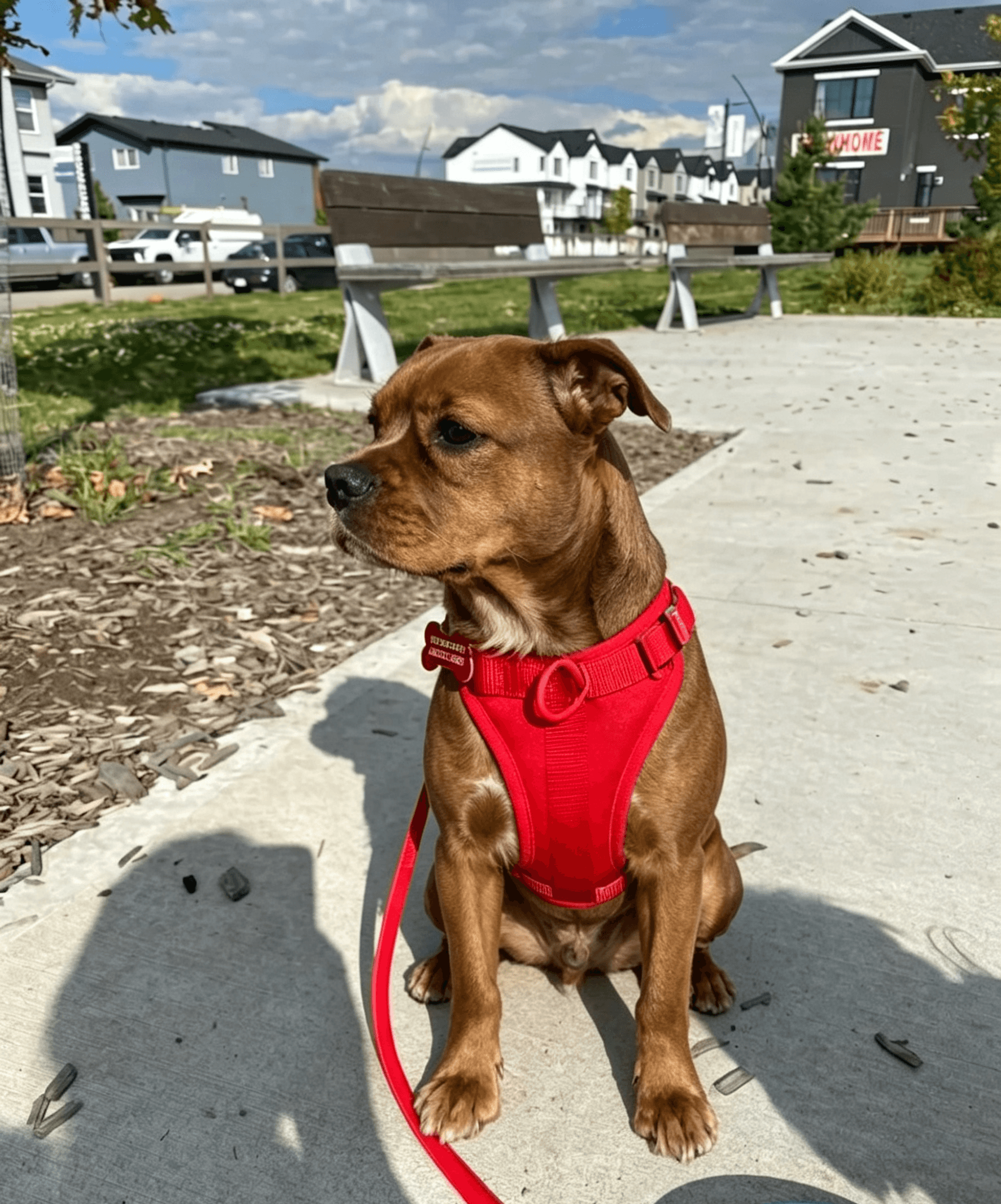
The MoonianPet No-Pull Dog Harness covers the hardware and fit requirements for Pitbull-type breeds: zinc alloy D-rings front and back, metal tri-glide adjustment sliders, reinforced ABS quick-release buckle, wide neoprene chest panel, and three-point adjustment that accommodates the wide chest and thick neck combination. Available in L and XL for most Pitbull-type breeds across 11 colors.
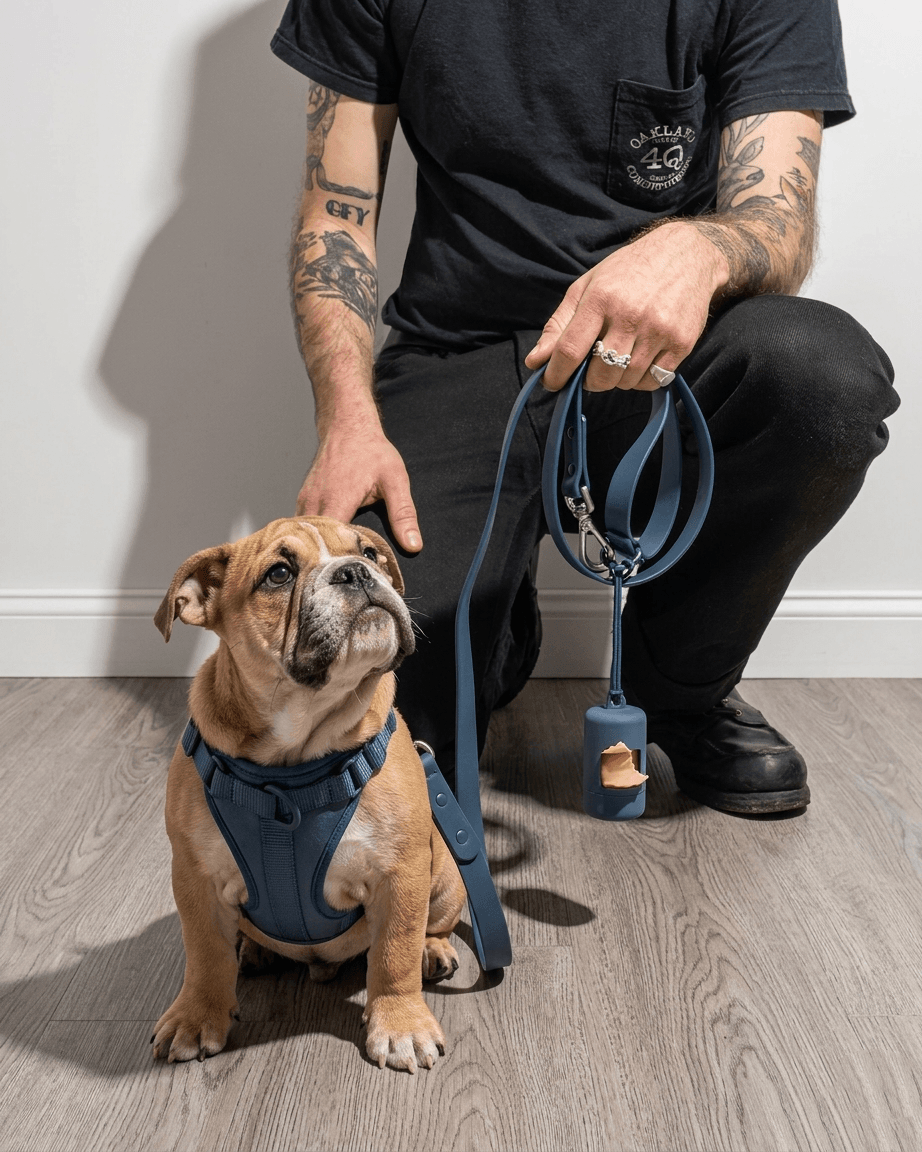
For a fully matched walking setup, the Harness & Leash Set pairs the harness with a heavy-duty PVC-coated leash — built to handle the pulling force of large, strong dogs without stretching or degrading.
Frequently Asked Questions
What is the best no-pull harness for a Pitbull?
For Pitbull-type breeds, the most important features are zinc alloy hardware throughout, a wide neoprene chest panel, and three-point adjustment that handles the breed’s wide chest and thick neck simultaneously. The MoonianPet No-Pull Harness covers all three in L and XL sizes. For a broader comparison of no-pull options, see our best no-pull harness guide.
What size harness does a Pitbull need?
Most American Pit Bull Terriers and Staffies fit size L (chest 28.0–38.6 inches). Larger XL Bully-type dogs may fit XL. Always measure chest girth and verify the neck measurement falls within the neck loop adjustment range — Pitbulls often have a wider neck than the size chart assumes for their chest measurement.
Will a no-pull harness stop my Pitbull from pulling?
A front-clip no-pull harness significantly reduces pulling by redirecting forward momentum sideways on every lunge. For most dogs, including Pitbulls, walks become more manageable immediately. Complete elimination of pulling comes from combining the harness with consistent reward-based training — the harness manages pulling while training changes the underlying behaviour. Pitbulls are food-motivated and respond well to this combination.
Why does my Pitbull’s harness keep rotating?
Rotation is almost always a fit issue — the harness is too loose at the neck, belly, or both, allowing the chest panel to rotate under pulling force. Tighten the neck strap and belly strap until each passes the two-finger rule snugly, then recheck the front D-ring position during the first few minutes of the walk. If rotation persists after correct adjustment, the harness design has insufficient anchor points for a strong puller — look for a three-point adjustment design.
Is a harness or collar better for a Pitbull?
A harness is significantly better for leash attachment on a Pitbull that pulls. A collar concentrates all leash force on the neck and trachea — on a dog that lunges consistently, this creates meaningful neck strain over time. A harness distributes force across the chest and shoulders, where the body is built to handle it. A collar can still be worn for ID tags. See our collar vs harness guide for the full comparison.
Looking for hardware and fit advice for other large, strong breeds? Our no-pull harness guide for large dogs covers hardware requirements by weight range. Or if you are also considering harness options for a Husky or German Shepherd, see our best no-pull harness overview.
About the Author
Wenyue
Wenyue is the founder of MoonianPet and writes about dog collars, harnesses, waterproof pet gear, and everyday dog care.
Growing up with dogs inspired her lifelong interest in pet care and practical dog gear. Through MoonianPet, she researches dog collars, harnesses, waterproof materials, and everyday solutions that help active dogs stay comfortable during daily adventures.